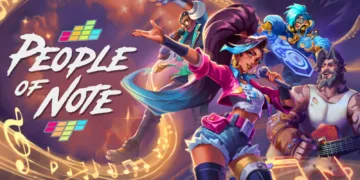























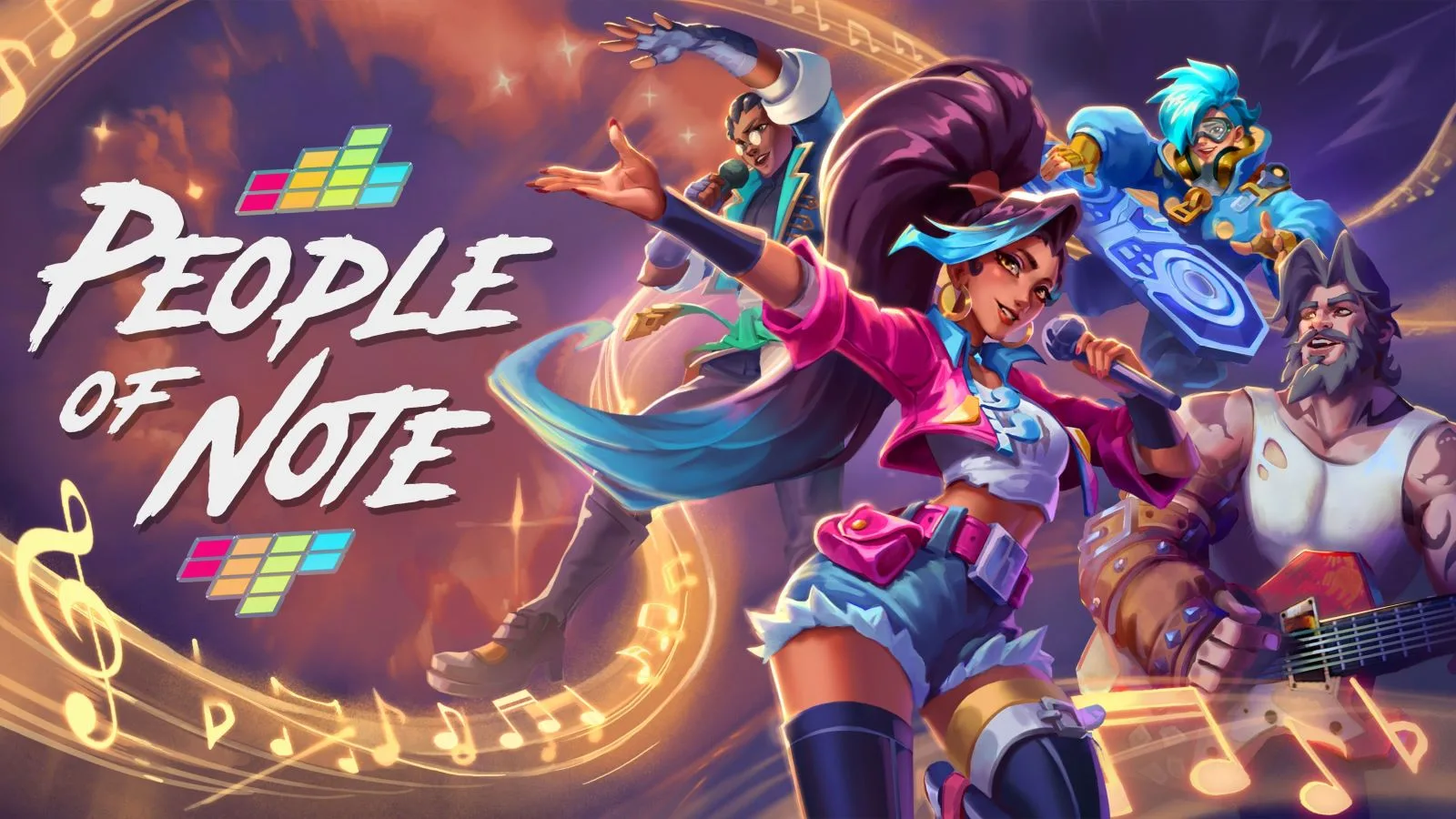

People of Note is a musical RPG that commits hard to its premise. You play as Cadence, a pop hopeful chasing a place in a singing contest, only to find that her dream pulls her across the world of Note and into a far larger conflict. That setup gives the game a light, road-trip feel at first, then lets it widen into fantasy with real stakes. The tone stays playful throughout, with puns, genre jokes, and plenty of pop culture wink-wink energy, yet the world itself is treated with real care.
Music is not a gimmick here. It shapes cities, factions, battles, and even the way people think. The game mixes story scenes, turn-based combat, puzzle work, and full musical set pieces into one experience that feels proudly built around sound. Its appeal comes from how completely it commits to that idea, and how often that commitment pays off.
Story, Setting, and Tone
Cadence’s goal is simple on the surface. She wants to prove she has what it takes to become a star. That ambition gives the opening a clear hook, since the first step is a contest and the first obstacle is self-doubt. What starts as a bid to win over judges grows into something much larger, as Cadence crosses the land of Note in search of voices and styles that can reshape her song. The story keeps widening from there, moving from a personal ambition to a conflict that reaches far beyond one performance. The shift works well because the game never forgets the smaller, human dream that started it all.
The world of Note is built on musical identity, and that idea carries the game’s strongest writing. Different regions are shaped by different genres, from rock and EDM to rap, country, classical, and folk. Each place has its own customs, its own visual style, and its own internal tensions. A rock region can split into rival camps. A classical area can feel rigid and formal. A pop city can look glossy and controlled, with its own status games. That gives the setting a social logic that goes past costume design. Music acts like culture, class, politics, and public taste all at once. It is easy to see the real-world parallels, yet the game keeps them playful rather than preachy.
The writing leans into puns, references, and genre jokes with confidence. Some of it is sharp and clever, some of it knowingly silly, and some of it lands closer to YA melodrama than dry wit. That balance matters. The game is willing to be earnest, which helps when the story shifts into heavier territory. It can go from a silly exchange to a serious turn without losing its voice. That tonal swing gives the adventure texture, even if a few jokes may be a step too far for players who do not enjoy relentless wordplay.
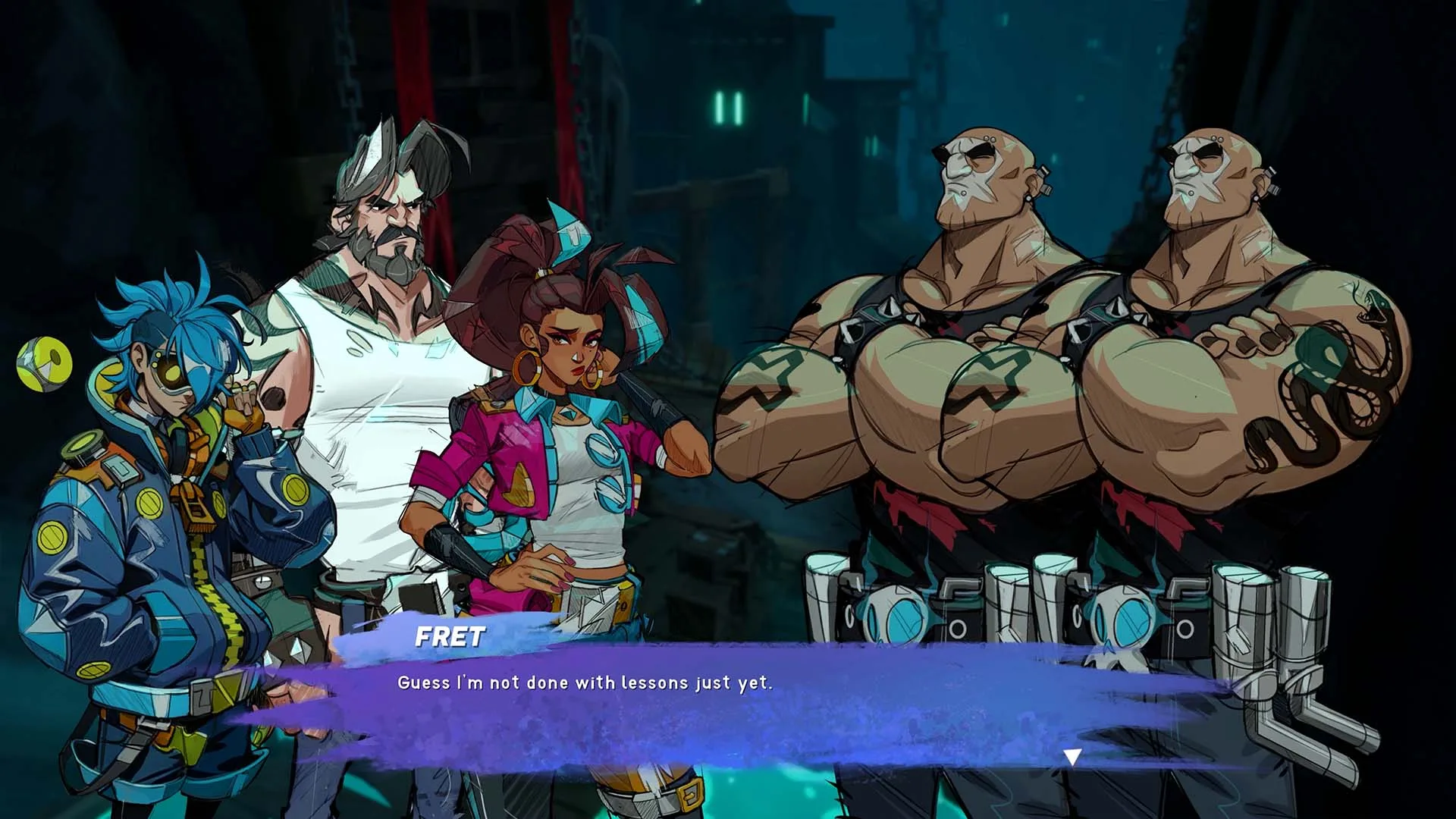
Cadence is the emotional anchor, and the story works best when it stays close to her growth. She begins with a narrow dream and becomes someone forced to think about collaboration, identity, and the kind of music she wants to make. Her bandmates each bring a different energy, and the contrast helps the cast feel like a real group rather than a stack of gameplay roles. Fret has a clearer early shape as a support-minded presence, Synthia adds a different kind of rhythm and control, and Vox arrives late enough that he can feel underused next to the others. The game still gives its cast enough personality to hold the story together, even when some parts are more developed than others.
Also Read






Combat, Customization, and Progression
Combat is the structural spine of People of Note, and it is built around a turn system that borrows the language of music. Instead of simply passing turns in a fixed line, fights use time signatures that decide how many actions fit into a round. Sometimes you get a normal flow, sometimes you get a cramped turn where someone sits out, and sometimes you get extra room to squeeze in another move. That setup gives each battle a planning layer that feels closer to solving a pattern than simply selecting the strongest attack.
Beat Points, or BP, are the fuel for the stronger tools in your kit. Basic attacks are always available, but the useful part of a character’s loadout lives in Songstones, which grant special abilities. Remix Stones can reshape those abilities and change how they behave, so character builds do not stay fixed for long. The result is a system that invites tinkering. You can lean hard into healing, status support, or raw offense. You can also make one character cover a role more fully than the game first suggests. That kind of flexibility gives the party real identity. A healer can stay a healer, or can become something sturdier and more flexible if you build that way.
The timed input system adds the musical layer. Attacks and skills ask for button presses in rhythm, and perfect timing boosts their power. The idea fits the theme well, and at its best it makes battles feel alive. The problem is that the timing patterns do not always line up with the feel of the music, so your hands can end up following memory while your ears push in another direction. That disconnect becomes more noticeable with stronger abilities, which can ask for several prompts in a row. The game does let you disable those prompts, and that option is a real relief for players who want the combat tactics without the execution test.
Each party member fills a distinct battle job, and the game becomes most interesting when those jobs interact. Cadence can be a flexible all-rounder, Fret can shore up the team with support and recovery, Synthia can alter turn order and remove annoying modifiers, and Vox brings a harsher control set with debuffs and damage. That means strategy is not only about who hits hardest. It is about sequencing, timing, and resource use. Equipment matters too, since better instruments can shift slot layouts and open room for stronger builds. A simple weapon upgrade can change how a character is assembled, which keeps progression tied to decision-making rather than plain number growth.
Enemy design pushes against the player in ways that feel like puzzles. Some foes add turn-order modifiers, some stun party members, some alter BP costs, and some force you to rethink your usual sequence. The best fights ask you to read the board, then adjust fast. Bosses keep pressure on with a crescendo-style meter that builds over time, so you cannot stall forever without consequence. That creates urgency, yet the later game can also fall into a longer-health-bar problem, where fights last too long after you have already found the correct answer. At that point, the system still works, but the tension starts to flatten.
Mash-Ups give the battle system another spark. These are team-based specials that combine characters for a shared effect, whether that means a heavy strike, a healing move, or a useful status shift. They reward synergy and help late-game combat feel more expressive once the roster has opened up. In that way, the system keeps adding tools without changing its basic shape. That works for a long stretch, since each layer gives you another way to solve the same musical puzzle.
Exploration, Puzzles, Side Content, and Accessibility
The game’s areas are compact and easy to read, which helps the story keep moving. Dungeons mix fights, light navigation, and puzzle work, and they rarely overstay their welcome at first. One strong choice is the lack of random encounters. Enemies are placed in the environment, you choose when to fight, and defeated foes stay down. That keeps the pace cleaner than many old-school RPGs, and it makes exploration feel less like a punishment loop.
Puzzle design gives the dungeons variety. Some problems are built around switches and moving objects, some rely on linking or combining elements, and others ask you to remember clues from the world itself. There are also special encounters that work like challenge rooms, with goal-based battle setups or trivia-style tests. Those optional pieces help the game feel playful without turning it into a pure puzzle title. They also give the world a little more texture, since trivia about local names, enemies, and places can reinforce how much strange detail the game has packed in.
Optional fights and reward systems sit alongside that structure. If you want extra currency, gear, or experience, you can seek it out. If you do not, the game does not force grinding on you as a constant requirement. That choice helps the pacing and keeps the core run focused. The side activity structure stays light, but it still offers a few reasons to poke around each region more carefully.
Accessibility is one of the game’s smartest areas. You can reduce or switch off rhythm prompts, tone down combat, or disable puzzles if you get stuck. Those settings make the game more welcoming without flattening its design. Quick recovery after defeat and the absence of random encounters also lower friction. The result is a game that lets players tailor the pressure level to their liking.
Presentation, Music, and Pacing
Visually, People of Note is easy to recognize. Each region has its own color palette and mood, and the design work changes enough from place to place that the world keeps feeling fresh. Rock-heavy zones have a rougher edge, EDM spaces lean into neon and nightlife, and rap-inspired areas have their own architectural confidence. The animated story moments help tie that all together. They play like musical performances, with choreography, camera movement, and a sense of stagecraft that gives the key scenes a lift.
The soundtrack does a huge amount of work. Battle music changes with the region and with the active genre in combat, so a fight can shift from one style to another without losing its identity. That makes the world feel reactive. The main songs land well too, especially when a scene needs a burst of emotional force. Lyrics and vocal delivery give the big moments shape, and the game knows when to step back and let a musical number carry the scene. The best tracks stick in the head fast, which is exactly what this kind of game needs.
Pacing is brisk for a good stretch. The story moves from one setting to the next with a clear sense of momentum, and the compact area design helps keep that motion alive. Early and mid-game sections benefit most from this, since the mix of story, battle, and puzzles keeps changing just enough to stay engaging. Later stretches can feel slower when fights grow longer without gaining much complexity. That is where the game’s structure starts to show its limits. It already has the right tactics in place, so extra health can feel like padding rather than escalation.
There are a few signs of a smaller production. Some animations feel a little stiff, menus could be more convenient, and the game lacks certain extras that would have been useful, like a better progress log or a cutscene gallery. Those gaps stand out more because the rest of the presentation is so committed. Even so, the game leaves a strong impression through sheer personality. Its music-first design, its genre-bending world, and its flexible combat all pull in the same direction, and that gives People of Note a voice that stays memorable long after the last song ends.
People of Note is a turn-based RPG musical that blends traditional party-based role-playing mechanics with interactive musical performances. Players follow the journey of a pop singer named Cadence as she travels through the vibrant world of Note—visiting diverse locations like the rock-themed Durandis and the EDM-centric Lumina—to recruit an ensemble of musicians and save the future of music itself. Released on April 7, 2026, the game is available on PC (via Steam, the Epic Games Store, and the Microsoft Store), PlayStation 5, Xbox Series X|S, and Nintendo Switch 2, featuring genre-bending “mashup” attacks, real-time rhythm elements, and fully cinematic musical sequences.
Full Credits
Director (Creative/Game Director): Jason Morningstar
Writers (Lead Writer/Narrative Designer): Jason Morningstar
Producers/Studio Leadership (Producers, Executive Producers, and Key Studio Heads): Jason Morningstar
Developer, Publisher: Iridium Studios, Annapurna Interactive
Release Date: April 7, 2026
The Review
People of Note
People of Note is a charming, smartly built RPG with standout music, inventive world design, and combat that rewards planning, even if later battles can drag and the rhythm inputs can feel uneven.
PROS
- Rich musical worldbuilding
- Strong soundtrack and musical performances
- Flexible, strategic turn-based combat
- Good accessibility options
- Distinct visual identity
CONS
- Later battles can feel too long
- Rhythm inputs can clash with the music
- Some story beats move too fast
- A few late characters feel less developed