

























A Buddhist monk jokes that shaved heads belong to monks or conmen while A Wen carefully runs a razor across his scalp. The remark suits a man who has spent years moving between roles: immigrant child, street seller, gangster, prisoner, restaurant owner, father and spiritual seeker. Xisi Sofia Ye Chen builds From Dawn to Dawn around those identities without pretending they fit into a clean progression.
The director’s older brother has returned to China from Barcelona, staying near his birthplace and testing a quieter existence at a monastery. Yet the calm setting does little to settle him. In a lonely hotel room, he listens as his daughter repeatedly calls him “Daddy” over the phone. The scene supplies no argument or confession. His silence does the work.
Ye Chen’s feature debut could have imposed a familiar redemption structure on this material. A criminal past, a monastery and a waiting family practically write the poster themselves. She declines the invitation. A Wen’s attempt to change remains uncertain because his earlier life persists through old friendships, family memories and habits he has yet to abandon.
The Gangster Story Refused
A Wen once modelled himself on the gangsters he watched in Hong Kong films. Ye Chen remembers looking at movie images reflected in his sunglasses, admiring an older brother who had learned how to appear untouchable. The image gains a harsher meaning once his performance of toughness becomes a working identity.
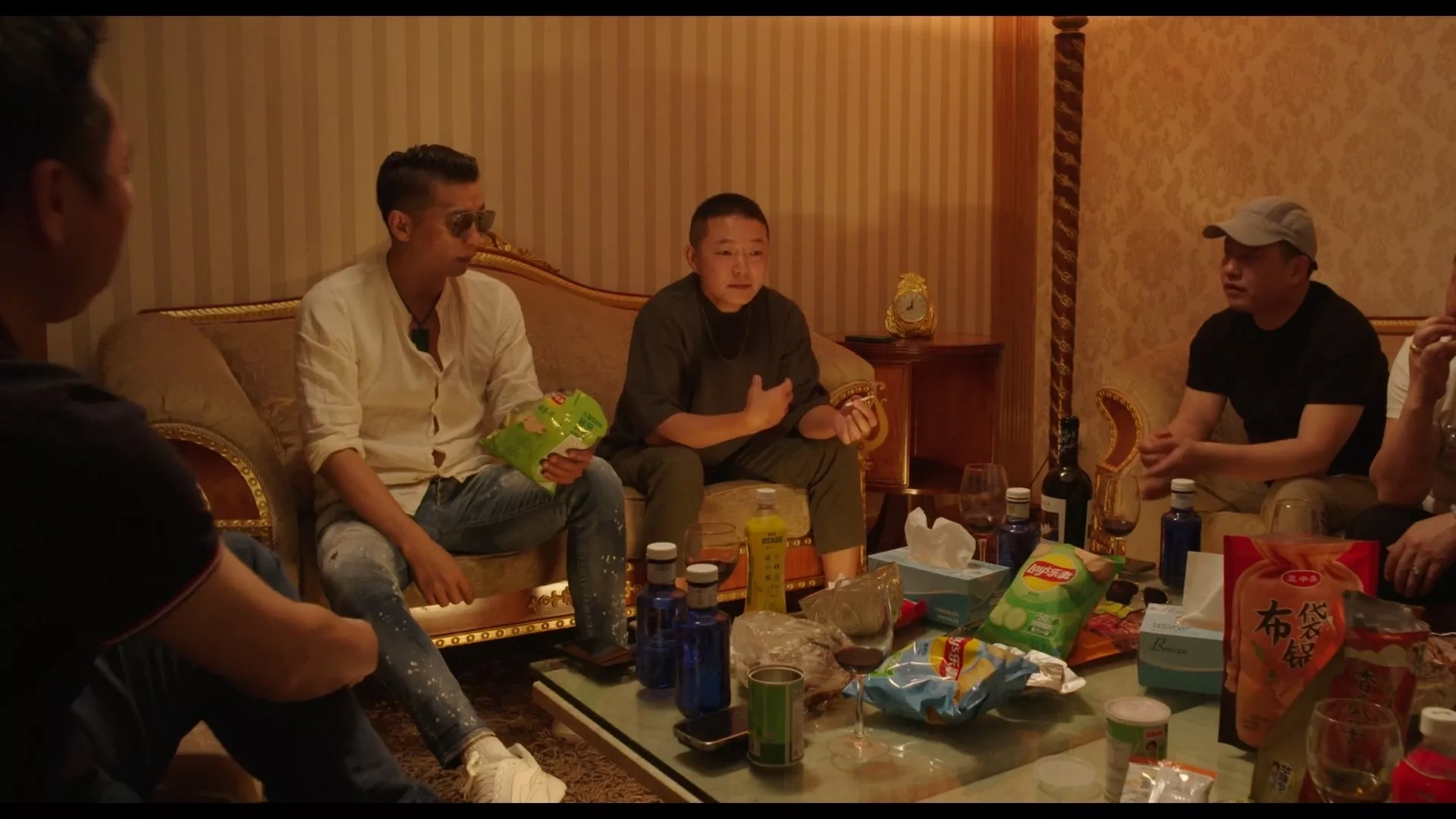
After arriving in Spain with his family, A Wen sells goods on Barcelona’s streets before running basement gambling dens. He accumulates a €50,000 debt, becomes entangled with loan sharks and spends time in prison. Former associates recall shootings, thefts and possible warrants with the relaxed rhythm of people discussing old jobs. Crime has been absorbed into anecdote.
The film never turns these details into a procedural account. Ye Chen does not map every debt or establish a neat chronology of A Wen’s descent. Her attention stays on what remains after the action has ended. Laosan, one of A Wen’s “street brothers,” cannot walk after taking a bullet intended for him. He recounts the injury with striking good humour, but his body gives the story a permanence that the conversation avoids.
Also Read




This refusal to dramatise the criminal history creates some frustration. Major events remain partially obscured, and several supporting figures appear long enough to reveal a piece of A Wen’s past before slipping away. Still, the omissions belong to the film’s subject. Families rarely maintain organised archives of their worst years. They keep fragments, grudges and stories repeated after midnight.
What Silence Inherits
A Wen’s contradictions begin before his involvement with gangs. His parents leave their children in China while travelling overland for three months to establish a life in Spain. Years later, his mother weeps while remembering how she treated them. Poverty explains certain decisions. It does not erase their effects.
Ye Chen places this family history inside the experience of a Chinese immigrant community pushed toward Barcelona’s margins. Restaurants, warehouses, industrial zones and hidden gambling rooms become the principal locations. These spaces reveal people building lives inside a city that benefits from their labour while barely registering their presence.
The film’s most effective conversations show how survival has shaped communication within the family. Practical matters are handled directly, while fear, guilt and abandonment sit beneath the words. Ye Chen describes silence as a virus, an idea that gains force through repetition. A Wen speaks about depression with monks, yet he remains guarded around relatives. His mother expresses regret decades after the choices that caused it. Everyone eventually talks, just rarely to the person who needed to hear it.
Language makes that separation audible. A Wen often uses Spanish for business and daily logistics, then turns to Chinese when discussing memory, emotion or dreams. His bilingualism is not presented as a simple division between two national identities. It functions like a set of emotional compartments, each opened for a different kind of truth.
At karaoke gatherings, alcohol and old stories briefly make the group louder. The silence is still there. It has simply learned the lyrics.
A Structure Built from Gaps
Ye Chen organises the film through observation, voiceover and memory rather than conventional exposition. Her narration moves between childhood admiration, family migration and A Wen’s present life without insisting on firm transitions. The structure mirrors her relationship with him: knowledge arrives late, out of order and with missing pages.
Her voiceover gives these fragments a spine. She speaks with restraint, resisting the first-person documentary habit of turning private pain into continuous explanation. The audience receives enough context to follow A Wen’s history, yet his motives stay partially inaccessible. Ye Chen watches him as a sister who has spent years near him without ever gaining complete access.
Pablo Paloma’s cinematography supports that distance. Rural China appears through composed images of mist, cultivated land and monastery rooms. Barcelona is rougher and less settled, captured in restaurants, smoky interiors and crowded karaoke clubs. The contrast could have become a blunt opposition between spiritual East and corrupted West. The editing avoids that trap by letting unease exist in both places.
The camera often remains on A Wen after a conversation has slowed, holding on expressions that offer no easy reading. These pauses prevent his charisma from controlling the portrait. He can tell entertaining stories and command a room, yet the film keeps returning to the quiet man left behind once everyone else stops laughing.
His meetings with monks provide the possibility of rebirth, framed through the suggestion that beginning again requires forgetting everything. The structure quietly disputes that advice. A Wen may change his work, surroundings and daily routine, but every attempt at reinvention remains crowded by people who remember the previous version. The past has excellent attendance.
The poetic European documentary From Dawn to Dawn celebrated its world premiere on April 17, 2026, at the 57th Visions du Réel international film festival in Switzerland, where it took home the prestigious Grand Jury Prize. Cinematic enthusiasts tracking the film’s initial festival run can look for regional distribution updates through international sales agent Parallax Film Sales or upcoming independent art-house screenings across Spain and France. The deeply personal nonfiction narrative chronicles the life of the director’s 38-year-old older brother, A Wen, exploring his transition from the criminal underworld of Chinese diaspora gangs in Barcelona into a restaurant entrepreneur attempting to reconcile his turbulent past through family ties and Buddhist spirituality.
Full Credits
Title: From Dawn to Dawn (originally titled La noche de la infancia)
Distributor: Visions du Réel, Parallax Film Sales, LaCima Producciones, The South Project, La Fabrica Nocturna Cinéma
Release date: April 17, 2026 (Visions du Réel World Premiere)
Running time: 93 minutes
Director: Xisi Sofia Ye Chen
Writers: Xisi Sofia Ye Chen
Producers and Executive Producers: Ricard Sales, Pedro Palacios, Luis Ferrón, Marta Lacima, Leonor Abreu, Ran Shao, Camilla Montaldo, Marina Perales Marhuenda, Xavier Rocher
Cast: A Wen, Xisi Sofia Ye Chen, Laosan
Director of Photography (Cinematographer): Pablo Paloma
Editors: Juliana Montañés
Composer: Lukas Mathias, Román Daniel
The Review
From Dawn to Dawn
Xisi Sofia Ye Chen resists shaping A Wen’s life into a tidy redemption story. The monastery, gambling debts, prison term, restaurant work and smoky reunions remain parts of the same unfinished character arc. Her restrained voiceover gives the fragmented structure a firm spine, while the camera’s patient attention protects A Wen from becoming either villain or victim. Some gaps surrounding his criminal past feel overly guarded, yet the film understands that family histories rarely arrive with complete documentation.
PROS
- Patient, observant direction
- Controlled first-person narration
- Complex portrait of A Wen
- Strong visual contrasts
- Nuanced immigrant-family history
CONS
- Criminal history stays opaque
- Supporting figures remain underdeveloped
- Deliberate pacing may test patience