



























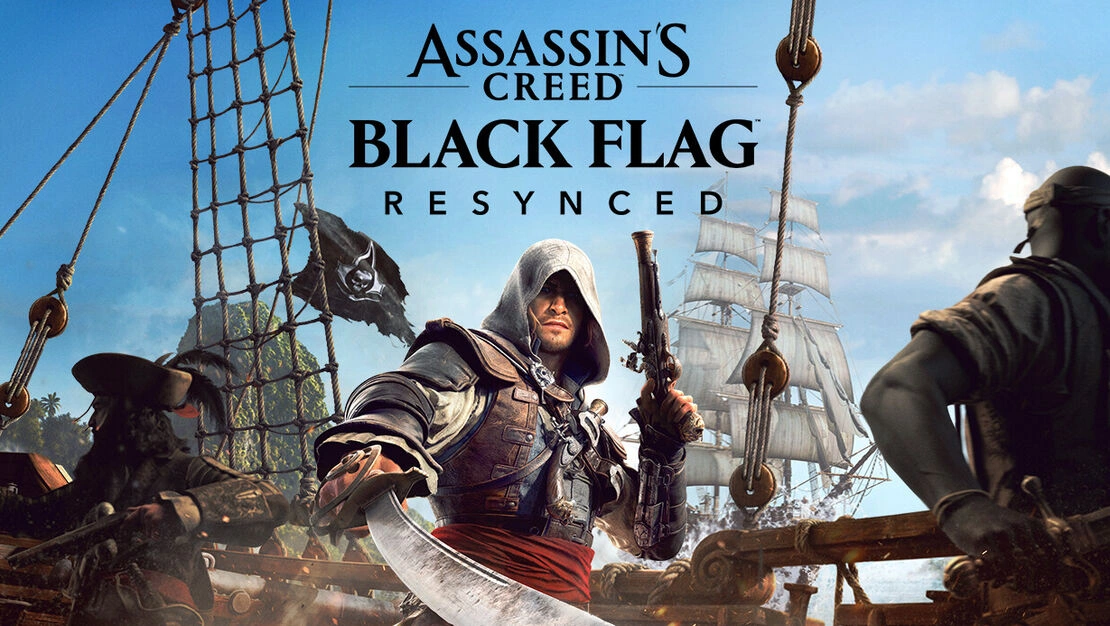

Parrying changes the rhythm of Edward Kenway’s first sword fights. Blue attacks invite a timed response, red attacks demand a dodge, and a broken guard creates an opening for a lethal takedown. That combat loop explains the remake’s approach. Ubisoft has rebuilt Black Flag around clearer player decisions while leaving its pirate fantasy recognizable.
Edward still crosses the 18th-century Caribbean chasing wealth, steals a dead Assassin’s identity, and treats the Observatory as the ultimate payday. The modern-day Abstergo sections are gone, along with multiplayer and Freedom Cry. New quests, Animus Rifts, recruitable officers, and a post-game epilogue take their place.
The story works because Edward’s character arc runs against his mechanical progress. The Jackdaw grows stronger and his equipment improves, yet every success pulls him deeper into choices that cost him friends. The Observatory can locate anyone from a blood sample. Edward initially sees a price tag.
Expanded scenes give Blackbeard and William Kidd extra room. Blackbeard appears before his feared persona fully hardens, while Kidd repeatedly presses against Edward’s self-interest. Three naval officer questlines and an Animus Rift imagining Edward never leaving Caroline extend those ideas by testing other versions of the life he chose.
Steel Learns New Rules
Resynced’s combat sits between classic Assassin’s Creed counters and the RPG-era action model. Repeated strikes drain guard. Perfect parries create instant-kill opportunities. Pistols can be quick-fired, the rope dart pulls enemies into range, and push or sweep attacks help Edward create space when soldiers surround him.
There is no huge skill tree selling tiny percentage increases. Better equipment matters and assassination chains expand, but player timing carries the loop. Learning the parry window changes a fight immediately.
The system occasionally betrays that precision. Chain-assassination prompts can fail to appear, contextual actions sometimes vanish as the button is pressed, and enemies may rotate during a sword swing to connect with Edward. The camera also loses clarity when several soldiers occupy the same space. A combat model built on readable attacks suffers whenever the game stops communicating cleanly.
Stealth receives a smaller change with a large consequence: Edward can crouch anywhere. The visibility meter and revised parkour make infiltration easier to read, rather than tying stealth to bushes and other designated spaces. Free diving applies the same logic to exploration by letting Edward search underwater without a diving bell.
The Jackdaw Has the Better Skill Tree
Naval combat remains the strongest system because upgrades change decisions made at the wheel. Heated Shot gives broadside cannons an alternate fire mode, Shrapnel Barrels improve rear pressure, and enhanced Mortars extend offensive reach. Swivel guns now require manual aiming at exposed weak points, borrowing the better version of that mechanic from Assassin’s Creed Rogue.
Ship officers deepen the loop through active abilities. One increases damage absorption during a barrage. Another gives the Jackdaw a burst of speed for a heavy ram. Their effects alter positioning and timing instead of quietly raising a number behind the scenes.
Boarding has a clearer objective. Killing enemies and completing tasks such as cutting the flag reduce morale until the opposing crew surrenders. Fort assaults use a related structure, sending Edward and his crew through a destroyed gate before the leaders can be finished in the war room.
Weather turns naval difficulty into another system. Large waves affect handling, storms reduce visibility, and lightning or tornadoes can make a dangerous region difficult before another ship fires. Tighter steering gives the player enough control to read a wave and correct course, fixing much of the original Jackdaw’s floaty handling.
Freedom Without the Grind
Regions carry difficulty labels, but those labels warn rather than lock. Hard waters may contain stronger ships, larger enemy groups, and violent weather. Edward can enter immediately. Surviving requires better parries, cleaner stealth, or stronger command of the Jackdaw.
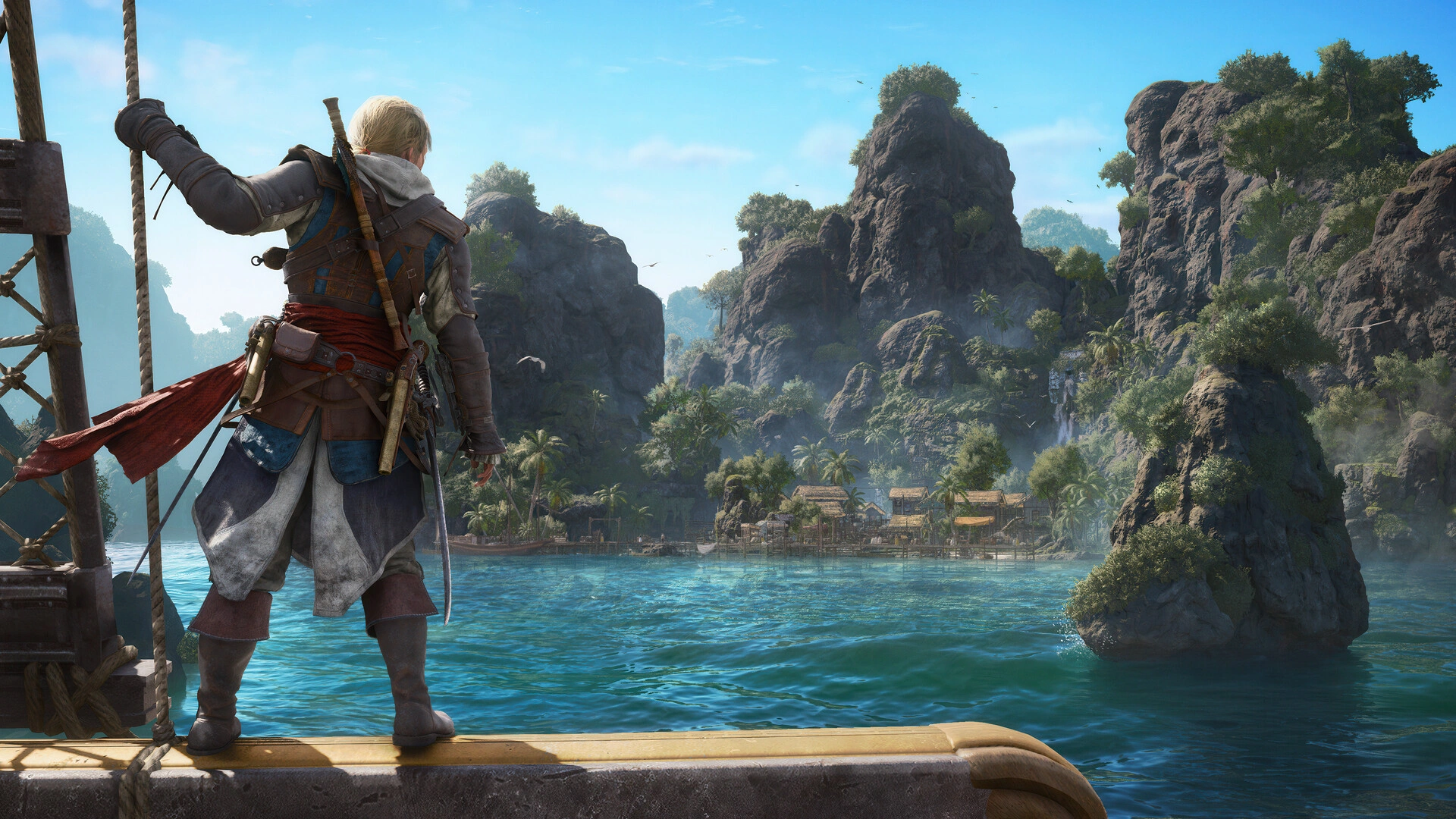
That structure sharply separates Resynced from Origins, Odyssey, and Valhalla. Naval Contracts pay Reales, enemy fleets provide ship materials, and hunting supplies skins for equipment upgrades. Each activity points toward a visible improvement, so optional play supports the main loop instead of delaying it.
The old Ubisoft formula still shows through. Song Sheets repeat the same chase, forts follow familiar structures, and some collectible loops lose energy across the 30-hour campaign. Edward can catch on tiny rocks or leap toward the wrong ledge because parkour remains deeply confident about destinations the player never selected.
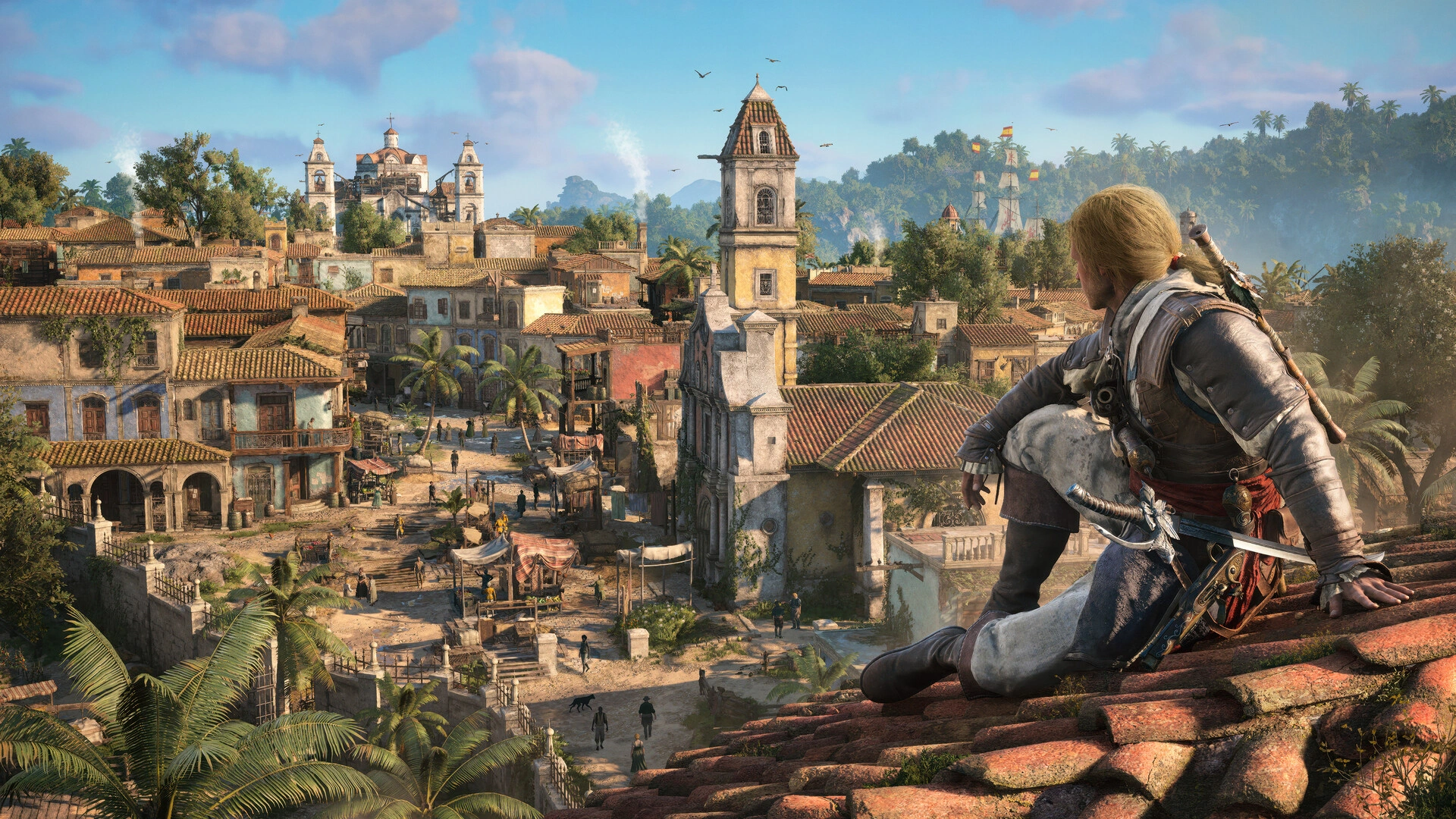
The rebuilt Caribbean helps carry those weaker loops. Ray-traced reflections, tropical islands, and dynamic water look strongest when calm seas become towering waves under a darkened sky. Fidelity mode targets 30fps with fuller effects, while Performance mode reaches 60fps with reduced reflections. Facial detail and cutscene animation can be inconsistent, and the Jackdaw occasionally spawns above or below sea level after boarding.
The Animus Hub is the uglier interruption. The most telling failure arrives when a Project notification occupies the input you were about to use for the map and sends you toward a slow reward screen instead. The game has spent hours teaching you that contracts produce materials and materials improve the Jackdaw. The Hub interrupts to remind you about cosmetic currency.
The Review
Assassin's Creed: Black Flag Resynced
Assassin’s Creed: Black Flag Resynced succeeds because its systems still point in the same direction. Edward grows through better weapons and player skill, the Jackdaw improves through purposeful exploration, and difficulty warns rather than locks the map. The rebuilt parry combat has occasional prompt and camera problems, while Animus Hub interruptions feel stapled onto a cleaner game. At sea, though, tighter handling, officer abilities, and expanded weapon options turn an already excellent loop into a richer one. Ubisoft remembered what progression is supposed to do: make freedom feel earned.
PROS
- Purposeful character and ship progression
- Excellent rebuilt naval combat
- Flexible, skill-driven melee system
- Exploration without level gates
- Strong Edward Kenway story
CONS
- Unreliable combat prompts
- Occasional camera and traversal jank
- Repetitive legacy activities
- Intrusive Animus Hub notifications