





























Your butcher raises the price of meat, a strange old man suggests robbing a cemetery, and the game responds to this crisis with one remarkably permissive economy. That contradiction defines Meat Grinder: Hotdog Simulator. Its premise promises a management game where keeping a tiny restaurant alive could push its owner toward increasingly terrible decisions. Its actual systems rarely apply enough pressure to make those decisions matter.
Panic Panda sets the game in Grimshore, a fog-covered town where the protagonist has purchased a hot dog shop. By day, the work is mundane. Grind meat, grill sausages, slice buns, fry potatoes, add sauces, serve drinks, sweep rubbish.
At night, you can visit graves, dig up bodies, process them for meat, and avoid police patrols while carrying out some rather questionable inventory management. The clash is funny. It also gives the game its clearest design problem. Regular meat remains financially practical, so turning dead people into dinner never becomes the desperate business strategy the setup suggests.
No Rush at the Counter
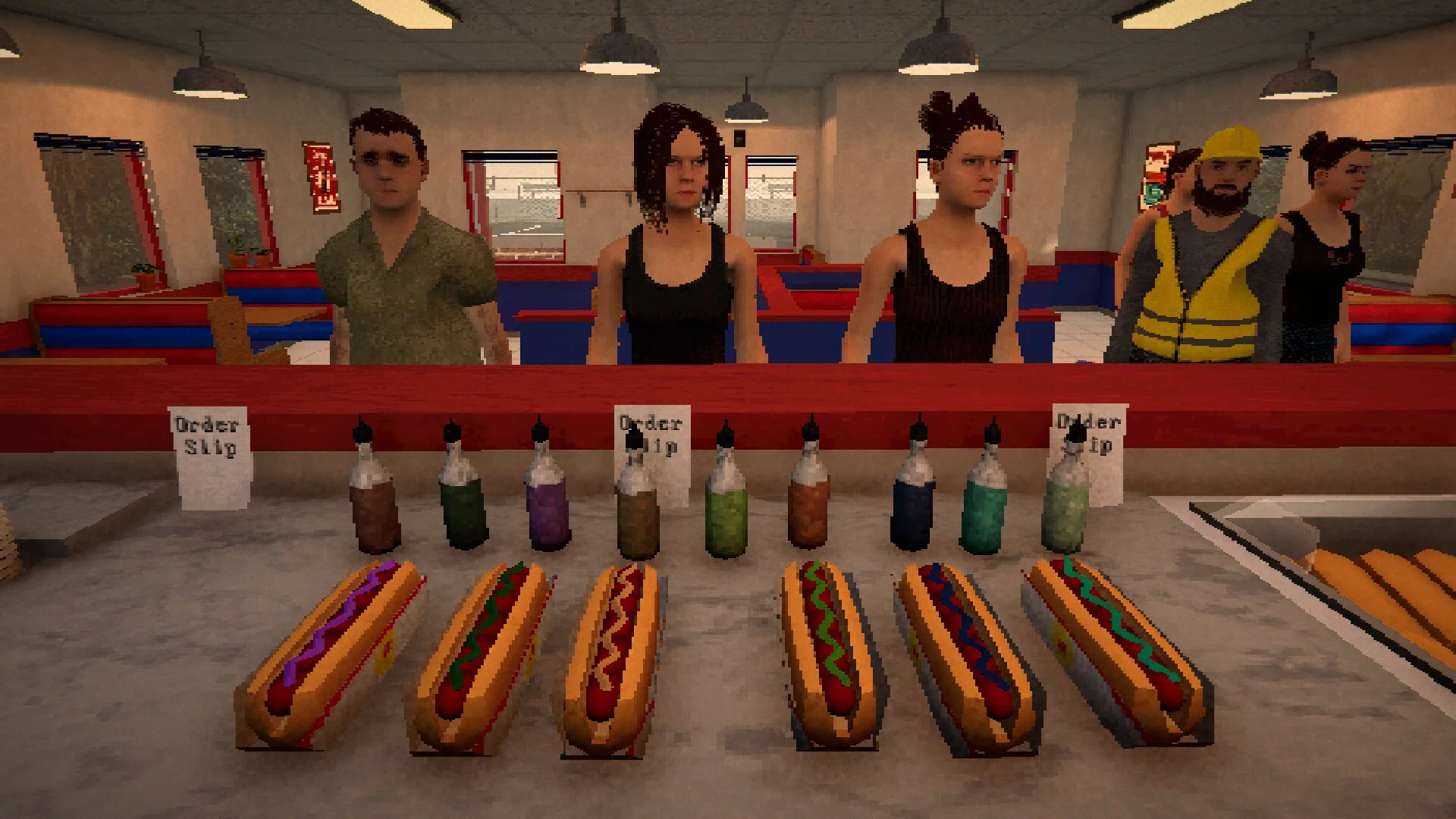
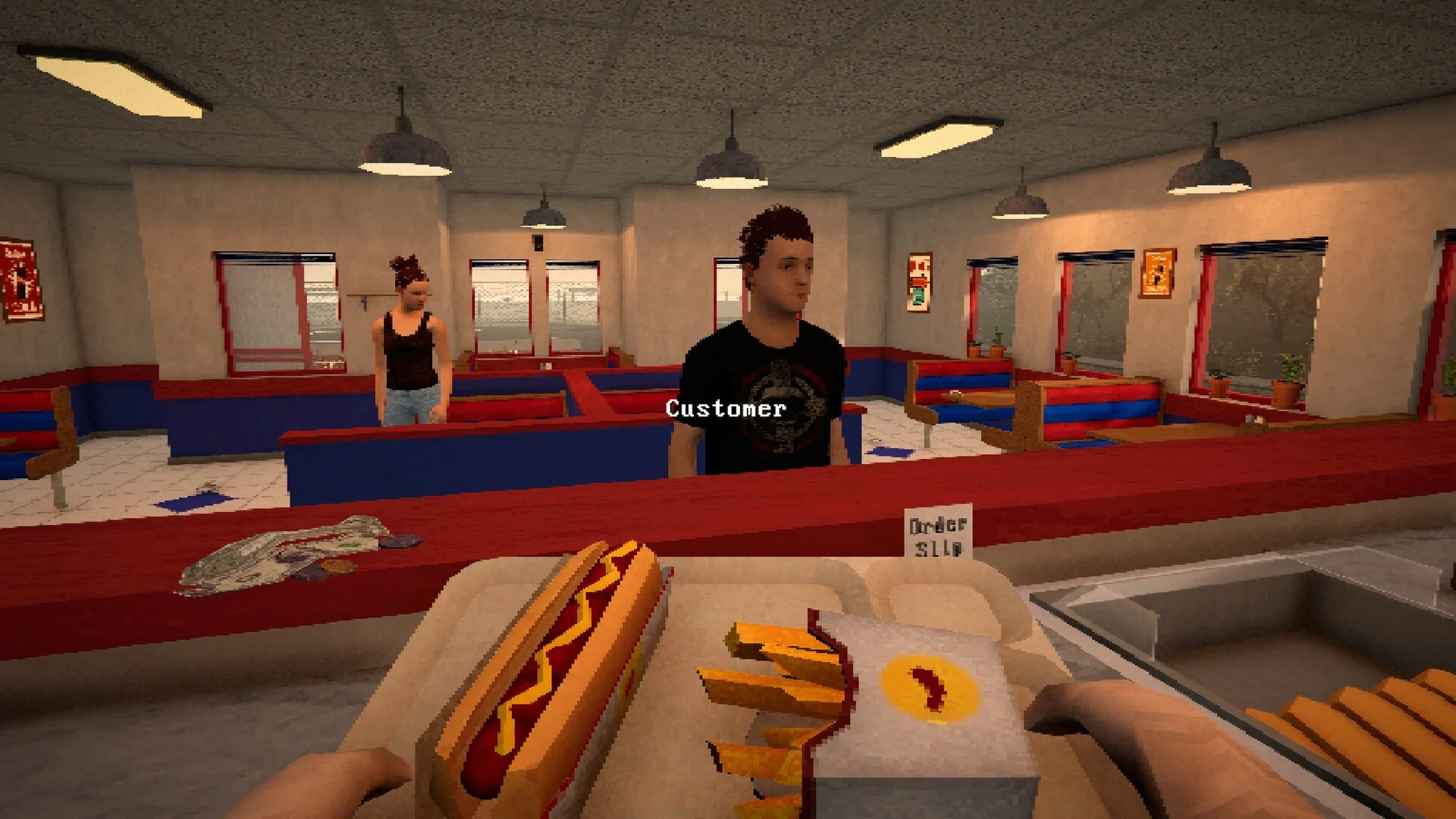
Cooking itself feels pleasant because every order is broken into readable physical steps. You take meat to the grinder, cook the resulting sausage, prepare a bun, add whatever sauce the customer requests, then hand over the finished meal. Later equipment expands the sequence with fries and drinks.
There is satisfaction in handling each stage manually. The straightforward WASD and mouse controls help, since the game rarely asks you to wrestle with its interface while juggling food. Movement can feel clunky around objects, yet preparing an order remains easy to understand from the first shift. What never arrives is operational pressure.
Customers can wait for ages. If rubbish piles up, they complain, then patiently stand around while you clean it. There is no aggressive timer forcing you to maximize orders before closing, and the game rarely creates the sort of queue management that turns repetitive actions into interesting decisions. Even the restriction that lets you carry only one item at a time produces inconvenience rather than strategy.
Management progression runs into the same wall. Buying a deep fryer or drink machine briefly changes what can be served, but the upgrade pool is small. There are few meaningful ways to alter prices, redesign the restaurant, specialize the menu, or build toward a different business model. Once the major equipment is purchased, money largely becomes a number that increases because the game needs something to display on the screen.
For a cozy simulator, that calmness has value. Grinding meat and assembling orders settles into an easy rhythm. The problem is that Meat Grinder surrounds that rhythm with systems that appear ready to escalate and then simply refuse.
Crime Without Consequence
The cemetery should be where the management game and horror game collide. Meat prices are rising, corpses are free, and the player should feel tempted into solving one problem by creating several worse ones. Instead, grave robbing functions closer to optional side content.
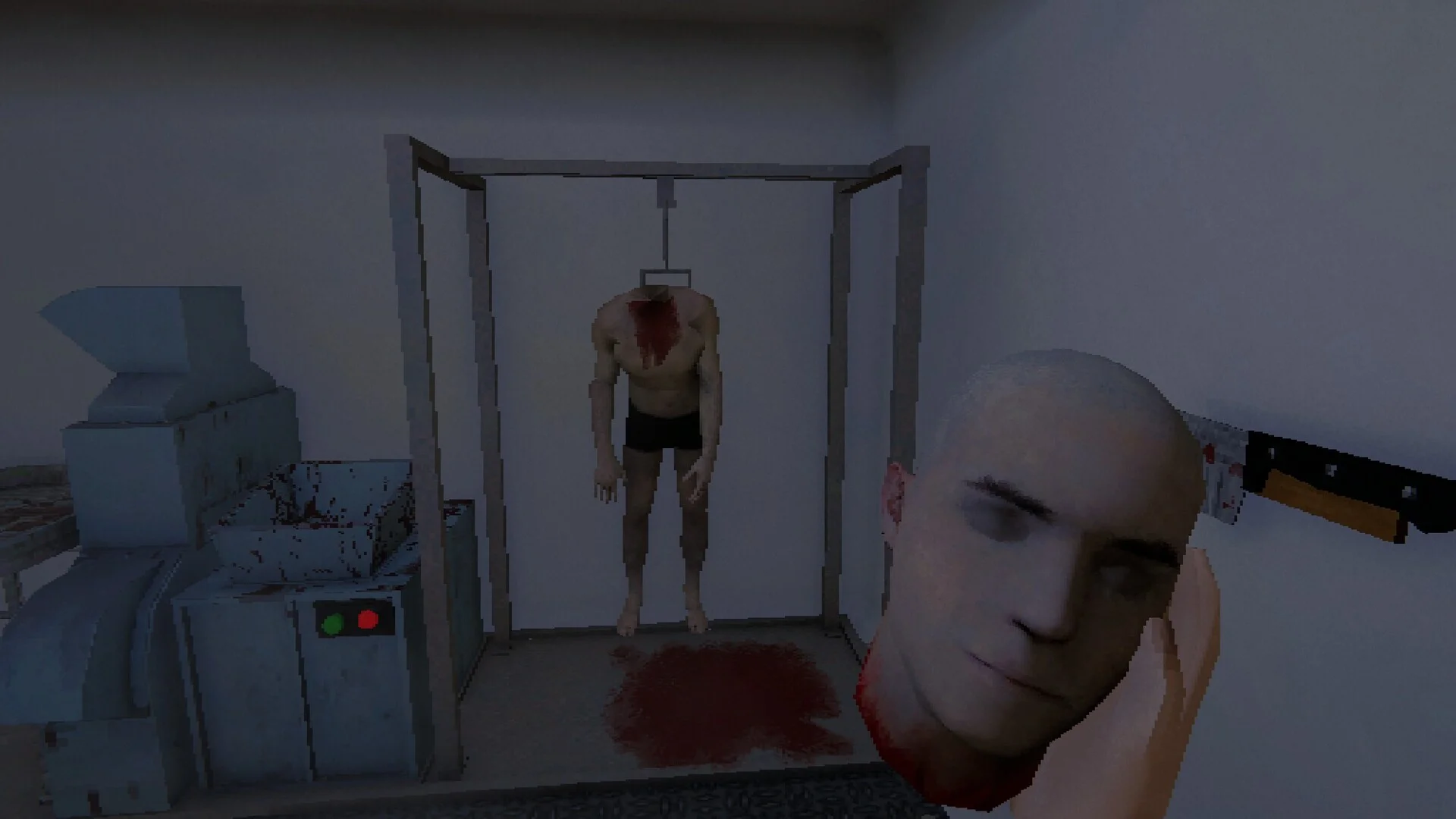
You can visit the cemetery, dig up corpses, chop them down, process the remains, and sneak past police officers. Strange ingredients found around Grimshore can also be turned into special sauces. These ideas sound like ingredients for a management system built around risk, supply, and moral compromise. Yet normal meat remains affordable enough that the player rarely needs the darker supply chain.
That choice weakens everything connected to it. Human meat does not significantly transform customer behavior. Filling the shop with bodies produces little reaction. Waving a chainsaw around does not turn the restaurant into chaos. Even bizarre objects that look destined for some horrifying recipe often cannot be used that way. The repeated corpse model makes the limitation harder to ignore. Digging up the same bald, middle-aged body several times turns what should feel transgressive into routine asset collection.
There was a much stronger game hiding inside these mechanics. Regular meat could have carried margins so thin that illegal sourcing became tempting. Serving human meat could have damaged the protagonist’s perception, changed Grimshore, altered customer behavior, or increased police attention. Then every cheap sausage would represent a system-level tradeoff between profit and stability. Here, the graveyard mostly gives you another ingredient.
Grimshore Runs Out of Secrets
Grimshore initially sells the deception well. Fog blankets abandoned streets, chunky character models evoke early 3D horror, and dirty low-poly textures give the town the look of a forgotten PlayStation game someone found in a locked drawer.
That aesthetic makes walking through town at night considerably more effective than the actual threats waiting there. Police encounters lose tension once their presence becomes readable through audio cues, and the streets that appear capable of hiding side stories mostly connect objective markers. The emptiness begins as atmosphere. After repeated trips, it starts looking like unused space.
The shop suffers from a different audio problem. Its repetitive background music wears thin quickly, while the absence of voiced dialogue leaves every exchange dependent on text. Neither choice breaks the game, but both expose how little variation exists once the cooking loop has settled.
The story eventually turns toward the protagonist’s past. Empty psychiatric medication bottles appear, followed by newspaper clippings suggesting that the mysterious old man may be the protagonist’s dead father, that the protagonist killed and butchered him, disturbed a child’s grave, spent time in psychiatric care, and escaped after a fire.
Those revelations arrive with startling speed. Major pieces of the character’s history are delivered through articles scattered around the environment, then the credits appear soon afterward. The use of schizophrenia and psychosis as a shortcut connecting mental illness to extreme violence is especially crude because the narrative does little dramatic work around it. The diagnosis functions largely as an explanation for unreliable perception and murderous behavior.
The campaign can reach this point in roughly 90 minutes to a few hours, after which the restaurant remains available indefinitely. By then, the fryer is installed, the graves have lost their shock, the economy has been solved, and the fog is still hanging over Grimshore. There are plenty of hot dogs left to make. The systems have already said everything they know.
The Review
Meat Grinder: Hotdog Simulator
Meat Grinder: Hotdog Simulator has a smart systems-level joke that its mechanics never fully commit to. Turning corpses into inventory should force ugly economic choices, yet ordinary meat remains viable, customers barely pressure the player, and criminal behavior carries few meaningful consequences. The cooking loop is pleasantly tactile, while Grimshore’s low-poly gloom gives grave robbing a fitting backdrop. Once the upgrades dry up and the story dumps its revelations through newspaper clippings, there is little left for either half of the game to feed the other.
PROS
- Satisfying hands-on cooking loop
- Strong retro horror atmosphere
- Amusing day-and-night premise
- Simple, approachable controls
- Dark humor fits the systems
CONS
- Human meat lacks mechanical necessity
- Shallow business progression
- Minimal player consequences
- Repetitive corpse assets
- Abrupt, exposition-heavy story