




























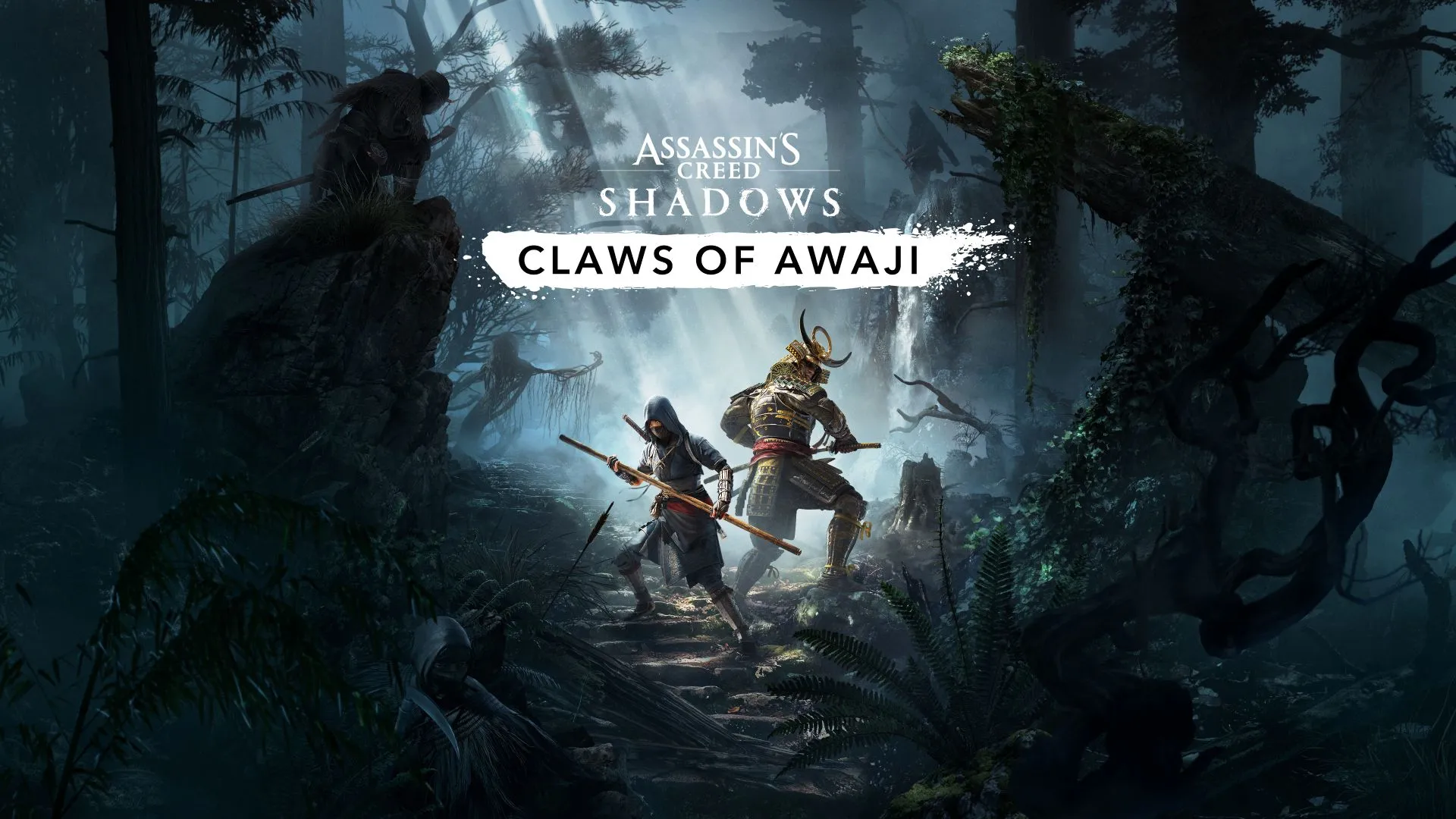

Assassin’s Creed Shadows: Claws of Awaji serves as the first major DLC expansion for the 2024 feudal Japan entry in Ubisoft’s long-running franchise. This expansion directly addresses the abrupt ending that left the main game feeling incomplete, picking up where Naoe and Yasuke’s story was cut short. Set on the island of Awaji, the DLC centers around the rescue of Naoe’s mother Tsuyu, who has been held captive by Templar forces for over a decade.
The expansion introduces players to a new, more focused experience compared to the sprawling base game, taking place entirely on the mountainous island of Awaji. Here, players must dismantle the Sanzoku Ippa organization and their leader Yukari while uncovering the final piece of the regalia that drives the overarching narrative. The DLC promises a more streamlined adventure that trims unnecessary padding while introducing new gameplay mechanics, particularly the bo staff weapon system for Naoe.
This expansion serves less as optional content and more as the true ending to Shadows’ narrative, addressing lingering plot threads involving Naoe’s family, Yasuke’s conflict with the Templars, and the fate of Japan itself in this shadow war.
Completing an Interrupted Arc
The narrative structure of Claws of Awaji reveals both its greatest strength and most glaring weakness. The rescue mission premise centered on Naoe’s mother Tsuyu provides genuine emotional stakes, while Yukari emerges as a compelling antagonist with clear Templar connections that tie directly to the base game’s events. The resolution of the regalia MacGuffin storyline finally gives players the closure that Shadows withheld, though this creates an uncomfortable precedent of withholding story conclusions behind paywalls.
The three lieutenant system—featuring a spymaster, samurai, and shinobi as primary antagonists—creates a satisfying structure that mirrors classic Assassin’s Creed target elimination mechanics. Each lieutenant represents a different pillar of stealth gameplay, creating encounters that feel thematically appropriate while offering varied gameplay approaches. This design choice demonstrates how mechanical variety can serve narrative purpose.
Naoe’s emotional journey reconnecting with her long-lost mother forms the expansion’s thematic core, examining the strained dynamics that develop after years of separation and assumed death. The writing explores how trauma and duty can create barriers between family members, though the execution sometimes feels restrained by the dual-protagonist structure that requires equal weight for both Naoe and Yasuke’s perspectives.
The narrative pacing shows marked improvement over the base game’s middle act, maintaining momentum through its 10-13 hour runtime. The mission structure allows meaningful player choice in target elimination order, creating a sense of agency that enhances the personal nature of Naoe’s quest. However, the expansion’s role as both epilogue and essential story ending creates an uncomfortable tension between optional content and narrative necessity.
Combat Evolution and Mechanical Refinement
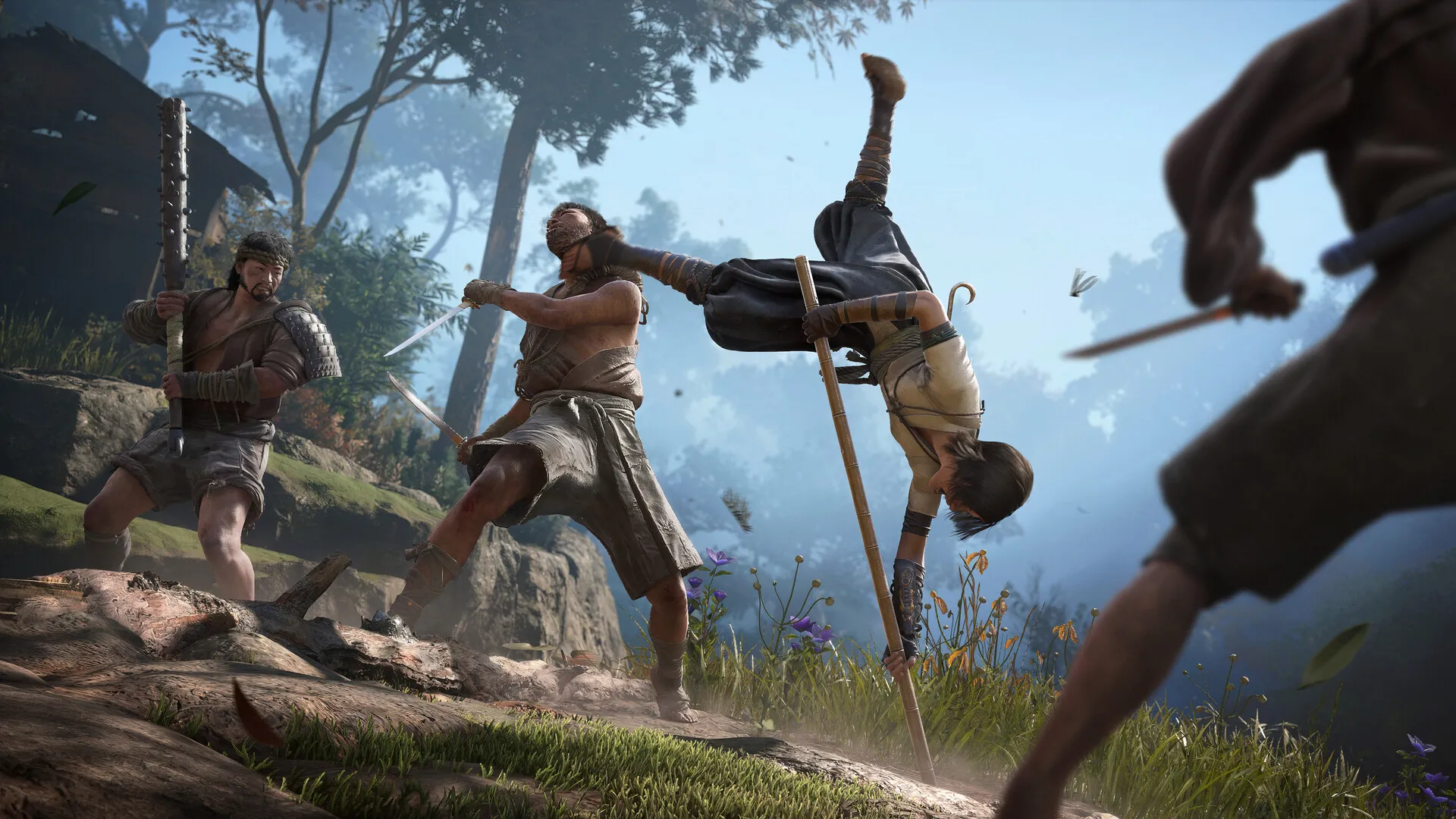
The new bo staff weapon system represents Claws of Awaji’s most significant mechanical addition, introducing a three-stance combat system that adds tactical depth without overwhelming complexity. The high stance focuses on raw damage through precise thrusts, neutral stance creates distance through knockback effects, and low stance emphasizes control by tripping opponents. Each stance serves distinct tactical purposes, encouraging players to adapt their approach based on enemy types and combat situations.
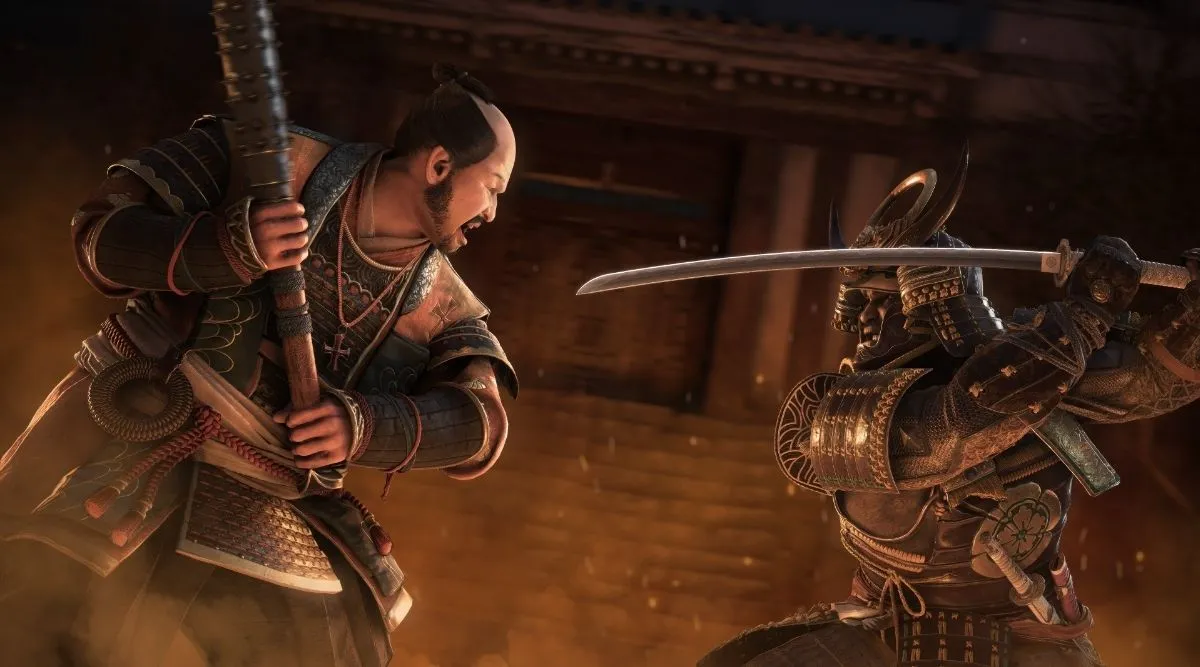
The skill tree progression accompanying the bo staff feels substantial, offering passive improvements and new combat techniques that expand the weapon’s versatility. The integration with existing combat systems is seamless, allowing players to switch between weapons mid-combat without disrupting the flow. This represents thoughtful design that respects player investment in existing combat styles while providing meaningful new options.
Enhanced enemy AI creates the expansion’s most innovative gameplay element through dynamic response systems tied to surviving lieutenants. The spymaster’s surveillance network places hidden agents throughout civilian areas, forcing players to question every innocent bystander. The samurai’s roadblocks and patrol systems make mounted travel hazardous, while the shinobi’s ambush tactics turn familiar hiding spots into potential traps. These systems create genuine consequences for player actions, making target elimination feel strategically meaningful rather than simply checking boxes.
The verticality improvements on Awaji’s mountainous terrain showcase how environmental design can enhance core mechanics. The new trap systems and environmental hazards create additional layers of challenge without feeling punitive. Players must now consider not only enemy placement and patrol patterns, but also environmental dangers that can be both obstacle and opportunity.
Mission design shows increased variety through large-scale battle sequences, undercover infiltration scenarios, and environmental puzzle elements integrated into boss encounters. This diversity prevents the content from feeling repetitive while maintaining mechanical consistency with the base game’s systems.
Crafting a Focused World
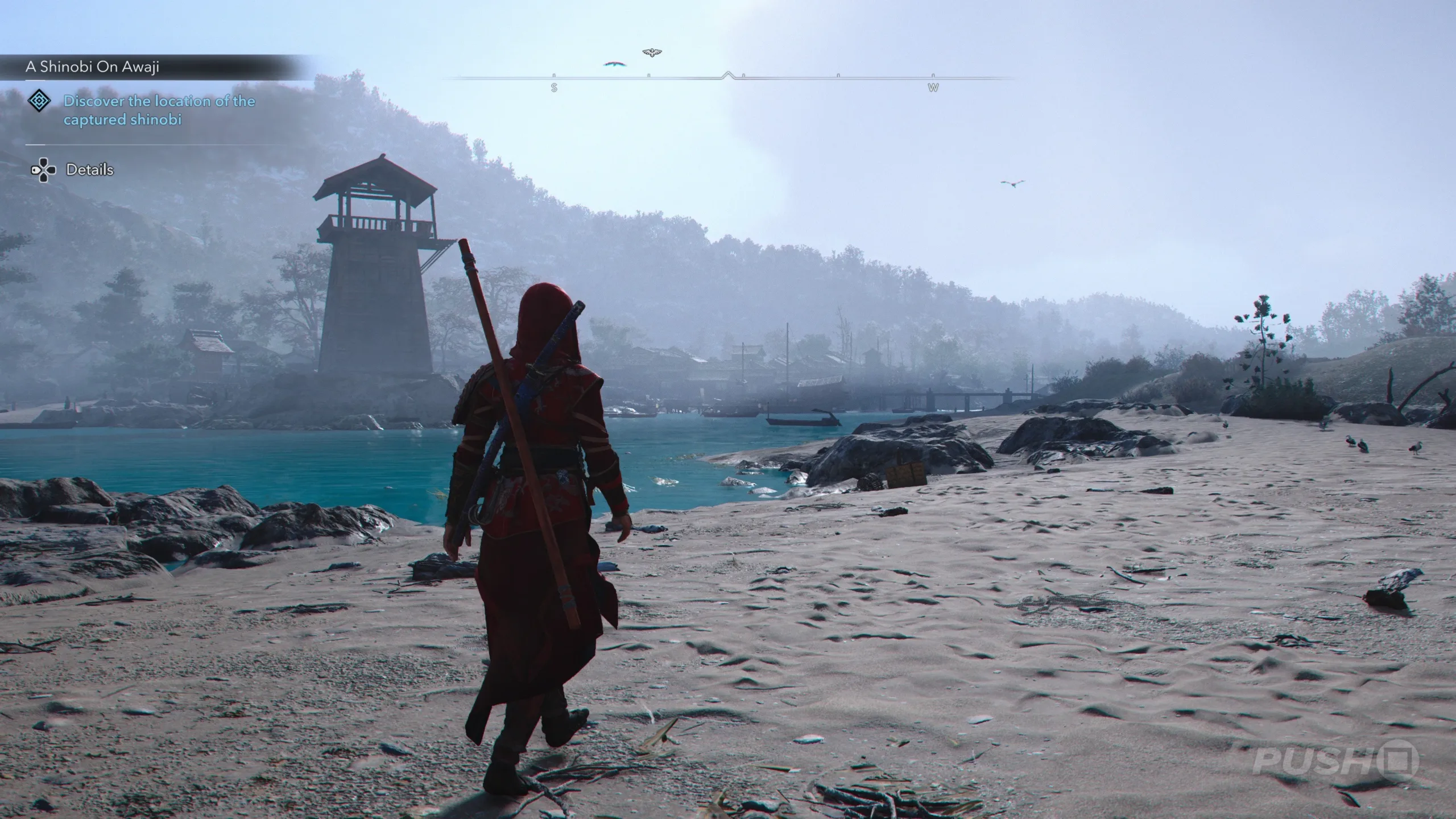
The island of Awaji demonstrates how spatial constraints can enhance rather than limit open-world design. The four distinct territories—Sumoto, Eshima Coast, Fukura Bay, and Yura—each maintain unique visual identities while contributing to the expansion’s oppressive atmosphere. The mountainous terrain creates natural vertical challenges that complement the enhanced traversal mechanics, making exploration feel purposeful rather than obligatory.
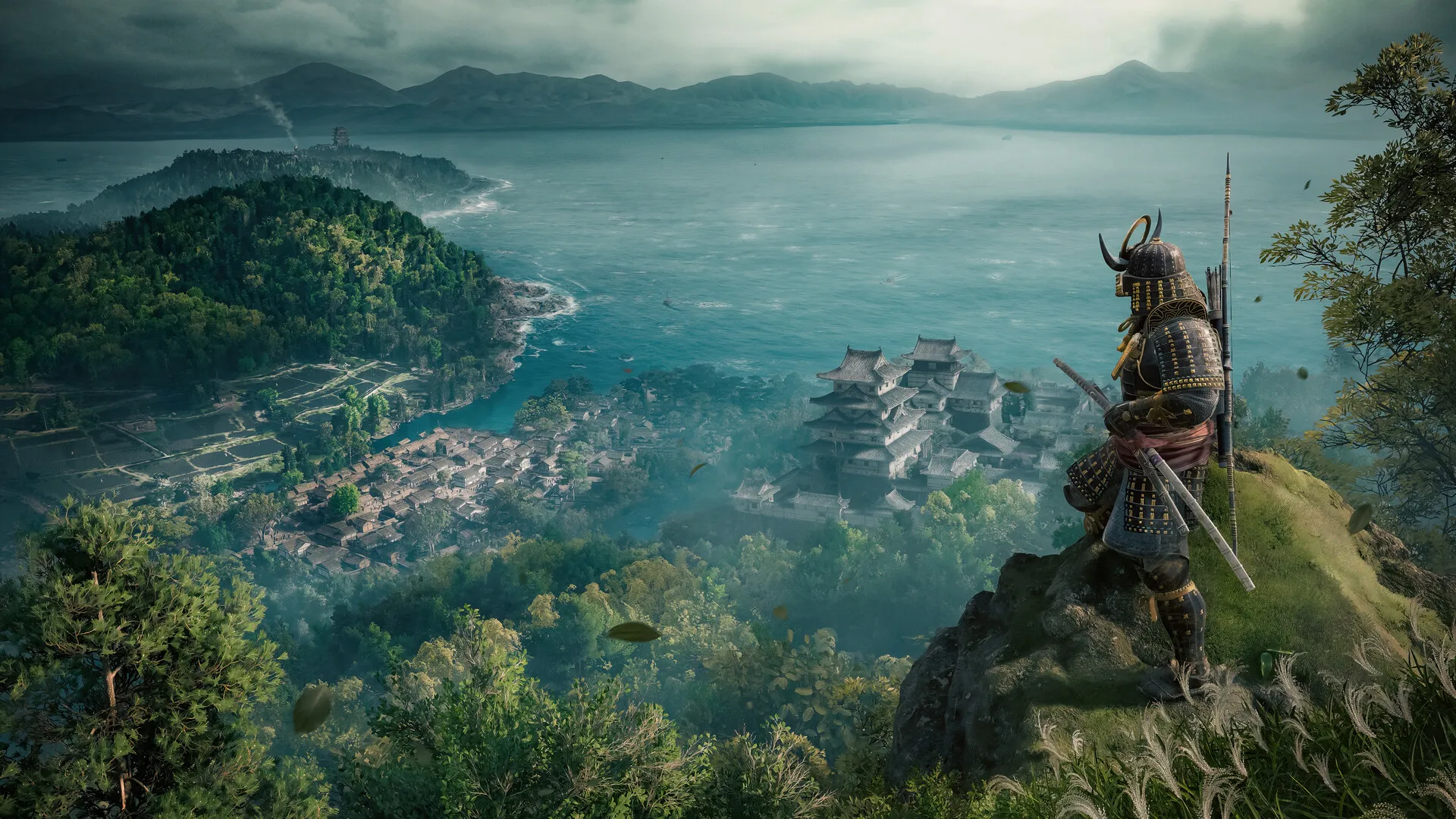
The visual atmosphere effectively conveys the island’s state under military occupation through environmental storytelling. Military checkpoints interrupt travel routes, spartan castle architecture contrasts with the base game’s more ornate structures, and civilian areas show signs of systematic oppression. These design choices reinforce the narrative themes while providing tactical considerations for player movement and mission planning.
The reduced scale compared to the base game’s regions initially appears limiting, but the increased density of meaningful content creates a more engaging exploration experience. Hidden areas and secret locations feel deliberately placed rather than scattered to fill empty space. The integration of trap systems into world design adds risk-reward calculations to exploration, making discovery feel earned rather than inevitable.
Technical performance shows noticeable improvements since the base game’s launch, with enhanced visual fidelity and more stable frame rates. Loading times for fast travel remain reasonable, though the limited number of fast travel points can make traversal feel tedious during certain mission sequences. The bug fixes and quality-of-life improvements demonstrate ongoing support, though they also highlight issues that should have been addressed at launch.
Boss Design and Combat Challenges
The three lieutenant encounters showcase varying degrees of design success, with each representing different approaches to boss fight philosophy. The spymaster encounter emphasizes investigation and social stealth mechanics, requiring players to gather intelligence and maintain cover while operating in hostile territory. While conceptually interesting, the execution feels underdeveloped compared to similar stealth-focused encounters in other titles.
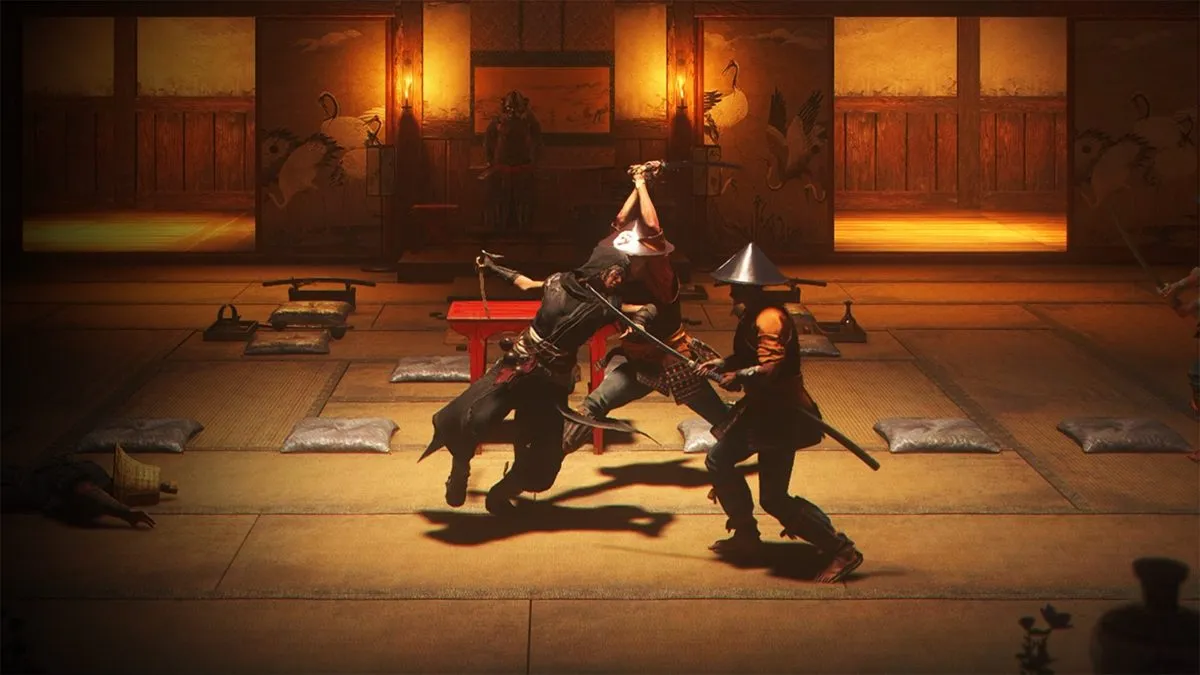
The samurai duel represents traditional combat design, testing players’ mastery of timing, positioning, and combo management. These encounters can feel repetitive for players who completed similar fights in the base game, though the increased difficulty scaling provides genuine challenge for endgame characters. The heavy reliance on dodge mechanics and extended health bars can create frustrating encounters that prioritize endurance over skill.
The shinobi swamp battle stands out as the expansion’s most innovative encounter design. The use of environmental audio cues, decoy placement, and trap mechanics creates a genuine cat-and-mouse dynamic that feels fresh within the Assassin’s Creed formula. The sound-based tracking system requires players to use audio information actively, creating tension through uncertainty rather than overwhelming enemy numbers.
The final confrontation with Yukari provides narrative closure while showcasing multiple approach options. The multi-phase structure allows different player builds and preferences to find effective strategies, though the encounter can feel anticlimactic after the more innovative lieutenant battles. The integration of story beats within the combat encounter helps maintain narrative momentum during extended fights.
Combat difficulty scaling for endgame players creates both opportunities and problems. While challenging encounters provide meaningful tests of player skill, some fights lean too heavily into damage sponge design rather than mechanical complexity. The balance between accessibility and challenge varies significantly between encounters, suggesting inconsistent design priorities.
Value and Longevity Assessment
The content quantity in Claws of Awaji presents a complex value proposition. The 28 main story missions provide substantial narrative content, while side quests and optional activities offer additional exploration opportunities. The 10-13 hour completion time for main content represents reasonable length for a major expansion, though the essential nature of the story content complicates traditional DLC value calculations.
The expansion requires minimal grinding or level progression for players who completed the base game, allowing immediate access to new content without artificial barriers. This respect for player time enhances the focused experience, though it also means the content offers limited long-term progression goals. New legendary gear and weapons provide collection incentives without requiring extensive farming.
The expansion’s classification as essential story content rather than optional adventures creates ethical concerns about withholding narrative conclusions behind additional purchases. While the content quality justifies the price point from a pure hours-per-dollar perspective, the story necessity makes the expansion feel less like bonus content and more like ransom for proper closure.
Replay value remains limited due to the linear story structure and single-use revelation mechanics. Players who enjoyed the base game will likely find satisfaction in returning to this world, but those seeking extensive post-completion content may feel disappointed. The expansion serves its purpose as narrative closure while offering limited reasons for repeated playthroughs.
A Qualified Recommendation
Claws of Awaji succeeds as mechanical refinement and narrative closure while failing as standalone expansion content. The enhanced enemy AI systems and bo staff mechanics demonstrate how DLC can meaningfully expand gameplay systems rather than simply adding more of the same content. The focused world design shows the benefits of constraint in open-world development, creating a more cohesive and purposeful experience than many larger environments.
The expansion works best for players who completed and enjoyed the base game’s story, providing necessary emotional closure and mechanical evolution. The improved boss encounter variety and enhanced traversal challenges offer genuine gameplay improvements that enhance the core Shadows experience. However, newcomers to the series or players who found the base game lacking will find little here to change their perspective.
The troubling precedent of withholding story conclusions behind DLC purchases overshadows many of the expansion’s mechanical and design successes. While Claws of Awaji delivers quality content that justifies its price point, the essential nature of its narrative contributions raises questions about complete game experiences and consumer expectations.
For dedicated fans of Assassin’s Creed Shadows, this expansion provides the closure and mechanical refinement that transforms a good game into a complete experience. For others, it represents a well-crafted but ultimately unnecessary addition to an already lengthy adventure.
The Review
Assassin's Creed Shadows: Claws of Awaji
Claws of Awaji delivers solid mechanical improvements and essential narrative closure, but its role as withheld story content undermines the experience. The bo staff system and dynamic enemy AI represent genuine gameplay evolution, while the focused island design creates a more cohesive adventure than the sprawling base game. However, hiding the story's true ending behind additional payment feels exploitative, despite the quality execution. This expansion refines Shadows into its intended form while raising uncomfortable questions about complete gaming experiences.
PROS
- Innovative bo staff combat system with three distinct stances
- Dynamic enemy AI that responds to player actions meaningfully
- Excellent shinobi boss encounter with unique stealth mechanics
- Focused world design that prioritizes quality over quantity
- Focused world design that prioritizes quality over quantity
- Satisfying narrative closure for Naoe's character arc
CONS
- Essential story content locked behind DLC paywall
- Some boss encounters rely on tedious health sponge design
- Limited fast travel points make traversal occasionally frustrating
- Yasuke feels secondary and underutilized in the narrative
- Mother-daughter relationship lacks emotional depth
- Replay value is minimal due to linear story structure