






















Las Vegas is condemned before Ethan sets foot in it. The opening voiceover separates the casino fantasy sold to tourists from the districts where losing means eviction, debt, or blood, then a tracking shot carries us through a strip club toward murder. Drew Kirsch announces his feature debut through movement, color, and threat. The film’s ethics arrive through décor.
That confidence matters because the story itself is familiar. Ethan, played by Joe Cole, escaped a youth of petty crime, built a real-estate career in Los Angeles, and became engaged to a woman whose family offers the permanence he never had. News of his brother Darren’s apparent overdose returns him to the city he abandoned. His mother is declining, his old friends have hardened, and the social order he fled still recognizes him.
Brett Pawlak’s cinematography repeatedly places Ethan between dirty amber practicals and colder pools of colored light. He is visually divided before the screenplay manages the same work. The framing suggests two identities competing inside one body: the respectable salesman and the boy who learned that violence settles arguments faster than language. Noir has always distrusted reinvention. Here, the lighting distrusts it first.
Violence as Investigation
The mystery of Darren’s death sends Ethan through dealers, hustlers, and mid-level bosses over a compressed 48 hours. Each encounter promises another piece of the city’s criminal geometry. Most deliver the same scene: intimidation, evasive dialogue, fists, departure.
Kirsch stages those fights with persuasive weight. Bodies strike walls rather than floating through choreography, and the camera stays close enough for each impact to disturb the frame. The blocking gives Ethan little room, forcing him into corners and narrow interiors where aggression becomes his only exit. This is effective audience manipulation. Confinement raises the pulse before the first punch lands.
Repetition soon drains the method. A confrontation should alter the moral position of a revenge story, revealing what the hero is prepared to sacrifice or which line has quietly vanished. Ethan’s fights mostly relocate him. The investigation accumulates bruises rather than knowledge.
Also Read





The sharper conflict arrives when Luis answers Ethan’s criticism with, “Well, you left.” Ismael Cruz Córdova delivers the line without ornament, and Kirsch lets the resentment sit between them. Ethan interprets escape as survival; Luis reads it as betrayal. That disagreement could have given the film its moral chiaroscuro. Instead, Luis is folded into the revenge crew, and the accusation loses its shadow.
People at the Edge of the Light
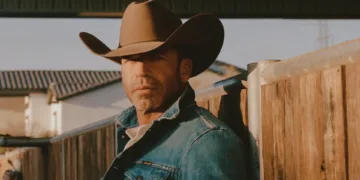
Cole plays Ethan with a guarded physical economy. His shoulders tighten when old loyalties are mentioned, then loosen once violence gives him a familiar task. During his confrontations with the crew, the polished Los Angeles persona does not collapse dramatically. It leaks. Cole makes that leakage credible, especially when Ethan’s anger arrives half a second before his judgment.
The screenplay is less helpful. Its dialogue keeps returning to the gravitational pull of the streets, phrasing Ethan’s history as inherited genre knowledge rather than lived memory. We hear that Darren controlled him, yet the few flashbacks featuring Paul Wesley offer only fragments of that bond. Wesley supplies the right predatory charm, a brother who can make coercion resemble affection, but the film gives the relationship too little space to poison the present.
Rita Ora fares best as Megan. Her entrance during the strip-club killing places her inside the film’s visual logic before the plot defines her. She holds the frame through stillness while the camera and score do the shouting. Marshawn Lynch brings ease to Prince, though the comic beats assigned to him often release pressure at the wrong instant. Noir can tolerate a joke. It merely prefers the joke to know where the body is buried.
The ensemble implies years of shared damage, yet specific memories are scarce. Faces are lit as though secrets live behind them. The writing rarely opens the door.
Borrowed Shadows
Kirsch’s music-video training is visible in the pulsating synth score, graphic credits, rhythmic cutting, and saturated club interiors. New Mexico doubles convincingly for the neglected edges of Las Vegas, all dust, low ceilings, and exhausted commercial light. The film’s strongest compositions treat the city as a machine that converts need into obedience.
Its visual lineage is equally plain. The narrated club passage recalls Goodfellas. The colored nocturnal interiors draw from recent neo-noir. Slow-motion menace, electronic music, and ornamental brutality carry traces of crime films that already turned alienation into a luxury surface. Kirsch handles these references with skill, yet rarely bends them toward Ethan’s particular guilt.
The title promises illumination contaminated by flesh. The film sometimes finds it, especially when neon reflections smear across faces during scenes of threat, giving skin the appearance of evidence. Elsewhere, the palette retreats into conventional grime. The images remain attractive, though attractiveness becomes a peculiar liability when the story concerns people trapped by poverty and coercion. Misery photographs well. Cinema has known this for some time.
Kirsch controls rhythm, lens choice, and atmosphere with the assurance of a director who understands how quickly an image can seize attention. Tim Cairo and Jake Gibson’s screenplay cannot keep pace. It offers a city built from predation, a hero divided by escape, and friendships corroded by abandonment, then reduces those tensions to another doorway, another threat, another fight. The camera keeps searching the darkness for moral weight. Too often, it finds production design.
He Bled Neon premiered at the South by Southwest Film & TV Festival on March 16, 2026, with distribution handled by XYZ Films. The action thriller follows a man who travels to Las Vegas for his estranged brother’s funeral, plunging into a gritty criminal underworld to uncover the truth behind a mysterious death.
Where to Watch He Bled Neon (2026) Online
Full Credits
Title: He Bled Neon
Distributor: XYZ Films
Release date: March 16, 2026
Running time: 102 minutes
Director: Drew Kirsch
Writers: Tim Cairo, Jake Gibson
Producers and Executive Producers: Nate Bolotin, Lucan Toh
Cast: Joe Cole, Rita Ora, Marshawn Lynch, Ismael Cruz Córdova, Paul Wesley, Josh Holloway
Director of Photography (Cinematographer): Brett Pawlak
Editors: Lee Haugen, Ryan Morrison, Jered Zalman
Composer: Zhu, Joseph Trapanese
The Review
He Bled Neon
He Bled Neon photographs Las Vegas as a moral trap, yet its people rarely feel trapped by anything deeper than the screenplay’s next confrontation. Brett Pawlak’s saturated clubs, dusty streets, and bruised interiors give Ethan’s return a tangible menace, while Drew Kirsch stages the fights with blunt physical force. Joe Cole and Rita Ora supply presence where character detail is missing. The film understands noir’s lighting, rhythm, and fatalism. It has less command of noir’s damaged souls.
PROS
- Striking neon cinematography
- Kinetic fight staging
- Pulsating synth score
- Strong presence from Rita Ora
- Confident visual direction
CONS
- Repetitive confrontations
- Thin character histories
- Derivative genre imagery
- Uneven comic relief
- Underdeveloped central mystery