
























![Kingdom Hearts Collection [I-III] Review](https://gazettely.com/wp-content/uploads/2026/10/Kingdom-Hearts-Collection-I-III-1-360x180.webp "Kingdom Hearts Collection [I-III] Review: KHII Holds Steady as Newer Entries Fluctuate 37")



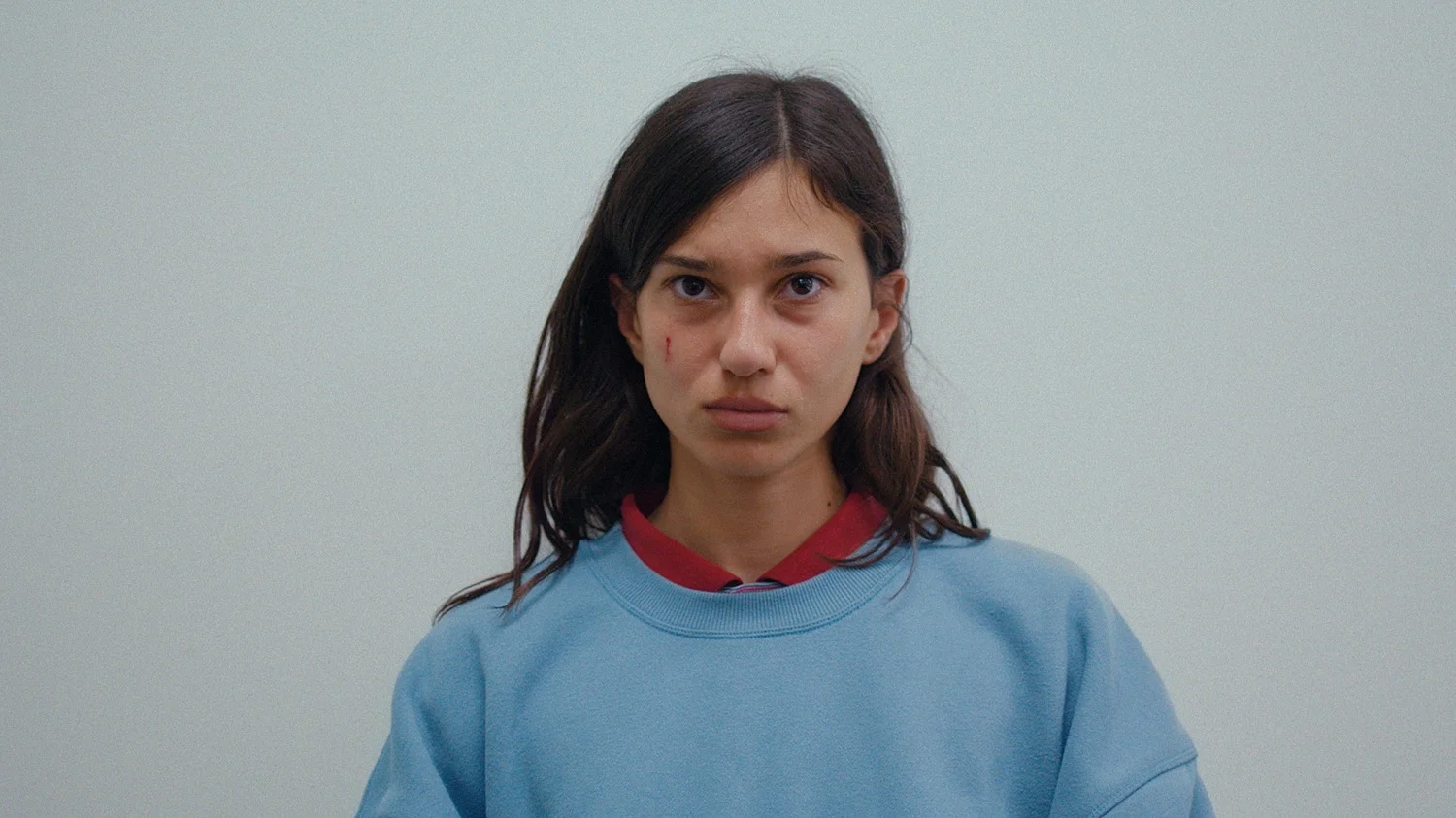

The funniest thing French Girls understands about modelling is how little modelling seems to happen. Mia enters this supposedly rarefied Sydney world and discovers women sitting around between shoots, talking nonsense, waiting for makeup, waiting for clothes, waiting for somebody to decide they are ready to be looked at. One model calls the job “90% waiting and 10% work.” Writer-director Hyun Lee treats that ratio almost as a formal instruction.
Reportedly made for roughly $28,000, Lee’s debut strips fashion of the usual cinematic seduction. Warehouses, alleyways, cheap rooms and Sydney streets surround Mia rather than champagne, backstage hysteria or luxury hotels. Lee worked as a fashion photographer, and her familiarity appears in tiny details: the tedious preparation before a shoot, the strangely intimate business of strangers adjusting someone’s face, and a model casually removing an elaborate editorial makeup look after the artist has finished painstakingly applying it. Call it glamour depletion. The closer Lee gets to fashion, the less glamorous it becomes.
Mia Kidis plays Mia, a construction worker approached on the street by an agent who thinks she has the agency’s preferred “unique and different look.” Her recruitment barely registers as destiny. She listens, accepts and gradually slips into another profession. That lack of ceremony is refreshing. It also creates the film’s central problem.
Watched for a Living
Lee is interested in perception, especially the peculiar condition of earning money by allowing other people to evaluate your body. Mia attends castings, poses for photographers and eventually walks in a white garment that she is asked to open, exposing herself on the runway. A conventional screenplay would turn the request into an obvious crisis. Mia agrees with little fuss.
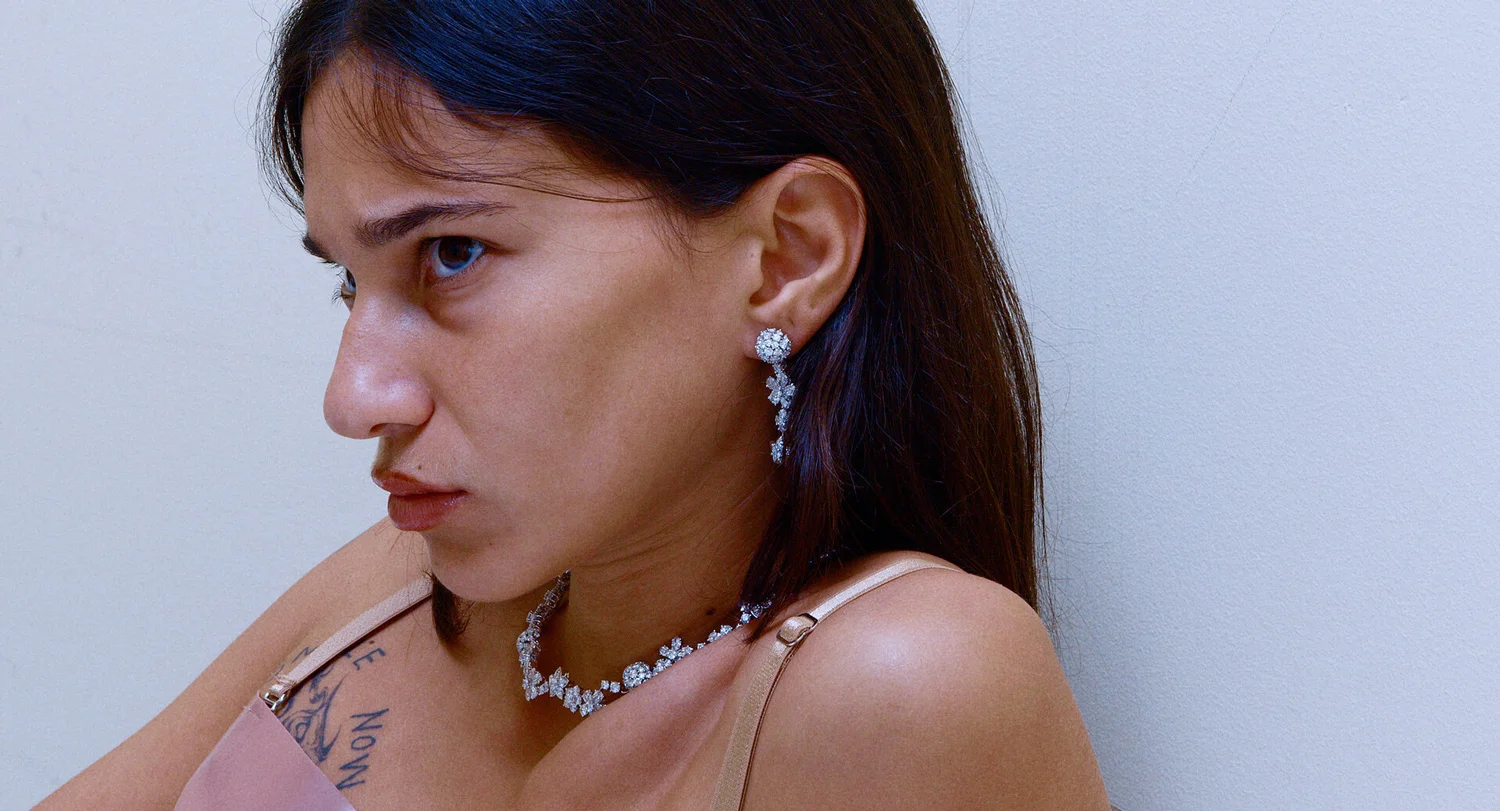
That choice tells us something valuable. French Girls refuses to pretend every uncomfortable feature of modelling produces instant trauma. Mia can consent to being photographed, displayed and judged without the film inserting alarm bells into the soundtrack.
The difficulty comes later, when Mia’s relationship with being seen begins carrying psychological consequences the earlier scenes have barely prepared. The screenplay repeatedly returns to the gaze, yet professional scrutiny and destructive objectification remain frustratingly close together. If Mia moves from enjoying or tolerating this attention to feeling consumed by it, Lee rarely gives us the intermediate steps.
Kidis helps preserve some ambiguity. Her performance is quiet enough that a glance or delayed response can suggest discomfort without announcing it. During the long stretches around shoots, she blends naturally into the deadpan social rhythm of the models. When the story asks for stronger emotional ruptures, that same restraint leaves Mia difficult to locate. Perhaps the distance is intentional. I kept testing that possibility against the film. It works until the plot begins demanding that distance explain an explosion.
The French Girl Problem
A female voiceover keeps circling ideas about beauty, authenticity and the mythical French woman who apparently possesses je ne sais quoi by waking up and effortlessly satisfying an international aesthetic standard. “Maybe the French invented fashion, but they also invented the guillotine,” the narration observes. It is funny. It is also considerably sharper than several of the ideas surrounding it.
The film returns repeatedly to fashion’s instruction to “be yourself,” treating the phrase as a contradiction. There is something useful there: an industry can demand individuality while selecting, styling, photographing and selling specific versions of individuality. Yet French Girls rarely examines how that process actually operates. “Be yourself” remains floating around as a slogan waiting for somebody to dissect it.
The same problem affects Mia’s growing dissatisfaction. She enters an industry populated by people who are frequently pleasant to her, finds work without much visible coercion and experiences only scattered moments of explicit humiliation or exploitation. Then the story begins moving her toward collapse. The film wants the accumulated gaze to explain the change. Accumulation, however, needs increments.
When the Gun Appears
The weakest material arrives once Mia’s boyfriend, Bella and a gun begin pulling the film toward a different genre. Her boyfriend has been sketched so lightly that his importance starts to feel suspiciously logistical. He exists partly because the screenplay will eventually require access to a weapon. Conversations surrounding the gun have the same mechanical quality: people exchange information because a later scene has already placed an order for it.
When Mia finally fires the weapon, the moment should externalize everything she has swallowed. Instead, it exposes how much connective tissue is missing from her arc. The action is enormous. The emotional mathematics underneath it are strangely unfinished.
Lee is far more persuasive when the camera wanders through Sydney. Redfern, Surry Hills, Darlinghurst, King’s Cross and the surrounding industrial spaces feel inhabited rather than presented for postcard recognition. Mia’s living conditions provide an especially useful counterpoint to her new occupation: she can participate in a business built around expensive images while returning to mattresses on floors and cramped domestic spaces. Fashion sells fantasy exceptionally well. Apparently it does not include rent.
The microbudget occasionally reveals itself through uneven performances and scenes whose deadpan rhythm slips into flat delivery. Yet Lee repeatedly finds precise compositions around faces, clothes, makeup and neglected corners of the city. A filmmaker trying to understand surfaces has made a film whose strongest ideas live on its surfaces. That sounds like an insult. I am no longer sure it is one.
French Girls premiered in August 2026, showcasing an intimate look into Sydney’s independent film scene. Written and directed by Hyun Lee, the low-fi drama follows a young construction worker who is suddenly scouted by a modeling agent, leading her to navigate the peculiar and unfamiliar realities of the fashion industry with quiet detachment.
Full Credits
Title: French Girls
Distributor: Independent / Festival Release
Release date: August 20, 2026
Rating: Not Rated / Unrated
Running time: 1 hour 23 minutes
Director: Hyun Lee
Writers: Hyun Lee
Producers and Executive Producers: Georgia Noe, Matt Noonan, Nash Edgerton
Cast: Mia Kidis, Luca Blasonato, Nash Edgerton, Diana McLean, Kirsty McKenzie, Ellie Poussot
Director of Photography (Cinematographer): Dimitri Zaunders
Editors: Hyun Lee
The Review
French Girls
French Girls understands the peculiar emptiness of being professionally observed better than it understands what that observation does to Mia. Hyun Lee finds wit and texture in waiting rooms, shoots, warehouses, and Sydney streets, then asks a thinly developed breakdown to carry ideas the earlier scenes mostly leave untouched. I kept expecting the distance to become the point. Maybe it is. The gun plot makes that interpretation harder to defend. Still, Lee’s compositions and Mia Kidis’s restraint mark two talents worth following beyond this $28,000 experiment.
PROS
- Distinctive Sydney atmosphere
- Strong fashion-shoot compositions
- Kidis’s restrained performance
- Sharp observational humor
- Impressive microbudget filmmaking
CONS
- Mia’s breakdown lacks groundwork
- Abrupt gun subplot
- Underdeveloped fashion critique
- Voiceover overexplains thin ideas
- Uneven non-professional performances







