


























The cleanest piece of storytelling in Mutiny involves a Rolex and a ventilation grate. Tibu Campallo gives the watch to Cole Reed shortly before his murder, and much later Cole dismantles part of it to unscrew a screen after becoming trapped inside the cargo ship carrying him toward the men responsible. The gesture is sentimental, functional, and finished in seconds. That economy tells you what director Jean-François Richet understands about this kind of Jason Statham movie.
Cole is a former British soldier and police officer who now handles security for Tibu, a Bangkok shipping magnate preparing to retire and sell his company. Tibu treats Cole like family, inviting him into the small circle occupied by his son Kameron, playing chess with him, and giving him that watch during a celebration. The screenplay by Lindsey Michel and J.P. Davis does not spend much time deepening their friendship. It gives us enough information to understand what Tibu means to Cole, then kills him in a sudden attack.
Cole survives, takes down one assailant, and quickly discovers that the dead man was connected to one of Tibu’s cargo ships. There is another problem: Cole has been framed for the murder himself. He steals the identity of another bald man, boards the KMG Artemis, and begins working backward through the conspiracy while the authorities hunt him.
It is familiar material, especially for Statham. His characters often arrive with enough military or law-enforcement history to explain why they can dismantle six armed men while everyone else struggles with a door handle. Mutiny barely pretends Cole will change.
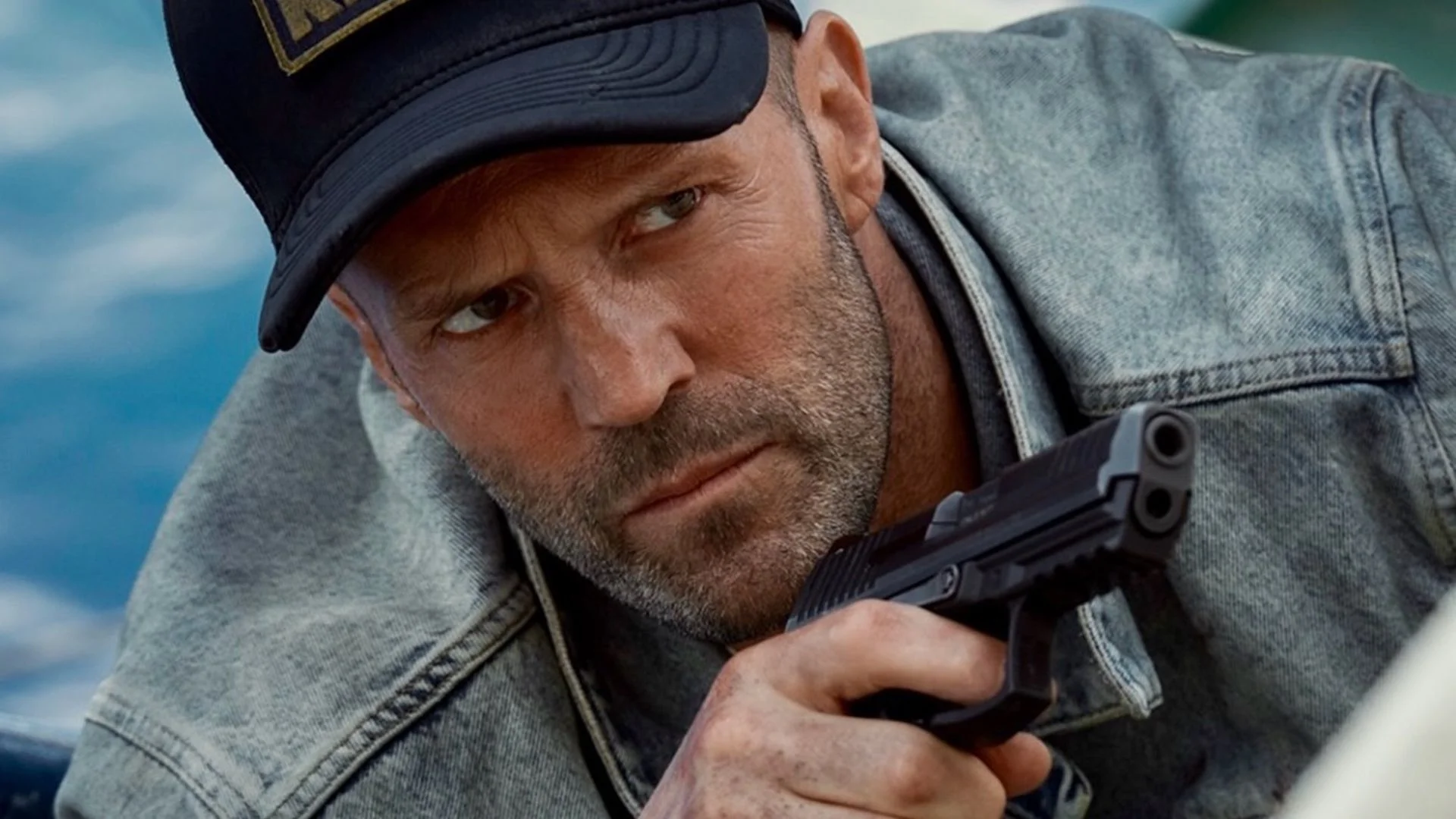
Statham plays him as a professional whose emotional life appears through action: Tibu dies, Cole goes hunting. That simplicity can work. The problem is that the movie occasionally asks the thin conspiracy surrounding Cole to carry suspense that Statham’s physical presence could generate much faster.
Trouble Below Deck
Cole boards the Artemis looking for Tibu’s killers and discovers something much uglier happening inside the vessel. Captain Marko Madsen and members of his crew are involved in a human-trafficking operation, with over a dozen captives hidden aboard the ship.
The discovery shifts Cole from avenger to rescuer, which gives his violence a straightforward moral purpose. It also exposes one of the screenplay’s weaker choices. The captives rarely become distinct people. They function mainly as the human cost of Marko’s operation, then recede whenever the shooting starts. For a plot device carrying this much moral weight, the film gives the victims surprisingly little dramatic space.
Annabelle Wallis gets a better deal as Angie Ellis, the Artemis’s newly assigned third mate. Angie does not want the posting. She wants to get back to Los Angeles and her daughter, but refusing the job could cost her employment. Marko makes his irritation at having her on his bridge crew clear almost immediately, giving her reason to distrust him before she understands what the ship is carrying.
Wallis makes the character work through practical reactions rather than action-star transformation. Angie knows the ship. She understands which stairwells connect, where doors lead, and how Cole can move around Marko’s crew without running straight into gunfire. She escapes danger herself, gets caught again, acquires a weapon, and briefly infiltrates the bridge to contact a nearby Navy vessel.
That bridge sequence is one of the film’s better examples of parallel tension. Angie is trying to send a warning while Cole remains hunted elsewhere on the Artemis. The Navy captain, played by Adrian Lester, has already seen reports identifying Cole as a cop-killing fugitive. From his perspective, another armed man aboard a compromised ship hardly simplifies matters.
Richet and editor David Rosenbloom keep those strands moving cleanly. We understand who knows what, who has the wrong information, and how quickly that misunderstanding could become lethal. The film also avoids forcing romance between Cole and Angie. Their relationship remains tactical. He can fight. She can help him move through the ship. They need each other alive.
Steel Corridors and Short Fights
Richet made Plane with co-writer J.P. Davis, and Mutiny has a similar attraction to old-fashioned action logistics: put a capable star somewhere difficult to escape, surround him with armed men, then make geography part of the problem.
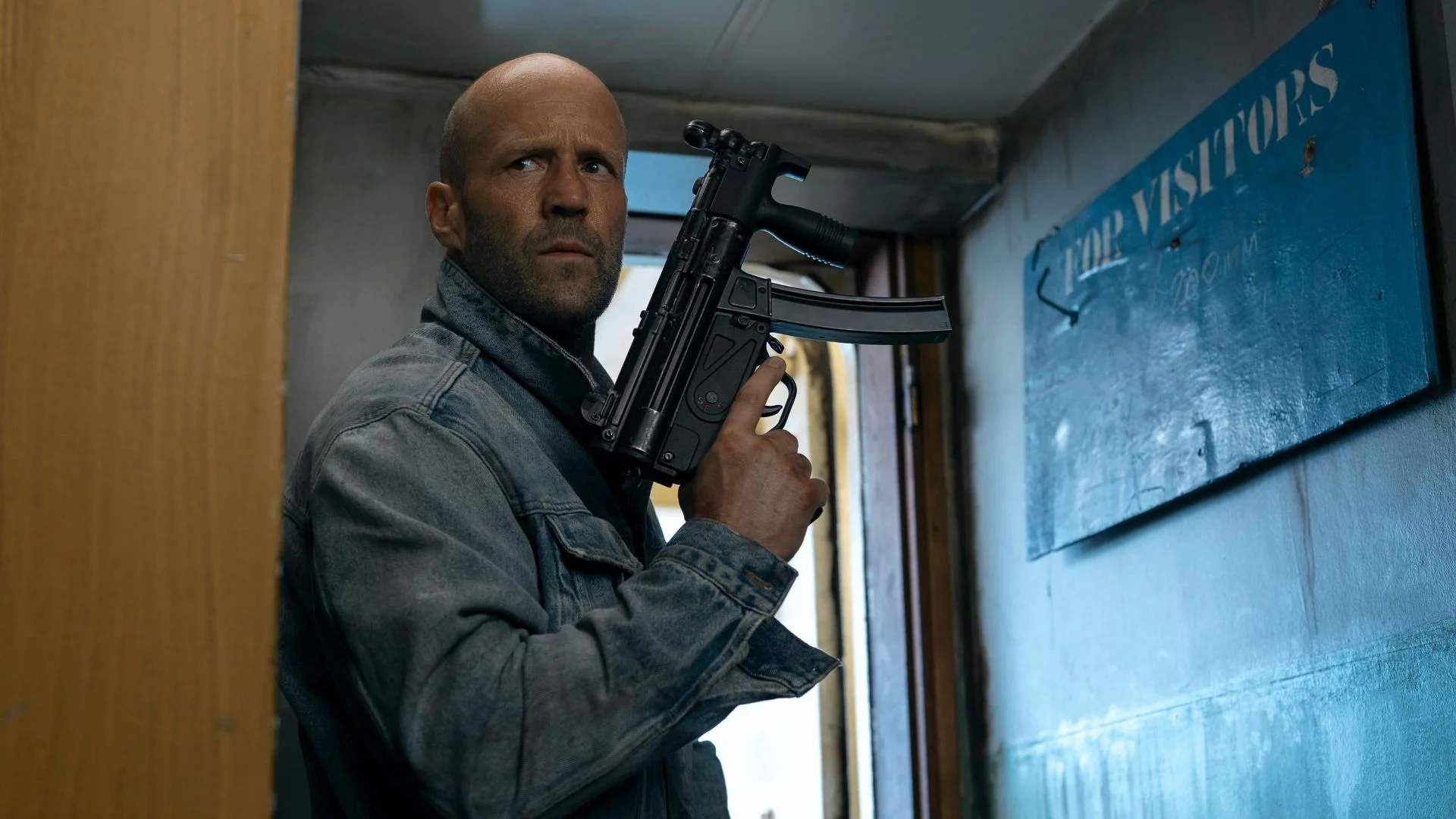
The Artemis is an ideal playground for that approach. Its hallways are narrow. Staircases create vertical threats. Containers block sightlines. Ventilation shafts become escape routes. Machinery rooms offer hiding places and potential weapons. Cole is frequently forced to retreat or disappear before attacking, giving sections of the film the structure of a maritime Die Hard.
Richet is especially good when he establishes distance before violence. If one attacker is below Cole and another is approaching from the opposite end of a corridor, the camera gives us enough spatial information to understand the danger before the fight begins. That sounds basic, but confused geography ruins plenty of close-quarters action.
A knife fight in a narrow hallway shows the approach clearly. Neither combatant has enough room for elaborate choreography, so the sequence becomes a vicious exchange of forward pressure, blocks, reversals, and tiny positional advantages. Rosenbloom’s cutting accelerates with the movement without reducing the actors to fragments.
The violence gets nastier as Cole moves deeper into the ship. A blade goes through a man’s cheeks. Another attacker takes a brutal strike through the forehead. A padlock becomes useful in a way its manufacturer probably did not advertise.
These kills matter because Statham’s action style depends on impact. He does not fight like John Wick, where movement can take on an almost dance-like continuity. Cole attacks as if every additional second is an administrative inconvenience. He grabs the nearest useful object, breaks whatever needs breaking, and keeps moving.
Statham is approaching 60, yet Richet still shoots close enough for us to see how much physical work he is doing. The stunt team deserves its credit, but the film rarely hides behind distant doubles or frantic abstraction. When Cole drives somebody into a wall, the scene lets the collision register.
The Waiting Game
For a 95-minute action movie, Mutiny spends a curious amount of time delaying its strongest material. Cole sneaks through corridors, listens, hides, searches compartments, studies the crew, and tries to understand how Tibu’s murder connects to Marko’s operation.
None of this is incoherent. Some of it generates real tension. Yet the first large stretch keeps Statham in investigative mode when the movie’s clearest advantage is watching him solve problems physically. That creates an unusual pacing issue. The film is short, but portions of it feel slow.
Once Cole begins using the Artemis itself against his pursuers, the rhythm improves immediately. The ventilation escape is a small example. Trapped behind a screen, Cole examines what he has, takes apart Tibu’s Rolex, turns part of the gift into a tool, and gets himself moving again. There is no speech explaining the symbolism. The object simply carries memory into action.
The later fights follow the same principle. Tools, doors, pipes, containers, and narrow passages become extensions of Cole’s tactical thinking. Richet is much stronger at staging that material than at creating mystery around the conspiracy.
Marko presents another pacing problem because Roland Møller looks like someone who should be an imposing physical opponent, yet the character has little personality beyond intimidation. He orders people around, hunts Cole, fires weapons, and eventually moves toward the confrontation the casting has promised from the start.
Daniel Kluth brings a twitchier energy to the polished figure sitting higher in the scheme, especially once Cole closes in and the story loops back toward material shown near the beginning. The structural trick reframes much of the movie as part of a larger flashback, but the revelation itself carries little surprise. The script has already pointed too clearly toward where responsibility lies.
Old Machinery, Still Operational
The easiest comparison for Mutiny is Under Siege, another action thriller built around a highly capable man trapped aboard a ship controlled by criminals. That comparison also exposes what Richet’s film lacks. Steven Seagal’s 1992 vehicle had Tommy Lee Jones attacking the villain role with such gleeful eccentricity that the antagonist became part of the entertainment. Marko rarely offers Statham that kind of counterweight.
The broader template goes back to Die Hard: isolated location, superior numbers, civilians in danger, hidden routes, improvised weapons, and a hero who survives by understanding his environment faster than his enemies do.
Richet does not attempt to disguise those influences. His filmmaking is practical and readable. The camera usually prioritizes bodies, spaces, and impact. Rosenbloom keeps separate threads intelligible. The gore supplies occasional jolts of personality.
The screenplay is far less adventurous. Cole repeatedly finds the person, clue, or location required to keep the investigation moving. Angie’s arrival aboard the same compromised vessel is extremely convenient. The conspiracy develops along lines action fans can predict early, and the personal histories given to Cole and Angie feel designed to establish sympathy quickly rather than create complicated people.
I can forgive plenty of that in an action film when the machinery around it runs hard enough. Mutiny proves the point every time Cole is boxed into another section of the Artemis with armed men closing from opposite directions. The steel corridors suddenly matter. The editing tightens. Statham stops investigating and starts calculating angles, exits, weapons, and bodies. A movie built around Jason Statham turning ship equipment into assault tools probably does not need a sophisticated conspiracy. It does need to reach the padlock sooner.
Mutiny releases in theaters on August 21, 2026, distributed by Lionsgate. The high-octane action thriller follows Cole Reed, an ex-Special Forces operative who is framed for the murder of his billionaire industrialist boss and boards a cargo ship on a relentless mission to clear his name and expose an international conspiracy.
Where to Watch Mutiny (2026) Online




Full Credits
Title: Mutiny
Distributor: Lionsgate, Sky Cinema, StudioCanal
Release date: August 21, 2026
Rating: R
Running time: 1 hour 35 minutes
Director: Jean-François Richet
Writers: Lindsay Michel, J.P. Davis
Producers and Executive Producers: Marc Butan, Jason Statham
Cast: Jason Statham, Annabelle Wallis, Roland Møller, Arnas Fedaravičius, Adrian Lester, Ramon Tikaram, Jason Wong, Chaneil Kular
Director of Photography (Cinematographer): Brendan Galvin
Editors: David Rosenbloom
Composer: Marcus Trumpp
The Review
Mutiny
Mutiny works best when Jean-François Richet locks Jason Statham inside the Artemis and lets steel corridors, knives, tools, and tight editing dictate the rhythm. The conspiracy is transparent, the supporting characters are thin, and the first half spends too long keeping Cole out of combat. Once the violence accelerates, Statham remains physically convincing, Annabelle Wallis gives Angie welcome credibility, and several nasty close-quarters kills deliver the old-school pleasures the film promises. Familiar, efficient, occasionally savage.
PROS
- Brutal close-quarters fights
- Strong shipboard staging
- Statham's physical commitment
- Crisp action editing
- Wallis makes Angie credible
CONS
- Predictable conspiracy
- Slow first half
- Thin villains
- Underwritten trafficking victims
- Limited character development