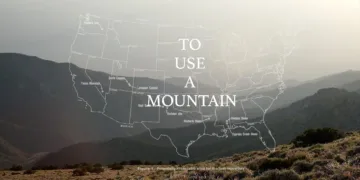










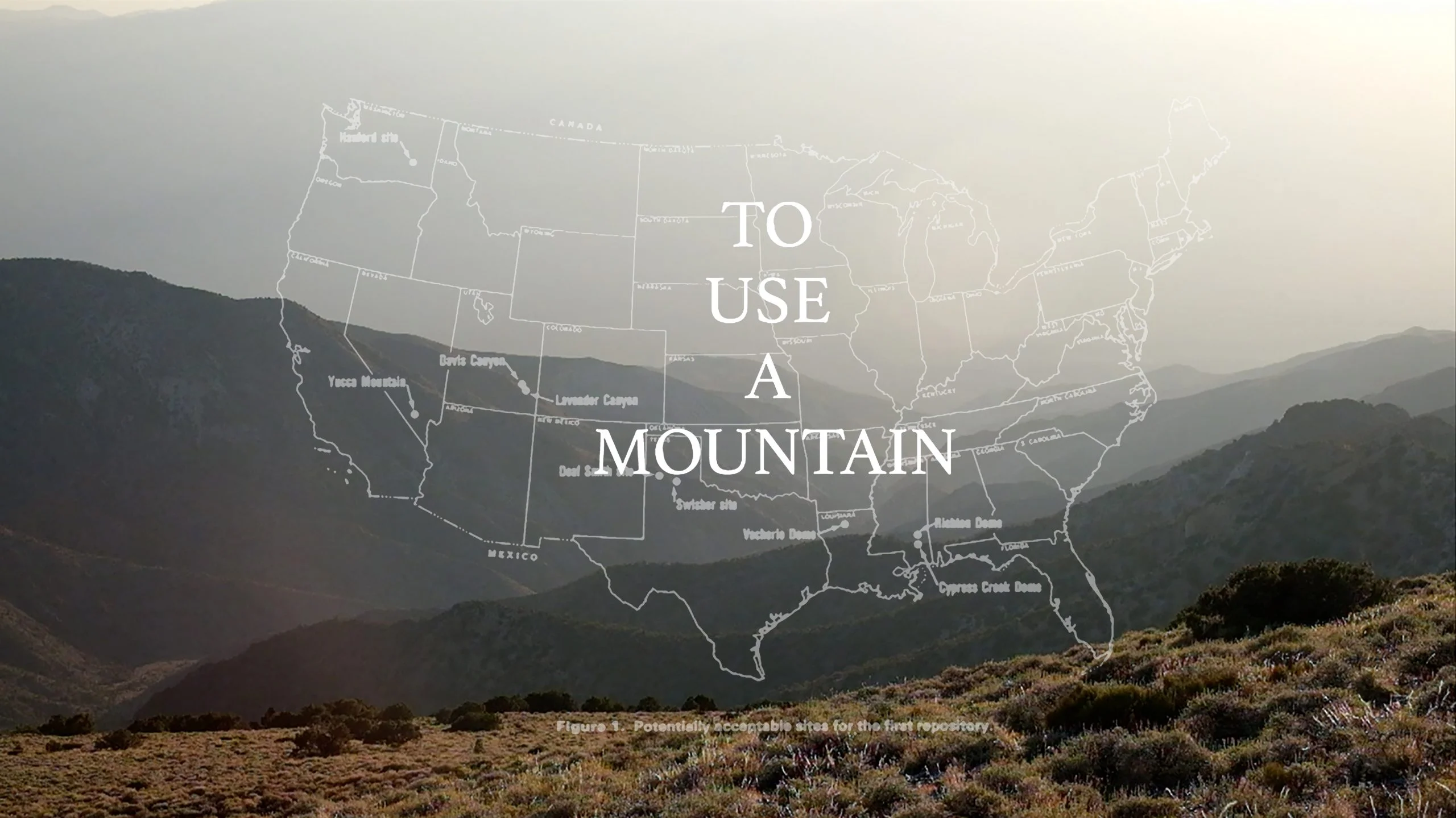

A government map can make a place look empty long before anyone is forced to leave it. Casey Carter’s To Use a Mountain keeps returning to that idea through maps, policy language, geological surveys, and images of rural land that federal agencies once considered suitable for storing tens of thousands of tons of radioactive waste.
The documentary traces the fallout from the 1982 Nuclear Waste Policy Act, which tasked the Department of Energy with finding permanent storage for nuclear material produced through weapons programs and nuclear power.
Carter organizes the film around six rural communities considered during that process, moving among farmers, Indigenous residents, African American communities, activists, and families who resisted plans capable of reshaping their land for generations. What fascinates Carter is less the spectacle associated with nuclear history than what happens after the spectacle disappears. The mushroom cloud has vanished. The waste remains.
Six Places Marked for Sacrifice
Archival town-hall footage provides some of the film’s clearest confrontations. Government representatives arrive armed with studies, maps, technical vocabulary, and assurances about geological suitability. Residents answer with different measurements: crops, wells, pregnancies, illnesses, inherited farms.
Those competing forms of knowledge matter. A geological survey may describe rock formations beneath a proposed site, while a farmer worries about radioactive material entering soil and plants. Elsewhere, residents recount stillbirths, fertility problems, cancers, and relatives becoming sick in areas already scarred by uranium extraction, processing, testing, or contamination.
Carter never treats the six communities as interchangeable. Their histories and circumstances differ. What links them is the recurring suggestion that political power influences where environmental risk gets deposited. Communities with less money, less institutional leverage, or long histories of mistreatment become easier places for distant authorities to mark on a map.
One interviewee captures the generational problem with painful economy, describing how prestige belonged to making bombs and producing electricity while cleaning up the waste became the responsibility of children who inherited the consequences. The line lands because the film has already shown how absurdly mismatched the timelines are. Governments operate through elections and policy cycles. Radioactive material operates through centuries.
Paperwork as Visual Pressure
The most striking choice Carter makes is refusing to let interviews function in the familiar documentary manner. Much of the testimony plays over landscapes, documents, archival images, or passages from the Nuclear Waste Policy Act. We hear people before we necessarily see them.
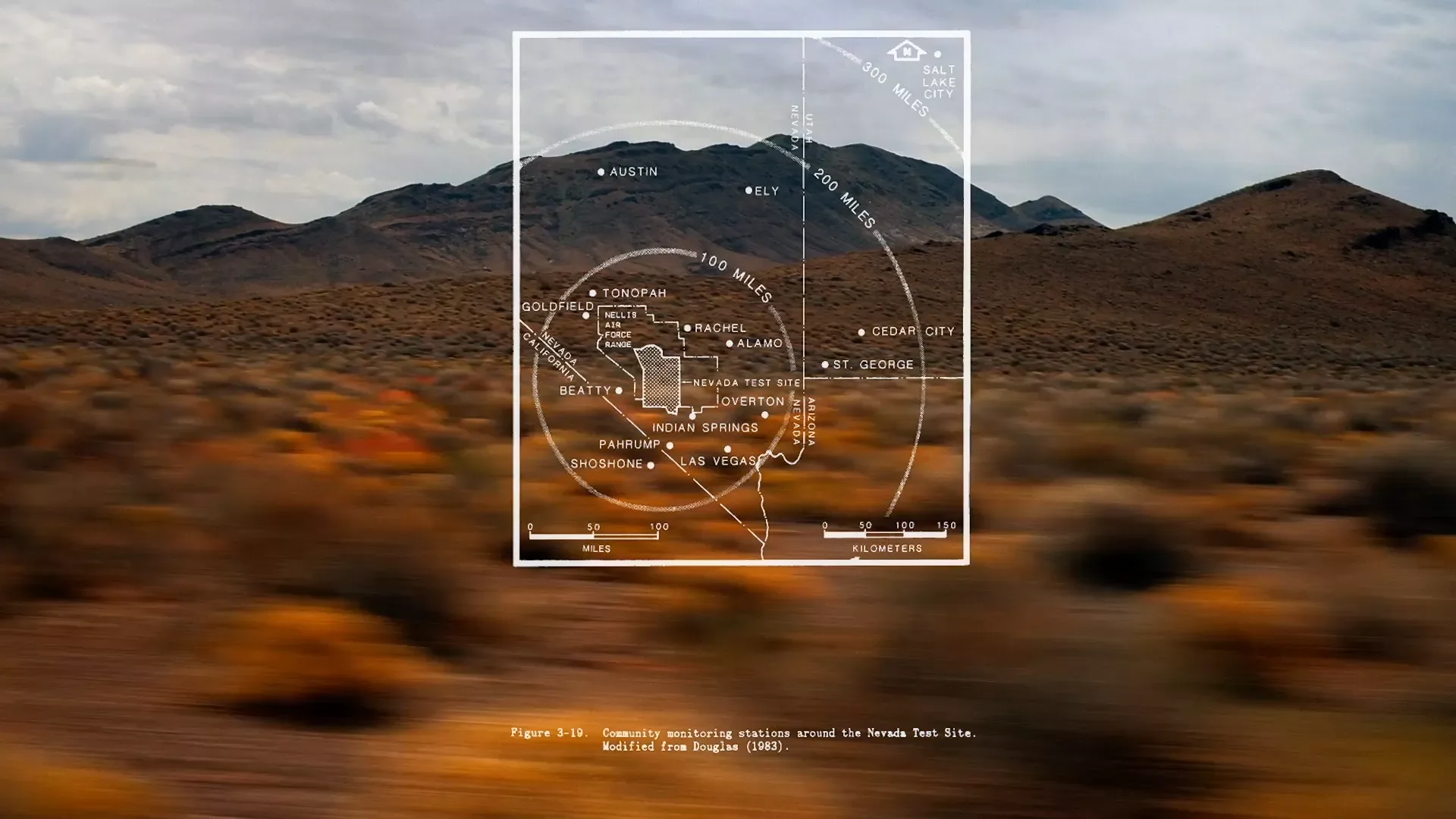
That creates a useful visual tension. Bureaucratic text can fill the screen while somebody describes fear, contamination, illness, or displacement. The documents promise procedure and control; the voices reveal what those tidy sentences cannot contain.
Carter also lets testimony travel across chapters. A concern raised in one location can continue over footage from another, connecting communities separated by geography through shared anxieties about water, soil, health, and political neglect. The editing makes information accumulate rather than simply proceed from point A to point B.
For viewers unfamiliar with this kind of filmmaking, montage is simply the process of creating meaning through the collision and arrangement of different images and sounds. Carter uses it aggressively. Nuclear test footage, demonstrations, public meetings, legal documents, maps, and present-day landscapes keep interrupting one another.
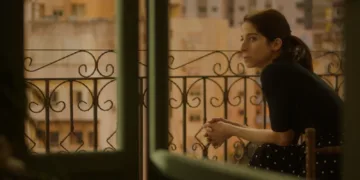
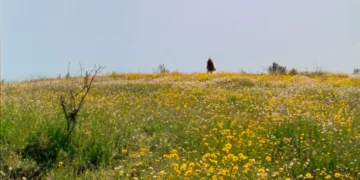
I found that approach most effective when the film allows the countryside itself to sit quietly on screen. There is no visible cloud of radiation hovering over a farm. A field remains a field. Water still looks like water. That normality becomes unsettling because the threat Carter is describing cannot be photographed directly. Sound and pacing slowly tighten the effect. Historical footage begins to feel oddly immediate, as though decisions made decades earlier are still moving toward the people who must live with them.
Where the Structure Frays
The same design that gives To Use a Mountain its power occasionally limits it. Covering six locations in roughly 99 minutes requires compression, and some personal accounts deserve far greater room than they receive. Carter’s early reliance on disembodied voices lets individual experiences merge into a wider history. Later glimpses of his conversations with residents shift the film toward a familiar interview format without giving those people enough screen time to gain equivalent depth.
It creates an uncomfortable contradiction. Carter clearly wants people excluded from official versions of nuclear history to speak for themselves. Yet stories involving reproductive loss, illness, land ownership, and decades of resistance can appear briefly before another document, landscape, or community takes their place.
The scientific material can be similarly demanding. Geological questions, waste storage procedures, political decisions, and historical contamination sometimes arrive faster than Carter explains them. A conventional documentary might stop, define every term, and place each event neatly on a timeline. Carter would rather let information overlap. I understand the instinct. I occasionally wished he would slow down.
Still, that fragmentation has a strange relationship with the subject. Nuclear waste refuses the clean shape documentaries often prefer. There is no single explosion around which the whole story can organize itself. There are decisions, delayed consequences, contaminated landscapes, bureaucratic files, family memories, and risks measured on a timescale that makes ordinary political planning look almost comically short-sighted.
Carter’s film is strongest when those pieces refuse to settle into a comfortable historical record. The proposed repositories belong to the past, yet the material that inspired them remains dangerous. The paperwork ages. The waste does not.
To Use a Mountain opened theatrically in New York on August 21, 2026, with a regional expansion to follow. The documentary explores the historical and environmental crisis that unfolded across six rural American communities after they were designated as potential sites for the nation’s nuclear waste repository.
Where to Watch To Use a Mountain (2025) Online
Full Credits
Title: To Use a Mountain
Distributor: Grasshopper Film
Release date: August 21, 2026
Running time: 1 hour 39 minutes
Director: Casey Carter
Writers: Casey Carter
Producers and Executive Producers: Colleen Cassingham
Director of Photography (Cinematographer): Casey Carter
Editors: Casey Carter
Composer: Kara-Lis Coverdale, Boris Bunnik
The Review
To Use a Mountain
To Use a Mountain turns an abstract policy nightmare into something disturbingly human. Casey Carter’s strongest choice is letting government documents, archival footage, landscapes, and disembodied testimony collide, so radioactive waste feels less like a historical problem than a threat still moving through time. The six-community structure can leave individual stories underdeveloped, and some scientific context arrives with little guidance. Still, the editing, sound design, and patient landscape photography give an invisible danger startling weight.
PROS
- Powerful archival montage
- Striking landscape photography
- Excellent use of legal text
- Haunting testimony and sound design
- Sharp generational perspective
CONS
- Some testimonies feel compressed
- Scientific context can be demanding
- Six-part structure limits depth