

























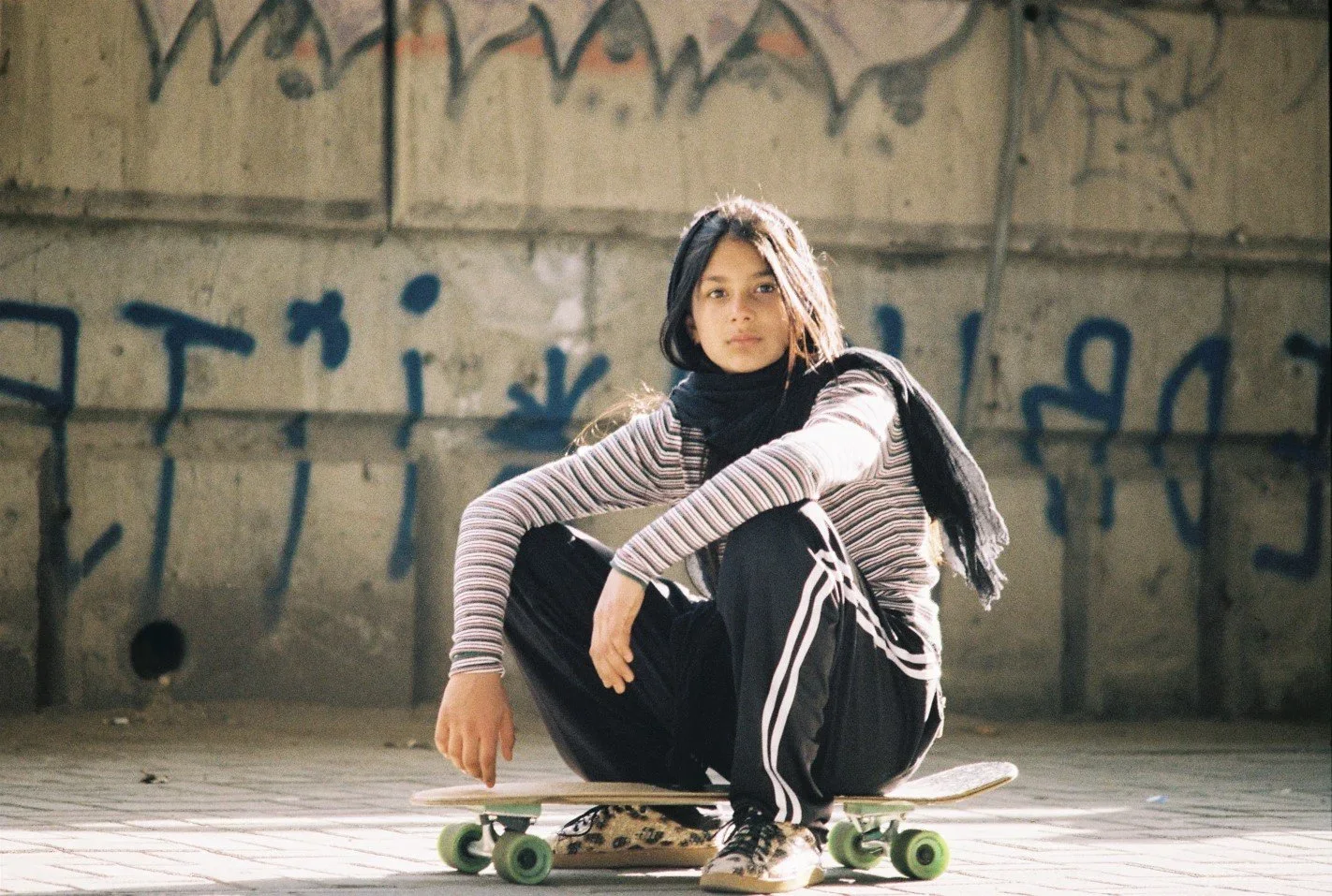
Eleven-year-old Adela believes a skateboard competition can solve a housing crisis. That idea is naive, obviously, yet Skateboarding Is Not for Girls understands exactly why she clings to it. Winning is something she can imagine controlling. Her family’s debts, her father’s abandonment, and the adults deciding her sister’s future are another matter.
Dina Duma’s second feature places Adela (Efkjar Abaz) in working-class Skopje with her older sister Zara (Džefrina Jašari) and their mother Esma (Simonida Selimovič). Their father moved to Switzerland supposedly to work, stopped sending money, and eventually left them for another relationship. Esma cleans houses despite being trained as a laboratory technician, and eviction is getting closer. Then Aunt Aida (Ganimet Abdula) proposes a solution: Zara can be taken to a bridal market in Bulgaria and married for money.
The screenplay’s smartest connection sits between that terrifying proposition and Adela being told skateboarding is inappropriate for girls. One restriction is clearly far graver, yet both come from the same assumption. Other people get to decide what these girls are allowed to do.
Two Sisters, Different Battles
Duma and co-writers Lidija Mojsovska and Teona Strugar Mitevska avoid turning Zara into the obvious rebellious teenager. Her response is much sadder. She understands the family’s finances well enough to accept marriage as something she may have to endure for everyone else.
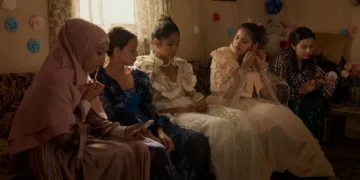
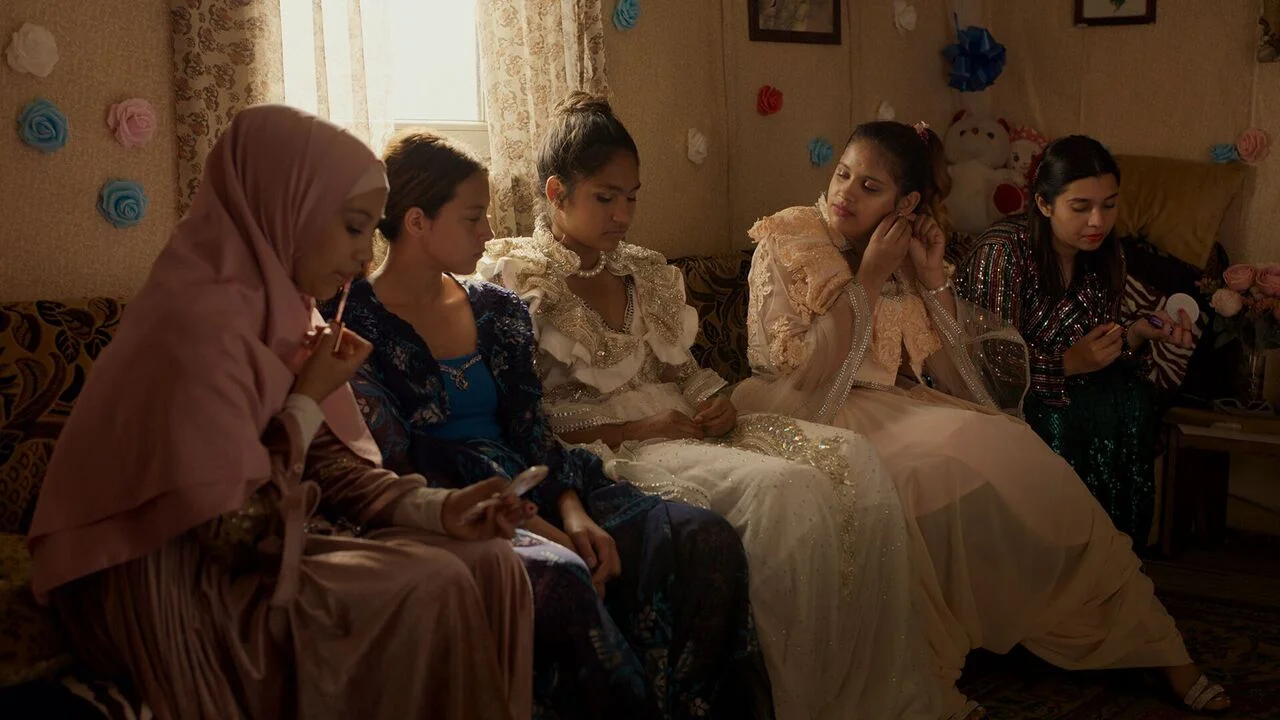
Jašari plays that resignation quietly. Watch Zara during the wedding celebrations, where the public mood says happiness while her face says something entirely different. The scene works because Duma does not need a speech explaining what Zara has lost.
Adela reacts in the opposite direction. She argues, interferes, and convinces herself that prize money from skateboarding might rescue the family. Abaz makes those choices believable because she never plays Adela as a tiny adult. She can be sarcastic and stubborn one moment, then visibly overwhelmed when circumstances outrun her understanding.
Her face does much of the work during the school choir sequence. Adela cries while surrounded by children carrying on with an ordinary activity, and the separation between her public routine and private panic lands harder than several louder scenes.
Esma occupies the cruel space between her daughters. Selimovič gives her exhaustion a physical quality during the cleaning work and quieter family exchanges. She knows what marriage will cost Zara, yet homelessness is not an abstract threat either. The script gives her a choice where every available answer harms somebody.
Patriarchy Without a Villain
One useful thing Duma does is show how restrictive systems survive without assigning every ugly belief to one cartoonishly evil man. Aida cares about Esma and the girls, yet still explains that they cannot move into her house because her brother would object.
This is the same brother who has abandoned them. Teenage girls discuss supposed methods for conceiving boys. Someone remarks on the importance of having a male child. Esma repeatedly finds men controlling access to work or money.
These details matter because oppression here is presented as routine. People repeat the rules because the rules have been around long enough to feel ordinary. The skateboard becomes an effective visual counterpoint whenever Duma actually uses it. Adela moving through Skopje creates rare stretches where nobody is physically steering her somewhere else. Electronic music pushes those scenes forward, and occasional split-screen editing gives them a playful velocity absent from the family drama.
The fairground sequence achieves something subtler. When the sound falls away during the ride, Duma temporarily removes the noise surrounding Adela and lets her anxiety occupy the scene. It is one of the film’s clearest examples of technique expressing emotion without dialogue.
When Restraint Becomes Avoidance
The same restraint that gives Skateboarding Is Not for Girls some of its best moments also creates its biggest problem. Duma repeatedly approaches confrontations, then cuts away before their consequences can fully develop.
Several developments surrounding the betrothal, an accident, and the wedding arrive through abrupt transitions. The editing can feel less like deliberate omission and closer to missing connective tissue. At roughly 82 minutes, the film has little space to recover once a thread disappears.
The skateboarding material suffers most. Adela’s belief that she can enter a competition and help her family gives the film a strong dramatic mechanism, yet the sport vanishes for long stretches. For something important enough to supply the title and central metaphor, it rarely shapes the story with the force you expect.
Frédéric Noirhomme’s cinematography is steadier. The cramped homes and working-class streets of Skopje are photographed plainly, without turning poverty into picturesque misery. That visual restraint suits a film interested in how extraordinary injustice can hide inside ordinary routines.
I like Duma’s refusal to manufacture easy villains or explosive melodrama. I am less convinced by how frequently the film protects itself from the hardest consequences of its own premise. Zara standing amid wedding celebrations with fear written across her face gives us exactly the confrontation the quieter passages keep postponing. The camera stays close enough to see what ceremony cannot disguise.
Skateboarding Is Not for Girls premiered at the Tribeca Festival on June 4, 2026, where it won the prestigious Nora Ephron Award, and subsequently screened in competition at the Sarajevo Film Festival in August 2026. International distribution rights are represented by Kinology. Set in Skopje, North Macedonia, the coming-of-age drama centers on an 11-year-old Romani girl who turns to her passion for skateboarding to forge her own independence and attempt to rescue her older sister from being sold into an arranged marriage following their family’s sudden economic hardship.
Full Credits
Title: Skateboarding Is Not for Girls
Distributor: Kinology, Sisters and Brother Mitevski Production, Entre Chien et Loup, Vertigo, Terminal 3
Release date: June 4, 2026
Running time: 1 hour 22 minutes
Director: Dina Duma
Writers: Dina Duma, Lidija Mojsovska, Teona Strugar Mitevska
Producers and Executive Producers: Labina Mitevska, Sébastien Delloye, Danijel Hočevar, Vanja Sremac
Cast: Efkjar Abaz, Džefrina Jašari, Simonida Selimovič, Ganimet Abdula, Labina Mitevska, Bajramsha Amdijevska, Emili Bajram, Jana Gjorgieva
Director of Photography (Cinematographer): Frédéric Noirhomme
Editors: Alain Dessauvage, Pierpaolo Filomeno
Composer: Jura Ferina, Pavle Miholjević
The Review
Skateboarding Is Not for Girls
Skateboarding Is Not for Girls finds its strongest material in the distance between Adela racing through Skopje on her board and Zara quietly accepting a marriage arranged to keep their family housed. Efkjar Abaz gives Adela the restless energy the film needs, while Džefrina Jašari makes the wedding scenes painfully restrained. Dina Duma’s light approach keeps the drama humane, yet it sometimes skips the confrontation its subject demands. The skateboarding thread also fades too often for such a central metaphor. Still, the fairground sequence, school choir scene, and family performances carry real emotional force.
PROS
- Efkjar Abaz’s expressive lead performance
- Strong chemistry between the three central women
- Effective fairground and choir sequences
- Naturalistic depiction of working-class Skopje
- Thoughtful connection between skateboarding and autonomy
CONS
- Skateboarding thread feels underused
- Key conflicts are sometimes skipped
- Uneven transitions between story threads
- Brief runtime limits character development