




























The best puzzles in The Alighieri Circle: Dante’s Bloodline ask you to read a room before they ask you to solve it. A symbol appears where you did not expect one. A sound becomes part of a sequence. An object that looked like decoration suddenly matters. For a few minutes, the game’s supernatural ritual stops being exposition and becomes something you actually perform. Those moments reveal the strongest version of ONE-O-ONE Games’ idea. They also expose how rarely the rest of the experience reaches the same level of integration.
Gabriele Alighieri has inherited a fairly miserable family tradition. Every 33 years, one member of Dante Alighieri’s bloodline must descend through a portal beneath the family estate and complete a ritual that keeps Hell sealed. Previous Alighieris returned changed by the experience, leaving later generations to carry emotional damage alongside supernatural responsibility. Gabriele now has to take his turn.
The setup works because the curse gives inherited trauma a literal system. Gabriele does not simply suffer because of family history. He has objectives, rules, spaces, and obligations created by people who came before him. That is exactly the kind of idea a game can make tangible.
The Alighieri Circle gets closest to doing that through its three major trials. One mixes exploration with a sliding-style combinatorial puzzle. Another asks you to interpret visual and auditory information scattered through the environment. Smaller riddles depend on symbols, objects, and spatial observation. One repeating-room sequence requires tracking which doors produce changes in the environment, pushing some players toward the very old-school solution of pen and paper.
The individual puzzles vary in difficulty, yet their real strength is how they change the way you look at the environment. A corridor stops being scenery once you suspect its details might form part of a code. A strange sound becomes information. The game has no combat system competing for attention, so observation effectively becomes its primary verb.
That design choice fits a story about ritual beautifully. Gabriele is supposed to repeat an inherited process whose meaning has been partially obscured by time and secrecy. Having the player reconstruct patterns from incomplete information makes mechanical sense. The trouble is that this relationship between system and story rarely extends beyond the immediate puzzle.
Dante provides the game with an extraordinary framework. The Divine Comedy appears through the descent itself, Charon, missing pages connected to the ritual, and the lion, leopard, and she-wolf associated with the opening of Inferno. Hell is reinterpreted as the Abyss, a mutable space shaped by the memories and psychological wounds of whoever enters it.
That last idea is especially strong because it gives ONE-O-ONE Games permission to avoid a predictable tour through familiar circles of fire and punishment. Gabriele’s Hell can instead be personal. Yet the trials rarely tell us enough about him.
A puzzle might be mechanically satisfying without reflecting a specific fear, failing, memory, or moral pressure in Gabriele’s life. Dante’s contrapasso offers an obvious comparison. In the poem, punishment reflects the nature of the sin. Here, the game repeatedly establishes that the Abyss reshapes itself around its visitor, then leaves several challenges feeling comparatively detached from the character supposedly shaping them.
The result is an odd disconnect. The player is solving problems inside Gabriele’s psyche without always learning much about Gabriele through solving them.
His family drama runs into a similar limitation. Previous generations were damaged by their descents, and his relationship with that inheritance should give the ritual emotional weight. A disembodied Guardian or Ancestor gradually reveals information about earlier experiences and sacrifices. Some of those revelations suggest a richer story about people giving parts of themselves to keep the family obligation alive.
Still, Gabriele often feels emotionally distant from events that should be rearranging his understanding of his entire family. Conflict with his guide develops along fairly familiar lines, while major information is sometimes delivered through explanation rather than through situations the player can meaningfully participate in. The game builds a system around inherited responsibility, then lets much of the human consequence sit outside that system.
Movement makes those weaknesses easier to notice. This is a short game, with completion estimates sitting around three to five hours, yet stretches of it can feel considerably slower. Gabriele’s walking speed is restrained, sprinting provides limited relief, crouching sections slow him further, and some puzzles require retracing ground while checking clues.
Backtracking is not inherently a problem in an exploration game. It becomes one when the player has already extracted everything meaningful from the space. The Alighieri estate sometimes runs into that issue. Rooms and corridors can suggest greater density than they actually contain, leaving sections where moving between useful interactions takes too much of the player’s attention. Then the ending moves in the opposite direction, reaching major narrative territory before several ideas have received enough development. The pacing somehow finds room to drag and rush inside the same brief runtime.
Atmosphere carries a significant amount of that dead space. Rain beats against the villa windows, floorboards creak, and old libraries, marble surfaces, dusty corridors, and empty rooms create tension without needing enemies or chase sequences. The game understands that a house built above a portal to Hell already has plenty going for it. It does not need something screaming from every doorway.
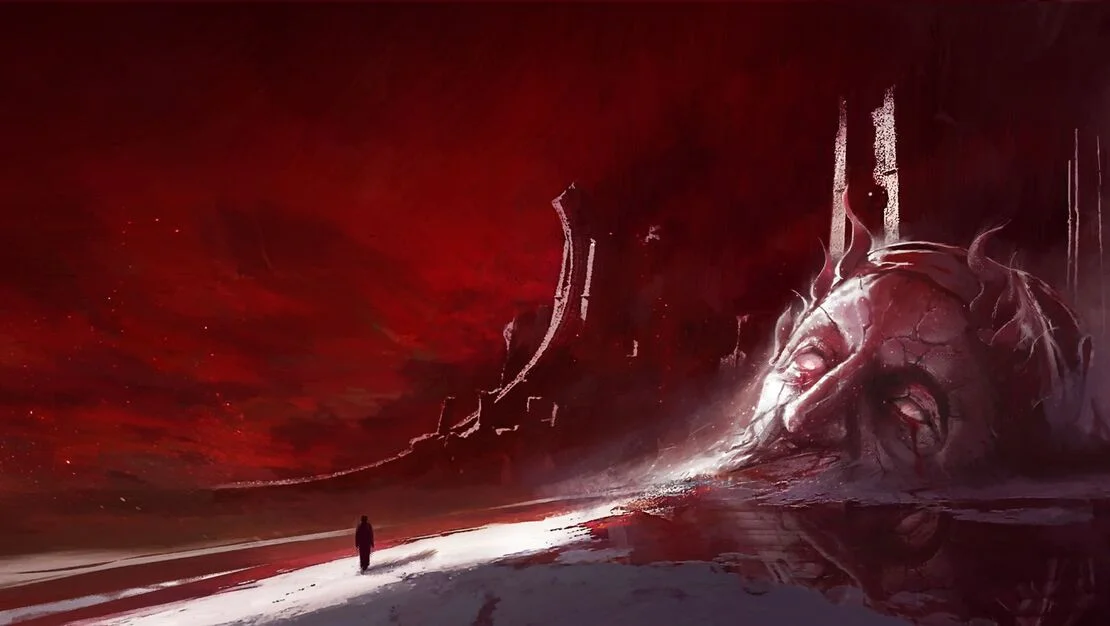
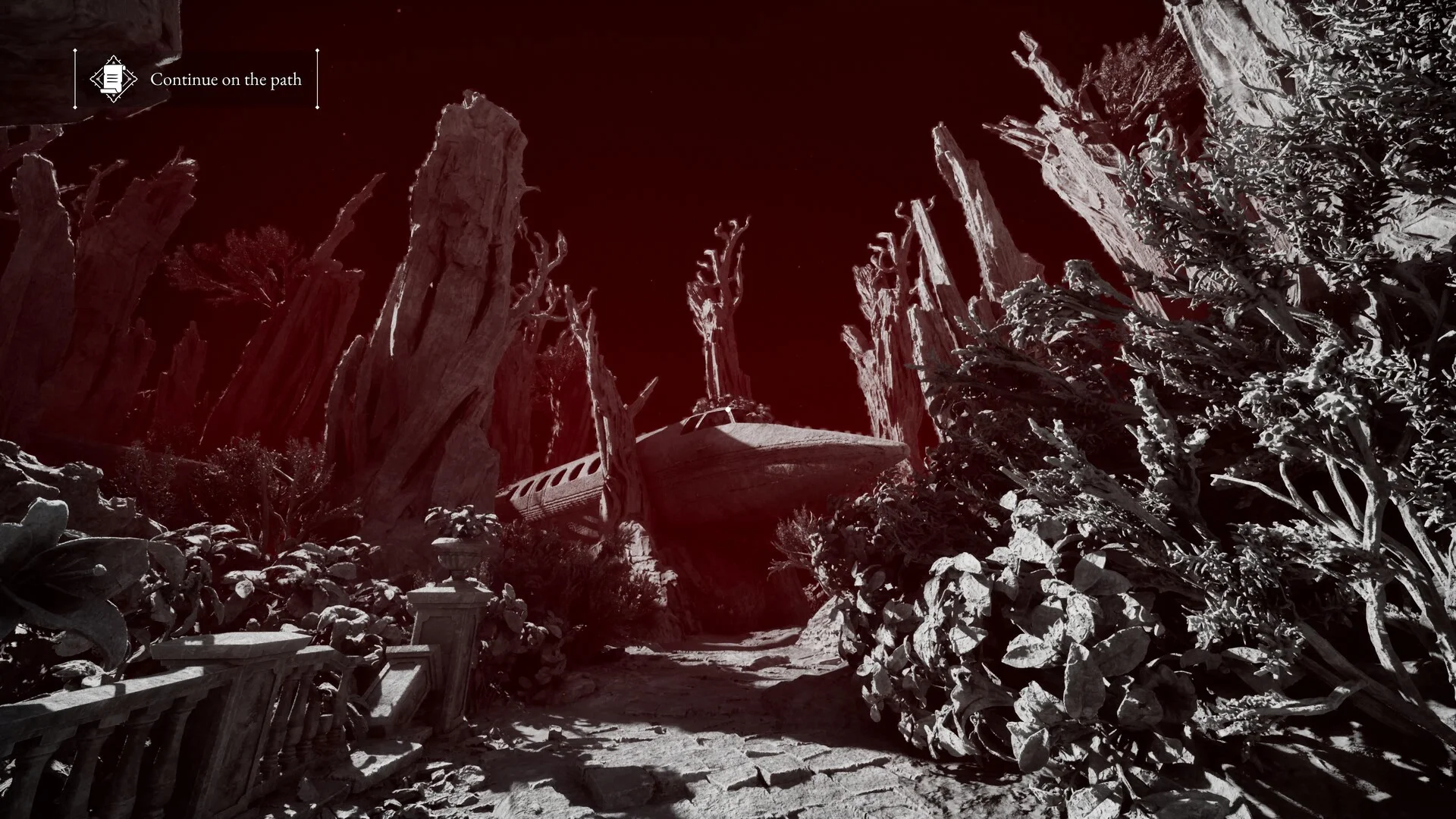
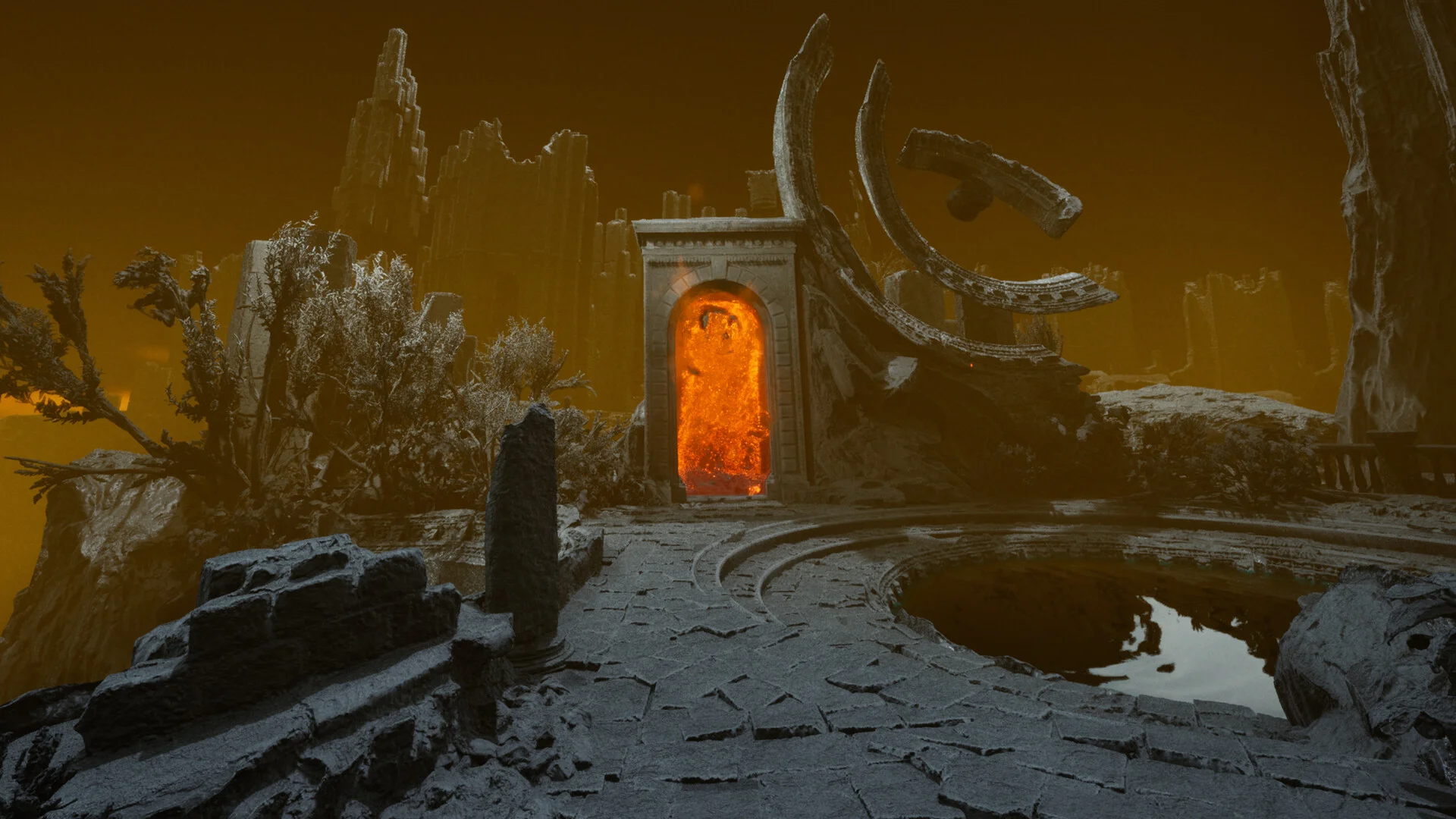
The Abyss is less consistent. Its red mist, pale formations, warped landscapes, and fragments of displaced memory give it a striking identity, especially when reality appears to dissolve into Gabriele’s internal history. Yet some areas feel visually expansive while offering little interaction. The concept promises a responsive psychological space. Too often, it behaves like a beautiful hallway.
That contrast defines The Alighieri Circle better than any single flaw. Its mechanics periodically express its ideas with real clarity, especially when observation turns ritual into player behavior. Then a trial ends, the player returns to walking and listening, and the connection loosens again. The frustrating part is that every time one of those ritual rooms finally clicks, the game demonstrates exactly how much richer Gabriele’s descent could have been if solving Hell had consistently meant understanding the man trapped inside it.
The Review
The Alighieri Circle: Dante's Bloodline
The Alighieri Circle: Dante’s Bloodline is strongest when solving a puzzle means participating in Gabriele’s inherited ritual. Its environmental challenges turn observation into meaningful player behavior, while the villa and Abyss build an effective sense of unease. The disappointment is how rarely those systems reveal something equally meaningful about Gabriele himself. Slow traversal, thin stretches of interaction, and an underdeveloped connection between Dante’s mythology and the trials keep a smart premise from reaching its full potential.
PROS
- Strong environmental puzzle design
- Observation meaningfully drives progression
- Effective villa atmosphere
- Smart psychological reinterpretation of Hell
CONS
- Puzzles rarely deepen Gabriele’s character
- Slow traversal weakens pacing
- Dante framework lacks deeper mechanical integration
- Some environments feel underused