























• Latest
  • Trending
NAZA Review

NAZA Review: Twenty-Four Voices From Inside the System

Stuffed Review

Stuffed Review: Jodie Comer and Harry Melling Make Death Feel Strangely Romantic

The Alighieri Circle: Dante's Bloodline Review

The Alighieri Circle: Dante’s Bloodline Review: Hell Is Better Solved Than Explained

Until the Day Ends Review

Until the Day Ends Review: Romance in the Glare of Political Violence

Jeremy Thomas

Jeremy Thomas, Oscar-Winning Producer of “The Last Emperor” and “Crash,” Dies at 77

2 hours ago
Maggie Gyllenhaal

Maggie Gyllenhaal Denies Gender Played Role in “Woman Unknown” Golden Lion Win

2 hours ago
Mia Wasikowska Agata the Writer

Mia Wasikowska Leads Kuba Dorabialski’s Bold Venice Debut “Agata the Writer”

2 hours ago
Possible Love

Venice Wins for Malkovich, “Possible Love” and “NAZA” Reshape Early Oscar Race

2 hours ago
Seth Rogen Babies

Seth Rogen Says Wife’s TIFF Film “Babies” Is His Most Personal Role Yet

2 hours ago
Woman Unknown

“Woman Unknown” Takes Venice’s Golden Lion as Gaza Documentary “Naza” Wins Special Prize

2 hours ago
Pierce Brosnan

Pierce Brosnan Predicts an Unknown Actor Will Land Next James Bond Role

2 hours ago
Taylor Frankie Paul

Taylor Frankie Paul Says She’s Stayed “Single and Celibate” Since Bachelorette Cancellation

2 hours ago
Diablo Netflix

Netflix and Blizzard Confirm “Diablo” Animated Series Is in Development

2 hours ago
  • Home
  • Privacy Policy
  • Terms and Conditions
  • Gazettely Review Guidelines
Sunday, September 13, 2026
GAZETTELY
  • Home
  • Movie and TV News
    Jeremy Thomas

    Jeremy Thomas, Oscar-Winning Producer of “The Last Emperor” and “Crash,” Dies at 77

    Maggie Gyllenhaal

    Maggie Gyllenhaal Denies Gender Played Role in “Woman Unknown” Golden Lion Win

    Mia Wasikowska Agata the Writer

    Mia Wasikowska Leads Kuba Dorabialski’s Bold Venice Debut “Agata the Writer”

    Possible Love

    Venice Wins for Malkovich, “Possible Love” and “NAZA” Reshape Early Oscar Race

    Seth Rogen Babies

    Seth Rogen Says Wife’s TIFF Film “Babies” Is His Most Personal Role Yet

    Woman Unknown

    “Woman Unknown” Takes Venice’s Golden Lion as Gaza Documentary “Naza” Wins Special Prize

    Pierce Brosnan

    Pierce Brosnan Predicts an Unknown Actor Will Land Next James Bond Role

    Taylor Frankie Paul

    Taylor Frankie Paul Says She’s Stayed “Single and Celibate” Since Bachelorette Cancellation

    Diablo Netflix

    Netflix and Blizzard Confirm “Diablo” Animated Series Is in Development

  • Movie and TV Reviews
    Stuffed Review

    Stuffed Review: Jodie Comer and Harry Melling Make Death Feel Strangely Romantic

    NAZA Review

    NAZA Review: Twenty-Four Voices From Inside the System

    Until the Day Ends Review

    Until the Day Ends Review: Romance in the Glare of Political Violence

    American Hostage Review

    American Hostage Review: A Hostage Crisis Traps the Reporter Too

    Agatha Christie's Tommy & Tuppence Review

    Agatha Christie’s Tommy & Tuppence Review: Two Great Detectives Need Sharper Mysteries

    The Perfect Lie Review

    The Perfect Lie Review: The Dinner Club Knows How to Keep a Secret

    The Drop A Snowfall Saga Review

    The Drop: A Snowfall Saga Review: West Coast Hip-Hop Gives the Franchise Fresh Energy

    Marble Hall Murders Review 1

    Marble Hall Murders Review: Susan Ryeland Returns to a Denser Case

    Possible Love Review

    Possible Love Review: Lee Chang-dong Turns Covetousness Into Social Anatomy

  • Game Reviews
    The Alighieri Circle: Dante's Bloodline Review

    The Alighieri Circle: Dante’s Bloodline Review: Hell Is Better Solved Than Explained

    Marvels Wolverine Review

    Marvel’s Wolverine Review: A Great Logan Trapped in a Limited Action Game

    NHL 27 Review

    NHL 27 Review: EA Has the Right Ideas, Mostly

    Welcome to Elderfield Review

    Welcome to Elderfield Review: Roll the Dice and Tend the Crops

    Barbarian Saga: The Beastmaster Review

    Barbarian Saga: The Beastmaster Review: Great Transformations, Rough Execution

    Apidya' Special Review

    Apidya’ Special Review: One Cult Classic Still Has Plenty of Sting

    Bus Simulator 27 Review

    Bus Simulator 27 Review: A Management Sim Waiting for Mechanical Repairs

    SPRAWL zero Review

    SPRAWL zero Review: Disposable Guns, Permanent Fun

    HOT WHEELS Infinite Rush Review

    HOT WHEELS Infinite Rush Review: Four Islands of Plastic Chaos

  • The Bests
No Result
View All Result
  • Home
  • Movie and TV News
    Jeremy Thomas

    Jeremy Thomas, Oscar-Winning Producer of “The Last Emperor” and “Crash,” Dies at 77

    Maggie Gyllenhaal

    Maggie Gyllenhaal Denies Gender Played Role in “Woman Unknown” Golden Lion Win

    Mia Wasikowska Agata the Writer

    Mia Wasikowska Leads Kuba Dorabialski’s Bold Venice Debut “Agata the Writer”

    Possible Love

    Venice Wins for Malkovich, “Possible Love” and “NAZA” Reshape Early Oscar Race

    Seth Rogen Babies

    Seth Rogen Says Wife’s TIFF Film “Babies” Is His Most Personal Role Yet

    Woman Unknown

    “Woman Unknown” Takes Venice’s Golden Lion as Gaza Documentary “Naza” Wins Special Prize

    Pierce Brosnan

    Pierce Brosnan Predicts an Unknown Actor Will Land Next James Bond Role

    Taylor Frankie Paul

    Taylor Frankie Paul Says She’s Stayed “Single and Celibate” Since Bachelorette Cancellation

    Diablo Netflix

    Netflix and Blizzard Confirm “Diablo” Animated Series Is in Development

  • Movie and TV Reviews
    Stuffed Review

    Stuffed Review: Jodie Comer and Harry Melling Make Death Feel Strangely Romantic

    NAZA Review

    NAZA Review: Twenty-Four Voices From Inside the System

    Until the Day Ends Review

    Until the Day Ends Review: Romance in the Glare of Political Violence

    American Hostage Review

    American Hostage Review: A Hostage Crisis Traps the Reporter Too

    Agatha Christie's Tommy & Tuppence Review

    Agatha Christie’s Tommy & Tuppence Review: Two Great Detectives Need Sharper Mysteries

    The Perfect Lie Review

    The Perfect Lie Review: The Dinner Club Knows How to Keep a Secret

    The Drop A Snowfall Saga Review

    The Drop: A Snowfall Saga Review: West Coast Hip-Hop Gives the Franchise Fresh Energy

    Marble Hall Murders Review 1

    Marble Hall Murders Review: Susan Ryeland Returns to a Denser Case

    Possible Love Review

    Possible Love Review: Lee Chang-dong Turns Covetousness Into Social Anatomy

  • Game Reviews
    The Alighieri Circle: Dante's Bloodline Review

    The Alighieri Circle: Dante’s Bloodline Review: Hell Is Better Solved Than Explained

    Marvels Wolverine Review

    Marvel’s Wolverine Review: A Great Logan Trapped in a Limited Action Game

    NHL 27 Review

    NHL 27 Review: EA Has the Right Ideas, Mostly

    Welcome to Elderfield Review

    Welcome to Elderfield Review: Roll the Dice and Tend the Crops

    Barbarian Saga: The Beastmaster Review

    Barbarian Saga: The Beastmaster Review: Great Transformations, Rough Execution

    Apidya' Special Review

    Apidya’ Special Review: One Cult Classic Still Has Plenty of Sting

    Bus Simulator 27 Review

    Bus Simulator 27 Review: A Management Sim Waiting for Mechanical Repairs

    SPRAWL zero Review

    SPRAWL zero Review: Disposable Guns, Permanent Fun

    HOT WHEELS Infinite Rush Review

    HOT WHEELS Infinite Rush Review: Four Islands of Plastic Chaos

  • The Bests
No Result
View All Result
GAZETTELY
No Result
View All Result
NAZA Review

Until the Day Ends Review: Romance in the Glare of Political Violence

The Alighieri Circle: Dante's Bloodline Review: Hell Is Better Solved Than Explained

Home Entertainment Movies

NAZA Review: Twenty-Four Voices From Inside the System

Caleb Anderson by Caleb Anderson
26 minutes ago
in Entertainment, Movies, Reviews
Reading Time: 5 mins read
A A
0
Share on FacebookShare on TwitterShare on PinterestShare on WhatsAppShare on TelegramSummarize with ChatGPTSummarize with Perplexity

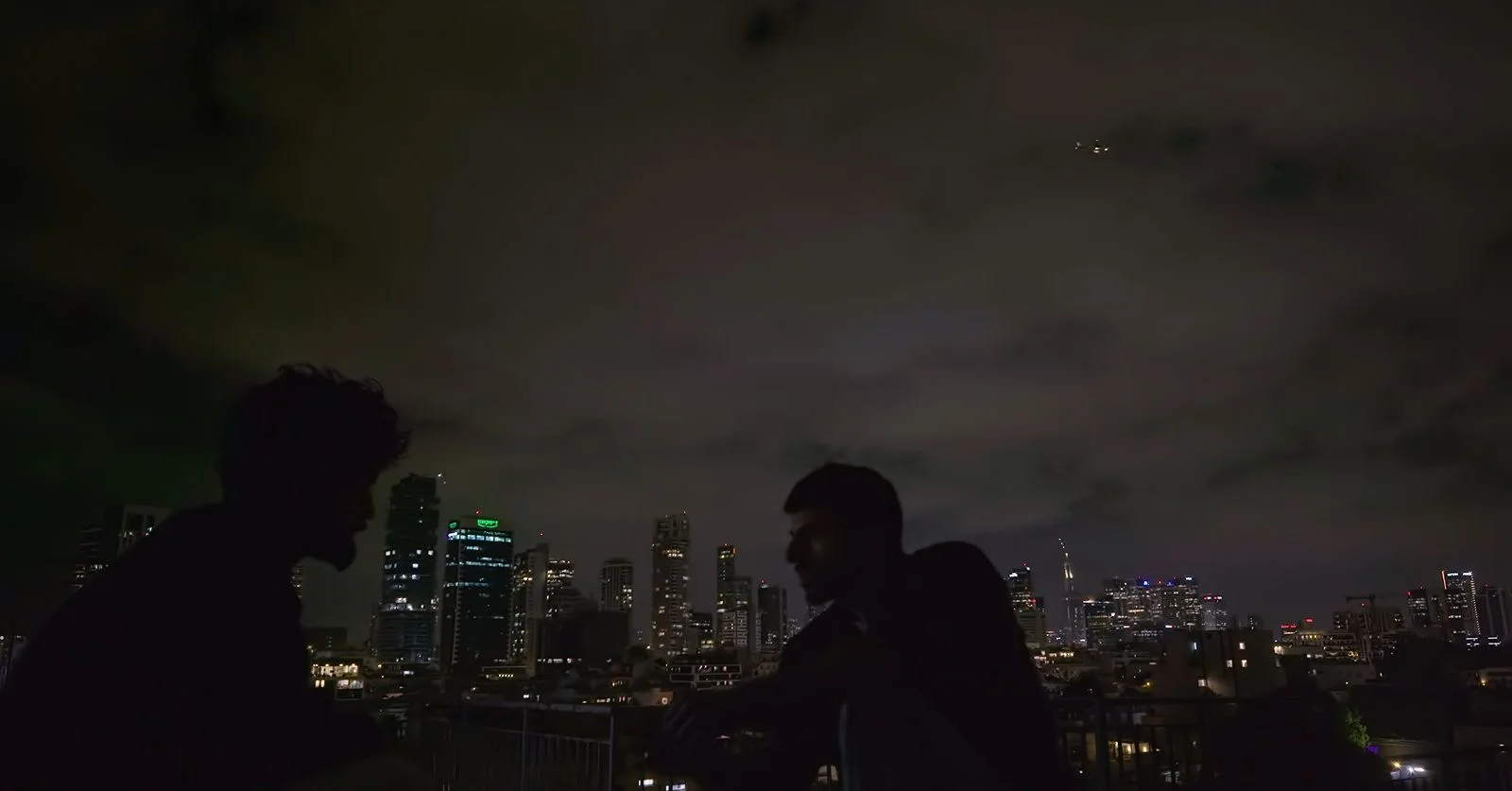
The most unsettling choice Yuval Abraham and Rachel Szor make in NAZA is also one of the simplest: they keep the volume low. Twenty-four Israeli military personnel describe surveillance, target selection, civilian casualty calculations, artificial intelligence systems, destroyed homes and dead families, yet the documentary rarely reaches for the visual or editorial language of outrage. People sit on Tel Aviv rooftops after dark. Their faces disappear into shadow. Cars pass below. Aircraft move overhead. Long pauses remain in the edit.

That restraint changes how the testimony lands. A louder documentary might tell us where to place our anger. NAZA gives the speakers enough space to reveal how thoroughly violence can be absorbed into procedure.

Abraham and Szor, who were among the filmmakers behind No Other Land, build the film around conversations Abraham conducts with Israeli intelligence officers and soldiers whose identities are concealed. Their appearances and voices have been digitally altered, and the arrangement immediately creates a strange visual contradiction. Abraham is partly visible while the people describing military operations resemble dark outlines against the city. The technique protects them, but it also turns them into representatives of a system whose individual components are difficult to see clearly.

The anonymity creates an evidentiary problem too. Viewers cannot independently judge a speaker’s rank, history or exact access to the information being discussed. Israeli military representatives have rejected allegations connected to the film and questioned anonymous testimony while maintaining that strike decisions are made by human personnel and that civilian harm is minimized under military guidelines. NAZA cannot eliminate that challenge through atmosphere. What it can do is make the testimony legible enough for us to understand the process being alleged.

The title supplies the clearest example. “NAZA,” derived from the Hebrew term for collateral damage, refers here to the number of civilians considered acceptable losses alongside a military target. Interviewees describe casualty allowances that can move from relatively small numbers into the hundreds. The figures are horrifying, yet the more revealing detail is the existence of the number itself. Once a family becomes a variable in a targeting calculation, language has already created distance between the person approving an attack and the people inside the building.

That distance keeps appearing in different forms. One speaker describes his role as technical. Others talk about trusting the system. Another compares the work to a video game. One describes carrying out a successful mission as fun. The film leaves these comments largely undecorated, which suits the material. Its editing works by accumulation: the documentary first teaches us the vocabulary, then shows how surveillance feeds targeting, how targeting connects to homes and families, and how individual strikes fit inside a larger destructive apparatus. Each new piece of information changes what the previous one means.

That structure is especially effective when NAZA reaches the surveillance system known as Lavender. The interviewees describe large quantities of phone data being analyzed to identify suspected Hamas operatives, with one account mentioning an error rate of roughly 15 percent. The film then moves from the abstraction of data toward the much more intimate practice called “Where’s Daddy?”, where surveillance allegedly determines when a suspected target has returned home.

One testimony describes monitoring two young sisters in an effort to establish when their father would be present. A strike later kills the girls and other members of the family. The intended target, according to the account, was not there. The technology stops feeling futuristic at that point and becomes painfully ordinary.

The easy interpretation would be that NAZA is warning about artificial intelligence replacing human judgment. The documentary’s testimony describes something harder to dismiss. Humans design the systems, interpret their information, approve targets and carry out attacks. Automation creates distance, but it does not erase responsibility. If anything, the film keeps following the chain until every supposedly technical decision reconnects with a person.

Abraham’s interviewing style helps. He tends to ask for details rather than performances of remorse. The approach can initially seem too restrained, especially when someone describes acts of enormous consequence in an almost professional tone. Yet pressing each person to declare guilt would produce cleaner television and weaker evidence. Several interviewees seem unsettled by what they participated in without fitting comfortably into the role of repentant whistleblower. One reflects on the moral categories through which he has understood historical perpetrators and begins turning that judgment toward himself. Others sound far less reflective. Confession does not automatically create repentance, and speaking does not undo participation.

Szor and Abraham extend that argument visually by turning their cameras away from the interview chairs and toward Tel Aviv. Using distant views into apartment windows, the film watches residents eating, watching television and preparing for bed. A long lens, for readers unfamiliar with the term, allows a camera to observe subjects from far away while visually compressing the distance between them. Here that technique resembles the surveillance methods being described in the interviews.

The reversal is pointed without becoming smug. The residents are not treated as individual villains, and their faces remain hidden. What matters is the physical coexistence of ordinary domestic life and a military apparatus operating roughly 60 kilometers away. People cook dinner while, elsewhere, people are reduced to target probabilities. Traffic, aircraft and the occasional interruption of the city continue beneath the interviews, reminding us that these conversations are happening inside a functioning metropolis. Most of the horror arrives without sonic emphasis.

Later testimonies widen the scale. Interviewees describe areas of northern Gaza as annihilation zones, the destruction of buildings, attacks on civilians crossing invisible military lines and shootings near food distribution areas. The film gradually shifts from the logic of selecting an individual target toward the destruction of physical spaces where civilian life once existed. That escalation explains why the documentary waits so long before entering Gaza directly. For most of its running time, destruction reaches us through voices, diagrams, software, euphemisms and memories. When physical consequence finally occupies the frame, the distance created by all those systems disappears.

NAZA also makes historical connections that require care. Holocaust remembrance, references to Claude Lanzmann and Shoah, archival material concerning Tel Aviv, and accounts of displaced Palestinian communities expand the film’s examination of memory. Direct equivalence between Gaza and the Holocaust would flatten histories that demand specificity. The stronger idea concerns the way societies remember past dehumanization while remaining capable of constructing new moral categories that permit suffering elsewhere.

That question sits inside the film’s form from the beginning. The people on those rooftops are educated, technically skilled and often articulate. Some identify themselves with political positions that they apparently understand as humane. They describe software, protocols and missions with the vocabulary of professional competence. Then someone explains how a child’s phone can help locate her father, and the camera stays still while the system keeps sounding perfectly reasonable, right up until you understand what it has been built to do.

Naza had its world premiere in the main competition at the 83rd Venice International Film Festival on September 10, 2026. The investigative documentary examines the systems and operations behind the mass killing of Palestinian civilians during the ongoing Gaza war.

Where to Watch Naza (2026) Online

Unfortunately, we couldn't find any streaming offers.
Source: JustWatch

Full Credits

  • Title: Naza

  • Distributor: The Guardian, JW Films

  • Release date: September 10, 2026 (Venice International Film Festival)

  • Running time: 1 hour 20 minutes

  • Director: Yuval Abraham, Rachel Szor

  • Writers: Yuval Abraham, Rachel Szor

  • Producers and Executive Producers: James Wilson, Jonathan Glazer

  • Cast: Yuval Abraham

  • Director of Photography (Cinematographer): Rachel Szor

The Review

NAZA

9 Score

NAZA turns investigative testimony into controlled, unsettling cinema. Its greatest strength is the discipline of its form: anonymous rooftop interviews, patient editing, distant surveillance imagery and restrained sound give bureaucratic language enough space to expose its moral consequences. The anonymity of its witnesses inevitably limits what viewers can independently verify, but the film acknowledges that tension rather than hiding it. What remains is a documentary less interested in spectacle than in showing how violence becomes process, vocabulary and routine.

PROS

  • Exceptional use of restraint
  • Strong cumulative editing
  • Surveillance imagery reinforces the argument
  • Complex treatment of responsibility
  • Clear connection between systems and consequences

CONS

  • Anonymous testimony limits verification
  • Historical comparisons require careful handling
  • Some allegations depend heavily on participant credibility

Review Breakdown

  • Overall 0
Tags: 2026 Venice Film Festival83rd Venice International Film FestivalDocumentaryNAZAWarYuval AbrahamYuval Abraham and Rachel Szor
Previous Post

Until the Day Ends Review: Romance in the Glare of Political Violence

Next Post

The Alighieri Circle: Dante’s Bloodline Review: Hell Is Better Solved Than Explained

0 0 votes
Article Rating
Subscribe
Connect with
Login
I allow to create an account
When you login first time using a Social Login button, we collect your account public profile information shared by Social Login provider, based on your privacy settings. We also get your email address to automatically create an account for you in our website. Once your account is created, you'll be logged-in to this account.
DisagreeAgree
Notify of
guest
Connect with
I allow to create an account
When you login first time using a Social Login button, we collect your account public profile information shared by Social Login provider, based on your privacy settings. We also get your email address to automatically create an account for you in our website. Once your account is created, you'll be logged-in to this account.
DisagreeAgree
guest
0 Comments
Oldest
Newest Most Voted

Try AI Movie Recommender

Gazettely AI Movie Recommender

This Week's Top Reads

  • Is This Seat Taken? Review

    Is This Seat Taken? Review: A Satisfying Mental Workout

    1294 shares
    Share 0 Tweet 0
  • Fauda Season 5 Review: Revenge Crosses the Mediterranean

    1 shares
    Share 0 Tweet 0
  • A Tale of Two Cities Review: Dickens Rewritten for Prestige TV

    0 shares
    Share 0 Tweet 0
  • You Can See Everything Review: Three Hours Inside a Manufactured Reality

    0 shares
    Share 0 Tweet 0
  • Trust Review: Squandered Potential and an Incoherent Plot

    6 shares
    Share 0 Tweet 0
  • The Grand Tour Review: The Keys Change Hands

    0 shares
    Share 0 Tweet 0
  • Last Seen Review: A Missing-Girl Thriller With Better Questions

    1 shares
    Share 0 Tweet 0

Must Read Articles

Marvels Wolverine Review
PlayStation

Marvel’s Wolverine Review: A Great Logan Trapped in a Limited Action Game

9 hours ago
American Hostage Review
TV Shows

American Hostage Review: A Hostage Crisis Traps the Reporter Too

10 hours ago
NHL 27 Review
Games

NHL 27 Review: EA Has the Right Ideas, Mostly

13 hours ago
The Drop A Snowfall Saga Review
TV Shows

The Drop: A Snowfall Saga Review: West Coast Hip-Hop Gives the Franchise Fresh Energy

13 hours ago
The Debut Review
Movies

The Debut Review: Julianne Moore Finds Herself and Becomes Everyone Else’s Problem

2 days ago
Loading poll ...
Coming Soon
Which of Alfred Hitchcock's 1960s thrillers is your all-time favorite?

Gazettely is your go-to destination for all things gaming, movies, and TV. With fresh reviews, trending articles, and editor picks, we help you stay informed and entertained.

© 2021-2026 All Rights Reserved for Gazettely

What’s Inside

  • Movie & TV Reviews
  • Game Reviews
  • Featured Articles
  • Latest News
  • Editorial Picks

Quick Links

  • Home
  • About US
  • Contact Us
  • Advertise with Us
  • Review Guidelines

Follow Us

Facebook X-twitter Youtube Instagram
No Result
View All Result
  • Gazettely | Movie, TV & Game Reviews, News, and Rankings
  • Movies
  • Entertainment News
  • Movie and TV Reviews
  • TV Shows
  • Game News
  • Game Reviews
  • Contact Us

© 2024 All Rights Reserved for Gazettely

wpDiscuz
0
0
Would love your thoughts, please comment.x
()
x
| Reply