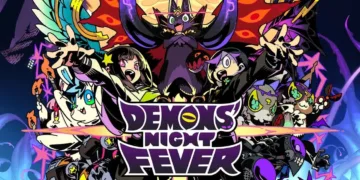



























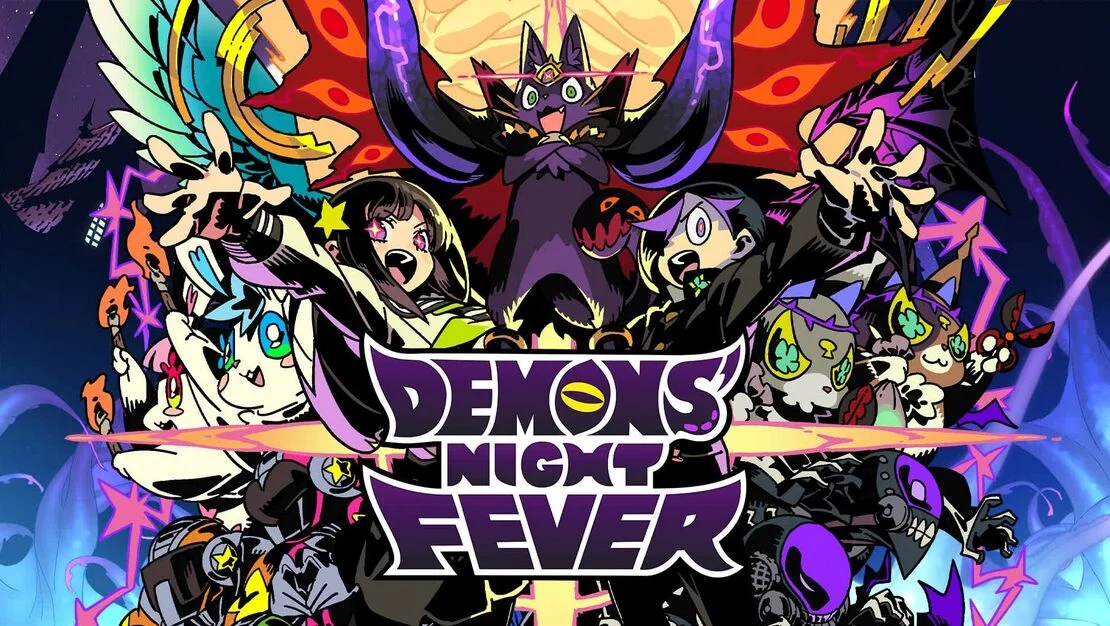

The Disgaea connection is easy to spot in Demons’ Night Fever: Sōhei Niikawa’s involvement, extravagant demonic personalities, and colorful menus all suggest familiar territory. The important departure arrives in the treatment of the army. Recruiting a useful Peon means acquiring a soldier whose most valuable contribution might be the effect triggered by killing it yourself. For players accustomed to keeping carefully developed units alive, that changes the calculation behind a successful turn. A surviving ally represents both future attacks and an opportunity waiting to be spent.
The game complicates that calculation by withholding direct control over the Peons. They move and attack independently, leaving Killshiro Katanaka to intervene through his own abilities. Early on, teleportation lets him exchange positions with a unit, arranging a sacrifice that might damage enemies across a particular grid pattern. Other sacrifices provide buffs or debuffs. Positioning still matters, but the process differs from assigning each soldier a destination: you work with the formation your army produces, then spend actions correcting it. A promising arrangement can become a small logistical problem before anyone explodes.
Killshiro’s weakness gives this arrangement a practical foundation. A resentful office worker recruited by Giga Super Death, an evil deity reduced to kitten form, he helps pursue the ritual that will restore his patron’s power. His personal combat ability offers little reassurance, and his death means defeat. Moving him into position to manipulate a Peon therefore exposes the one participant you cannot afford to lose. Chapter-specific classes adjust his capabilities, sometimes removing teleportation entirely, so an approach learned under one set of conditions cannot always carry the next chapter.
The turn sequence creates useful decisions within those restrictions. Peons act first, followed by Killshiro, the enemy, and another Killshiro phase. Leaving a unit alive preserves its capacity to attack; sacrificing it converts that continuing contribution into an immediate effect. Replacement summons depend on reserves and deployment allowances, which prevent the board from becoming an endlessly replenished demolition site. The long-term promise of stronger Peons returning after sacrifice does not remove the immediate cost of losing bodies. The system has room for timing, conservation, and aggressive exchanges, even with its gleefully wasteful premise.
Its weaker moments concern the information needed to judge those exchanges. Sacrifices can deal zero damage without the game adequately communicating why that unit was unsuitable for the target. Losing a soldier to discover the limits of its attack is an expensive substitute for a clear explanation. Indirect positioning carries a similar risk: moving Killshiro, swapping places, and activating a Kill Skill can feel considered when it solves a formation problem, then laborious when it repeatedly corrects unhelpful autonomous movement. The distinction matters because the game’s unusual control scheme creates both effects. Novelty alone cannot make every corrective action satisfying.
Preparation gives those battlefield losses a second cost. Chapters impose a limited calendar, commonly around thirty in-game days, with activities such as abduction, theft, Misdeeds, and battles competing for that allowance. Persona 3 offers a useful comparison for the pressure of selecting an activity while other opportunities disappear, though the purpose here is military preparation. Recruiting replacements takes time that could support stronger stats or better equipment. An army built to consume its members needs a reliable supply, and replenishing it competes with making each member worth consuming.
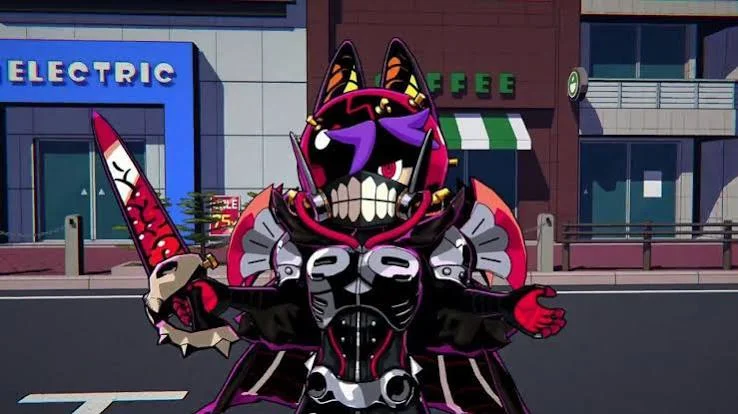
Perverse Points tighten that competition further. Misdeeds generate points alongside stat gains, while required events and the upgrade board create different demands on the currency. Using the board costs no day itself, but spending there still affects the resources available for progression.
These are worthwhile management decisions when their benefits are understandable. A 4% class-stat increase or a poorly explained skill-level improvement makes comparison harder, especially against something as tangible as another recruit. Pillaging concentrates the same pressure into short battles with a chosen limit of one to five combat turns, asking players to accept tighter execution demands for increased rewards.
Repeated attempts offer a way to recover from imperfect preparation. Permanent bonuses and certain stored resources make returning to earlier chapters productive, while familiarity can reduce wasted actions. There are two kinds of progress operating here: understanding the systems better and bringing stronger numbers into a familiar situation.
Both can be rewarding, but they deserve separate credit. A quicker return supported by better decisions gives the speedrunning premise substance; a return eased chiefly by accumulated stats supplies a different pleasure. Randomized recruitment and activities keep preparation from becoming entirely fixed, while making the strength of the next attempt less predictable.
The presentation maintains a recognizable connection to Niikawa’s earlier work without making this feel like an anonymous imitation. Yuji Himukai’s expressive portraits, emphatic fonts, and colorful menus suit a world where a kitten can direct a campaign against God. Changing chapter designs give the dialogue screens fresh faces and creatures. That visual variety has a practical complication on the battlefield, however: new appearances can require another trip through the menus to inspect familiar unit functions and sacrifice ranges. Attractive presentation and immediate comprehension do not always arrive together.
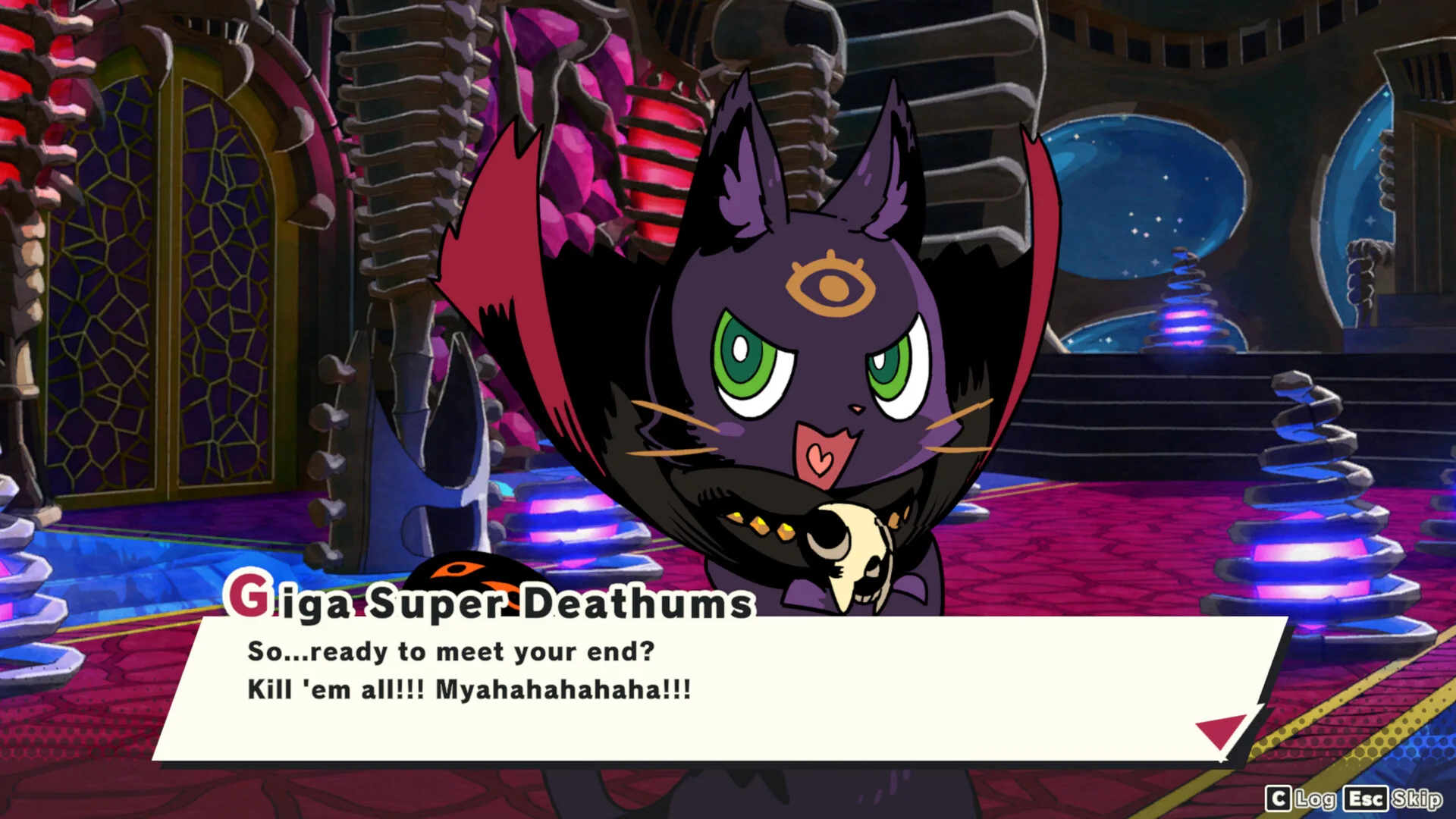
The fiction also works to make sacrifice comfortable. Peons are recruited from criminals, and their return in stronger form receives a dreamlike explanation, reducing the emotional resistance to disposing of them. Killshiro is harder to warm to. His hostility toward the world and fixation on his successful former school crush, Mary Haley, supply recognizable targets for ridicule, but dwelling on those grievances can leave the characterization dependent on the attitude it mocks. Chapter 2’s repeated genital-mutilation jokes expose a related limitation: the game keeps returning to the same provocation after its comic value has diminished. The expressive portraits give these exchanges energy that the repeated material struggles to sustain.
The dialogue becomes especially intrusive when it takes responsibility for teaching the game. Introducing mechanics across several chapters is sensible for a strategy RPG that asks players to rethink unit preservation, positioning, and preparation at once.
Killshiro and Giga Super Death discussing buttons and tutorials also fits the fiction’s game-conscious framing. Yet extended explanations and banter occupy time that could be spent testing a new ability or revising an unsuccessful plan. As the player becomes familiar with the systems, those conversations have less work left to do. The next useful lesson may already be available on the grid, waiting behind another exchange about how to play.
The Review
Demon's Night Fever
Demons’ Night Fever takes its Disgaea-associated mischief in a promising tactical direction, making recruited allies resources to spend and replenish. Sacrifice timing and calendar preparation give that idea substance, while permanent growth rewards repeat attempts. Unclear damage outcomes and cumbersome positioning make experimentation needlessly costly, though, and repetitive jokes and tutorial conversations slow the pace. Players attracted by Niikawa’s pedigree will find an interesting departure, provided they can tolerate the friction involved in learning its rules.
PROS
- Sacrifice timing creates meaningful tactical choices.
- Calendar limits connect recruitment with preparation.
- Persistent growth supports repeat attempts.
- Expressive portraits and distinctive menus.
CONS
- Unclear sacrifice damage and upgrade benefits.
- Repeated repositioning becomes laborious.
- Tutorial banter delays experimentation.
- Crude jokes wear thin through repetition.