

























Assane Diop is locked inside a transparent enclosure, restrained and available for inspection, and somehow this still fails to establish his whereabouts. When the lights go out and two museum robberies proceed under the Lupin name, his apparent disappearance confirms what everyone already suspects: the man can get out of anything. His reputation has become an exceptionally efficient prosecution witness. It requires very little evidence and cannot be cross-examined.
The nastier complication is Captain Sofia Belkacem’s serious injury during the pursuit. Assane insists that his version of Lupin would never kill, which exposes the weakness in having a public identity built around deception. He knows the rules he follows. Everybody else knows the disguises. Once somebody borrows those, the distinction between an ingenious thief and a violent criminal depends on a personal code that cannot be seen in security footage.
This is fertile territory for Lupin’s fourth season. Four years after surrendering, Assane is approaching early release and intends to take his son, Raoul, to Senegal. Then a cyberattack announces the robberies, manipulated evidence implicates him, and leaving prison legally becomes a vanishing possibility. The familiar criminal dragged back for another job has acquired a useful complication: Assane must defend himself against the very assumptions that once made him formidable.
Omar Sy’s charm gives that reversal some friction. Assane’s confidence remains enjoyable, particularly when he reconstructs the tricks for Guédira, yet expertise no longer guarantees authority. Explaining how a crime happened does not prove that he abstained from committing it. His intelligence can even make him sound suspiciously well informed. There is dry comedy in watching a professional manipulator discover the administrative disadvantages of being professionally manipulative.
The practical explanations retain the series’ puzzle-box pleasure. An LED screen conceals Assane inside the enclosure; a soluble substitute painting helps make a museum theft appear impossible. These are specific operations involving objects, placement, and an observer’s mistaken understanding. They give the deception something to push against. Assane’s task becomes interpretive: he must work backward from an effect to somebody else’s decisions, while the authorities work backward from his reputation to his presumed guilt.
I initially found the deepfake element an easy way to cheapen this contest. Fabricated footage can place a suspect wherever the plot needs him, which threatens to turn an intricate frame-up into a software demonstration. That objection needs adjusting, though. The screen and the substitute painting keep physical preparation inside the scheme. The copycat’s methods have not abandoned the old pleasure of explaining an illusion. They have extended the distance between the illusion and the people persuaded by it.
That extension is also where the technological material becomes less satisfying. A concealed body invites reconstruction; a convincing synthetic image asks us to accept a capability. The former offers the pleasure of discovering a mechanism, while the latter carries a looser promise about what an opponent can manufacture. The physical tricks provide the firmer foundation for the mystery. The footage is more effective as an assault on Assane’s credibility than as an ingenious feat in itself.
His credibility at home faces a different problem. Claire is now involved with Benjamin, Assane’s friend and accomplice, and their relationship gives those four missing years consequences that cannot be reduced to a calendar change. Other people have made decisions while he was away. The revelation interrupts the comforting fantasy that his release will allow everyone to resume their previous positions.
Assane’s response is welcome. He recognizes what has happened, gives them room to tell him, and avoids treating their relationship as a betrayal demanding punishment. That acceptance complicates the easy accusation that he simply wants control over everybody. He can relinquish a claim on Claire. Sy’s familiar assurance acquires a different value here: Assane can absorb a personal hurt without turning it into another contest he must win.
Benjamin has less room to maneuver. His continuing availability to Assane places pressure on his relationship with Claire, who finds herself competing with the demands of their friendship. Loyalty begins to look different depending on who is waiting. The same dependable friend can be an absent partner. This is a sharper use of the triangle than jealousy alone would provide, because nobody needs to stop caring for the arrangement to become painful.

Raoul’s estrangement is harder for Assane to accommodate. The Senegal trip gives his hope of reconciliation a tangible form, but a promise can preserve a parent’s image of the future long after a child has lost confidence in it. Assane wants to fulfill an obligation he still recognizes. Raoul has had to live through the interval. Their relationship makes the return to criminal ingenuity emotionally awkward: every demonstration that Assane remains an extraordinary Lupin can prolong the absence of an ordinary father.
The false accusation against Assane recalls the injustice that destroyed his own father, who was accused of stealing a necklace and later died in prison. The repetition has force because the circumstances differ. Assane has committed spectacular crimes. His father’s innocence cannot simply be transferred to him as an inherited moral status. Yet prior guilt offers no proof of responsibility for this robbery. The blurry footage identifying a Black suspect sharpens that failure of judgment: racial resemblance and criminal reputation fill the space where identification should be.
Raoul is left with consequences that an explanation of the heist cannot settle. Proving that the footage is false might restore Assane’s freedom; it cannot return the years already spent apart. Even the promised trip carries that missing time with it. Assane can still take his son to Senegal, if he gets the chance, but he will be traveling with someone who has grown older while waiting for him.
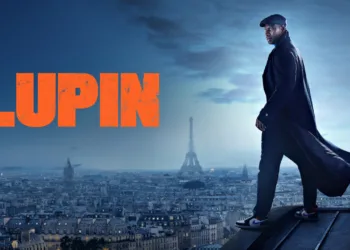
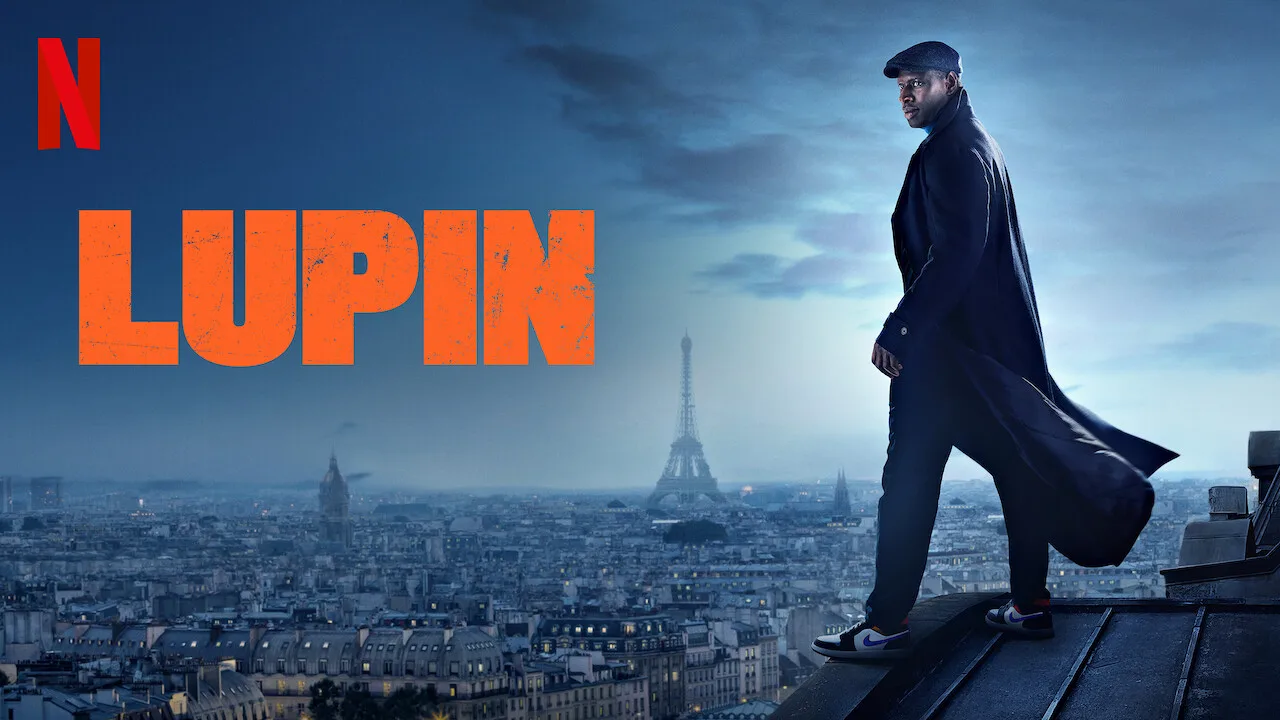
Lupin returned for its fourth season on Netflix on October 23, 2026. Inspired by the adventures of Arsène Lupin, master thief Assane Diop faces his greatest challenge yet as new enemies and unexpected secrets from his past threaten his family, forcing him to orchestrate his most dangerous heist to protect those he loves. You can stream the complete new season along with previous installments globally on Netflix.
Where to Watch Lupin Season 4 Online


Full Credits
Title: Lupin (Season 4 / Part 4)
Distributor: Netflix
Release date: October 23, 2026
Rating: TV-MA
Running time: 45–50 minutes per episode
Director: Ludovic Bernard, Hugo Gélin, Marcela Said, Daniel Grou
Writers: George Kay, François Uzan, Florent Meyer, Tigran Rosine
Producers and Executive Producers: Isabelle Degeorges, Nathan Françoise, Omar Sy, George Kay, Louis Leterrier
Cast: Omar Sy, Ludivine Sagnier, Antoine Gouy, Soufiane Guerrab, Shirine Boutella, Etéran de Panafieu, Théo Christine, Clotilde Hesme, Vincent Londez
Director of Photography (Cinematographer): Christophe Nuyens, Martial Schmeltz
Editors: Jean-Daniel Fernandez-Qundez, Audrey Simonaud
Composer: Mathieu Lamboley
The Review
Lupin Season 4
Lupin’s fourth season makes Assane’s reputation a liability, giving its copycat mystery a sharper purpose than another supposedly impossible robbery. The practical tricks reward curiosity; the deepfake footage offers less satisfying machinery. Omar Sy keeps Assane’s confidence appealing while the changed family relationships challenge his assumption that freedom means restoration. His acceptance of Claire and Benjamin’s relationship supplies welcome maturity. Raoul’s estrangement presents a problem for which being an ingenious thief is spectacularly poor preparation.
PROS
- Copycat premise turns Assane’s ingenuity against him.
- Practical illusions preserve the pleasure of reconstruction.
- Sy balances confidence with personal vulnerability.
- - Family relationships give his absence lasting consequences.
CONS
- - Deepfake evidence offers a less tangible, loosely constrained puzzle.