


























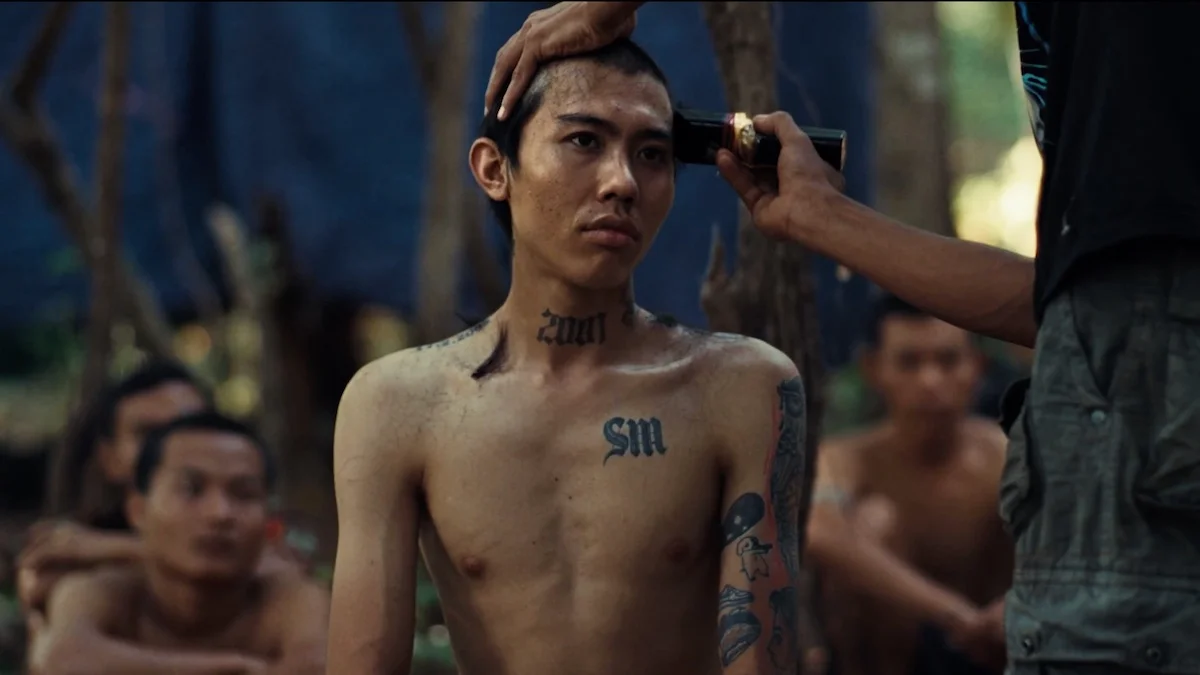

The volunteers in White Tiger Column are repeatedly reminded that they chose to come. A commander invites them to explain their reasons, to affirm that they are here willingly; elsewhere, the same freedom of choice becomes an answer to complaints about food and physical hardship. Their decision is called upon to account for everything that follows it. Among the obstacle courses and shouted instructions of this jungle camp in Myanmar, consent begins to acquire a duration. It must survive the next exercise, the next meal, the hours when conviction has to inhabit an exhausted body.
One recruit tells the others about being arrested and tortured, about his brother being killed, about a mother whose whereabouts he does not know. Later, he runs ahead of everyone during training until he collapses. The distance between these scenes allows his effort to remain troubling. His account gives the exertion a personal history without making his body transparent to us. We can see how hard he runs. We cannot know everything he is running with, and the collapse leaves his determination exposed to the ordinary, merciless limit of what a person can physically bear.
Directors Robert Mentov, Dwight Jantzi, and Bryan Dickie spend most of their documentary within the recruits’ 45-day preparation for service in a People’s Defence Force militia. Roughly thirty young people pass through its routines, committed to resisting the military dictatorship established after the February 2021 coup. The political objective is clear; the experience of choosing it keeps changing. By staying with preparation, the filmmakers give time to the interval between declaring oneself ready and discovering what readiness demands. Crawling, press-ups, reprimands: the body receives the decision in instalments, long after the mouth has announced it.
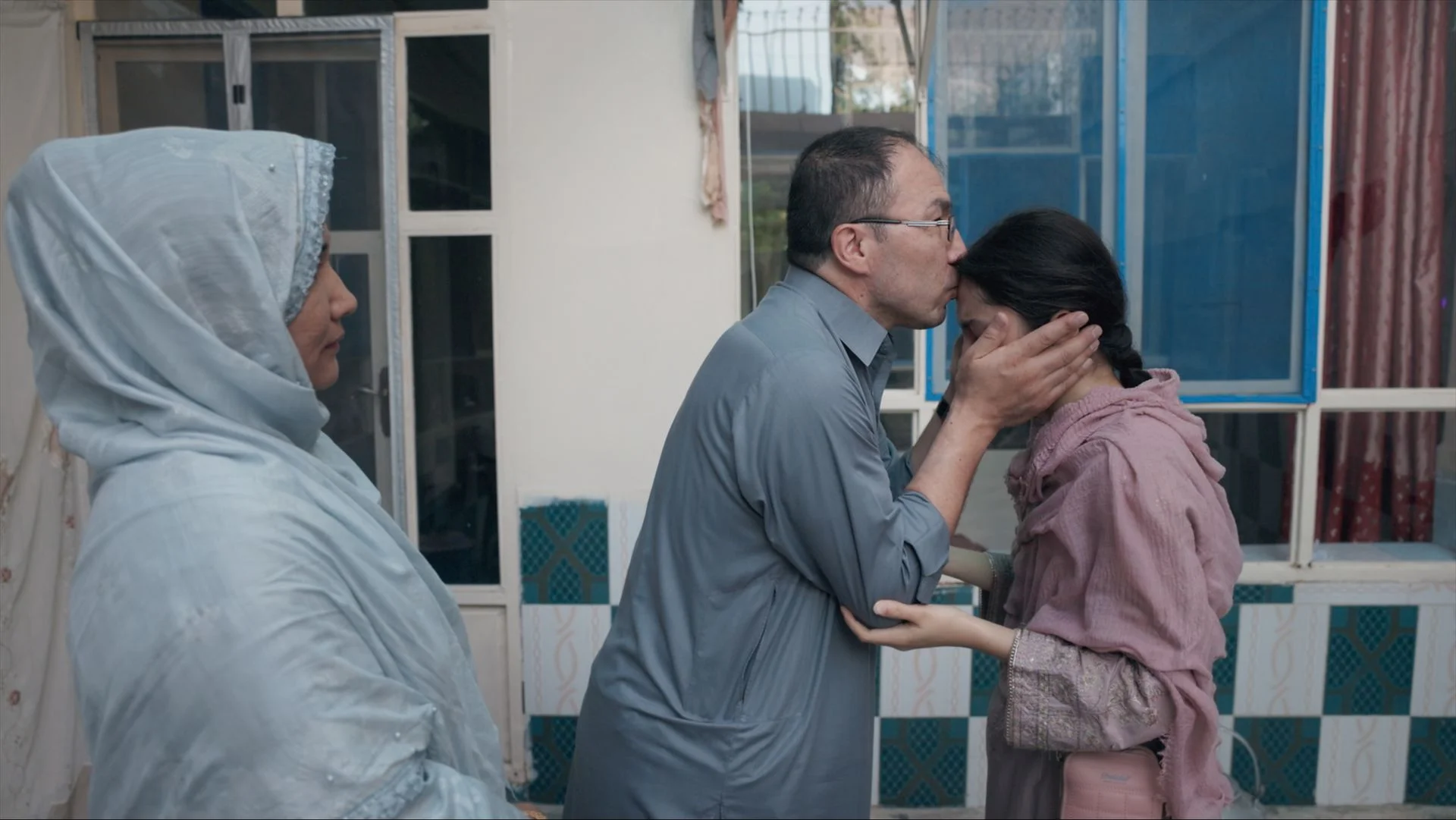
Home returns on a different schedule. The cadets are allowed one telephone call each week, a restriction that gives family contact its own small place within military time. A recruit describes the ache of remembering loved ones at night. One young woman recalls leaving her house without saying goodbye so she could enlist. These fragments make departure feel unfinished. The camp can organise meals and exercises, but the people left behind continue to occupy its hours, arriving through a call or through memories that become harder to bear after dark. Choosing to leave does not give anyone command over the absence.
During a break, two teenage girls sing along to Taylor Swift, and one begins to cry. The emotional change is sudden, its cause unavailable. The familiarity of the song offers no reliable translation of her tears; grief, homesickness, fear, or some private association would all be guesses. What matters is the ease with which pleasure becomes permeable. A shared activity carries them into a feeling that cannot be shared quite so completely. The filmmakers allow the moment to retain that privacy, and its tenderness depends on the small distance between witnessing someone’s distress and knowing what it contains.
There is genuine ease elsewhere: recruits wash in the river, play with the camp’s dogs, gather around a guitar. Such scenes give their companionship a physical existence, something made through proximity and repeated activities. They also make the coming dispersal harder to imagine without loss. A friendship formed here belongs to a place already counting down towards departure. The film lets us spend enough time among these pleasures to feel their present value, while the training schedule keeps placing a limit around them. Affection develops inside an arrangement that will soon send its participants elsewhere.
The preparation of homemade explosives brings another kind of intimacy with materials. Chemicals are mixed in a wok; cans and plastic bottles become containers; small detonations are greeted with cheers. Familiar objects pass into lethal use through work carried out together. The scenes expose the militia’s limited equipment while making the recruits’ satisfaction uneasy to sit beside. Their success is practical and immediate, yet its purpose reaches beyond the test. When instructors warn them that combat will bear little resemblance to Hollywood warfare, the improvised devices give that warning a material weight. Enthusiasm has something frighteningly tangible to work on.
The soundtrack keeps this apprehension dispersed through the camp. Wind, water, birdsong, and creaking branches give the jungle an audible life around the drills, while Dylann Miller’s restrained score places low sustained chords and vocal textures beneath it. The music seldom overwhelms those surroundings. Its quiet pressure lets an ordinary sound remain ordinary while making it difficult to hear the place as secure. The river can offer relief without promising protection. Sitting inside this mixture, one becomes conscious of how much the camp’s sense of shelter depends on a temporary routine, on people continuing to do what they did yesterday.
The film’s sympathy is explicit, extending to its dedication to the recruits, and its closeness leaves important political questions outside the frame. The opening account of the coup supplies little sense of the resistance’s internal complexities; conversations about personal motives cannot tell us how the wider movement exercises power. This limits the authority of the portrait.
The commanders’ invitations to speak and their harsh appeals to voluntary commitment remain suggestive encounters, insufficiently examined to settle questions about the institution receiving these young lives. The tenderness is persuasive at the scale of companionship, where a phone call or a confession gives it something particular to answer to.
Departure and deployment arrive late, after so much time spent preparing for them that leaving carries the weight of interrupted habits. Then attention passes to another intake, nervous newcomers receiving uniforms. Familiar procedures have begun to admit people we do not know. The camp already has a place for them, a schedule, clothing to distribute; our attention is slower to adjust. They have histories that cannot be read from their shuffling, and the administrative business of arrival continues before we can begin to understand what each has left outside.
White Tiger Column had its world premiere as the opening film of the 39th International Documentary Film Festival Amsterdam (IDFA) on November 12, 2026. Directed by Robert Mentov, Dwight Jantzi, and Bryan Dickie, the documentary provides an intimate look inside a jungle training camp where civilian recruits prepare to join Myanmar’s resistance movement.
Full Credits
Title: White Tiger Column
Distributor: Lightwood Green
Release date: November 12, 2026 (International Documentary Film Festival Amsterdam)
Running time: 1 hour 35 minutes (95 minutes)
Director: Robert Mentov, Dwight Jantzi, Bryan Dickie
Writers: Alyse Ardell Spiegel
Producers and Executive Producers: Tom Edgerton, Dwight Jantzi
Cast: Not applicable (Documentary featuring real-life resistance recruits)
Director of Photography (Cinematographer): Robert Mentov
Editors: Alyse Ardell Spiegel, Karl Kai
Composer: Dylann Miller
The Review
White Tiger Column
White Tiger Column gives forty-five days the weight of a life being rearranged. Training, shared songs, and calls home make commitment felt as something the body must keep answering for. Its closeness to the recruits leaves the resistance’s politics and the camp’s authority insufficiently explored, yet the patient attention to companionship earns its tenderness. The departure of one intake and arrival of another leave an ache that no declaration of courage can settle.
PROS
- Training scenes connect conviction to bodily limits.
- Shared pleasures retain the ache of separation.
- Restrained scoring deepens the jungle’s uncertain shelter.
- The new intake gives the ending unresolved emotional weight.
CONS
- Little explanation of the resistance’s internal politics.
- Limited scrutiny of how camp authority invokes consent.