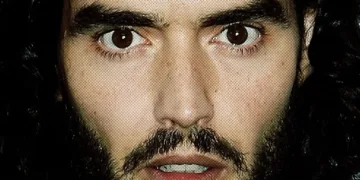




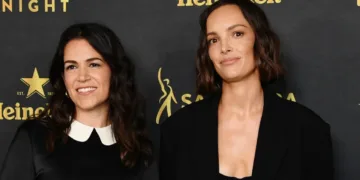
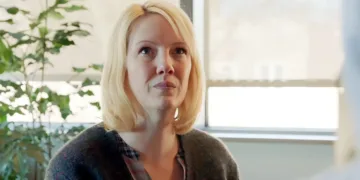















Rosamund Urwin describes approaching people who had already left Russell Brand’s circle. They could point her toward other people, including those willing to speak publicly, without the same fear of losing access to him. In Olivia Isaacs’s documentary Russell Brand: Open Secret, this practical explanation gives the reporting a shape we can follow. A story begins with a conversation, which produces another name, which may eventually produce an account that can be published. Urwin makes the distance between hearing something and establishing it feel substantial.
Her investigation began in 2019, with Charlotte Wace later joining the work that reached publication and broadcast in 2023. Their retrospective accounts supply the film’s clearest sense of progression. Women feared legal action and public exposure; talking privately did not mean agreeing to be identified.
When Urwin discusses a woman called “Nadia,” who alleges rape, she separates the reported apology from Brand from the verification that Nadia sought support afterward. Each detail tells us something different. I appreciate how the journalists’ explanations let us understand the work behind an allegation without turning a woman’s willingness to appear on camera into a test of its seriousness.
Isaacs builds the surrounding film from interviews and an extensive entertainment archive, tracing Brand’s career alongside accounts of abusive behavior. The women filmed here were separate from the complainants in the trial that led to his conviction for rape and sexual assault. Their allegations were not adjudicated by that verdict, and Brand has maintained that his sexual relationships were consensual. The documentary’s personal accounts deserve attention on their own terms.
Jordan Martin describes visiting Brand in Hawaii while he was making Forgetting Sarah Marshall. According to her account, he demanded that she wear black and made her brush her teeth until her gums bled. She also alleges sexual assault, but the clothing and toothbrushing recollections explain something that a list of accusations cannot: how control can occupy ordinary activities until the person subjected to it loses confidence in her own judgment. Her recollection of feeling perpetually confused gives those details a human connection. The film is strongest here when it allows that confusion to remain intelligible, rather than reducing the relationship to a warning sign viewers should congratulate themselves for spotting.
For the anonymous contributor identified as “Emily,” Isaacs uses an actor to deliver the woman’s own words. Emily alleges that Brand raped her after refusing her request to use protection. This is mediated testimony: someone else speaks the account so its author can remain unidentified. The arrangement preserves a spoken presence without demanding personal exposure as the price of being heard. It also asks viewers to keep the account and its delivery distinct. We are listening to a woman’s description of what happened, presented through a performance, rather than watching a reconstruction of the alleged assault.
Georgina Baillie’s contribution gives the film a different kind of injury to examine. She describes her sexual relationship with Brand as consensual. The harm she discusses followed the calls Brand and Jonathan Ross made to her grandfather, Andrew Sachs, boasting about that relationship. Baillie faced humiliation and harassment over a broadcast she had neither devised nor authorized. Hearing her account changes the scale of Sachsgate. An incident usually recalled through the careers and punishments of famous broadcasters acquires consequences for the woman whose private life supplied their material.
This is where the archive earns its place. Recontextualization simply means placing a recording beside information that changes how we understand it. Brand’s interviews and stage appearances document sexual boasting and self-denunciation as parts of his public act; Baillie’s testimony lets us hear the costs excluded from that act. The recordings establish what was said and how it was received. They cannot independently prove a particular assault, and laughter cannot tell us what each audience member knew. Their value lies in showing how this public persona functioned as entertainment.
Isaacs sometimes pushes those images harder than they need to be pushed. Slowing early performance and home-video footage stretches an ordinary expression or gesture until it invites scrutiny as something ominous. Dramatic scoring supplies a similar instruction before the image has established much on its own. I found these passages less persuasive than the patient reporting accounts. The issue is the particular use of speed and music: it encourages viewers to search a face for a secret that testimony and corroboration are already doing the difficult work of examining.
Sarah Solemani’s discussion of the period’s sexualized entertainment culture, accompanied by footage from The Big Breakfast, provides a useful account of what television rewarded. The sequence establishes a permissive television atmosphere, but gives us less help with decisions taken by particular people. Sexual openness and nonconsensual conduct are different subjects.
The later career material has a similarly uneven relationship with explanation. George Monbiot recalls the attraction of Brand’s left-wing activism; the film then follows Brand into conspiracy broadcasting and public Christianity. The political turn gains a clear purpose when Brand portrays the reporting against him as an attack by establishment media. His audience is being offered a framework for rejecting the allegations before considering them. That connection is useful. The compressed succession of new identities offers less room to examine how support was transferred between them, and it cannot settle the sincerity of religious belief.
Monbiot’s presence means this is no simple parade of people who always opposed Brand. Still, the absence of fresh interviews with Ross and former Radio 2 controller Lesley Douglas leaves the institutional account incomplete. The missing material concerns decisions: what objections reached people with authority, how they assessed them, and what they did next. Closing updates establish the court outcome, but a conviction cannot answer those earlier questions about professional responsibility.
The contributors’ hopes that women will feel able to speak are understandable. Martin’s account of trying to attract press attention to her 2014 memoir, kNot, gives that encouragement a specific complication. She says she had already tried to make herself heard. Her experience leaves another task for the film’s institutional inquiry: tracing where that attempt went, who received it, and how it was handled.
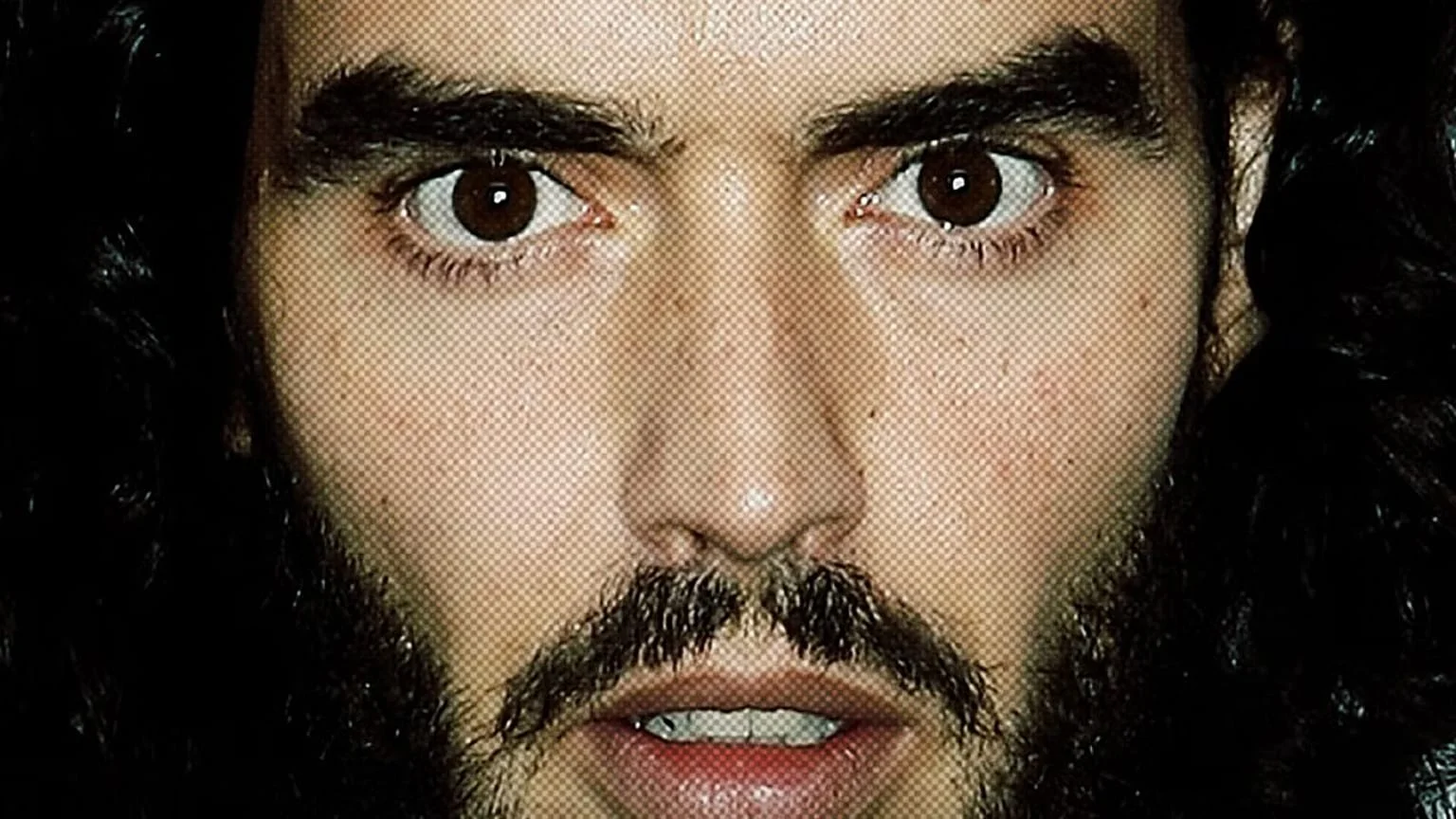
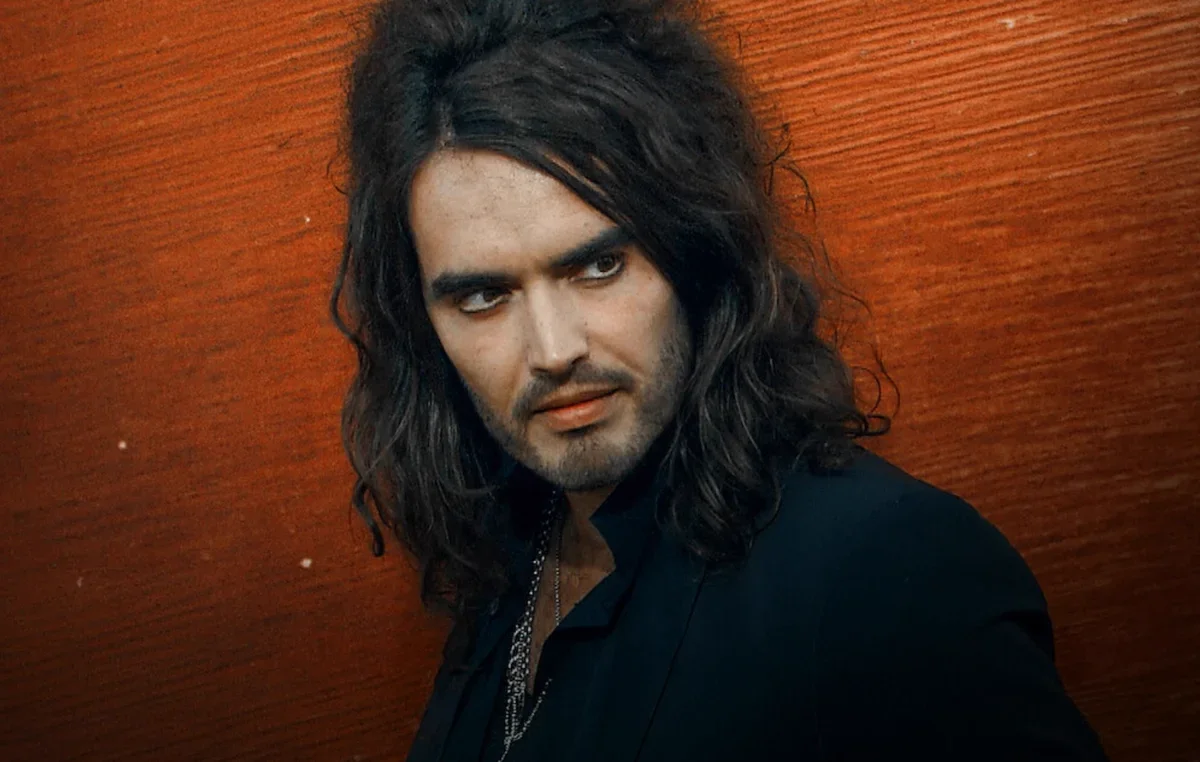
Russell Brand: Open Secret premiered globally on Netflix on November 13, 2026. Directed by Olivia Isaacs, the biographical true-crime documentary charts the meteoric rise and steep fall of the British comedian and entertainer following landmark investigations and his subsequent criminal trial.
Where to Watch Russell Brand: Open Secret (2026) Online


Full Credits
Title: Russell Brand: Open Secret
Distributor: Netflix
Release date: November 13, 2026
Rating: TV-MA
Running time: 1 hour 23 minutes (83 minutes)
Director: Olivia Isaacs
Producers and Executive Producers: 72 Films
Cast: Russell Brand, Rosamund Urwin, Charlotte Wace
The Review
Russell Brand Open Secret
Olivia Isaacs makes the patient work of reporting understandable and gives the women’s accounts room to explain harms that celebrity headlines flatten. The actor-delivered testimony protects anonymity while preserving a spoken presence, and Baillie’s account changes how Sachsgate reads. Insistent music and slowed footage sometimes press harder than the evidence needs, while missing institutional voices leave important decisions unexplored. A worthwhile documentary, strongest when explaining how allegations become publishable and less satisfying when examining how protection endured.
PROS
- Clear explanations of investigative reporting and corroboration.
- Personal testimony reveals distinct forms of harm.
- Actor-delivered testimony preserves anonymity.
- Baillie’s perspective gives familiar archive new meaning.
CONS
- Ominous scoring and slowed footage overstate their case.
- Missing institutional voices limit scrutiny of professional decisions.
- Compressed career reinventions leave shifts in support underexplored.