

















Brooklyn McCrystal joins Tinder looking for a lead, finds the profile her missing friend had shown her, and gets a phone number for investigators. Sydney Loofe, 24, has disappeared after a second date with a woman calling herself Audrey. McCrystal’s intervention gives the search something usable, and the detective discussing it has to acknowledge both its value and its danger. His gratitude comes with a professional obligation to discourage a repeat. The tension needs little embellishment: McCrystal is trying to reach someone the police urgently need to find.
Sydney’s colleagues supply a different kind of knowledge. Missing work without explanation is sufficiently unlike her to trigger alarm; Michael Glascon remembers her helping him become sociable and inviting him fishing. Brian Biegel gives these recollections substantial room in “The Search for Sydney,” the first episode of Hulu’s three-part Swipe Right on the Devil. Glascon’s account is particularly useful because Sydney gets to be the person making something happen in somebody else’s life. The investigation will accumulate phone records and surveillance footage. First, the documentary establishes who noticed she was gone, and why they acted.
That opening takes its time, especially beside the increasingly disturbing material that follows. Yet calling Sydney’s biography a delay would misunderstand what the episode accomplishes. Her move to Lincoln, her working life, and her frustration with short-lived relationships establish an existence that a murder investigation can easily reduce to a timeline.
Biegel also discloses the fatal outcome rather than spending three episodes pretending it remains an open question. The first hour’s momentum comes from tracing the search and identifying Audrey as Bailey Boswell, who lives with Aubrey Trail. The series has answers to pursue beyond the identity of its killers.
The second episode, “Another Missing Girl,” makes its strongest structural move by turning toward Kaitlyn “Katie” Brandle. Katie had become involved with Boswell and Trail before Sydney’s disappearance. During a trip to Branson, her mother Jennifer, increasingly worried about losing contact, invented a medical emergency involving Katie’s father to bring her home. The documentary presents Katie as an intended murder victim whose departure preceded the targeting of Sydney. Her account changes the function of the middle episode. It reconstructs an existing pattern of recruitment and threatened violence, making the connection to Sydney’s murder clearer.
Here, the title’s promise of dating-app horror gives way to something more specific. The women describe Boswell offering romantic attention, followed by Trail offering money and somewhere to live. Affection and practical support become routes into dependency. Sydney’s difficulty finding companionship and the survivors’ accounts of rejection help explain the appeal of those offers without making abuse the inevitable consequence of loneliness. Biegel has enough testimony to show deliberate exploitation. A warning about swiping carefully would be a feeble substitute for examining what Boswell and Trail did after gaining someone’s trust.
Trail supplies the occult vocabulary himself. His warlock credentials are self-issued, and the documentary is most informative when the women describe the rules beneath that grandiose title. They recount physical punishment and needing permission to use the bathroom. Those restrictions make the operation of control legible without requiring viewers to solve his theology. Claims about gaining power through killing matter because they entered conversations about actual violence. They need to remain claims, attached to the people making them. The permission system is considerably easier to verify than the magical one.
The survivor interviews give this material a difficult, necessary weight. Jaya “Ana” Golyakova refers to herself in the third person when recounting experiences she finds painful to discuss. Katie holds a small stuffed dog. Such details resist the tidy progression from victimization to confident retrospective explanation.
Katie and Ashley Hills also acknowledge conversations about murder while saying they never intended to carry them out. Their testimony contains attachment, fear, regret, and uncertainty about threats they once hoped were merely talk. The documentary allows those difficulties to remain audible instead of making every witness an uncomplicated delivery system for the next revelation.
There is a cost to this expansion. Sydney’s personal presence becomes less immediate as the series spends increasing time reconstructing the household around Boswell and Trail. The opening has established her carefully, but that work cannot automatically carry every later shift toward the perpetrators. The survivors’ testimony earns its place by explaining the environment in which the crime developed. The finale’s search for a definitive account of the couple’s hierarchy is less convincing. By then, the series has moved from showing how control operated to entertaining competing explanations of who possessed it.
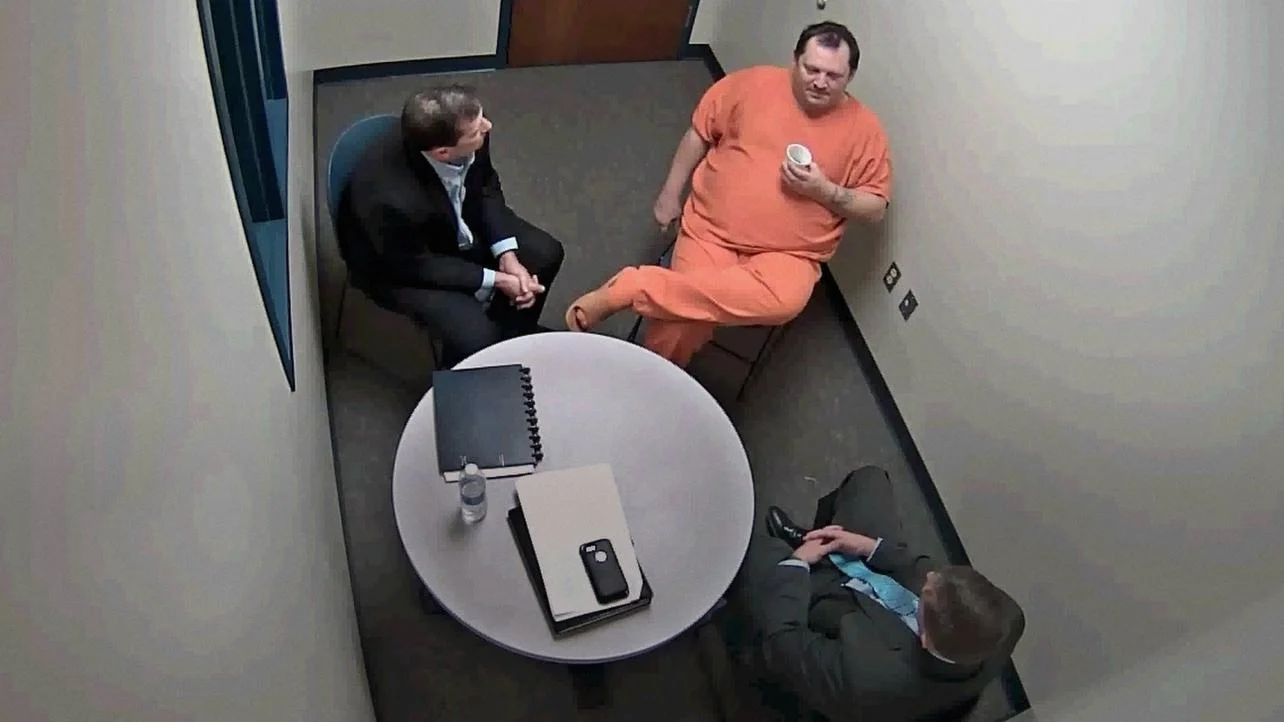
“Witches Can Be Made,” the third episode, covers the separate trials and introduces brief prison-interview material with Trail. Both he and Boswell were convicted of first-degree murder. Trail had previously claimed Sydney died accidentally during consensual sexual activity; he now acknowledges a planned killing in which both participated. A coded jail message also describes his willingness to accept responsibility to help Boswell avoid conviction. This is substantial material about an effort to manage their accounts. It establishes a strategy. It leaves room for several interpretations of the relationship behind it.
Some investigators’ late suggestion that Boswell may have controlled Trail gives the finale an additional turn, reversing the earlier emphasis on his dominance. It is an arresting possibility, yet the placement gives it a decisiveness the evidence does not fully supply. Trail’s willingness to take blame could reflect manipulation, attachment, calculation, or some combination. His new account assigns Boswell greater murderous ambition while admitting his own participation. Even his confession comes with casting notes. Boswell declined an interview, leaving the documentary with an imbalance of access that cannot settle the question of authority between them.
The brief duration of Trail’s prison material limits his screen time without resolving the problem of its dramatic position. He arrives late, with a revised explanation, after witnesses have described his talent for telling people what serves him. The convictions supply legal resolution; his account offers the attraction of a final interpretive answer. Biegel has already shown how a story about power can become an instrument of power. Why should Trail’s latest version receive the privileges of a final reveal?
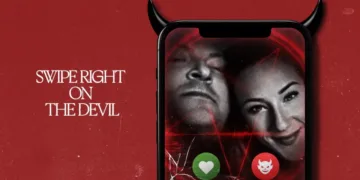
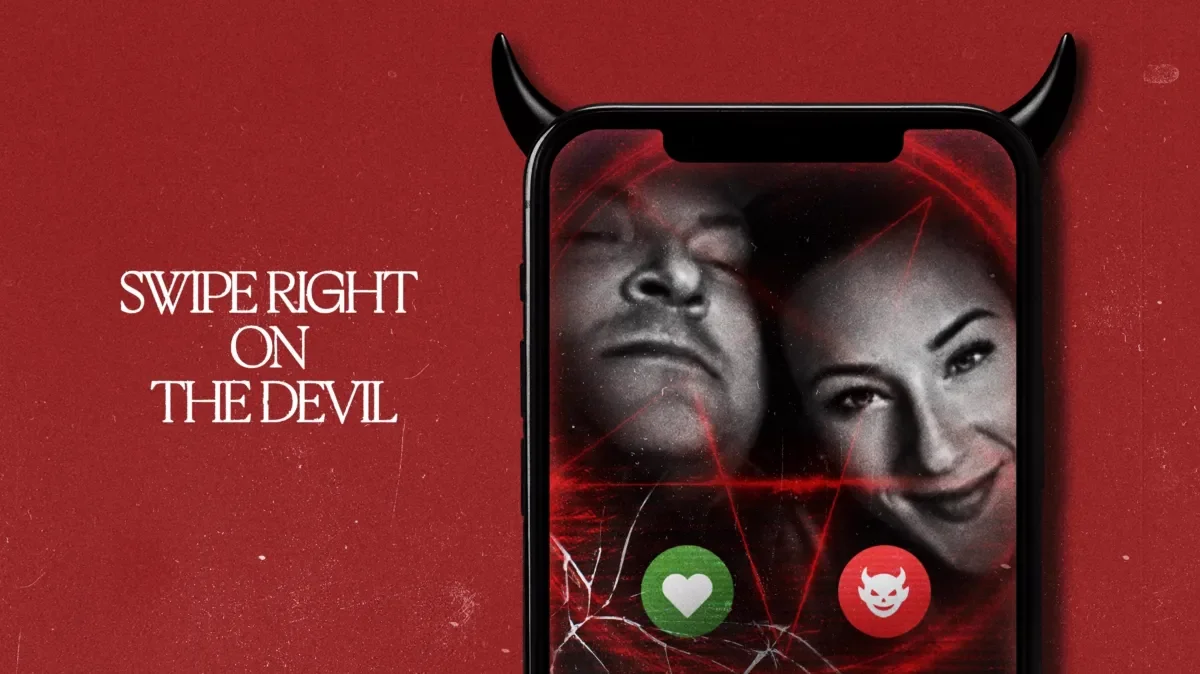
Swipe Right on the Devil premiered globally on Hulu and Disney+ on October 22, 2026. Directed by Brian Biegel and produced by Imagine Documentaries, this three-part true-crime docuseries examines the 2017 disappearance of 24-year-old Sydney Loofe after a Tinder date, leading investigators into a dark subculture of manipulation, con games, and bizarre occult claims surrounding her killers.
Where to Watch Swipe Right on the Devil Online

Full Credits
Title: Swipe Right on the Devil
Distributor: Hulu, Disney+
Release date: October 22, 2026
Rating: TV-MA
Running time: 45 minutes per episode (3 episodes)
Director: Brian Biegel
Producers and Executive Producers: Brian Grazer, Ron Howard, Sara Bernstein, Christopher St. John, Justin Wilkes, Craig D’Entrone, Pete Kasko, Brian Biegel
Cast: Sydney Loofe, Bailey Boswell, Aubrey Trail
The Review
Swipe Right on the Devil
Swipe Right on the Devil earns its three episodes through investigative detail, a carefully established portrait of Sydney Loofe, and survivor testimony that resists tidy explanations. Its strongest developments clarify how coercion worked. The finale is shakier, giving competing accounts of the killers’ relationship a dramatic certainty they have not earned. Trail’s confession comes with casting notes, and the documentary could scrutinize those notes harder.
PROS
- Personal recollections give Sydney an active, individual presence.
- Katie’s story meaningfully expands the investigation.
- Survivor interviews preserve difficult emotional contradictions.
CONS
- Sydney becomes less immediate in later episodes.
- The late reversal of the couple’s hierarchy lacks firm support.
- Trail’s revised account receives excessive dramatic authority.