



























Sanji’s history at the Baratie gives a restaurant game a convincing place within One Piece. Feeding people already belongs to this character’s identity, and Grand Gourmet builds its management systems around that connection. Cooking itself happens instantly once ingredients are selected. Your attention goes toward choosing a main course, side dish, drink, and dessert, arranging the dining space, and keeping the business supplied. The pleasure comes from developing the establishment around Sanji’s cooking, with staff handling the serving while you decide what should happen next.
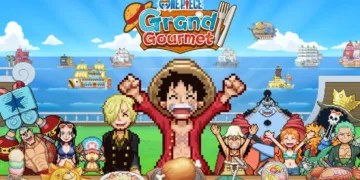
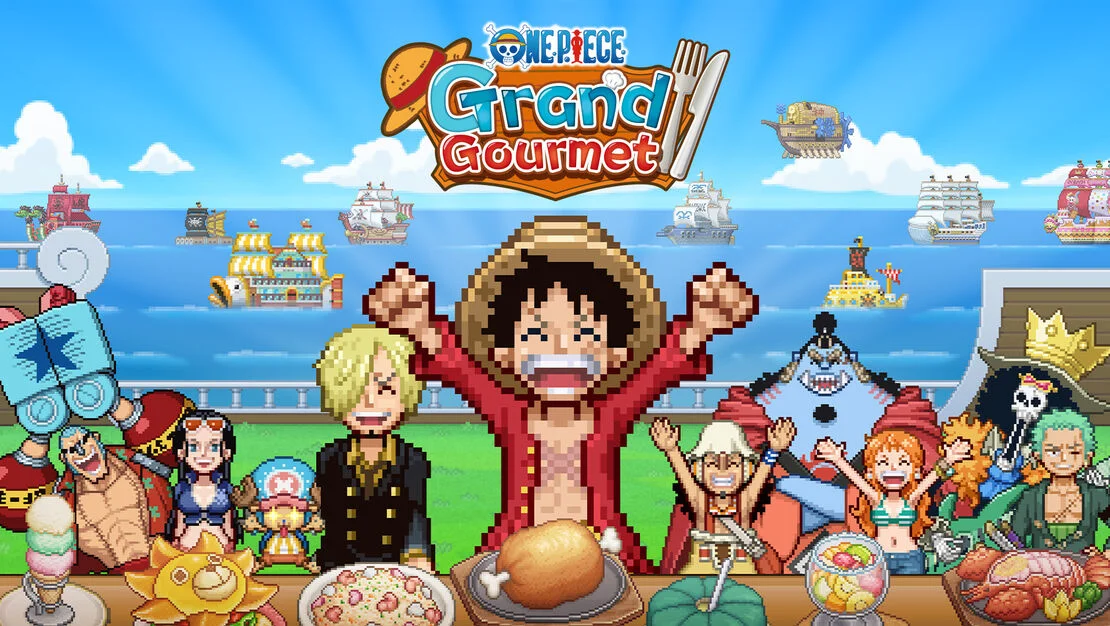
Kairosoft’s familiar pixel-art management approach accommodates the Straw Hats particularly well. Luffy goes looking for ingredients and potential recruits, Nami cuts purchasing costs, Zoro trains employees, and Franky expands the ship. These assignments give recognizable crew roles practical consequences. Finding another Straw Hat means gaining a useful service alongside the satisfaction of a reunion. Compared with simply collecting familiar faces, this division of labor gives you reasons to care about who has joined and what their arrival lets you change.
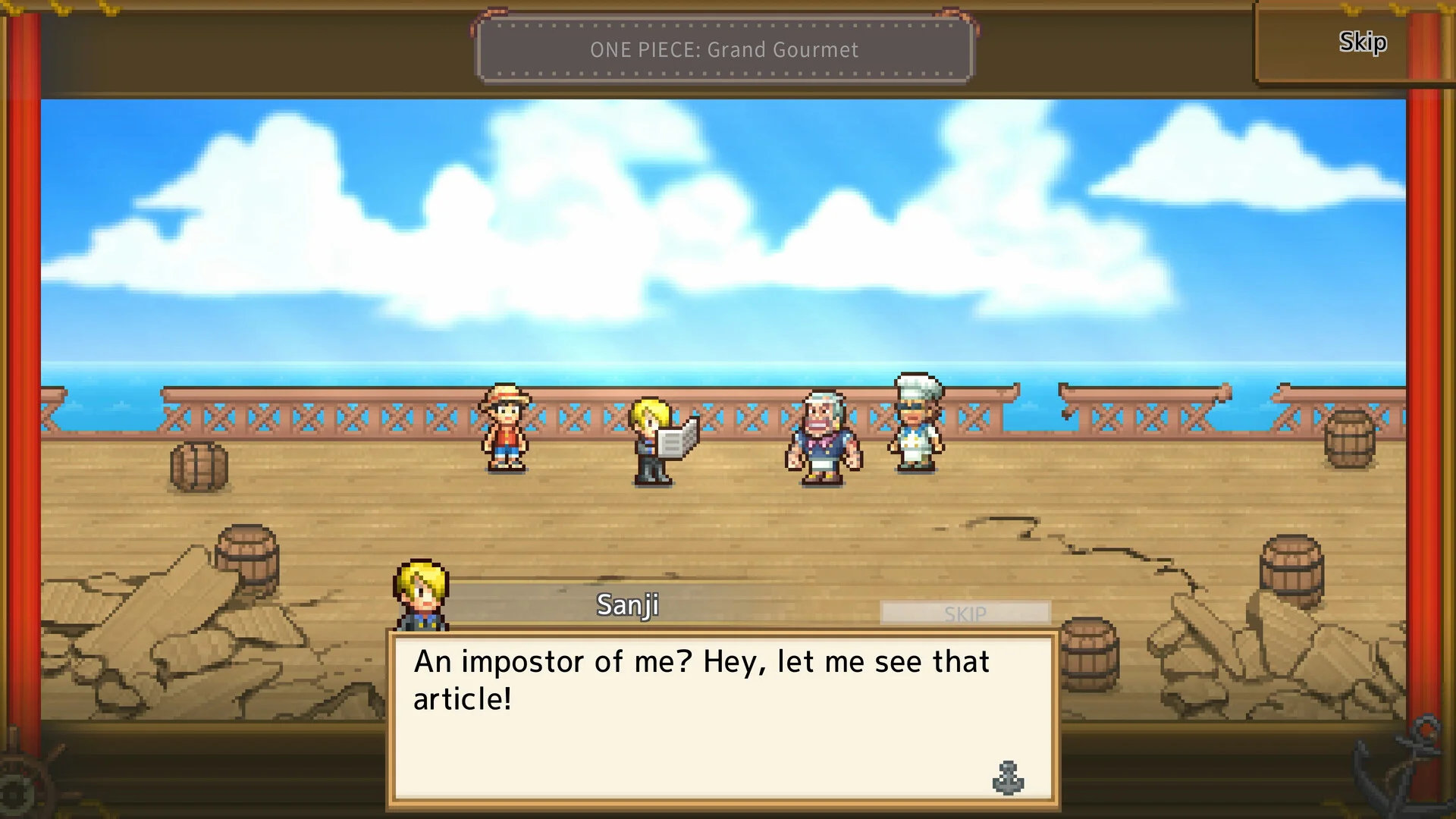
The impostor restaurant supplies a straightforward competitive framework. You help Sanji establish a second Baratie, reunite the scattered crew, and build a reputation strong enough to challenge the fakes across successive seas. It is a thin narrative, introduced quickly and largely left to support recruitment and growth. The more engaging connections develop through ordinary management. An expedition brings back ingredients and gifts; those help produce recipes or improve customer affinity; satisfied visitors become regulars, introduce other characters, or join the staff. Progress keeps creating another small task within reach.
For returning fans, the customer system gives series knowledge a use beyond recognizing sprites. Vivi prefers an Alabasta-themed dining area, and attracting her can bring Baroque Works characters into the restaurant’s orbit. Decorating becomes a way to cultivate a particular clientele.
Visitors have preferences involving meals, gifts, surroundings, and other people, so the hundreds of characters represent an expanding network of possible connections. Regulars can keep visiting after the ship moves to another sea, making the relationships you develop part of the restaurant’s continuing growth.
That attention extends into the presentation. Sanji’s eyes briefly turn into hearts when he serves Nami, while Luffy tackles a stack of plates. Nami’s orange parfait carries her identity into the menu through a peel shaped like her tattoo.
These details work at different scales: a familiar gesture makes a tiny sprite expressive, and a dish makes characterization something you can serve. Conversations add another kind of recognition, including child Momonosuke and Rayleigh recalling earlier times. The pleasure lies in seeing the game remember connections that a less attentive adaptation could easily overlook.
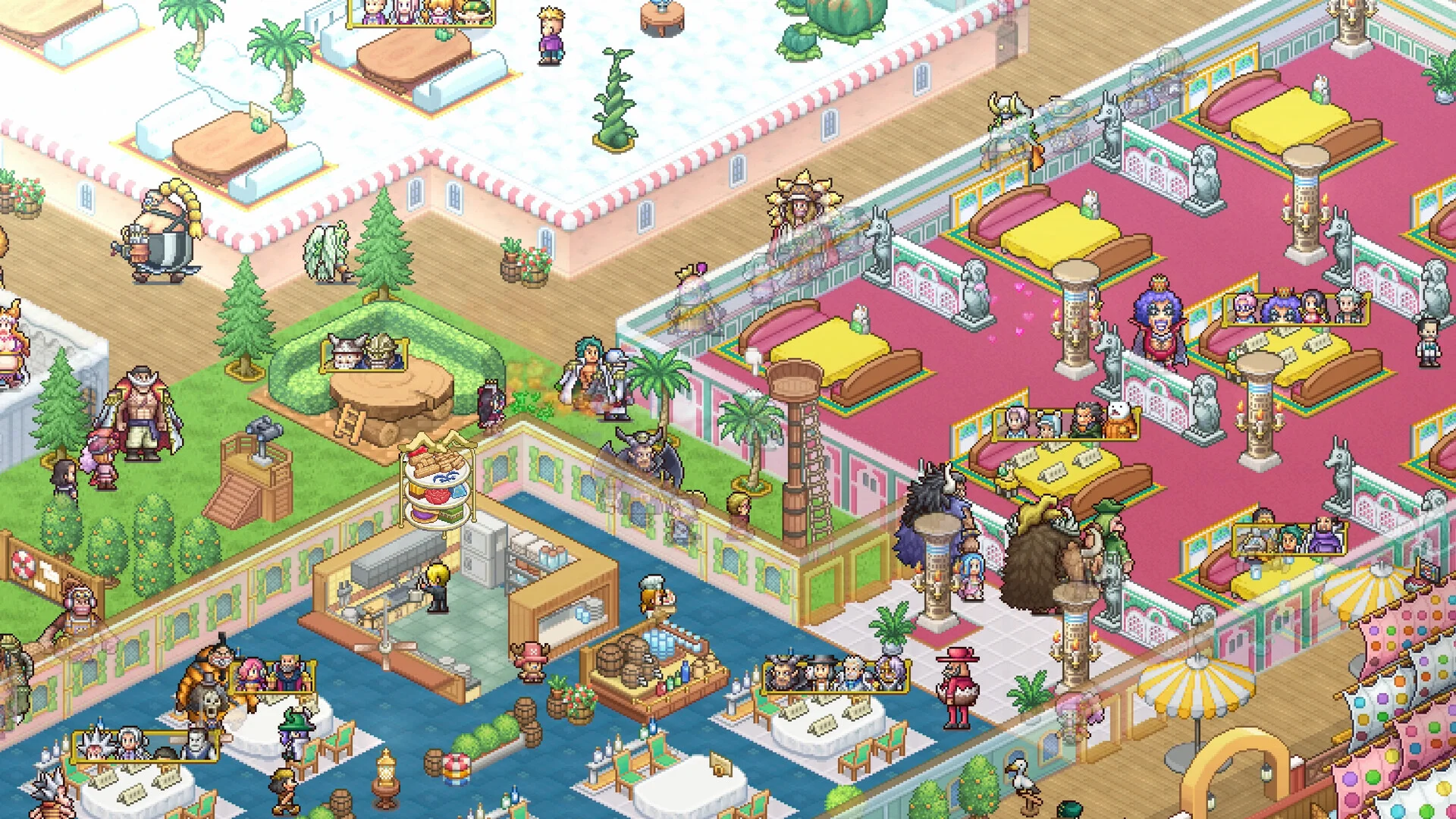
Its appetite for inclusion creates some awkwardness, though. Doflamingo and Akainu can become customers within the same welcoming commercial routine. The game preserves individual appearances and habits while relaxing the hostilities that give those characters their dramatic significance.
That compromise suits a franchise gathering better than a faithful continuation of the story. Existing fans get the fullest benefit from the references and social clues, but familiarity is an advantage rather than a requirement for understanding the basic restaurant business. Newcomers have preferences and objectives to follow, even when the significance of a conversation passes them by.
As the ship expands, the attraction increasingly resembles the gradual development of Animal Crossing: adding facilities and welcoming familiar visitors can be satisfying without a steep difficulty curve. Shops and aquariums give guests something to do after eating, while expeditions and requests keep several projects running together.
There are useful decisions about spending, recruitment, and where to direct the crew. Cooking competitions provide gates between seas. Yet the restaurant grows busier faster than it becomes strategically demanding. Much of the later momentum comes from accumulating activities, characters, and options rather than being pushed to rethink a successful approach.
Automation exposes both the convenience and the limits of that rhythm. Once Tori can select menus according to specified conditions, you can direct attention elsewhere. Delegation feels useful when another part of the business needs a decision.
It feels less useful when an objective mainly requires money, hearts, or ingredients to accumulate and the sensible response is to wait. Brief visits suit this arrangement because several small developments can be ready to inspect on your return. During a sustained session, the difference between having several projects underway and having several interesting choices becomes easier to notice.
Building the restaurant has a similar division between inviting expansion and awkward revision. Selecting a themed floor tile automatically supplies surrounding architecture and converts tables, making a new dining area easy to establish. Rearranging that space later is needlessly cumbersome.
Objects cannot be temporarily stored, so renovating a crowded area requires shifting furnishings into whatever spare corner remains. A game that encourages you to collect decorations and accommodate different customer tastes should make reconsidering an arrangement convenient. Here, the growing inventory of possibilities can make changing your mind feel like extra work.
The menus add further friction. The back button can return to a previous screen or close the menus entirely, and some functions are cumbersome to reach with a controller. Touch input offers another route, but selection areas do not always match the visible fixtures. Meanwhile, conversations, requests, expedition results, and character updates compete for attention. The very interactions that make early visitors feel distinctive become interruptions when several arrive in succession. Managing a successful restaurant increasingly involves dismissing messages so you can get back to managing it.
The sound and English text receive less care than the sprites. A small, frequently repeated music selection becomes tiring during the same recurring visits that suit the management loop. Localization errors are harder to dismiss in a game whose appeal depends so heavily on knowing its cast. Whitebeard being introduced as “she” is an especially conspicuous mistake. Recognizing Sanji’s response to Nami or the shape of a garnish suggests close attention to individual characters; an incorrect pronoun in an introduction makes that attention feel uneven across the game’s different parts.
The Review
One Piece Grand Gourmet
Grand Gourmet gives Sanji’s culinary identity a fitting management framework, with crew roles and customer preferences turning franchise familiarity into useful knowledge. Its expanding restaurant offers plenty of reasons to return, especially for fans who appreciate the carefully observed character details. Growth brings fewer fresh decisions than fresh tasks, though, and awkward controls and persistent notifications interrupt the relaxed rhythm. A charming One Piece diversion whose affection for the cast exceeds its interface polish.
PROS
- Crew abilities give recruitment practical value.
- Customer relationships reward franchise knowledge.
- Expressive sprites and character-inspired dishes.
- Satisfying restaurant growth suits brief sessions.
CONS
- Awkward menus and furniture rearrangement.
- Frequent notifications interrupt management.
- Later growth leans on accumulation and waiting.
- Repetitive music.
- Conspicuous English localization errors.