




























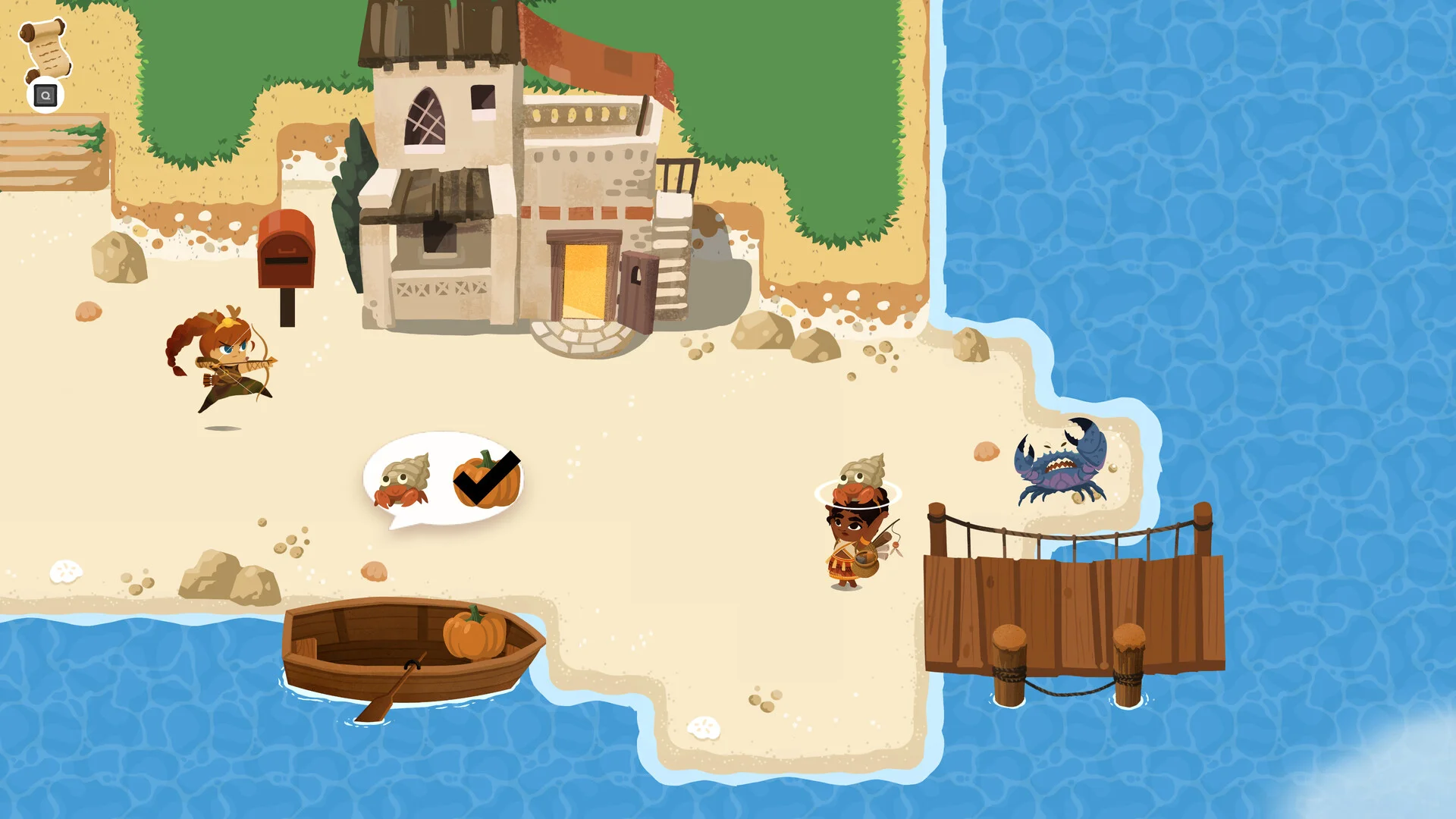

Artemis has been carrying supplies around Ithaca one item at a time when Penelope offers to make her a bag. The extra capacity is a welcome convenience, but receiving it from someone she has been helping gives the relief a personal quality. Someone has noticed the work. Someone can make it easier. For a game built around fulfilling requests, Mythmatch understands the pleasure of occasionally letting its useful protagonist receive some assistance herself.
That exchange develops through the town’s everyday routines. Residents provide materials for Artemis to merge, and stronger friendships can bring higher-tier supplies. Getting to know people changes what they contribute to the shared work. These relationships have an efficiency benefit, certainly, yet their emotional effect comes from making assistance reciprocal. Artemis spends her days answering requests while the people around her gradually become better equipped to help her answer them. Repetition starts to feel like familiarity.
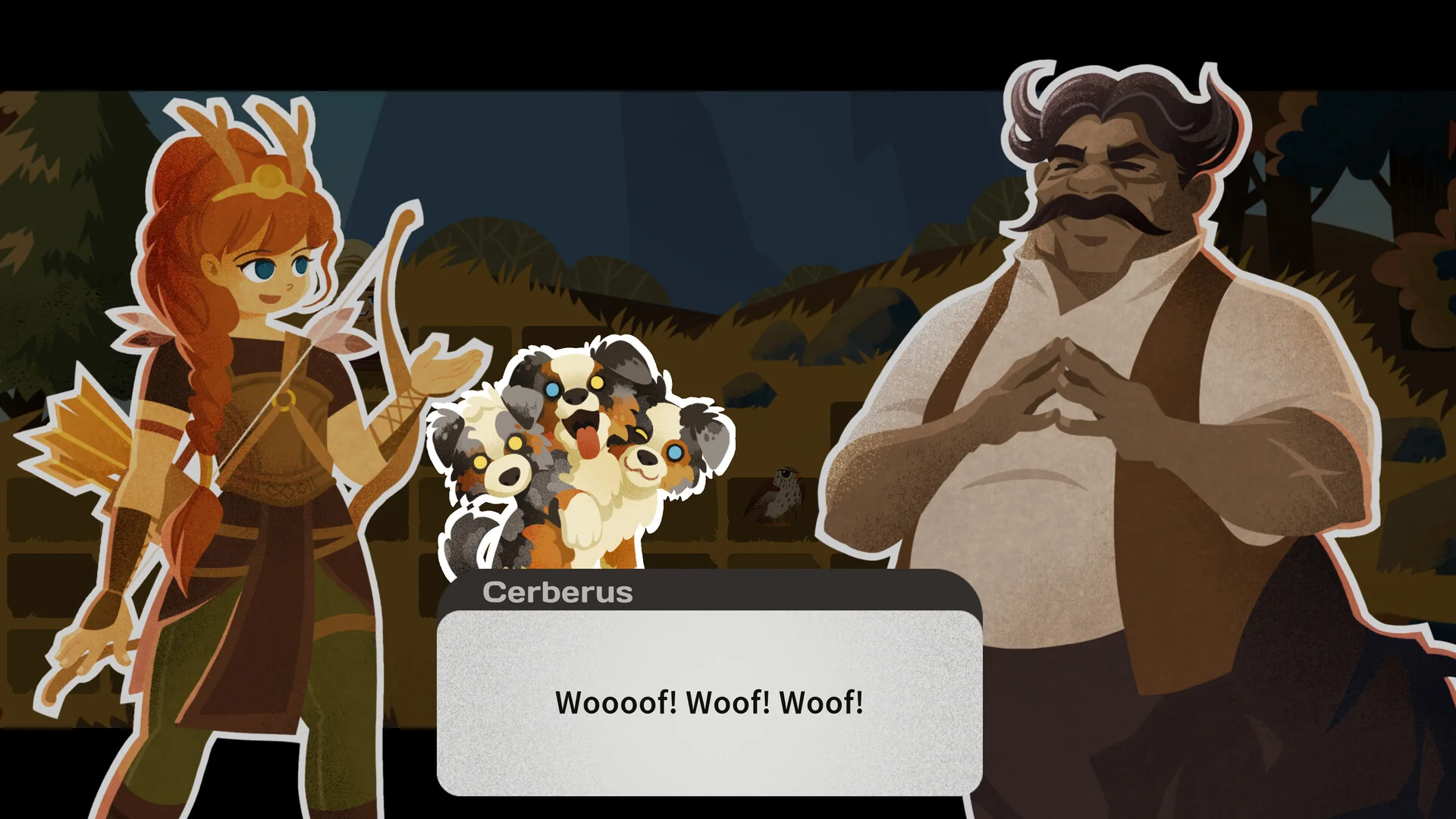
Team Artichoke builds this connection through a wonderfully strange ability. Place three identical objects together and they become something new: three shells produce a pearl, while three dogs produce Cerberus. Artemis uses her bow to pull objects toward herself, including across gaps, before carrying or throwing them into position. The curiosity of discovering the next transformation gets you experimenting; requests and building repairs give those discoveries somewhere to go. A merge can satisfy the urge to complete a pattern and leave somebody’s circumstances improved.
Artemis arrives in Ithaca after meeting resistance to her ambition of becoming Goddess of the Hunt. Hermes sends her down from Olympus, leaving her among the families sustaining Odysseus’s home during his prolonged absence. The setting gives her talents an immediate purpose. There are buildings to repair, materials to produce, and people whose lives continue while the celebrated hero is elsewhere. Helping them allows Artemis to develop an identity through repeated contact, away from the institution deciding which identity she is allowed to have.
The town’s clock makes that contact pleasantly habitual. Daytime lasts roughly ten real-world minutes, during which residents gather resources and collection points accept the things they need. Night stops those activities without forcing Artemis to stop working. You can arrange supplies, prepare deliveries for tomorrow, or speak with available residents for as long as you like. Selene can take you back to Olympus, but departure remains a choice. Having tomorrow’s materials almost ready creates its own gentle invitation to stay.
There is room for silliness inside that routine. Raccoons rummage through refuse for resources, then fall asleep after scavenging, leaving the results of their appetite visible around town. They give production a small comic life beyond the moment an item appears. Their leftovers also belong to an increasingly crowded environment. Objects persist on the ground, which removes the worry of losing useful supplies, but the absence of storage chests means abundance can become awkward to manage. A reassuring feature gradually creates another demand on your attention.
This is where the pleasure of being useful sometimes wears thin. Transporting ingredients individually takes time, and repeated trips can put too much handling between deciding to help and actually helping. The bag reduces that burden; the catalogue makes complicated merge chains easier to follow.
Neither entirely removes the moments when a promising task becomes an exercise in moving things around. Mythmatch earns affection through small actions, so unnecessary actions can interrupt that affection especially clearly. You begin thinking about the distance to the delivery point instead of the person waiting there.
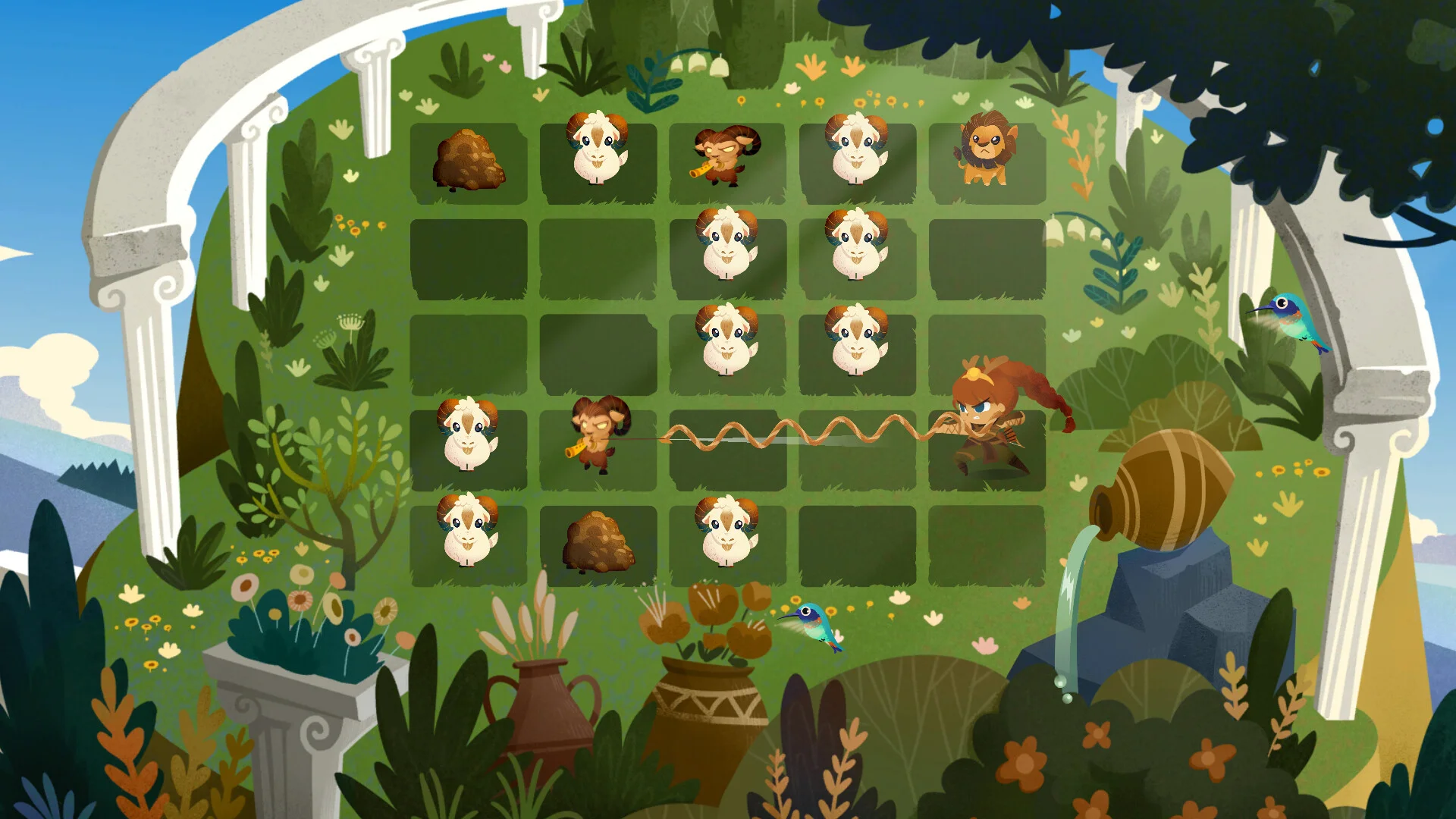
Olympus changes the emotional temperature of those same actions. Its corporate incarnation, Olympus Inc., asks Artemis to prove herself through puzzle trials. Demeter’s garden becomes a problem of managing creatures before the available space fills, while Hephaestus’s forge puts requested crafting under a clock. Returning to these challenges provides a useful break from the town’s errands. Familiar merging becomes something to perform quickly or fit into a tightening space, and a successful attempt brings the sharper satisfaction of having handled pressure well.
The game gives that pressure some cushioning. Belief earned from requests and offerings can purchase abilities that clear space or stop creatures moving, along with further chances. Trial challenges retain progress between attempts, and the story does not demand top grades.
Returning after another day in Ithaca can therefore feel encouraging: your work below has made the next attempt more approachable. Awkward grabbing and placement become harder to forgive here, however. Pulling the wrong object during hurried movement can consume precious time after you have already understood what the puzzle needs. The frustration comes from failing to express a decision cleanly.
That irritation sits beside a deliberately unfair application process. Apollo receives his appointment as Sun God readily, while Artemis must make her case for a hunt position Hermes has reserved for Herakles. The workplace satire has a clear emotional target: the exhaustion of demonstrating competence to people whose preferences were settled before you arrived.
Penelope supplies a quieter variation in Ithaca, governing during Odysseus’s absence and bearing responsibility for problems he left behind. Artemis’s assistance matters to someone already carrying work that a celebrated man has escaped. The relationship gives the satire a human consequence beyond Olympus’s bureaucracy.
Belief complicates the comfort of these relationships. Ithaca’s temple contains statues of established gods and a makeshift one of Artemis, where residents leave offerings that she can collect as currency. Their acceptance has acquired a physical presence before Olympus has finished assessing her. Collecting those gifts feels like receiving recognition, yet the progression system immediately gives that gratitude another use. The next ability or second chance on the mountain can be paid for by people whose faith she has already earned.
The Review
Mythmatch
Mythmatch makes helping people feel rewarding because that help comes back: better supplies, a useful bag, a town gradually finding its feet. Its merging puzzles give friendship a practical presence, while Olympus’s unfair assessments complicate Artemis’s growing sense of belonging. Repetitive hauling and awkward item handling sometimes turn care into chores, especially under a clock. Still, Ithaca gives those small tasks enough warmth and purpose to make returning feel worthwhile.
PROS
- Reciprocal assistance makes relationships tangible.
- Merge discoveries serve meaningful town improvements.
- Daytime activity and unrestricted nights create an inviting rhythm.
- Workplace satire connects closely to Artemis’s search for acceptance.
CONS
- Repeated ingredient hauling can become tedious.
- Limited storage leaves supplies cluttering the ground.
- Awkward grabbing and placement frustrate timed trials.