























• Latest
  • Trending
Lovers in the Blue Night Review

Lovers in the Blue Night Review: Searching for Intimacy in a City That Keeps Asking Questions

A Bit Of Light Review

A Bit Of Light Review: The Quiet Weight of Staying Alive

Big Little Things Review

Big Little Things Review: The Cost of Making Love Invisible

Donutal Review

Donutal Review: Two Aliens, One Interrogation Room, Plenty of Trouble

The Stunt Driver Review

The Stunt Driver Review: Ken Carter’s Biggest Risk Was Becoming His Own Legend

High Value Target: The Hunt for Saddam Review

High Value Target: The Hunt for Saddam Review: The Best Scenes Need Nothing Except Two Men Talking

Shuhua Yeh

K-pop Star Shuhua Steps Into Acting With TIFF Premiere “Happily Ever After”

2 hours ago
Misty Green

Chris Rock’s “Misty Green” Ignites Oscar Buzz After Toronto Premiere

2 hours ago
Elephants in the Fog

Nepal’s Cannes-Winning “Elephants in the Fog” Expands Global Reach Ahead of Oscar Run

2 hours ago
Words Are Weapons Michaël R. Roskam

Belgian Director Revives a Wartime Newspaper Hoax That Fooled the Nazis

2 hours ago
Being Heumann Review

Being Heumann Review: Accessibility Was Won by Making Trouble

Stuffed Review

Stuffed Review: Jodie Comer and Harry Melling Make Death Feel Strangely Romantic

The Alighieri Circle: Dante's Bloodline Review

The Alighieri Circle: Dante’s Bloodline Review: Hell Is Better Solved Than Explained

  • Home
  • Privacy Policy
  • Terms and Conditions
  • Gazettely Review Guidelines
Sunday, September 13, 2026
GAZETTELY
  • Home
  • Movie and TV News
    Shuhua Yeh

    K-pop Star Shuhua Steps Into Acting With TIFF Premiere “Happily Ever After”

    Misty Green

    Chris Rock’s “Misty Green” Ignites Oscar Buzz After Toronto Premiere

    Elephants in the Fog

    Nepal’s Cannes-Winning “Elephants in the Fog” Expands Global Reach Ahead of Oscar Run

    Words Are Weapons Michaël R. Roskam

    Belgian Director Revives a Wartime Newspaper Hoax That Fooled the Nazis

    Jeremy Thomas

    Jeremy Thomas, Oscar-Winning Producer of “The Last Emperor” and “Crash,” Dies at 77

    Maggie Gyllenhaal

    Maggie Gyllenhaal Denies Gender Played Role in “Woman Unknown” Golden Lion Win

    Mia Wasikowska Agata the Writer

    Mia Wasikowska Leads Kuba Dorabialski’s Bold Venice Debut “Agata the Writer”

    Possible Love

    Venice Wins for Malkovich, “Possible Love” and “NAZA” Reshape Early Oscar Race

    Seth Rogen Babies

    Seth Rogen Says Wife’s TIFF Film “Babies” Is His Most Personal Role Yet

  • Movie and TV Reviews
    Lovers in the Blue Night Review

    Lovers in the Blue Night Review: Searching for Intimacy in a City That Keeps Asking Questions

    A Bit Of Light Review

    A Bit Of Light Review: The Quiet Weight of Staying Alive

    Big Little Things Review

    Big Little Things Review: The Cost of Making Love Invisible

    The Stunt Driver Review

    The Stunt Driver Review: Ken Carter’s Biggest Risk Was Becoming His Own Legend

    High Value Target: The Hunt for Saddam Review

    High Value Target: The Hunt for Saddam Review: The Best Scenes Need Nothing Except Two Men Talking

    Being Heumann Review

    Being Heumann Review: Accessibility Was Won by Making Trouble

    Stuffed Review

    Stuffed Review: Jodie Comer and Harry Melling Make Death Feel Strangely Romantic

    NAZA Review

    NAZA Review: Twenty-Four Voices From Inside the System

    Until the Day Ends Review

    Until the Day Ends Review: Romance in the Glare of Political Violence

  • Game Reviews
    Donutal Review

    Donutal Review: Two Aliens, One Interrogation Room, Plenty of Trouble

    The Alighieri Circle: Dante's Bloodline Review

    The Alighieri Circle: Dante’s Bloodline Review: Hell Is Better Solved Than Explained

    Marvels Wolverine Review

    Marvel’s Wolverine Review: A Great Logan Trapped in a Limited Action Game

    NHL 27 Review

    NHL 27 Review: EA Has the Right Ideas, Mostly

    Welcome to Elderfield Review

    Welcome to Elderfield Review: Roll the Dice and Tend the Crops

    Barbarian Saga: The Beastmaster Review

    Barbarian Saga: The Beastmaster Review: Great Transformations, Rough Execution

    Apidya' Special Review

    Apidya’ Special Review: One Cult Classic Still Has Plenty of Sting

    Bus Simulator 27 Review

    Bus Simulator 27 Review: A Management Sim Waiting for Mechanical Repairs

    SPRAWL zero Review

    SPRAWL zero Review: Disposable Guns, Permanent Fun

  • The Bests
No Result
View All Result
  • Home
  • Movie and TV News
    Shuhua Yeh

    K-pop Star Shuhua Steps Into Acting With TIFF Premiere “Happily Ever After”

    Misty Green

    Chris Rock’s “Misty Green” Ignites Oscar Buzz After Toronto Premiere

    Elephants in the Fog

    Nepal’s Cannes-Winning “Elephants in the Fog” Expands Global Reach Ahead of Oscar Run

    Words Are Weapons Michaël R. Roskam

    Belgian Director Revives a Wartime Newspaper Hoax That Fooled the Nazis

    Jeremy Thomas

    Jeremy Thomas, Oscar-Winning Producer of “The Last Emperor” and “Crash,” Dies at 77

    Maggie Gyllenhaal

    Maggie Gyllenhaal Denies Gender Played Role in “Woman Unknown” Golden Lion Win

    Mia Wasikowska Agata the Writer

    Mia Wasikowska Leads Kuba Dorabialski’s Bold Venice Debut “Agata the Writer”

    Possible Love

    Venice Wins for Malkovich, “Possible Love” and “NAZA” Reshape Early Oscar Race

    Seth Rogen Babies

    Seth Rogen Says Wife’s TIFF Film “Babies” Is His Most Personal Role Yet

  • Movie and TV Reviews
    Lovers in the Blue Night Review

    Lovers in the Blue Night Review: Searching for Intimacy in a City That Keeps Asking Questions

    A Bit Of Light Review

    A Bit Of Light Review: The Quiet Weight of Staying Alive

    Big Little Things Review

    Big Little Things Review: The Cost of Making Love Invisible

    The Stunt Driver Review

    The Stunt Driver Review: Ken Carter’s Biggest Risk Was Becoming His Own Legend

    High Value Target: The Hunt for Saddam Review

    High Value Target: The Hunt for Saddam Review: The Best Scenes Need Nothing Except Two Men Talking

    Being Heumann Review

    Being Heumann Review: Accessibility Was Won by Making Trouble

    Stuffed Review

    Stuffed Review: Jodie Comer and Harry Melling Make Death Feel Strangely Romantic

    NAZA Review

    NAZA Review: Twenty-Four Voices From Inside the System

    Until the Day Ends Review

    Until the Day Ends Review: Romance in the Glare of Political Violence

  • Game Reviews
    Donutal Review

    Donutal Review: Two Aliens, One Interrogation Room, Plenty of Trouble

    The Alighieri Circle: Dante's Bloodline Review

    The Alighieri Circle: Dante’s Bloodline Review: Hell Is Better Solved Than Explained

    Marvels Wolverine Review

    Marvel’s Wolverine Review: A Great Logan Trapped in a Limited Action Game

    NHL 27 Review

    NHL 27 Review: EA Has the Right Ideas, Mostly

    Welcome to Elderfield Review

    Welcome to Elderfield Review: Roll the Dice and Tend the Crops

    Barbarian Saga: The Beastmaster Review

    Barbarian Saga: The Beastmaster Review: Great Transformations, Rough Execution

    Apidya' Special Review

    Apidya’ Special Review: One Cult Classic Still Has Plenty of Sting

    Bus Simulator 27 Review

    Bus Simulator 27 Review: A Management Sim Waiting for Mechanical Repairs

    SPRAWL zero Review

    SPRAWL zero Review: Disposable Guns, Permanent Fun

  • The Bests
No Result
View All Result
GAZETTELY
No Result
View All Result
Lovers in the Blue Night Review

A Bit Of Light Review: The Quiet Weight of Staying Alive

Home Entertainment Movies

Lovers in the Blue Night Review: Searching for Intimacy in a City That Keeps Asking Questions

Vimala Mangat by Vimala Mangat
17 seconds ago
in Entertainment, Movies, Reviews
Reading Time: 6 mins read
A A
0
Share on FacebookShare on TwitterShare on PinterestShare on WhatsAppShare on TelegramSummarize with ChatGPTSummarize with Perplexity

The most revealing question in Lovers in the Blue Night is asked repeatedly: where are you from? In Anuparna Roy’s Mumbai, the inquiry rarely sounds innocent. Origin determines how someone is read, where someone may live, which name is safer to use, what work is available, and how securely they can claim the city around them. One man is even told he will need a Hindu name. Identity becomes administrative before it becomes personal.

Roy’s second feature understands migration in similarly intimate terms. Hindi, Sylheti Bengali, and Marathi circulate through the film, giving Mumbai the linguistic texture of a city assembled from people who have arrived carrying other places with them. Yet Lovers in the Blue Night is less persuasive when it states the politics of that displacement than when it observes the private behaviors displacement produces: the lie someone accepts because it resembles affection, the touch that stops halfway, the marriage that offers shelter without desire.

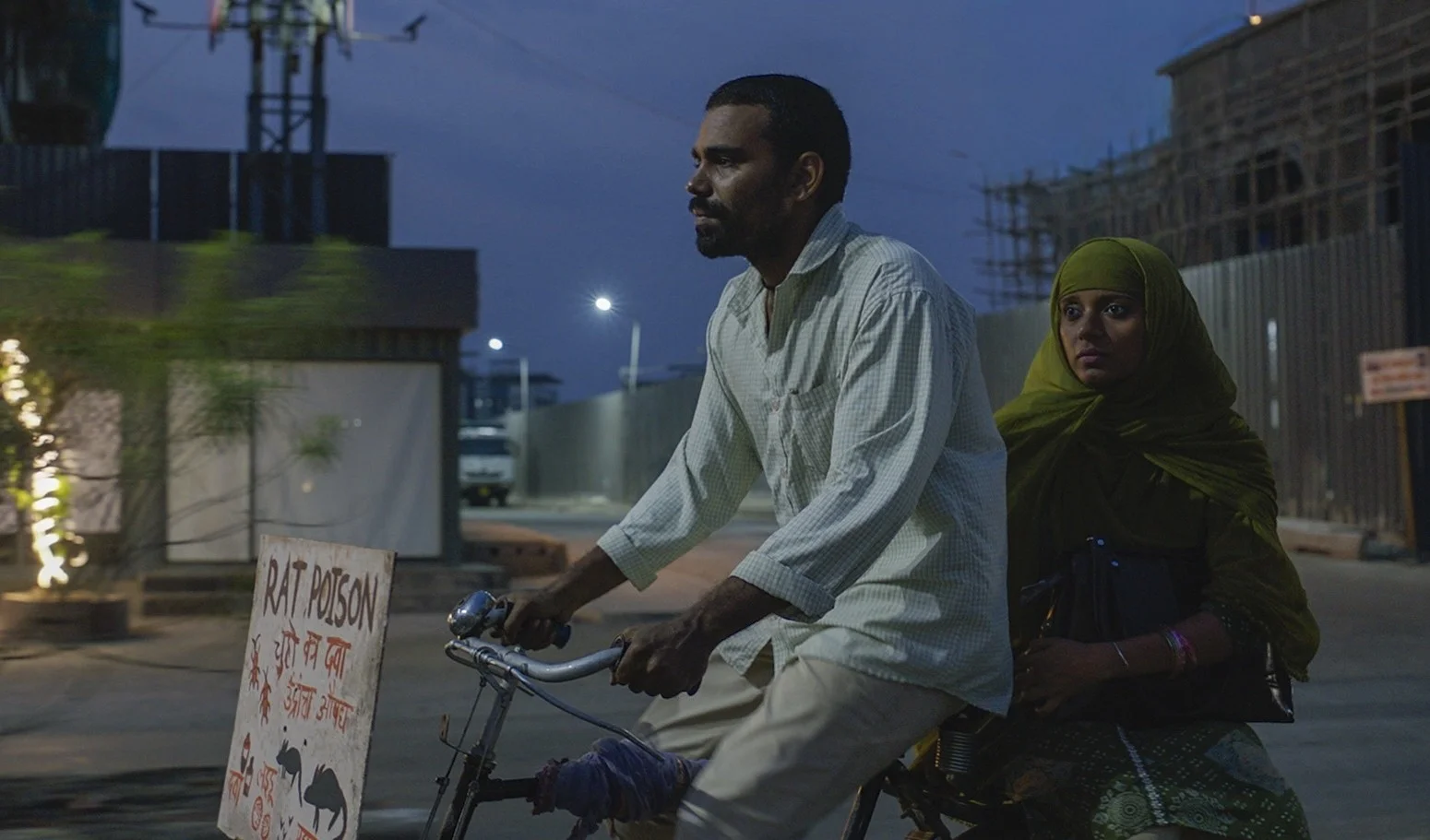
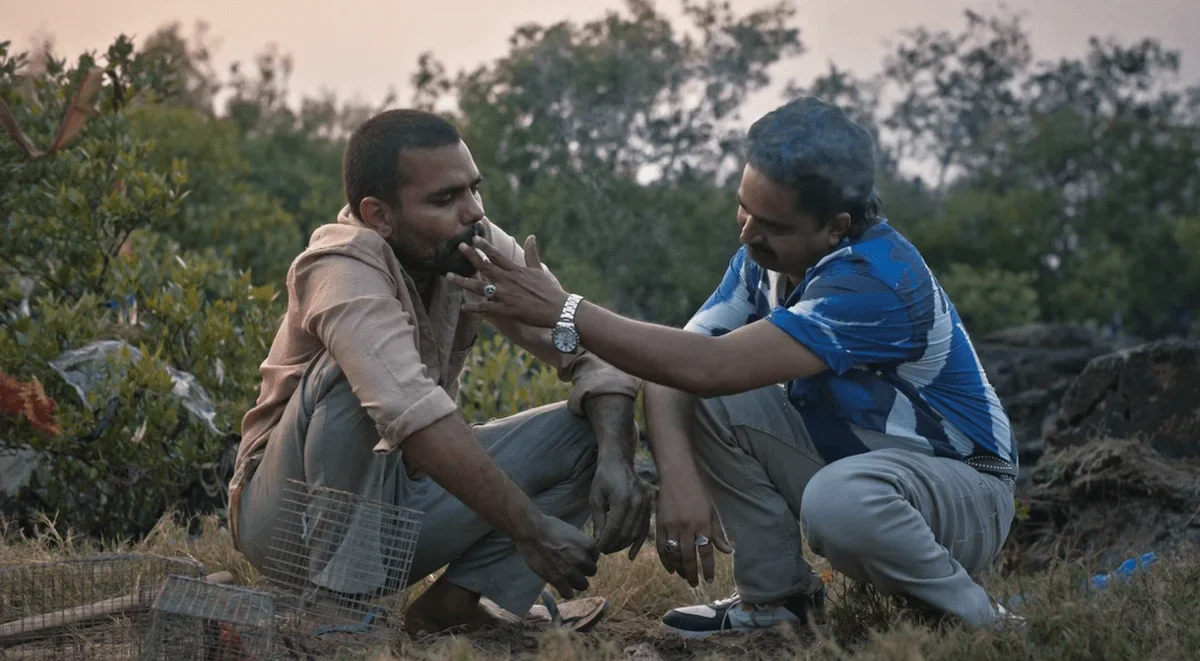
Karim is the film’s most affecting expression of that contradiction. A closeted gay man, he works laying rat poison and later buries the bodies of the animals he kills. The tenderness of that gesture tells us considerably more about him than exposition could.
Lovers in the Blue Night Review

He lives with Ameena, whom he married after floods destroyed their village, and there is care between them without the intimacy she needs. They share a bed while seeming to inhabit separate emotional climates. In one small moment, Ameena edges an arm toward him. The distance she cannot cross is barely the width of the mattress.

Roy places migrant labor, caste insecurity, queer desire, sex work, criminality, and religious identity inside ordinary behavior rather than separating them into an issue list. That instinct connects the film to the observational strain of Indian parallel cinema: social conditions become legible through rooms, labor, language, and gesture. The method works best when Roy trusts those details and weakens when she shifts toward emphatic melodrama.

Ameena’s storyline is where those quieter instincts are strongest. She works in a bar performing telephone intimacy for men she cannot see, then begins receiving letters from a client who has mistaken her for someone from his own past. She in turn imagines that Omran, one of the men connected to the bar, may be responsible for them. The romantic arrangement rests on layers of misidentification, yet the feeling produced by those mistakes is real.

That distinction is the film’s sharpest idea. Ameena does not need the fantasy to be factually correct for it to alter her sense of herself. She is a woman starved of tenderness who suddenly encounters language suggesting she might be wanted. Omran, carrying his own loneliness and precarious identity, becomes entangled in the emotional fiction. The relationship gains force because neither person possesses the security to demand uncomplicated truth.

Karim finds a parallel refuge in Sukka, a small-time thief whose energy fascinates him. Karim calls Sukka the only person who seems alive in a field of corpses, a line that risks sounding grander than the film around it until Roy quietly earns it. Karim’s daily existence has become a sequence of concealments: his sexuality, his emotional distance from Ameena, his dissatisfaction with his work. Sukka steals, improvises, challenges the limits placed around him, and occupies space with an ease Karim cannot imitate.

Bhushan Shimpi gives Sukka a physical restlessness that distinguishes him from the film’s more withdrawn characters, while Pritam Pilania lets Karim’s attraction register through hesitation rather than declaration. Karim speaking about his childhood carries greater emotional weight than some of their later physical exchanges. His reluctance to follow Sukka into the sea turns open space into its own kind of exposure.

The relationship is also where Roy’s screenplay begins forcing what her direction has already suggested. Sukka’s reciprocal desire arrives with insufficient preparation, making the sexual development feel engineered around a predetermined destination. A confrontation involving Sukka tips toward melodrama, while a later collision of shame, violence, and suppressed affection makes explicit what the film had handled with greater delicacy through gesture. The patient rhythm itself is not the problem. The trouble comes when quiet observation gives way to plot machinery without enough connective tissue between them.

Roy is far better when rooms do the arguing. Cinematographer Debjit Samanta repeatedly places these characters in spaces that seem barely large enough to contain their bodies: cubicles, cramped apartments, lockers, mosquito-netted bedrooms, vehicles, temporary shelters. Mumbai presses people together while leaving them emotionally stranded. Wealth enters through the larger homes Sukka and his companions burglarize, where physical space becomes an economic privilege.

The coastal passages reverse that geometry. Suddenly the frame can breathe, but the characters cannot necessarily do the same. Roy and Samanta use the city’s nightscape in wistful blues and warm pockets of artificial light, creating an atmosphere suspended somewhere between shelter and danger. There are images that linger, although the cinematography does not consistently extract everything this setting offers. Mumbai after dark could have become a richer visual language for anonymity, desire, and concealment. At times the film finds it. At others, attractive images remain oddly inexpressive.

Nishant Ramteke’s score reflects the same inconsistency. Its quieter passages complement Roy’s patience, especially when voiceover from Ameena’s letters pushes the film toward something hazier and less literal. Elsewhere the music presses emotional meaning onto scenes that would have benefited from remaining exposed. A film so attentive to silence should trust it longer.

The political material faces a related problem. Questions about origin, the instruction to adopt a Hindu name, and the contrast between migrant labor and urban wealth emerge naturally from character experience. A paid political protest and vote-buying sequence is much less subtle. Its point is clear: these people are accepted when their bodies are useful and questioned when they ask to belong. Roy has already made the case through where people sleep, how they speak, and which versions of themselves they are permitted to present.

That tension runs through Lovers in the Blue Night. Roy has a remarkably precise understanding of loneliness and a less reliable instinct for plotting it. She can locate alienation in the space between two people sharing a bed, then push a later dramatic development past credibility. She can make a false love letter emotionally truthful, then make a political scene feel overly arranged. The film keeps moving between observation and insistence.

Its restraint around queer intimacy is especially complicated. The discretion sometimes feels inseparable from Karim’s repression and the homophobic atmosphere surrounding him. Elsewhere, the film retreats from the intimacy it has spent so much time approaching. Roy seems fascinated by what desire does to people who cannot safely name it, yet she occasionally stops just before those bodies and relationships become fully specific.

Still, the people remain vivid because Roy refuses to reduce them to their social categories. Ameena wants to be desired. Karim wants to feel alive. Sukka wants freedom from the identities assigned to him. Omran wants connection while surviving through concealment. None of these desires is politically neutral, but neither are they presented as lessons.

Near the film’s strongest register, politics and intimacy become impossible to separate. A woman reaches across a bed toward a husband who cannot return what she wants. A man stands before the sea and hesitates. A letter written under a mistaken identity allows somebody, briefly, to imagine another life. Roy does not always know how to carry these moments into a fully assured drama, but she knows why they matter. In a city forever asking its migrants where they came from, her characters keep trying to find someone who might make them feel, for a little while, that they have arrived.

Lovers in the Blue Night had its world premiere in the Orizzonti section of the 83rd Venice International Film Festival on September 11, 2026. Set amid Mumbai’s restless nightlife, the drama follows four migrant workers whose lonely lives intertwine through unexpected bonds of love, desire, deception, and survival.

Full Credits

  • Title: Lovers in the Blue Night

  • Distributor: Parallax Films

  • Release date: September 11, 2026 (Venice International Film Festival)

  • Running time: 1 hour 48 minutes (108 minutes)

  • Director: Anuparna Roy

  • Writers: Anuparna Roy, Nikhil Lama

  • Producers and Executive Producers: Vikas Kumar, Sharib Khan, Bibhanshu Rai, Romil Modi, Rhet Topham, Beesham A. Seecharan, Neeraj Churi

  • Cast: Neelima Sharma, Kajal Keshav, Pritam Pilania, Jatin Sarin, Bhushan Shimpi, Vinod Suryavanshi, Swetha Mishra

  • Director of Photography (Cinematographer): Debjit Samanta

  • Editors: Ketul Thakkar

  • Composer: Nishant Ramtake

The Review

Lovers in the Blue Night

7 Score

Lovers in the Blue Night is strongest when Anuparna Roy lets cramped rooms, uncertain gestures, and mistaken identities express the social pressures surrounding her characters. Ameena and Karim give the film its deepest emotional force, while Debjit Samanta’s use of confined space sharpens its portrait of displacement. Roy’s screenplay is less assured, occasionally forcing relationships and political points that her quieter direction has already made clear. Even with those weaknesses, the film retains a tender, culturally specific understanding of people trying to make intimacy possible under conditions designed to deny it.

PROS

  • Ameena and Karim are sensitively observed
  • Strong use of cramped urban spaces
  • Migration and identity emerge through character detail
  • Misidentification becomes rich emotional material
  • Performances favor restraint over declaration

CONS

  • Sukka and Karim’s relationship develops too abruptly
  • Some political scenes become overly explicit
  • Melodrama occasionally disrupts the observational tone
  • Nighttime imagery could be more expressive
  • Score sometimes pushes emotion too firmly

Review Breakdown

  • Overall 0
Tags: 2026 Venice Film Festival83rd Venice International Film FestivalAnuparna RoyBhushan ShimpiDramaFeaturedJatin SarinKajal KeshavLovers in the Blue NightNeelima SharmaParallax FilmsPritam Pilania
Previous Post

A Bit Of Light Review: The Quiet Weight of Staying Alive

0 0 votes
Article Rating
Subscribe
Connect with
Login
I allow to create an account
When you login first time using a Social Login button, we collect your account public profile information shared by Social Login provider, based on your privacy settings. We also get your email address to automatically create an account for you in our website. Once your account is created, you'll be logged-in to this account.
DisagreeAgree
Notify of
guest
Connect with
I allow to create an account
When you login first time using a Social Login button, we collect your account public profile information shared by Social Login provider, based on your privacy settings. We also get your email address to automatically create an account for you in our website. Once your account is created, you'll be logged-in to this account.
DisagreeAgree
guest
0 Comments
Oldest
Newest Most Voted

Try AI Movie Recommender

Gazettely AI Movie Recommender

This Week's Top Reads

  • Is This Seat Taken? Review

    Is This Seat Taken? Review: A Satisfying Mental Workout

    1294 shares
    Share 0 Tweet 0
  • Fauda Season 5 Review: Revenge Crosses the Mediterranean

    1 shares
    Share 0 Tweet 0
  • A Tale of Two Cities Review: Dickens Rewritten for Prestige TV

    0 shares
    Share 0 Tweet 0
  • You Can See Everything Review: Three Hours Inside a Manufactured Reality

    0 shares
    Share 0 Tweet 0
  • Trust Review: Squandered Potential and an Incoherent Plot

    6 shares
    Share 0 Tweet 0
  • The Grand Tour Review: The Keys Change Hands

    0 shares
    Share 0 Tweet 0
  • Last Seen Review: A Missing-Girl Thriller With Better Questions

    1 shares
    Share 0 Tweet 0

Must Read Articles

Marvels Wolverine Review
PlayStation

Marvel’s Wolverine Review: A Great Logan Trapped in a Limited Action Game

14 hours ago
American Hostage Review
TV Shows

American Hostage Review: A Hostage Crisis Traps the Reporter Too

15 hours ago
NHL 27 Review
Games

NHL 27 Review: EA Has the Right Ideas, Mostly

18 hours ago
The Drop A Snowfall Saga Review
TV Shows

The Drop: A Snowfall Saga Review: West Coast Hip-Hop Gives the Franchise Fresh Energy

18 hours ago
The Debut Review
Movies

The Debut Review: Julianne Moore Finds Herself and Becomes Everyone Else’s Problem

2 days ago
Loading poll ...
Coming Soon
Which of Alfred Hitchcock's 1960s thrillers is your all-time favorite?

Gazettely is your go-to destination for all things gaming, movies, and TV. With fresh reviews, trending articles, and editor picks, we help you stay informed and entertained.

© 2021-2026 All Rights Reserved for Gazettely

What’s Inside

  • Movie & TV Reviews
  • Game Reviews
  • Featured Articles
  • Latest News
  • Editorial Picks

Quick Links

  • Home
  • About US
  • Contact Us
  • Advertise with Us
  • Review Guidelines

Follow Us

Facebook X-twitter Youtube Instagram
No Result
View All Result
  • Gazettely | Movie, TV & Game Reviews, News, and Rankings
  • Movies
  • Entertainment News
  • Movie and TV Reviews
  • TV Shows
  • Game News
  • Game Reviews
  • Contact Us

© 2024 All Rights Reserved for Gazettely

wpDiscuz
0
0
Would love your thoughts, please comment.x
()
x
| Reply