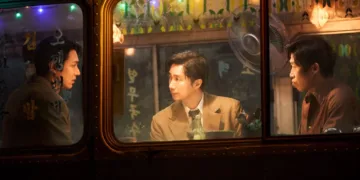














The investigation in The Assassin(s) keeps changing the feeling of the room. A discrepancy that initially seems like an interesting clue becomes something uglier once characters realize the people controlling the evidence may have no interest in resolving it. Director Hur Jin-ho builds much of the film around that sensation. Curiosity turns into suspicion, suspicion into fear, and fear eventually hardens into anger. The result is a political thriller whose strongest moments come from watching capable people discover that doing their jobs properly can make them dangerous.
The story begins around the August 15, 1974 attempt on South Korean President Park Chung-hee’s life during a Liberation Day ceremony. The president survives, while First Lady Yuk Young-soo and a young girl are killed. Mun Se-gwang is identified as the shooter, but details surrounding the attack refuse to settle neatly into the official explanation.
The number of shots does not appear to match the recovered ammunition, and questions remain around crucial ballistic evidence. Hur does not treat these details like puzzle pieces placed on a table for our amusement. Each contradiction raises the emotional stakes because somebody has to decide how far they are willing to push once the facts start pointing toward institutions powerful enough to punish curiosity.
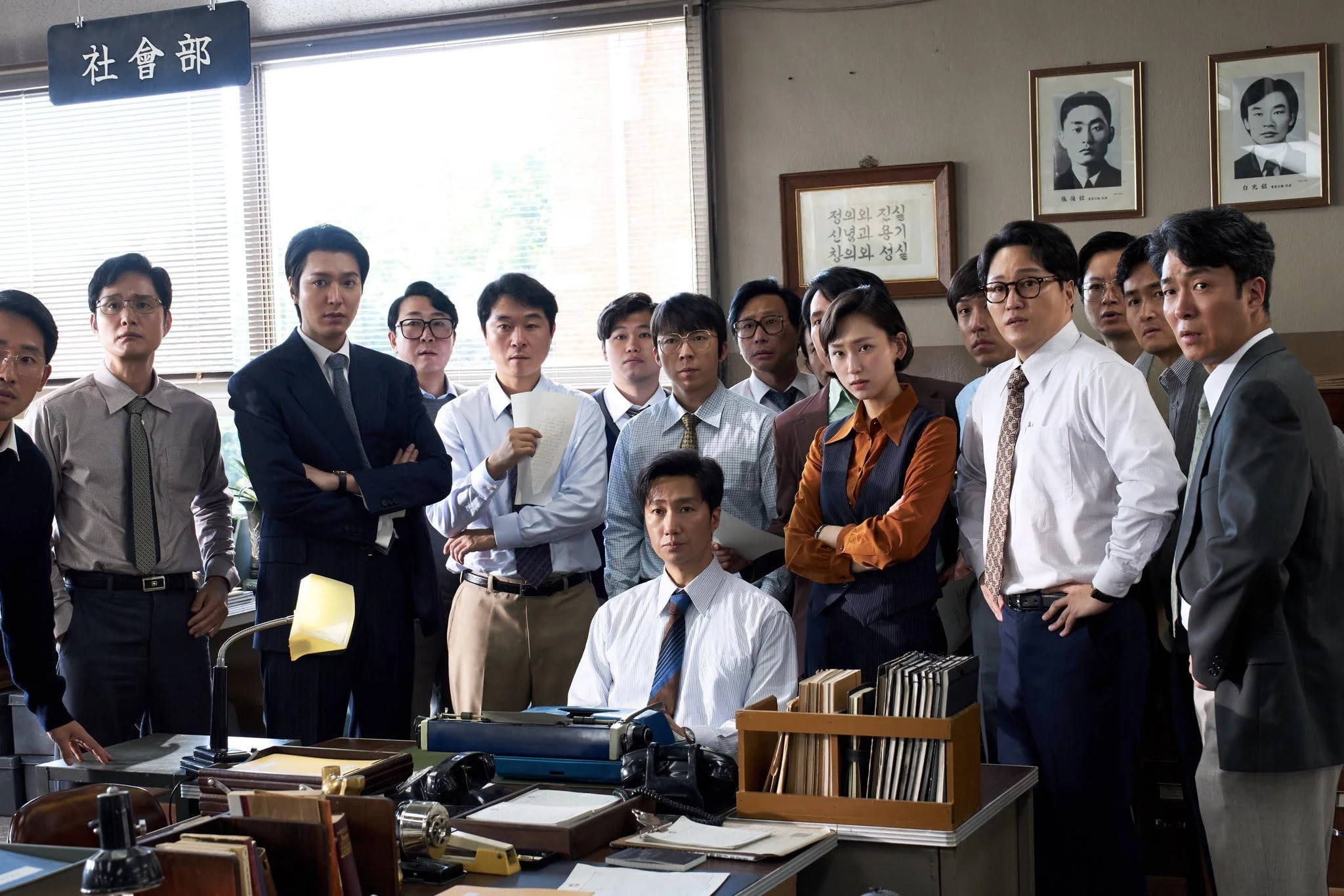
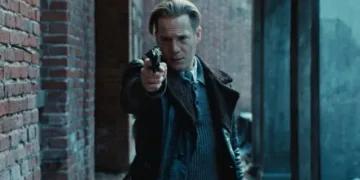
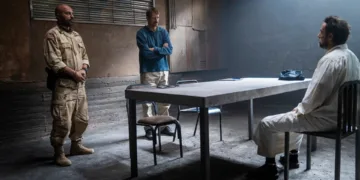
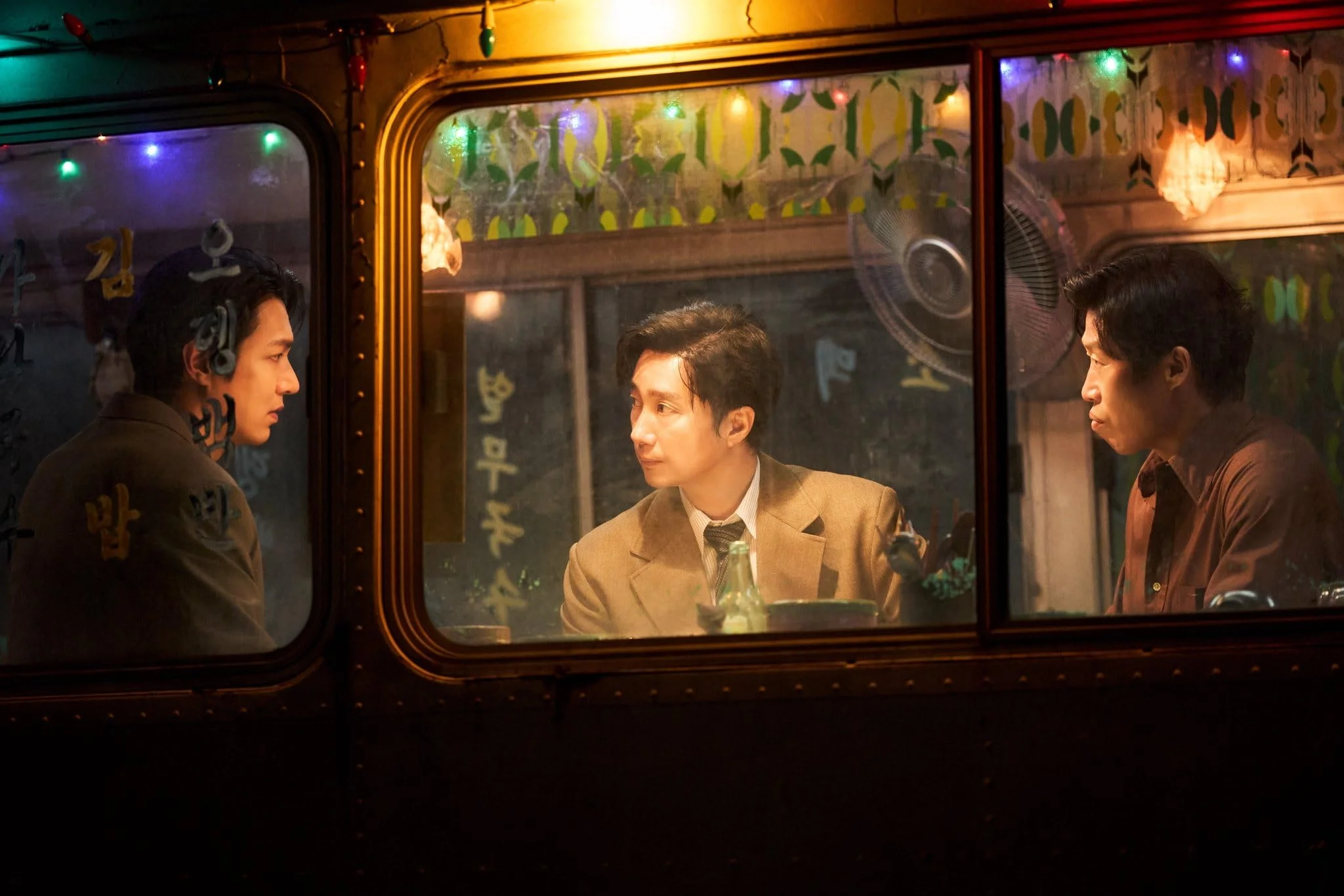
That pressure is divided between three protagonists, and each experiences it differently. Yoo Hae-jin’s Cheol-gu is the most painful to watch because he begins from a position of loyalty. He is a veteran police officer who was involved in security at the ceremony, and his earlier concerns about Mun had been dismissed. Yoo plays the character as a man whose trust is dismantled gradually rather than shattered in one dramatic instant.
His frustration grows every time official behavior contradicts what he remembers seeing. The film gives him family troubles as well, and those passages sometimes slow the investigation without adding the same intensity, but they make one idea tangible: state intimidation does not stay inside offices and interrogation rooms. It follows people home.
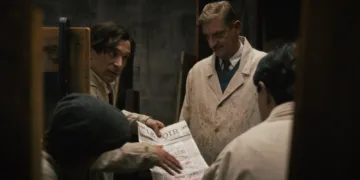
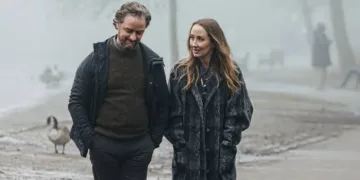
Park Hae-il’s Jae-hwan approaches the crisis from another direction. As a newspaper editor, he understands that discovering something and publishing it are two separate battles. He supports rookie reporter Young-il even as their editor-in-chief suppresses stories to avoid provoking the government. Park gives Jae-hwan a steady moral confidence that makes the newsroom conflict easy to invest in, though the screenplay occasionally pushes him toward speeches that explain principles the surrounding drama has already made clear.
Lee Min-ho brings a different energy to Young-il. His reporter is still learning what the job demands, and that makes his investigation feel especially immediate. He follows leads, moves into increasingly dangerous spaces, and eventually travels to Japan in search of connections surrounding Mun. Lee’s performance gives those stretches an eager momentum. Young-il wants the story before he fully understands what possessing it might cost.
That distinction matters because The Assassin(s) gets much of its excitement from work. Characters compare statements, revisit what they saw, chase leads and test official claims against physical evidence. Kim Hana and Kim Woo-hyun’s editing keeps these separate investigations in conversation with each other, so a discovery in one thread can change the emotional temperature of another. Action scenes appear, but Hur gets just as much tension from someone realizing that a piece of testimony does not fit. The film makes verification feel dangerous.
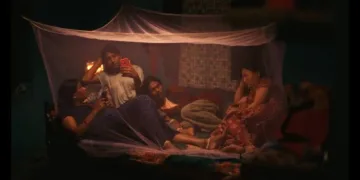
Lee Mo-gae’s cinematography strengthens that unease without turning the period setting into a display case. The widescreen compositions give political events scale, yet some of the most effective images concern people being visually absorbed by the forces around them.
A figure turning away from a flag carries a different charge after loyalty has been questioned. Faces hidden through shadow and light suggest how much of this world depends on who is permitted to be seen clearly. The craft works because it keeps feeding the same feeling generated by the investigation: certainty is always being obstructed by somebody with greater control over the frame.
The structure becomes shakier once that investigative web keeps expanding. The screenplay by Gwon Gi-jun and Lee Ji-min has to manage police, journalists, government agencies, relatives, Korean-Japanese connections and possible collaborators, and for a long stretch that density is productive.
Young-il’s trip to Japan widens the case in a way that complicates the official story rather than distracting from it. Late in the film, though, new material continues arriving after the investigation has already built considerable force. The final stretch contains several points that feel like possible endpoints before the film pushes ahead again, and one later conspiracy element strains the credibility Hur has spent so long establishing.
What is interesting is that the tension does not disappear when the structure starts to wobble. Individual scenes can still be gripping even as the larger shape becomes less satisfying. That split helps explain why the ending feels both forceful and awkward.
An end-credit scroll has to carry information the drama has not fully resolved, yet the closing use of real footage from the assassination attempt has an impact no neat fictional solution could reproduce. After spending two hours watching characters fight over evidence, the audience is confronted with history itself, recorded and visible, while the meaning surrounding it remains contested.
That is the feeling The Assassin(s) leaves behind most effectively. The mystery invites us to want an answer, but the film gradually makes certainty feel less attainable than the right to keep asking. Hur’s thriller is at its best when each clue increases the emotional cost of that right, and when journalism and police work become forms of resistance simply because somebody has decided the official story should remain untouched. The late narrative sprawl weakens some of that momentum, yet the anger survives it. By the time the archival images appear, the investigation has stopped feeling like a historical curiosity. It feels like unfinished business.
The Assassin(s) premiered at the Toronto International Film Festival on September 16, 2026, ahead of its South Korean theatrical release. The historical political thriller investigates the obscured conspiracies and journalistic battles following the 1974 assassination attempt on South Korean President Park Chung-hee.
Full Credits
Title: The Assassin(s)
Distributor: Hive Media Corp
Release date: September 16, 2026 (Toronto International Film Festival) / September 23, 2026 (South Korea)
Running time: 2 hours 11 minutes (131 minutes)
Director: Hur Jin-ho
Writers: Gwon Gi-jun, Lee Ji-min
Producers and Executive Producers: Kim Won-국
Cast: Yoo Hae-jin, Park Hae-il, Lee Min-ho, Choi Yu-ri, Ryu Hye-young, Kim Dae-myung, Bae Seong-woo, Park Jung-min
Director of Photography (Cinematographer): Lee Mo-gae
Editors: Kim Hana, Kim Woo-hyun
The Review
The Assassin(s)
The Assassin(s) turns investigation into emotional pressure, making every disputed bullet, blocked story, and official contradiction feel increasingly dangerous. Hur Jin-ho is strongest when police work and journalism reveal the human cost of challenging an approved version of history. Yoo Hae-jin, Park Hae-il, and Lee Min-ho keep its dense conspiracy grounded, while sharp editing sustains the procedural tension. The late expansion weakens the structure, and the resolution leaves too much work to the credits, yet its anger remains potent through the archival final images.
PROS
- Investigation carries genuine tension
- Strong central trio
- Effective newsroom and police dynamics
- Editing keeps dense plotting moving
- Archival footage gives the ending force
CONS
- Late conspiracy material strains credibility
- Final stretch loses structural control
- Some family drama interrupts momentum
- Jae-hwan’s speeches can overstate the film’s ideas
- End credits supply missing resolution