
























![Kingdom Hearts Collection [I-III] Review](https://gazettely.com/wp-content/uploads/2026/10/Kingdom-Hearts-Collection-I-III-1-360x180.webp "Kingdom Hearts Collection [I-III] Review: KHII Holds Steady as Newer Entries Fluctuate 37")



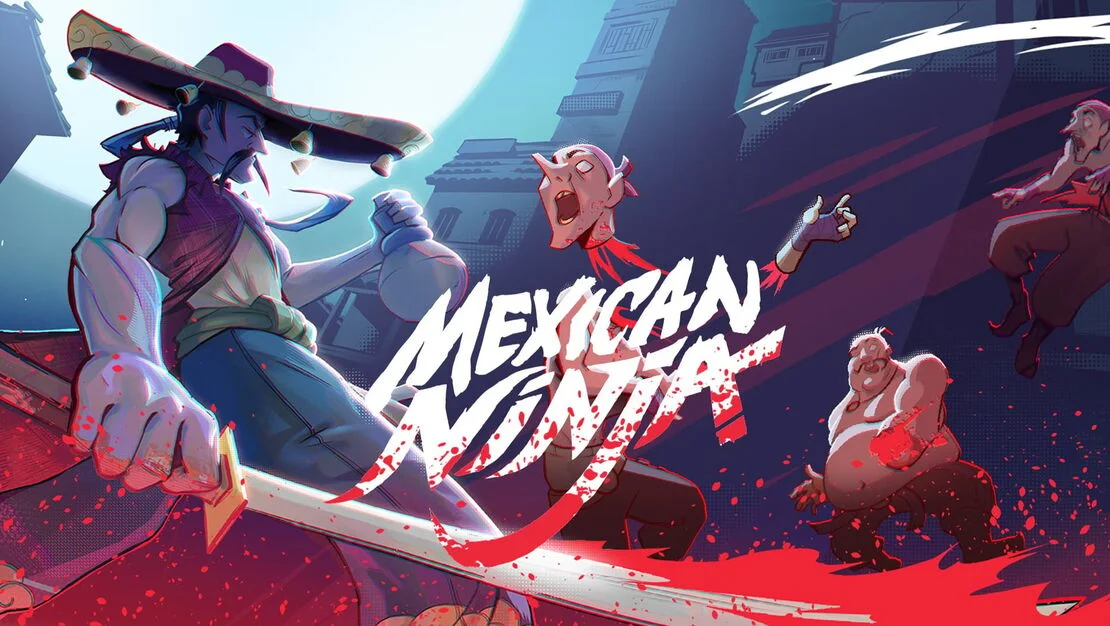

Five Narkuza bosses control Nuevo Tokyo, but the first lesson Mexican Ninja teaches is considerably less political: never underestimate a huge man wearing a neon green bandana. The protagonist confronts him over an apparent history involving his sister, gets virtually no opportunity to answer the ensuing trash talk, and is flattened by a belly flop before being called a cabrón. Madbricks establishes the tone quickly.
Mexican Ninja is a 2.5D beat ’em up with a run-based progression structure, placing it somewhere between Streets of Rage and Absolum while borrowing the cultural collision and cartoon energy associated with Guacamelee!.
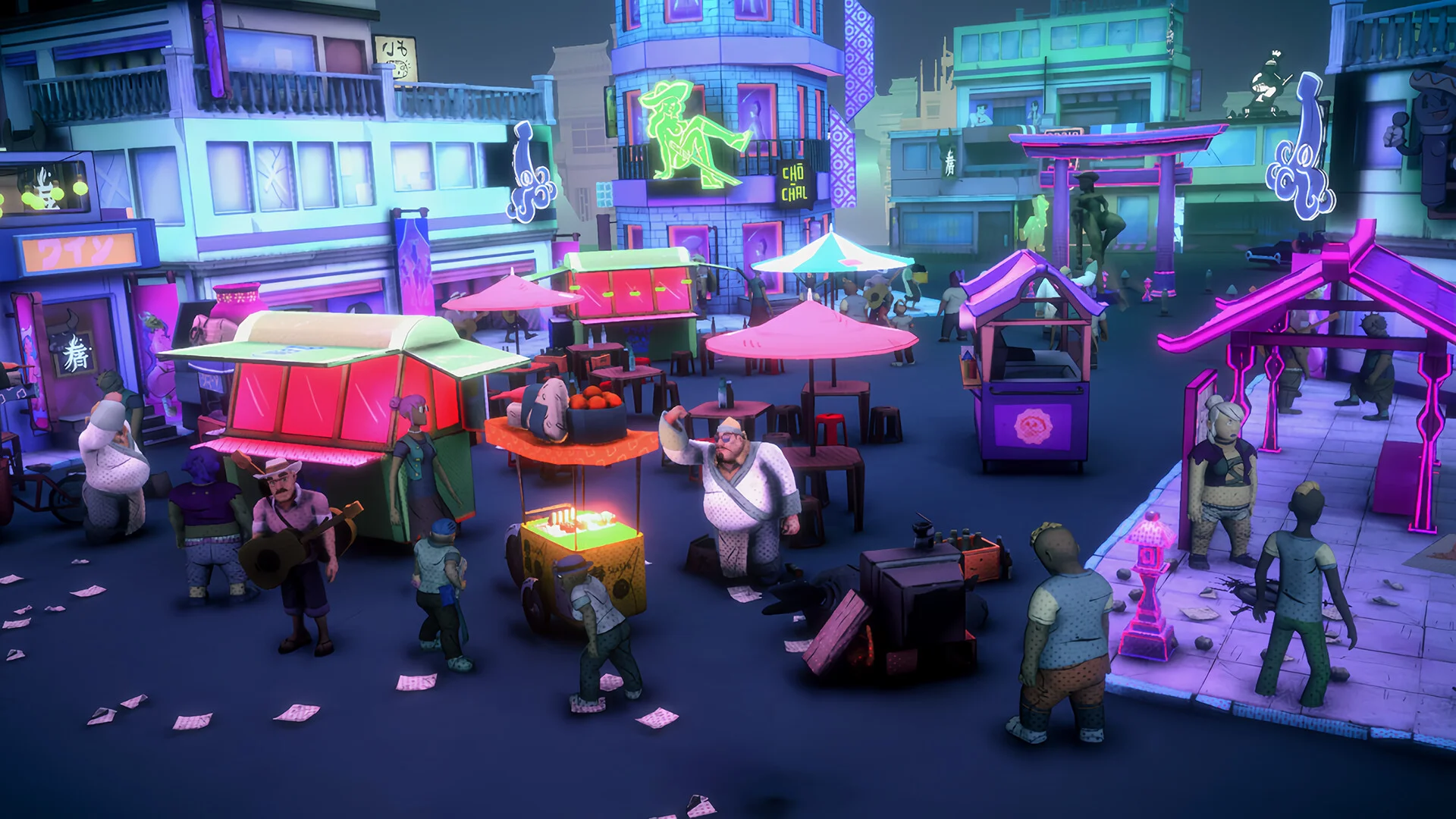
Nuevo Tokyo combines Mexican and Japanese influences into a city of neon signs, murals, taco stands, religious imagery, Japanese architecture, luchador references, and the Narkuza themselves, a merger of narcos and yakuza. The premise gives the game an identity that many roguelikes struggle to establish. The harder question is how effectively its systems sustain that personality once the jokes stop being new.
Building a Better Brawler
The basic combat kit is immediately readable. Light and heavy attacks form the foundation, with throws, aerial attacks, dodges, parries, counters, and Mexican Jutsus expanding the options. Jutsus operate on cooldowns, letting you drop powerful abilities into a combo without turning resource management into homework.
Aerial juggling is especially useful. Launching an enemy and keeping them suspended extends encounters beyond traditional left-to-right brawling, while the wider vertical space forces constant repositioning. Occasional perspective changes into a more isometric view help prevent every street from feeling identical.
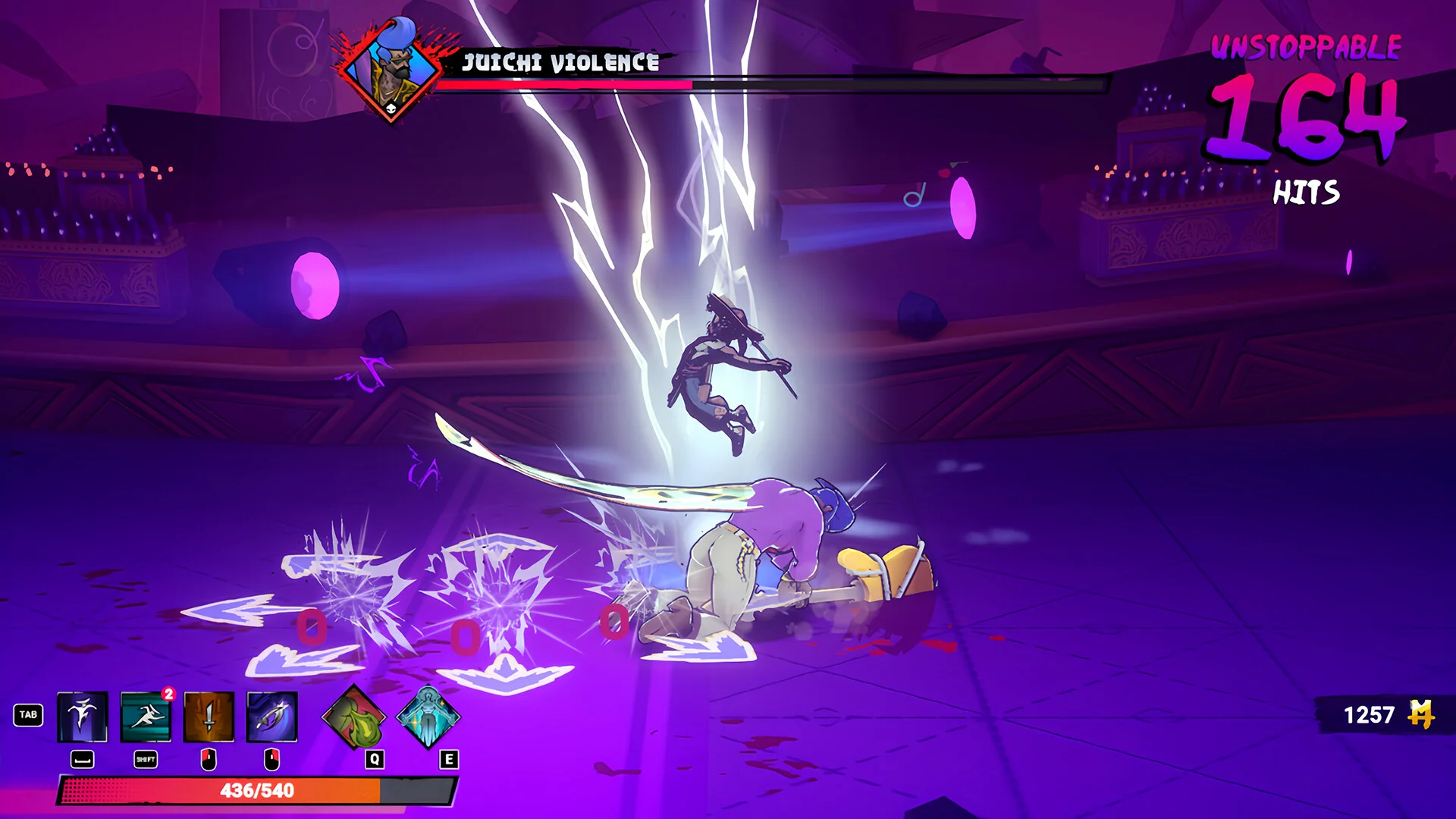
The combo meter is the system that ties everything together. It increases through actual enemy hits and remains active until the player takes damage. Attacking from behind can add five hits while a straightforward attack adds one, so positioning becomes part of score-building rather than a cosmetic concern.
Once permanent upgrades expand the moveset, the game gets wonderfully stupid. The Mexican Ninja can blink between enemies, become a damaging tornado, throw his sombrero through groups like Captain America throwing a shield, and weaponize flatulence strongly enough to set opponents on fire. Push the counter past 1,000 hits and the combat starts feeling like its systems have escaped containment. There is even an achievement for reaching 5,000. Good luck.
The Grind Before the Glory
Mexican Ninja is less convincing when its roguelike structure controls access to that combat depth. Temporary builds revolve around Jutsus, passive bonuses, and Death Charms that attach elemental effects to actions such as light attacks, heavy attacks, jumps, or dashes. Certain combinations can turn dodging into offense, emphasize burning damage, accelerate Jutsu cooldowns, or feed directly into huge combo chains.
Early runs expose the limited pool behind the system. Starting with roughly four available Jutsus while choosing two per run means familiar combinations return quickly. New abilities appear through progression and side quests, but the game makes players work too long before its build system begins producing meaningful differences.
Permanent progression has a similar issue. Pesos earned during runs are invested into the Way of the Donkey for statistical improvements and another tree containing attacks and combos. After several hours, these upgrades produce the fast, flexible ninja the combat seems built around. Before then, a 20 or 30-minute run can end with enough currency for one or two purchases.
That creates an awkward relationship between mastery and progression. Streets of Rage gives players a moveset and asks them to learn it. Mexican Ninja spends hours selling pieces of its moveset back to them.
Stage construction gives the grind little assistance. Runs move through mostly linear 2.5D areas where enemy groups frequently arrive from predictable positions. Bosses appear in a fixed order, and branching choices alter rewards without reshaping the experience enough to make repeated attempts feel substantially different.
Costumes offer a smarter form of progression. Side quests unlock outfits carrying passives such as extra health, additional currency, or improved parry timing, letting appearance and build strategy intersect. Tracking those quests would be easier with an actual quest log.
Personality Versus Readability
Nuevo Tokyo remains entertaining because Madbricks commits fully to the cultural mashup. Even healing items participate through names such as Sakila, a sake-tequila hybrid. Spanish slang runs through NPC dialogue, while bosses and environmental jokes keep pushing the premise toward deliberate absurdity.
Crack Panda, a boss riffing on Cocaine Bear and Kung Fu Panda, shows both the strength and limitation of that approach. The joke is immediate and memorable. The character behind it barely exists. By the time the Mexican Ninja reaches major Narkuza leaders, the game has supplied plenty of references without giving its villains enough history to make conquering the city carry much dramatic weight.
Combat presentation creates a separate problem. Particle effects pile across the screen as abilities trigger, while relatively small character models can disappear inside the spectacle. Traps occasionally hide behind scenery, and certain enemy attacks can catch the player in repeated recovery loops. A system built around preserving long combos suffers whenever visual information becomes harder to parse.
Yet when Mexican Ninja gives its mechanics enough room, the payoff is clear. A run that begins with familiar punches can end with elemental attacks, teleporting strikes, ricocheting sombreros, and a combo counter climbing into four digits. The frustrating part is realizing how much grinding it takes before the game finally lets that version of itself loose.
The Review
Mexican Ninja
Mexican Ninja finds its strongest identity once its combat systems start feeding each other. Jutsus, Death Charms, permanent upgrades, and the combo meter can turn a basic brawler into wonderfully excessive controlled chaos, especially once teleporting attacks and four-digit combos enter the picture. The problem is how slowly the game hands over those tools. Expensive upgrades, limited early Jutsu choices, repetitive stages, and thin storytelling make the early runs feel restrained compared with the fighter they eventually create. Nuevo Tokyo has personality to spare. Its systems simply need to catch up sooner.
PROS
- Excellent combo-driven combat
- Wild Jutsu and build synergies
- Distinctive Nuevo Tokyo setting
- Rewarding late-game moveset
- Strong visual personality
CONS
- Slow permanent progression
- Limited early build variety
- Repetitive stage structure
- Thin story and bosses
- No co-op mode