














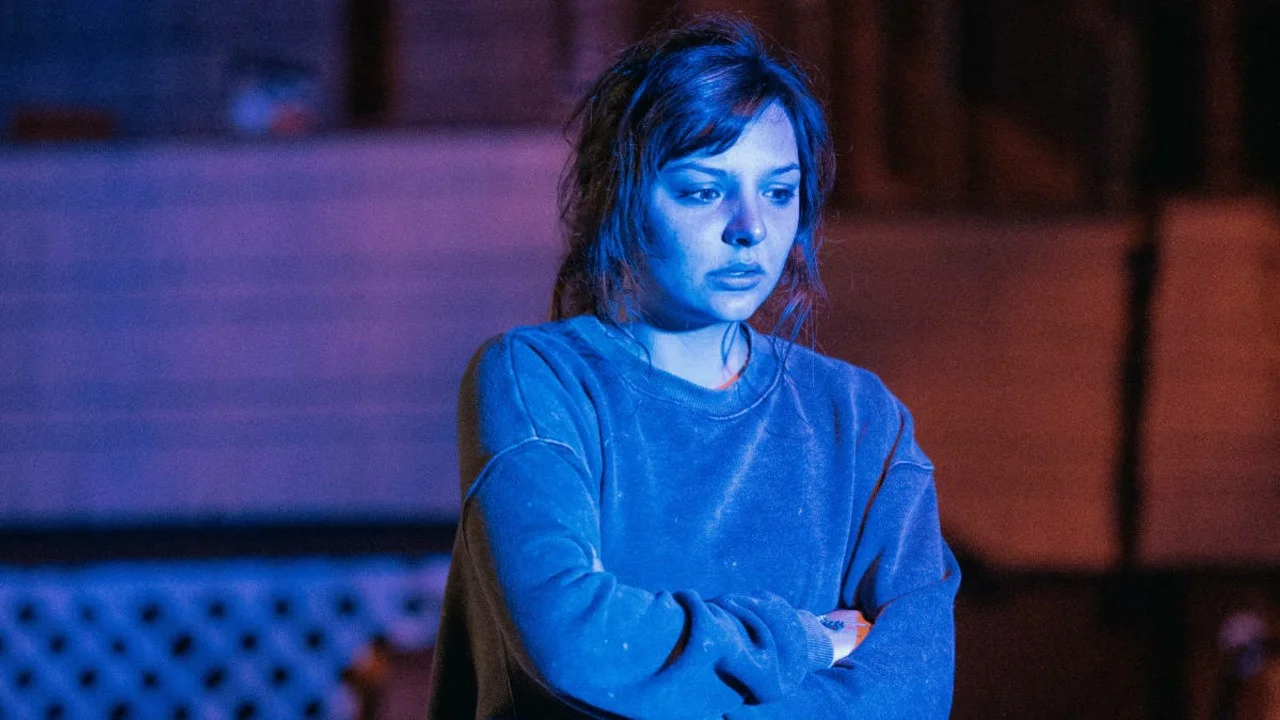

Merlin Camozzi builds his feature debut around a particularly cruel form of leverage: Dani has spent years constructing a future, so the police barely need to threaten her body. They threaten the life waiting for her.
Dani (Cassady McClincy Zhang) is 18, preparing for college on a scholarship and already carrying responsibilities that would exhaust someone twice her age. Her mother Faye (Lucy Walters) works several jobs and is frequently too tired to stay awake at home, leaving Dani to keep an eye on her younger brother. She works at a sandwich shop, worries about college costs and exists in that uncomfortable social space where friends surround her without reliably being there for her.
That isolation makes her decision to acquire MDMA for a party understandable without making it sensible. Dani barely drinks and has no established relationship with drugs. She agrees because friends ask, and because Marty (Dempsey Bryk), the young dealer who can supply the pills, is someone she clearly wants to be near. Then her brother gets into trouble at a shop. Dani intervenes. Police arrive. A search reveals the drugs. The legal system suddenly has its hand around every fragile thing she has built.
Choice as an Interrogation Technique
The interrogation room contains the film’s clearest expression of power, and Camozzi wisely stages it without theatrical excess. Detectives Ted (Royce Johnson) and Elena (Elizabeth Stahlmann) do not need to shout. Their authority already fills the room.
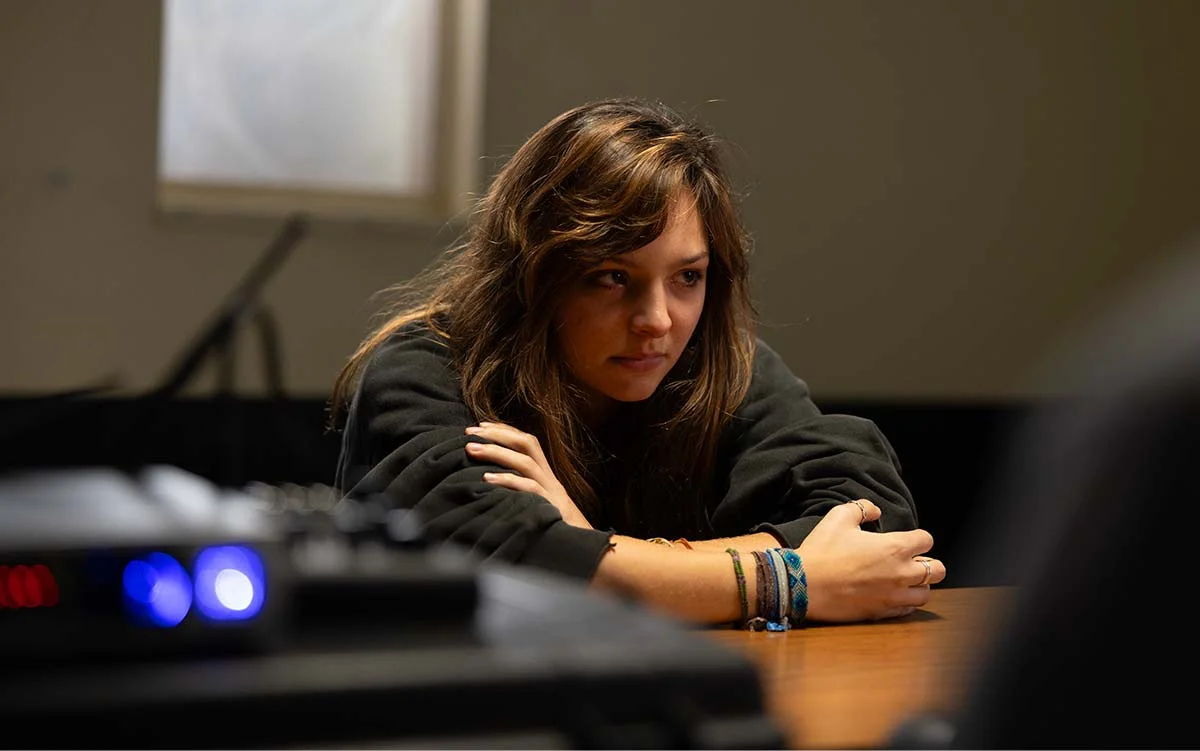
They tell Dani that carrying drugs near a school could become a serious charge. Her insistence that she had no intention of selling them means little once the detectives suggest they could claim otherwise. When Dani asks about getting a lawyer, she is told she is not technically under arrest. When she then asks if she can leave, the answer is yes, followed immediately by the warning that leaving will trigger her arrest. It is procedural language converted into a trap.
Also Read


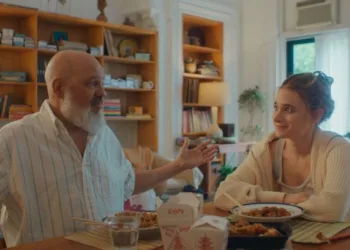


The scholarship becomes their sharpest instrument. A criminal record could destroy Dani’s college plans, they tell her, making years of good grades and responsibility function like hostages. Her supposed escape is to become a confidential informant and provide them with a dealer worth arresting. Marty is the obvious target.
Camozzi keeps returning to variations of this arrangement as Dani attempts to satisfy the detectives. Complete one task, and another appears. Provide something useful, and it is suddenly insufficient. The machinery is effective because Dani never knows where its authority actually ends. Ted and Elena understand that uncertainty better than she does. They call it cooperation. The framing says otherwise.
The Cost of Betrayal
McClincy Zhang gives Dani none of the polish that thrillers sometimes impose on frightened protagonists. She hesitates. She misjudges people. Fear disrupts her ability to think several moves ahead. Every time the situation expands, Zhang lets the additional pressure register physically before Dani works out what she might do next.
That becomes especially painful around Marty. Bryk avoids playing him as the obvious low-level criminal waiting for punishment. His scenes with Dani carry enough softness to suggest a romance that might have developed under ordinary circumstances. Yet every moment of intimacy exists beside the knowledge that Dani has effectively been ordered to manufacture his arrest.
Her anger eventually finds its cleanest expression when she tells her handler, “Your job is evil.” The line could have landed as screenplay punctuation. Zhang makes it sound like Dani has finally found words for something she has been feeling in fragments.
Trying to spare Marty only moves her toward greater danger. Dani searches for another dealer who might satisfy the police, bringing her into contact with a far more threatening figure played by Dominic Bogart. His suspicions change the texture of the film. Police pressure, previously contained in offices, vehicles and instructions, now exposes Dani to people who have every reason to punish an informant. The detectives want a larger arrest. Dani carries the physical risk required to produce it.
Light, Space and Institutional Guilt
Camozzi’s visual restraint gives The Snare much of its force. He resists turning Dani’s predicament into an action picture and instead photographs rooms, streets and conversations as spaces steadily losing exits.
One early detail captures that approach particularly well. Dani rides past a liquor-store sign with several letters burned out, leaving only “OR” glowing. It would be easy to overplay such an image. Camozzi lets it sit there. The word belongs to a story filled with choices structured so badly that “or” begins to sound sarcastic.
The interrogation sequences carry the same visual logic. Dani sits opposite adults who control the language, the room and the consequences. The staging repeatedly isolates her inside frames where authority figures appear secure while she seems temporary, someone placed there until she produces what they need.
Paul Corley and Josh Eustis’ ominous score works beside that containment rather than fighting it. The music keeps danger humming underneath scenes that might otherwise appear bureaucratic. Paperwork, surveillance instructions and quiet conversations acquire the temperature of a threat.
Camozzi occasionally presses the cautionary dimension harder than necessary, and Ted and Elena can approach the bluntness of institutional symbols rather than fully independent people. Yet the film’s strongest passages do something harsher. They show how ordinary such coercion can look. Nobody needs a dark alley. Nobody needs a gun on the table. A frightened teenager, a scholarship and a locked door that everyone insists is open will do.
The Snare received its U.S. theatrical and digital release on August 21, 2026, with distribution handled by Filmhub. Written and directed by Merlin Camozzi, the crime thriller follows a bright high school senior who gets arrested with a small amount of drugs and is coerced by police into becoming a confidential informant, threatening her scholarship, family, and future.
Where to Watch (2026) Online
Full Credits
Title: The Snare
Distributor: Filmhub, Grey Star Entertainment
Release date: August 21, 2026
Running time: 1 hour 50 minutes
Director: Merlin Camozzi
Writers: Merlin Camozzi
Producers and Executive Producers: Merlin Camozzi, Kareem Mortimer, Kristifor Cvijetic, Jenny Leigh Reed
Cast: Cassady McClincy, Dempsey Bryk, Royce Johnson, Lucy Walters, Dominic Bogart, Esther Zyskind, Anire Kim Amoda, Shawn Nathaniel Wallace
Composer: Paul Corley, Joshua Eustis
The Review
The Snare
The Snare turns institutional coercion into psychological confinement, with Merlin Camozzi tightening Dani’s world through interrogation rooms, surveillance, and choices designed to leave no clean exit. Cassady McClincy Zhang gives that pressure a human pulse, especially as Dani’s fear hardens into moral revulsion toward the officers exploiting her. The visual restraint keeps the film from sensationalizing its subject, while the burned-out “OR” sign quietly frames a story where alternatives keep disappearing. Some of its cautionary intent can become overly explicit, but its anger remains focused and disturbing.
PROS
- Cassady McClincy Zhang’s grounded performance
- Claustrophobic interrogation sequences
- Strong visual expression of entrapment
- Morally charged police dynamic
- Ominous, restrained score
CONS
- Cautionary message can feel overstated
- Police antagonists occasionally verge on bluntness
- Supporting characters receive limited depth