


















By the time Grace, Olivia, and Ariana are asked to act like mothers, nearly every institution around them has already behaved like a negligent parent. Their schools withhold basic sexual education. Their families pass down addiction, poverty, abandonment, and distorted ideas about affection. Courts respond to instability with restrictions, ankle monitors, and deadlines. Then adulthood arrives carrying a baby.
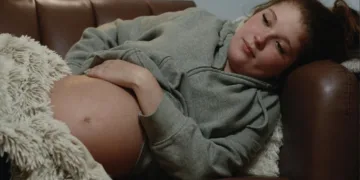
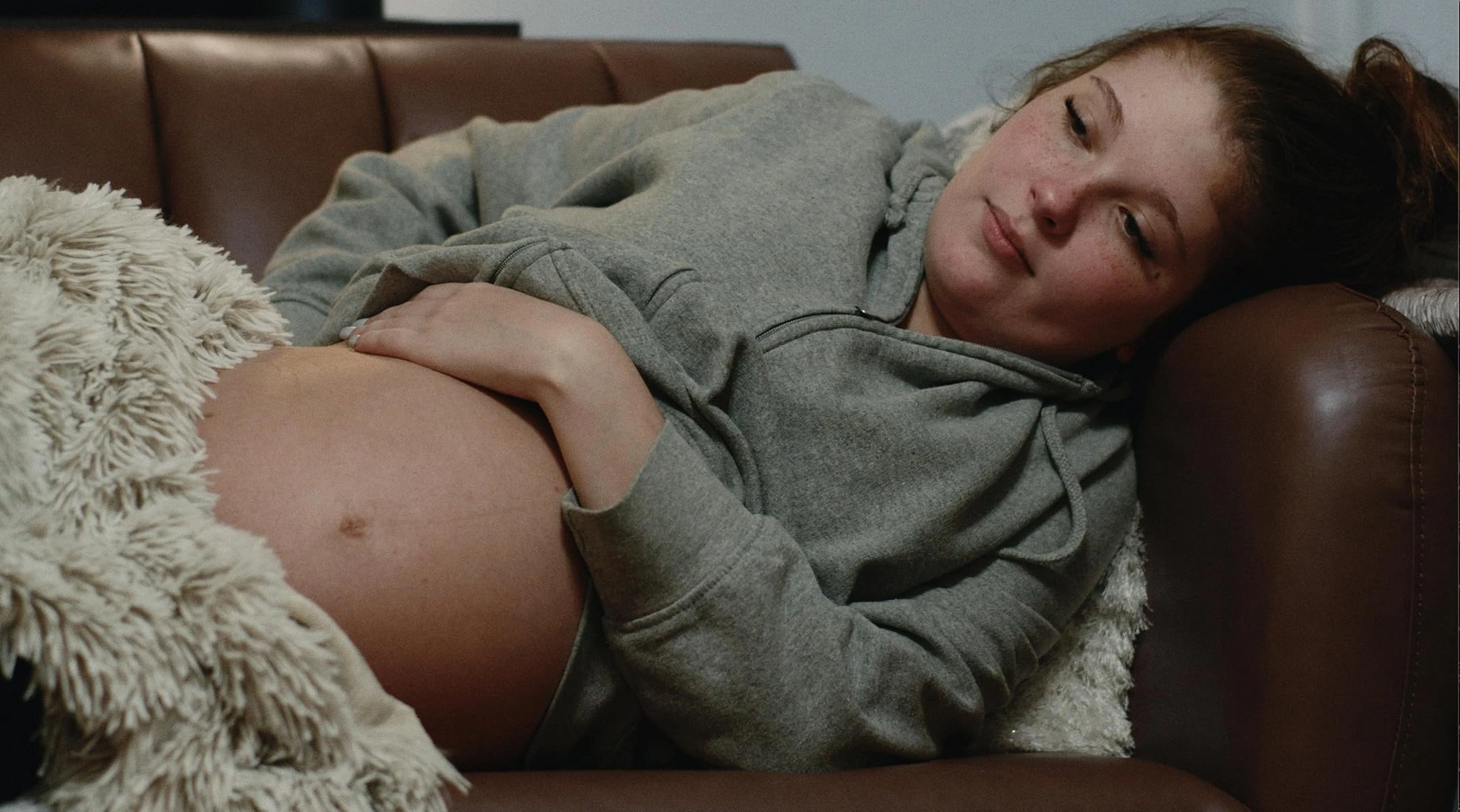
Filmed across two years in rural Arkansas, Alyse Walsh and Jackie Jesko’s Baby/Girls observes three pregnant or parenting teenagers connected through Compassion House, a Christian maternity home for girls aged 11 to 17. The documentary was conceived after the 2022 Dobbs decision permitted Arkansas to impose a near-total abortion ban, yet its argument reaches further back. Pregnancy is presented here as the visible crisis at the end of a long chain of quieter failures.
The film avoids treating Olivia, Grace, and Ariana as symbols polished for a political campaign. They joke, apply makeup, speak confidently, misunderstand their own bodies, and make decisions that appear sensible one day and disastrous the next. This contradiction matters. They are expected to produce maternal certainty while still trying to discover who they are. Call it compulsory adulthood: society denies children knowledge, safety, and agency, then punishes them for failing an exam they were never allowed to study for.
The Meaning of Choice
Compassion House offers prenatal care, housing, education, and temporary stability, yet its rooms exist inside the same social order that made such intervention necessary. Several residents arrive through court orders after arrests or unsafe domestic situations. One image captures the imbalance with brutal efficiency: an electronic monitor fastened around a girl’s leg looks absurdly large, a machine designed for an adult offender attached to someone still young enough to require permission for ordinary choices.
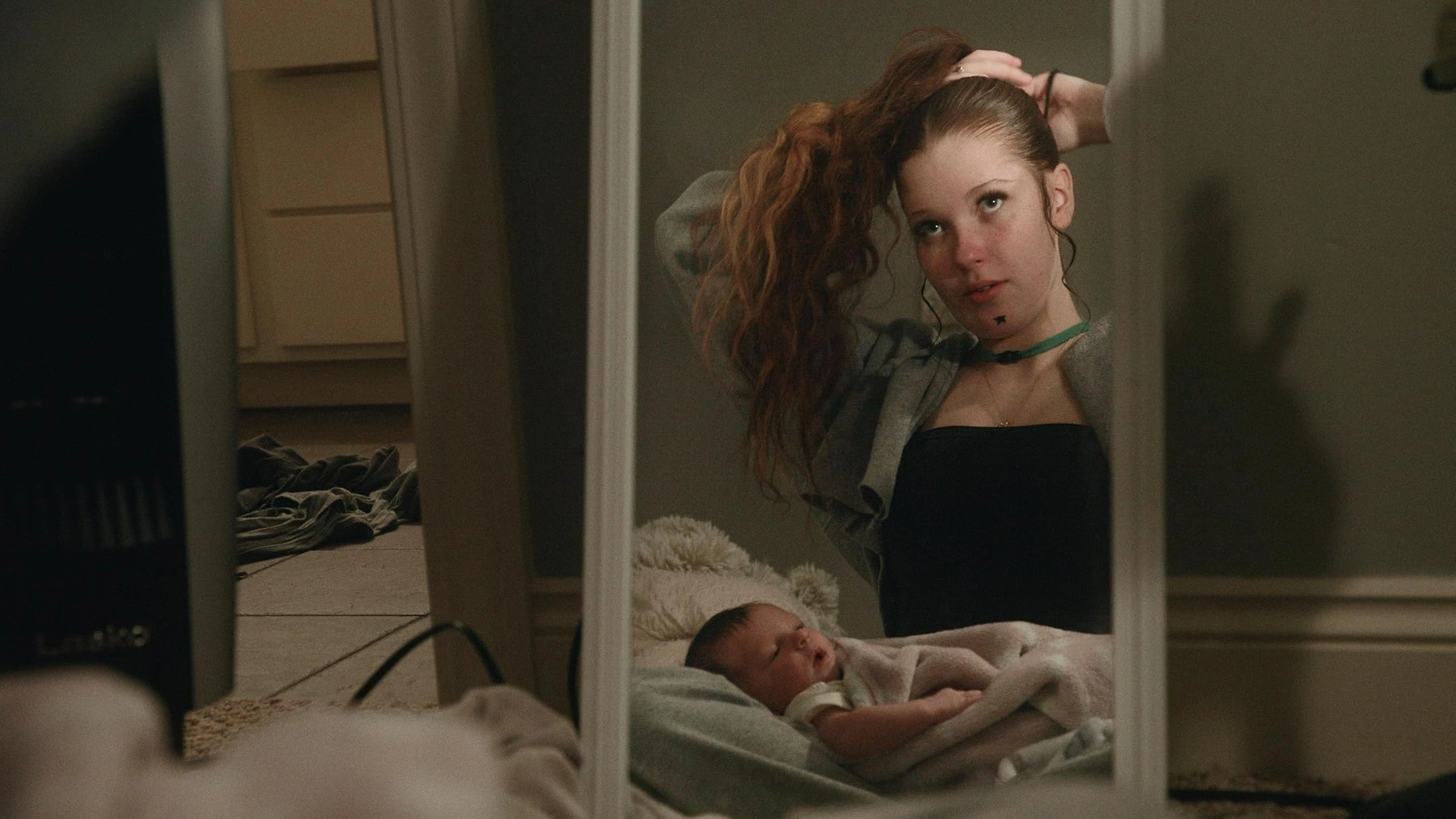
Crystal, a staff member who became a mother as a teenager, describes teen pregnancy as a generational cycle. Grace and Olivia were also born to teenage mothers. Their histories make that cycle feel less like repeated personal failure than inherited confinement.
Olivia admits that she never received meaningful sex education. Another girl struggles with basic reproductive anatomy. Such moments can be played for humiliating comedy in less responsible hands. Walsh and Jesko let the silence around the admissions expose the real absurdity: a state that treats contraception as morally dangerous has left teenagers ignorant of the bodies it claims the authority to regulate.
This is where Baby/Girls complicates the familiar language of reproductive choice. None of the central girls frames abortion as the missing answer to her life. Yet choice has already been reduced through poverty, unstable homes, religious stigma, inadequate schooling, limited childcare, and the threat of legal intervention. A person can technically make a decision while possessing no viable alternatives. Politics tends to admire this arrangement because it can call coercion “responsibility” and go home early.
Three Versions of Hope
Grace offers the documentary its most painful movement. Pregnant at 15, she speaks eagerly about raising her daughter Emerson with greater tenderness than she received. The intention is sincere. Then the daily labor arrives. Grace still wants parties, friends, and the social life of an ordinary teenager.
She encounters exhaustion, financial pressure, and depression while her mother, Audra, attempts to absorb the childcare. Audra is recovering from addiction, raising four other children, and living with multiple sclerosis. Her effort to help becomes another transfer of impossible responsibility between women who were each asked to grow up too soon.
When Audra persuades Grace to consider adoption, the decision carries no simple moral meaning. It might be care, surrender, recognition, or all three at once. The later effort to reclaim Emerson further resists a clean interpretation. Love can motivate a wise decision and its reversal. The film records that instability honestly, though it repeatedly cuts away from Grace when her conflict reaches its sharpest point. Her story begins gathering philosophical weight, then the edit goes looking elsewhere.
Olivia’s desire for motherhood grows from absence. After losing her mother to suicide, she describes wanting ordinary family rituals, such as sitting together for Christmas dinner. Her wish to create stability is understandable because she knows its value through deprivation. A hospital sequence in which she applies mascara before giving birth holds two stages of life in one gesture. She is preparing to meet her child while still performing the familiar ritual of a teenage girl facing the world.
Ariana appears the most outwardly composed. She speaks about becoming a lawyer and understands the pressure placed on young mothers by schools, courts, and relatives. After the birth of her first son, she is pushed to find work quickly so she will not be treated as a burden. Her relationship with Brian offers some support, yet her later second pregnancy, after the removal of an IUD, arrives without enough explanation. The documentary respects her right to opacity, but respect and narrative curiosity need not be enemies.
A Camera That Listens, an Edit That Wanders
Cassandra Giraldo’s cinematography gives rural Arkansas a double character. Green hills and open sunlight suggest possibility, while worn streets, cramped interiors, court supervision, and hospital rooms reveal how little space these girls possess. The landscape looks free. Their lives do not.
Walsh and Jesko keep the camera close without turning vulnerability into spectacle. Olivia applying mascara before labor, Grace speaking about her desire to party, and Ariana discussing employment pressure gain force because the directors allow pauses, jokes, and uncertainty to remain. The girls are not pushed toward polished revelations. Their incomplete understanding becomes part of the truth.
Daniela I. Quiroz’s editing creates several resonant connections between testimony and landscape, yet the broader structure weakens as it rotates among the three stories. Grace’s crisis loses momentum when the film cuts away. Ariana’s second pregnancy arrives before her earlier choices have been examined. The courts and Compassion House staff remain peripheral, leaving crucial placement decisions vague. Ninety-four minutes should feel concentrated. Here, repetition causes parts of the film to blur.
The strangest rupture comes from family photographs apparently altered through generative AI. Faces acquire warped features, and the viewer can no longer tell where documentation ends and fabrication begins. This might seem like a minor aesthetic error beside the gravity of the subject, but documentaries survive through a fragile agreement: the audience accepts mediation because it trusts the filmmaker’s relationship to reality. A documentary asking us to trust what vulnerable girls reveal should know that trust is not a visual effect.
Baby/Girls premiered at the South by Southwest Film & TV Festival on March 13, 2026, and is available through festival circuits and distribution via Latchkey Films. The documentary follows three pregnant teenagers living in a Christian maternity home in Arkansas as they navigate pregnancy and early motherhood.
Full Credits
Title: Baby/Girls
Distributor: Latchkey Films
Release date: March 13, 2026
Running time: 94 minutes
Director: Alyse Walsh, Jackie Jesko
Producers and Executive Producers: Melissa Leardi, Alex Waterfield, Kelly Rohrbach Walton, Nick Capote
Cast: Grace Dulaney, Ariana Green, Olivia Malott, Audra Dulaney, Crystal Widger, Brian Rivera, Paula Woods
Director of Photography (Cinematographer): Cassandra Giraldo
Editors: Daniela Quiroz, Andrew Morreale
Composer: T Griffin, Dash Hammerstein
The Review
Baby/Girls
Baby/Girls understands that “choice” becomes an empty political slogan when education, money, safety, and time have already been withheld. Its patient camera gives Olivia, Grace, and Ariana room to remain contradictory: loving, frightened, reckless, perceptive, and still very young. The fractured editing keeps their lives from developing with equal force, while the generative-AI imagery introduces doubt into a film built on trust (a remarkably poor bargain). The documentary sees its subjects clearly. It does not always shape what it sees with the same discipline.
PROS
- Compassionate access to the teenagers
- Clear account of institutional failure
- Intimate birth and family scenes
- Strong rural Arkansas cinematography
- Grace’s painful maternal conflict
CONS
- Parallel stories blur together
- Key crises cut short
- Courts remain underexplored
- Rushed late developments
- Distracting generative-AI photographs