














![Kingdom Hearts Collection [I-III] Review](https://gazettely.com/wp-content/uploads/2026/10/Kingdom-Hearts-Collection-I-III-1-360x180.webp "Kingdom Hearts Collection [I-III] Review: KHII Holds Steady as Newer Entries Fluctuate 33")








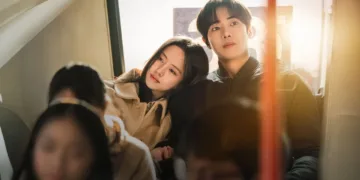
A relationship that has lasted ten years should have accumulated enough history to survive one bad stretch. A Love Other Than Yours spends its opening episodes testing that assumption with unusual patience. Namgung Ho and Lee Mi-do still know each other’s habits, still rely on each other, and still say “I love you” without thinking. What they can no longer agree on is what all that familiarity means.
The premiere initially disguises the problem as flirtation. Ho approaches Mi-do in a bar as though they are strangers, and the encounter develops into a seduction before revealing itself as role-play between longtime partners. It is an efficient piece of storytelling because the scene performs two jobs at once. Ho and Mi-do are comfortable enough to play together, yet they need the game to manufacture a feeling that used to arrive naturally.
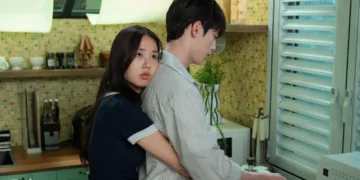
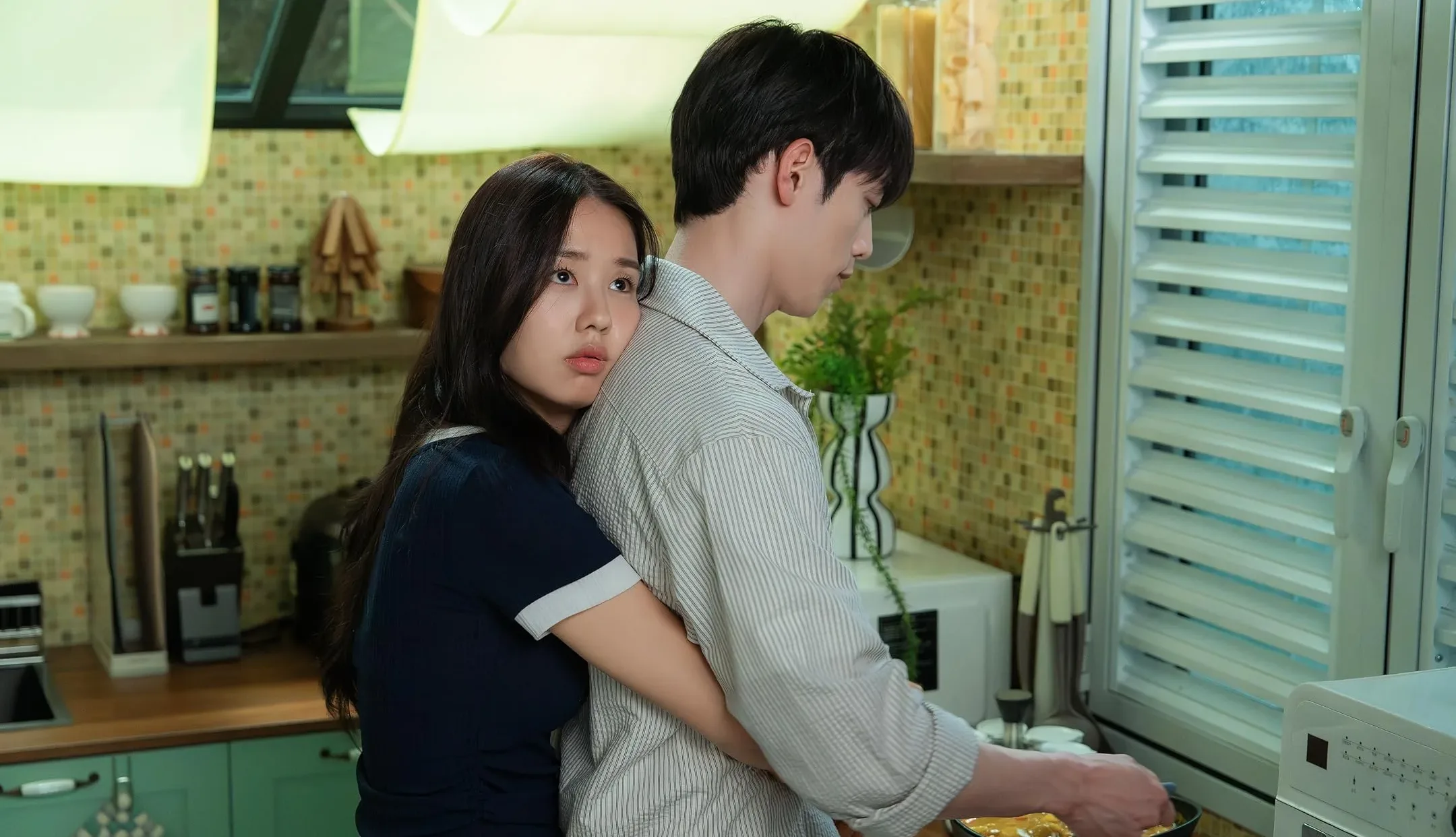
Their ordinary routine deepens that contradiction. They live across the hall from each other. Ho calls every morning to wake Mi-do. He cleans her apartment, listens to her complaints about work, and has become so embedded in her family that marriage appears less like a dramatic leap than overdue paperwork. Mi-do’s mother certainly treats it that way, pushing the couple toward either marriage or separation. Then Mi-do reveals they have not had sex for six months.
The disclosure is partly tactical, an attempt to shut down her mother’s interrogation, but the script understands the usefulness of what she has accidentally admitted. Their relationship has not collapsed. It has gone quiet in places neither of them wanted to inspect.
Mi-do’s failing filmmaking career gives that silence its real shape. Her production of Heartless has gone badly enough that she has effectively lost the film after confronting actress Song Hae-na over repeated absences. Mi-do responds to the pressure by threatening Hae-na with knowledge of her affair, a desperate and plainly ugly decision that leaves her facing professional and legal consequences. By the time she is accepting adult-film work to cover legal expenses, her confidence has already taken several direct hits. Ho reacts as he always has: he tries to help. That is precisely the problem.
From his side, support is proof that the relationship still works. He reassures Mi-do that he will stand beside her even if her career collapses, and the sentiment comes from a sincere place. From hers, every reassurance has begun to sound like evidence of an imbalance she cannot escape. His stability throws her instability into harsher relief. He has a job where he can argue over factory schedules and be heard. She has watched a film career she fought for start sliding away.
The argument after the police-station incident finally puts language around the resentment. Mi-do did not hide her problems because Ho was indifferent. She hid them because being seen by him at her lowest makes her feel pathetic. That distinction is what keeps the breakup from becoming another television misunderstanding that could be solved by one adequately scheduled conversation.
Ho has his own blind spot. He believes the transformation of passion into responsibility represents maturity. When Mi-do overhears him speaking to her brothers, she first hears the romantic version: that he still gets butterflies and misses her when she is gone. The later reveal is better. Ho actually describes her as his compass, the person who gives him a reason to endure the parts of his own life he dislikes. He means it as devotion. Mi-do hears obligation.
The writing is at its strongest when it allows both interpretations to stand. Ho has not secretly stopped loving her, and Mi-do has not suddenly decided that ten years meant nothing. They have developed incompatible definitions of what their relationship has become. He sees endurance as evidence of love. She sees herself becoming another responsibility he refuses to put down.
His planned proposal sharpens the irony. Ho thinks marriage will give shape to a life they have already built. Mi-do hears the same proposal as pressure to formalize a version of herself she no longer trusts. She talks about failing to master the second act of her life before being pushed into a third, which sounds theatrical until the rest of the episode proves how accurately she sees her own situation.
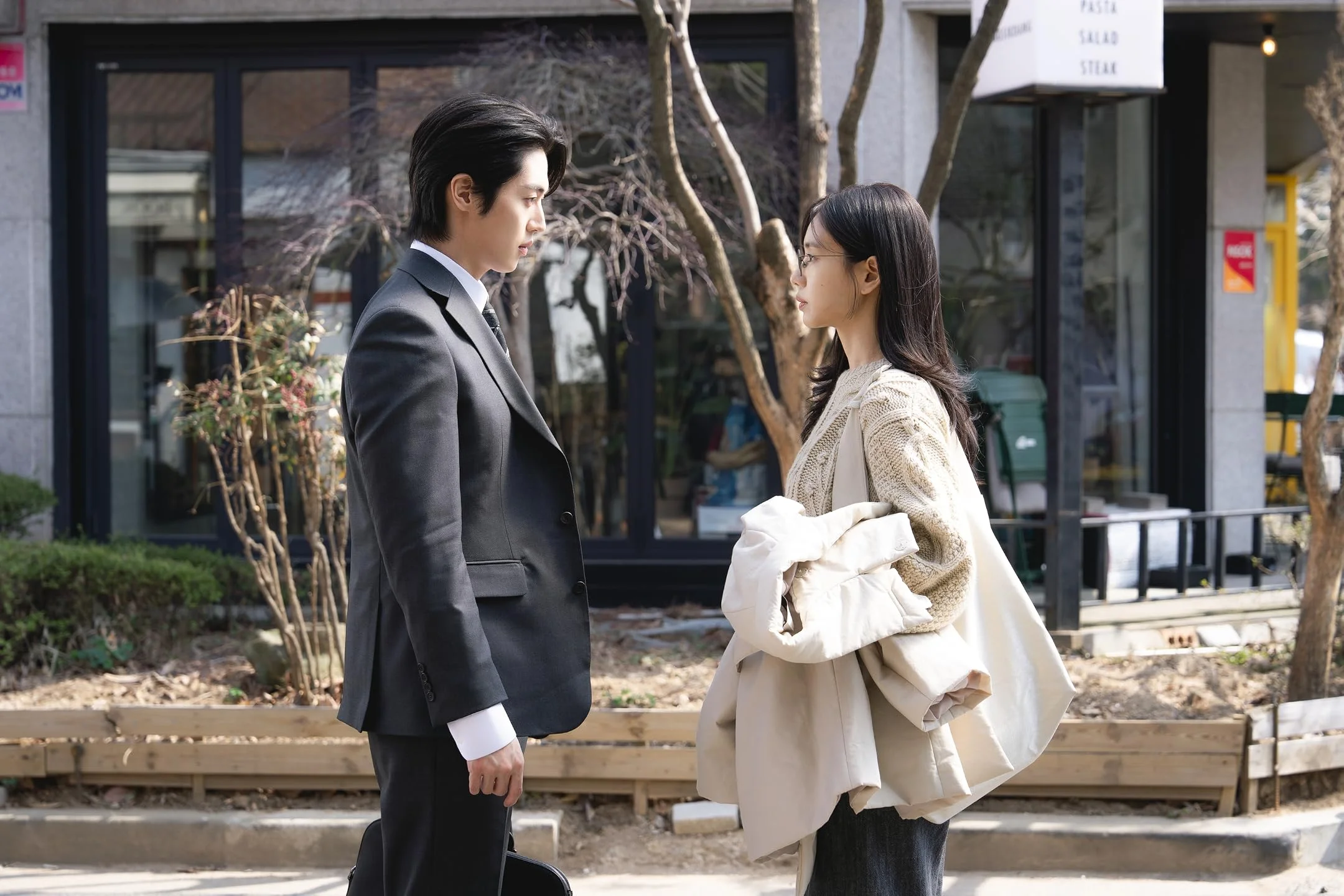
The flashbacks help because they do not merely decorate the romance. They keep revising the present. In 2017, Mi-do has just received recognition for her debut film when Ho prepares to leave for Australia rather than remain trapped as her friend. She runs after him, hesitates, and he closes the distance himself. He promises they will not break up.
Their anniversary becomes tied to the first snowfall, and they collect nine of them together before separating ahead of the tenth. Television loves to use shared history as proof that a couple belongs together. Here, history behaves differently. Every memory explains why leaving is so difficult without proving that staying is correct.
Seo Kang-joon and Ahn Eun-jin are essential to that balance. The bar game works because they make the choreography feel practiced rather than freshly romantic. Their morning calls have the casual rhythm of something repeated hundreds of times. During the breakup, neither performer reaches immediately for fury. Ho keeps asking if Mi-do is certain. She keeps answering yes. The scene hurts because both characters understand exactly what is being lost.
The morning after is even sharper. Ho calls her automatically, they exchange an equally automatic “I love you,” and only then do they remember that the relationship has ended. Ten years of behavior has outlived the decision by several seconds. The script does not need a speech after that.
The weaker material arrives once the drama begins arranging the next romantic possibilities. Lawyer Han Tae-sung enters Mi-do’s life through her settlement dispute, while Park Soo-ah challenges Ho at work. Both introductions have enough friction to establish future chemistry, but they also threaten to simplify a breakup the premiere worked hard to complicate. Turning the story into a clean four-person romantic configuration would be an easy way to lose the thing that currently distinguishes it.
The useful version of Tae-sung and Soo-ah is one where each relationship exposes something Ho and Mi-do could not see while they were together. The less interesting version uses them as jealousy delivery systems until the original couple remembers the first snow.
For now, the breakup remains stronger than the machinery surrounding whatever comes next. A Love Other Than Yours has built its opening around a difficult proposition: love can survive even after a relationship has stopped functioning properly. Ho and Mi-do still care for each other. Their real problem is that each has started reading that care as evidence for a different future.
A Love Other Than Yours premiered on KBS2 and Amazon Prime Video on September 12, 2026. The realistic melodrama follows a couple in a ten-year relationship who begin to experience shifting emotional boundaries and unexpected romantic tensions.
Where to Watch A Love Other Than Yours Online


Full Credits
Title: A Love Other Than Yours
Distributor: KBS2, Amazon Prime Video
Release date: September 12, 2026
Rating: TV-14
Running time: 60–70 minutes per episode
Director: Hwang Seung-ki, Lee Ga-ram
Writers: Yoo Su-ji
Producers and Executive Producers: Kim Soo-jin, Bae Sung-soo, Noh Sang-duk, Lee Eun-jin, Cho Chae-yeon
Cast: Seo Kang-joon, Ahn Eun-jin, Lee Joo-ahn, Jo A-ram, Kim Mi-kyung, Kim Nam-hee, Lee Min-jae
Director of Photography (Cinematographer): Yum Ho-wang, Jung Seung-hwan, Lee Eun-bi, Yoon Tae-hoon
Composer: Park Sung-jin
The Review
A Love Other Than Yours
A Love Other Than Yours finds its strongest material in the uncomfortable space between loving someone and no longer knowing how to live beside them. Ho and Mi-do’s breakup works because neither is reduced to villain or victim, while their routines, arguments, and shared history make ten years together feel consequential. The danger is structural: Tae-sung and Soo-ah could turn a perceptive relationship drama into familiar romantic machinery. For now, the emotional logic is considerably sharper than the setup waiting around it.
PROS
- Convincing breakup between two sympathetic leads
- Strong use of shared routines and history
- Seo Kang-joon and Ahn Eun-jin sell long-term intimacy
- Career failure gives Mi-do’s choices real pressure
- Flashbacks meaningfully revise the present
CONS
- Secondary romances risk making the story predictable
- Family comedy can clash with quieter emotional material
- Mi-do’s professional crisis carries several plot functions at once