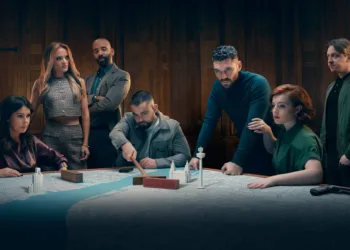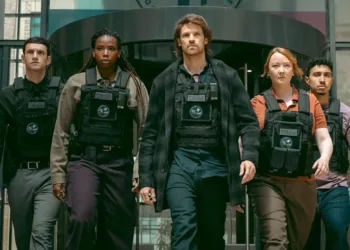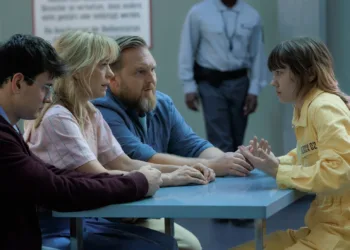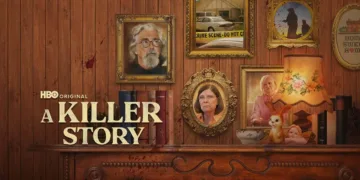
















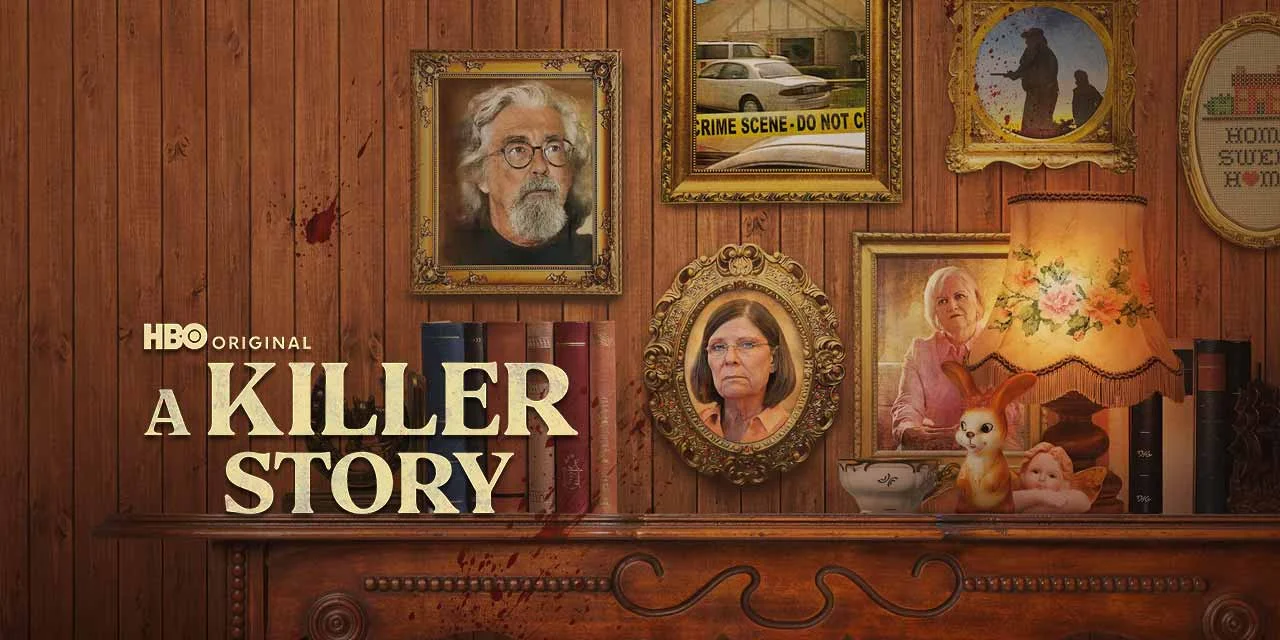

Certainty does a remarkable amount of work in true crime. Give people a motive, an ex-spouse, and a few ugly comments made years earlier, and suddenly the missing physical evidence starts to feel like an administrative inconvenience. A Killer Story spends three episodes dismantling that instinct, then has the good sense to turn the same scrutiny on the people doing the dismantling.
Mike Sisco and Karen Harkness were shot to death in their Topeka home in 2002. Suspicion quickly focused on Sisco’s ex-wife, Dana Chandler, yet the original district attorney declined to prosecute. Chandler lived hundreds of miles away in Denver, investigators could not place her at the scene, and there was no physical evidence tying her to the killings. Years later, after the case received national exposure through 48 Hours and a new prosecutor took office, Chandler was charged. She was convicted in 2012 and sentenced to two life terms.
Director Matthew Galkin could have shaped those facts into the familiar miscarriage-of-justice machine: shaky conviction, crusading outsiders, buried evidence, righteous vindication. For a while, the machinery seems ready to cooperate. The prosecution’s case against Chandler looks alarmingly thin, and later court proceedings expose serious misconduct. Her conviction is eventually overturned. Every narrative instinct says the documentary now needs to find the mistake, expose the culprit, and send everyone home satisfied.
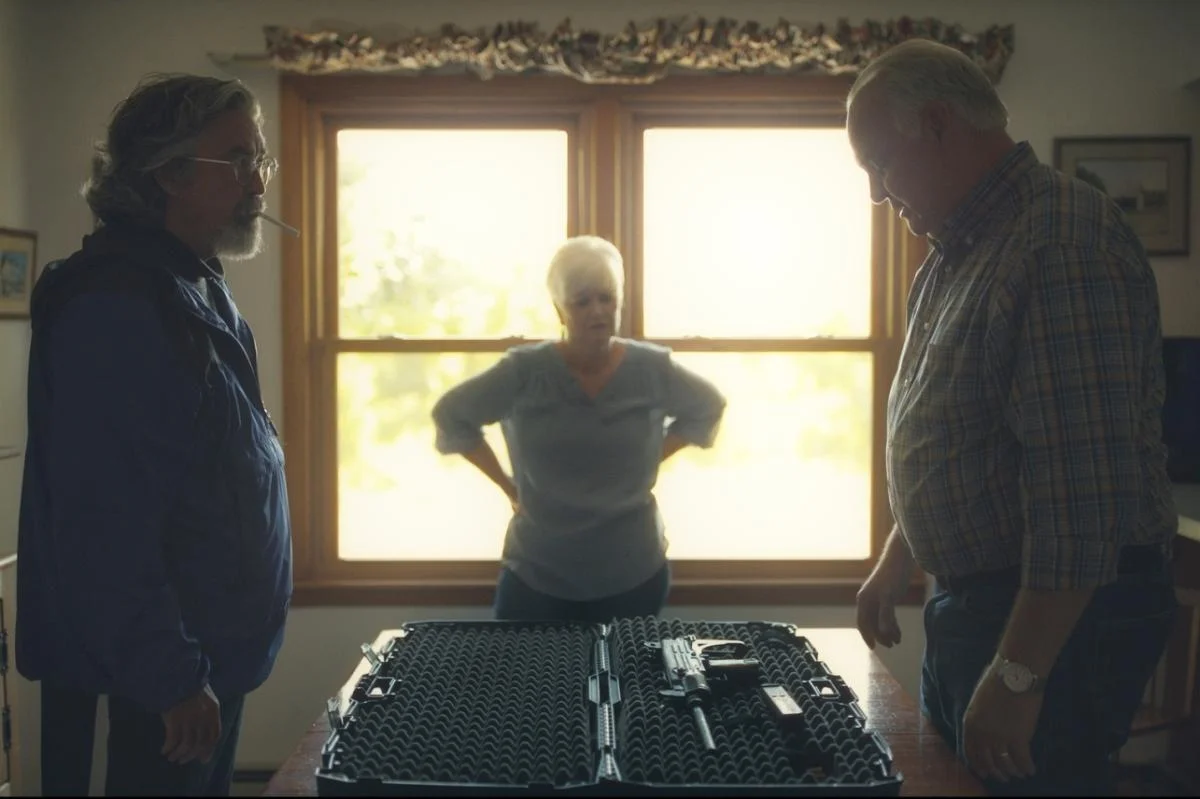
Then Eileen Umbehr enters the picture, armed with thousands of emails. Eileen and her husband Keen are true-crime devotees from Topeka who had no personal connection to Chandler, Sisco, or Harkness. They simply became convinced Chandler had been wrongly convicted.
Eileen sent investigative journalist Joe Sexton message after message until persistence crossed whatever invisible line separates “enthusiastic correspondent” from “person whose name now causes an involuntary eye twitch.” Sexton initially nicknamed her “Pen Pal.” After Chandler’s conviction was overturned, he finally went to Kansas.
The joke works because the Umbehrs are much harder to dismiss than their introduction suggests. Keen went from collecting garbage to practicing law after taking a First Amendment case all the way to the U.S. Supreme Court and winning. The couple do real work on Chandler’s case. Their obsession uncovers reasons to question the prosecution rather than merely inventing them over dinner.
That distinction matters, because A Killer Story gradually makes the Umbehrs its most uncomfortable argument. They object to investigators deciding Chandler was guilty and then arranging ambiguous facts around that conclusion. Yet they eventually become convinced that another person committed the murders. Sexton asks the obvious, unpleasant question: are they recreating the same tunnel vision with a different suspect? Suddenly the documentary is looking back at its own audience.
That turn is where Galkin’s three-part structure earns its compact running time. The episodes run under roughly forty minutes, and the series moves quickly through Chandler’s original conviction, the Umbehrs’ campaign, Sexton’s involvement, and the successive trials without burying the central argument under procedural debris.
The first episode especially has the rhythm of someone opening a filing cabinet and discovering each drawer contains a stranger story than the last. Eileen’s email campaign leads to the overturned conviction; the overturned conviction leads Sexton to Kansas; the investigation produces an alternative theory; that theory raises another ethical problem. True crime usually treats momentum as proof of progress. Here, momentum mostly produces additional complications.
Sexton is crucial to that effect. Sitting at his ProPublica desk with an unlit cigarette hanging from his mouth, he narrates the saga with enough profanity to make the HBO logo feel like a warning label. His language gives the series a dry comic texture without trivializing Sisco and Harkness. The jokes land on investigative absurdity, on his own exasperation, and especially on the gap between how cleanly murder stories are packaged for television and how unruly this one becomes in practice. Crucially, he is also allowed to be wrong.
Sexton begins by treating Eileen as an obsessive stranger filling his inbox. Then he sees enough in Chandler’s case to take her seriously. From there, the documentary might easily have promoted him into the seasoned journalist who arrives late, notices what everyone missed, and solves the puzzle before the credits. Instead, he gets pulled into the same gravitational field of theories, suspicions, and expectations that drew in everyone else. That is a much better use of a narrator than having him stand outside the story wearing the invisible badge marked Objective Professional.
The later trials make the problem even messier. Chandler’s second trial ends with a hung jury. During the third, she dismisses her attorneys and represents herself, a disastrous strategic choice that ends with another conviction. Galkin does not pretend this answers the larger questions around the prosecution. Nor does Chandler’s self-representation fit comfortably into the exoneration story that once seemed to be forming around her. The series keeps denying everyone the clean dramatic beat they appear to deserve.
Even the production timeline works in its favor. Filmed across six years, A Killer Story is following uncertainty instead of reconstructing it after the participants already know the ending. People commit to theories, discover new information, adjust, double down, and occasionally realize that the mystery has become less manageable rather than clearer.
The murder of Mike Sisco and Karen Harkness remains the tragedy underneath all of this, which is precisely why the documentary’s skepticism matters. A weak prosecution does not prove another suspect guilty. A persuasive alternate theory is still a theory. An investigator exposing tunnel vision can develop tunnel vision of their own. Television can draw attention to injustice while simultaneously teaching millions of viewers how quickly suspicion can start feeling like evidence.
A Killer Story never finds the comforting point where all those contradictions cancel each other out. It finds something sharper: the moment a murder case stops being a set of facts and becomes a story people need to finish. Once everyone thinks they know the ending, evidence has an annoying habit of becoming optional. That may be the scariest part.
A Killer Story premiered on HBO on September 10, 2026. The documentary series follows an investigative journalist over six years as he examines a contested double homicide conviction following persistent appeals from dedicated citizen sleuths.
Where to Watch A Killer Story Online


Full Credits
Title: A Killer Story
Distributor: HBO
Release date: September 10, 2026
Rating: TV-MA
Running time: 39 minutes per episode
Director: Matthew Galkin
Writers: Not publicly specified
Producers and Executive Producers: Joe Sexton, Matthew Galkin, Joshua Levine
Cast: Joe Sexton, Dana Chandler, Eileen Umbehr, Keen Umbehr
Director of Photography (Cinematographer): Jeff Hutchens
Editors: Ross Hockrow, Drew Blatman, James Pilott, Evan Wise
The Review
A Killer Story
A Killer Story works because every apparent answer creates a harder question. Matthew Galkin keeps the three episodes moving without sanding away the case’s contradictions, while Joe Sexton’s profane narration gives the investigation wit without turning murder into entertainment. The Umbehrs provide the series its sharpest tension: they expose genuine problems with Dana Chandler’s prosecution, then risk developing the same certainty they distrust. The result is a compact, smart true-crime series that understands suspicion is easy. Proof is the difficult part.
PROS
- Sharp three-episode pacing
- Sexton is an excellent narrator
- Strong examination of investigative certainty
- Keeps the legal contradictions intact
- Humor rarely compromises the victims
CONS
- Courtroom material becomes more conventional
- The case offers no satisfying resolution
- Chandler remains somewhat distant as a figure