




























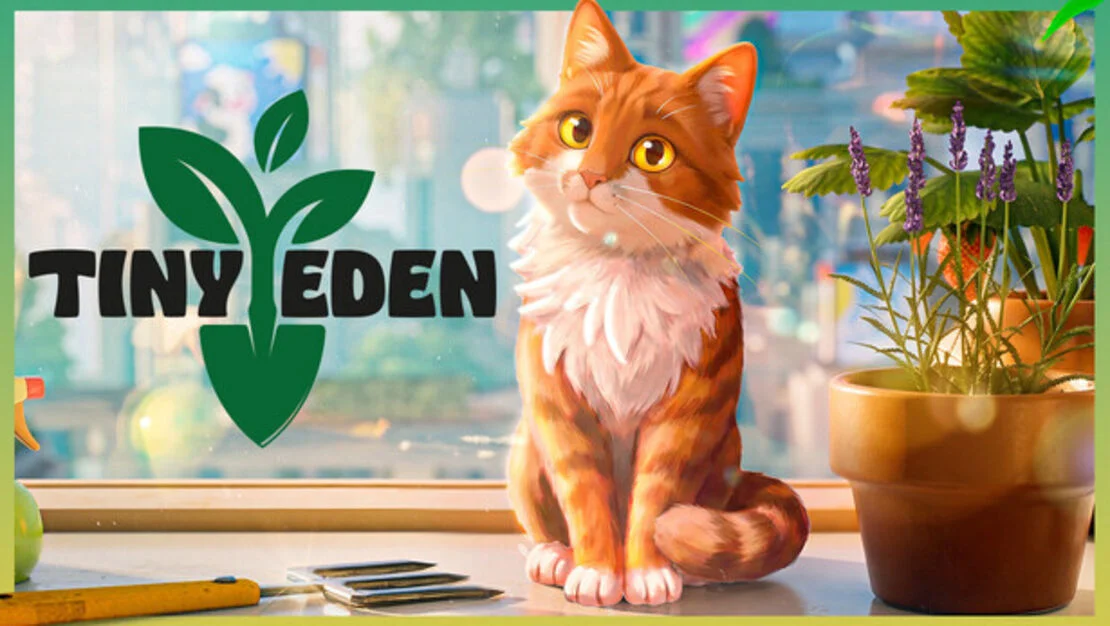

Moving a planter a few feet across a balcony should not feel important. In Tiny Eden, it can. A patch of shade that seemed harmless yesterday may be starving a plant of light today, so you pick up the pot, walk it across the apartment, and try somewhere warmer. It is a small correction, but the first-person perspective gives it a physical intimacy that most farming games lose somewhere between the crop grid and the inventory screen. You are caring for something because you noticed it. That feeling is Tiny Eden at its best.
Joy, a botanist whose research funding has disappeared, moves into her friend Holly’s apartment inside Garden Tower while continuing her work in a world where bees have vanished. Holly is away and mostly communicates by email, leaving Joy with a small drone called EN-G1, a rooftop cat, and a balcony that slowly becomes the center of her life. The larger ecological crisis never develops into a particularly substantial story, yet the setup gives the gardening an appealing melancholy. The world outside looks synthetic and distant. Inside, you are trying to make something grow.
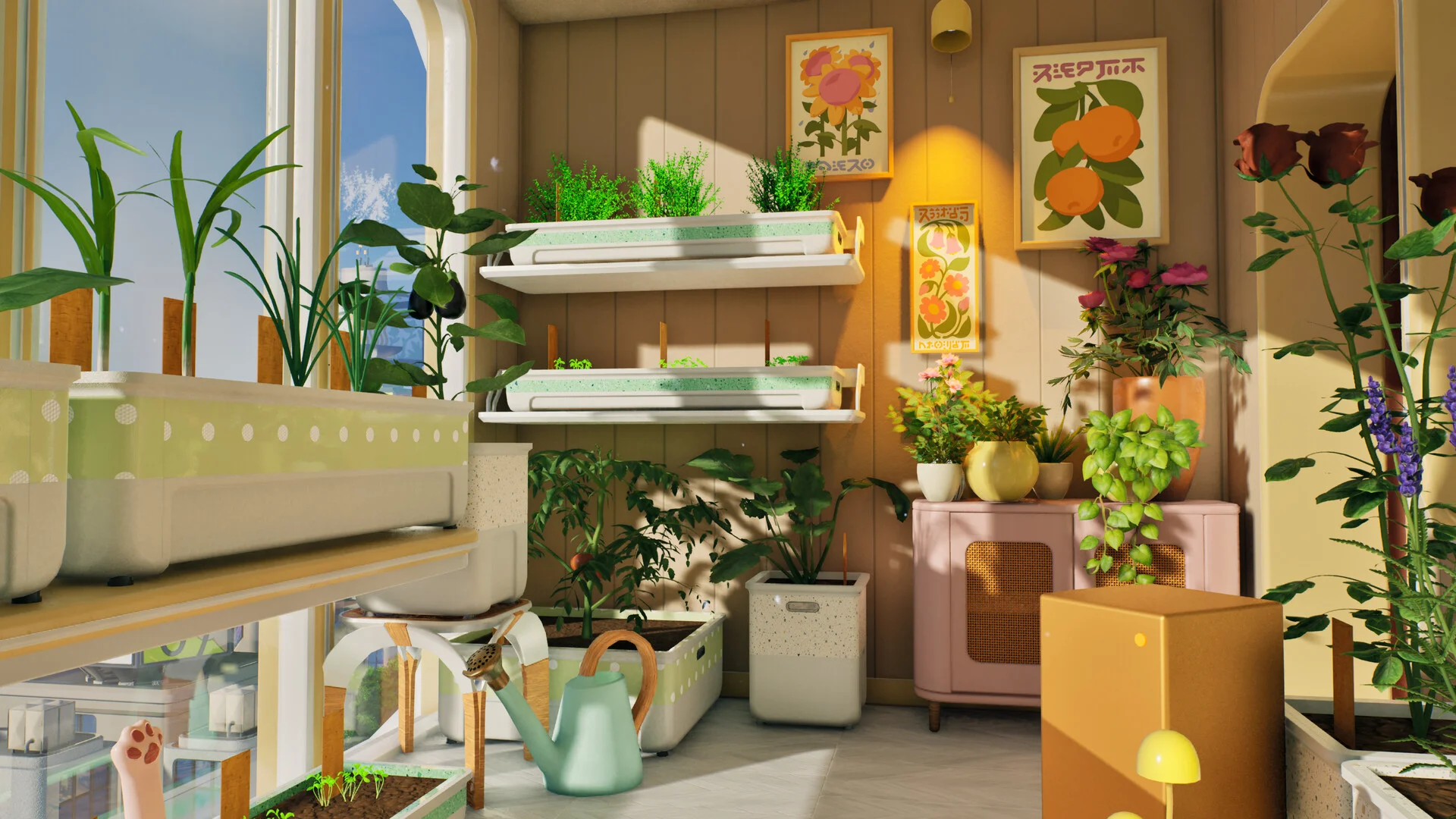
The gardening itself has enough detail to make that contrast matter. Plants require suitable planters and soil blends made from materials such as compost, sand, and clay. Temperature, sunlight, wind, water, weeds, damaged leaves, pests, and nutrient problems can all affect the result. Watering uses a small meter rather than an automatic command, while weeds need to be pulled and damaged growth trimmed away. Some plants can benefit from neighboring species, so placement gradually becomes part of the thinking too.
None of these systems is especially intimidating alone. What makes them satisfying is how they accumulate into a relationship with the space. You start recognizing which part of the balcony sits in shadow. You remember which planter needs moving before colder weather arrives. You notice a leaf that looks wrong and stop what you were doing to check it. Tiny Eden turns gardening into a sequence of tiny acts of attention, and that is where much of its warmth comes from.
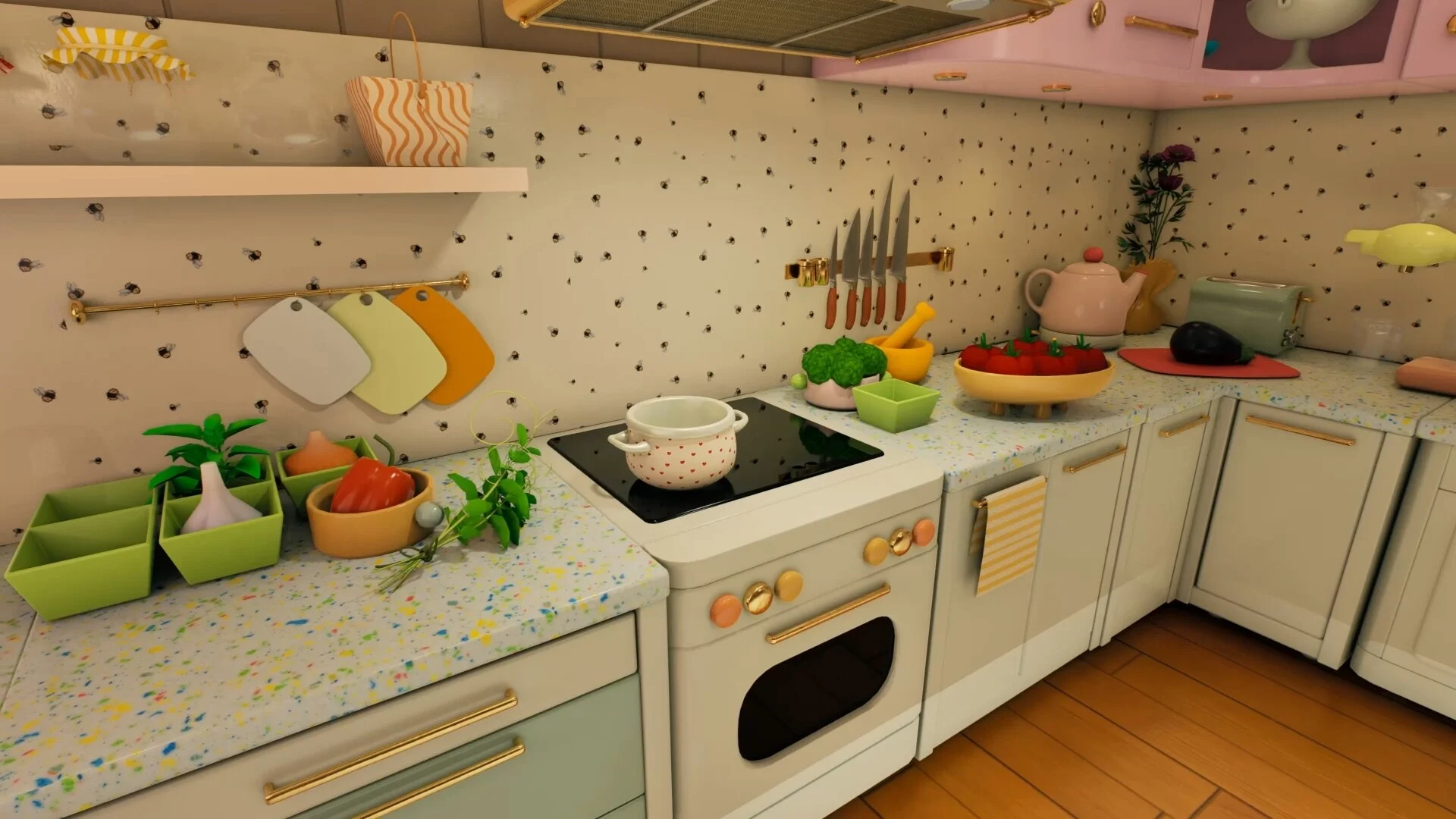
The game also understands that repetition can be comforting. Grow something, harvest it, cook with it if necessary, then fulfill an order through the tablet. Money goes back into seeds, equipment, rooms, furniture, additional balconies, and eventually a rooftop greenhouse. Reputation with clubs unlocks more inventory, recipes, and crafting options, while separate skills improve through repeated activity. Later drones can handle some routine upkeep for you. There is a pleasant rhythm buried inside all of this. Unfortunately, Tiny Eden sometimes mistakes making the player wait for asking the player to care.
Plants taking time to grow feels right. That delay belongs to the fantasy. Spending hours repeating a narrow set of orders because new shops and systems remain locked behind reputation is harder to defend. One source estimates that reaching the second shop can take around ten hours, while another describes sleeping through stretches of in-game time simply because there was little productive work available until crops matured.
Early income can also feel tight once seeds, soil materials, tools, recipes, and other necessities begin competing for the same small pool of money. The difference is emotional. Waiting for a strawberry plant creates anticipation. Waiting for an arbitrary reputation threshold creates impatience.
That distinction matters because Tiny Eden already has a strong answer to progression: space. Beginning with a modest balcony gives you somewhere understandable to care about, and unlocking rooms or larger growing areas feels tangible in a way a rising number on a menu never quite can. Watching the apartment become fuller, greener, and busier is satisfying because the change belongs to the world you physically occupy.
Garden Tower itself becomes stranger the longer you stay there. The player cannot really leave. Shopping happens through a tablet, deliveries arrive at a parcel locker, Holly remains somewhere beyond reach, and most neighbors feel present only when a task requires them. The atrium can seem oddly empty. Human faces are described as blank, while the surrounding city is muted and clinical beside the plants taking over Joy’s home. I kept coming back to that isolation because it gives the cozy premise an unexpected edge. The balcony feels alive partly because so much beyond it does not.
Tiny Eden never develops that implication as deeply as it could. A botanist tending plants in a bee-less future from inside an almost self-contained tower sounds like the beginning of a much stranger story than the game tells. Still, the atmosphere survives through smaller details. Quiet lo-fi music keeps daily routines gentle, rain turns the apartment into an especially soothing place to work, and the cat and EN-G1 add enough companionship that the solitude rarely becomes bleak. Then the technology starts misbehaving.
That is a bigger problem here than it might be elsewhere because calm depends on trust. The tablet, which handles shopping and orders, can stutter. Frame drops appear. Planters may clip through floors. Soil can spill or disappear. Plant-status information can become unclear, and one reported build saw those indicators vanish until the game was restarted. Another source encountered missing store images, incorrect text, awkwardly communicated progression, and finicky seed-sowing interactions.
The most serious account describes an update leaving a seven-hour save without store access, effectively stopping progress. Other reported playthroughs were less severe, so that should not be treated as a universal outcome. It does show how fragile the experience could be around release.
Tiny Eden asks you to notice minute changes in living things. That makes every broken interface, missing image, and unreliable interaction sting a little harder. The game trains you to pay attention, then occasionally punishes you for noticing.
I still like what happens on that balcony. Few gardening games make the act of moving a pot into better light feel this personal, and few make a small domestic space carry so much of the player’s attachment. Tiny Eden has a lovely instinct for the emotional side of tending something patiently. It just needs to learn the difference between patience and friction.