





















Streaming spent years telling viewers that television no longer needed to obey the old rules of broadcast schedules, fixed runtimes, or tidy episode counts. Stolen Heartbeats takes that freedom to a slightly alarming logical endpoint. Fifty episodes, most lasting only a few minutes, turn a Colombian medical-supernatural thriller into something closer to serialized narrative concentrate. Netflix has removed the waiting time from the cliffhanger economy. The cliffhangers, naturally, have responded by multiplying.
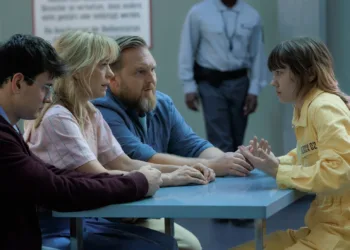
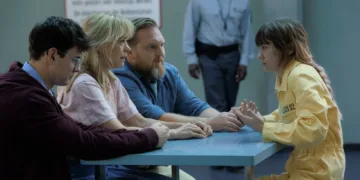
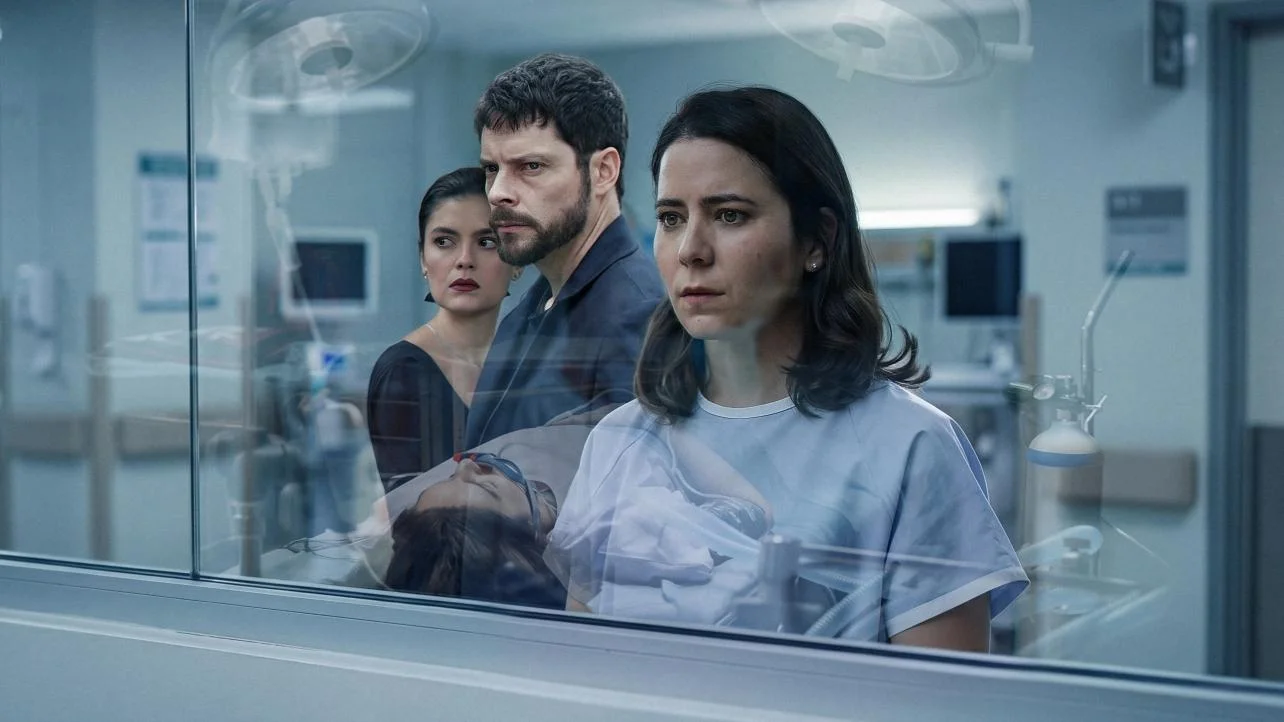
That format matters because almost everything interesting about the series grows from it. Anabel is left comatose after her car explodes. Rafael, a nurse who has previously been told that his encounters with spirits are hallucinations, begins communicating with her disembodied consciousness.
She tells him that people inside the hospital are drugging her and preparing to harvest her heart for an illegal transplant operation. Before the premise has much chance to sound absurd, the story has already moved on to attempted procedures, corrupt staff, hidden loyalties, romantic complications, and another episode.
There is undeniable skill in that propulsion. A traditional thriller can spend fifteen minutes moving pieces into position before springing a reveal. Stolen Heartbeats may barely have fifteen minutes available across several chapters. Conversations therefore become delivery mechanisms for decisions, betrayals, accusations, or discoveries.
Rafael hears Anabel, begins believing her, intervenes when medical staff move against her, and finds himself pulled into a conspiracy that keeps expanding beyond the clinic. The series understands that a two-minute episode cannot afford narrative idling. Netflix executives must look at this sort of efficiency with the expression of people who have just discovered a new mineral.
The danger is obvious. Television develops meaning through duration as much as through incident. Suspense needs a little empty space. Relationships need repetitions, hesitations, and contradictions that are not immediately converted into plot.
Here, somebody can enter a conversation with one understanding of the situation and leave ninety seconds later holding information that changes the entire story. The series rarely becomes dull, yet it often deprives its own revelations of the time needed to become dramatic events rather than fresh data.
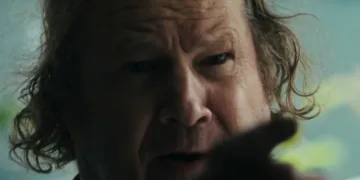
Jerónimo Cantillo helps enormously as Rafael because he treats the supernatural premise with seriousness even while the surrounding plot begins sprinting toward melodrama. Rafael initially doubts what he sees because his past has taught him to interpret these experiences as symptoms. That gives his relationship with Anabel a useful tension. Accepting her presence means accepting that his understanding of himself may have been wrong.
The hospital setting should make that conflict especially rich. Rafael works inside an institution built around diagnosis, procedure, evidence, and professional authority, while the knowledge saving Anabel comes from a source nobody can verify. The series briefly finds real friction there. Rafael knows things because Anabel tells him while unconscious. Carlos and others see only a nurse making increasingly questionable decisions around a vulnerable patient.
That reaches its strangest point when Rafael attempts to bring Anabel back by pushing her body toward the threshold between life and death, sedating her and using epinephrine so her consciousness can return. Within Rafael’s supernatural logic, it is an act of rescue. From Carlos’ position, it resembles attempted murder. Stolen Heartbeats has suddenly created a sharp conflict between institutional credibility and experiential knowledge, then races away from it.
This is where the microdrama model becomes revealing beyond this particular series. Compression does not merely shorten stories. It rewards certain kinds of stories. Secrets survive compression well. Conspiracies survive it. Romantic reversals, betrayals, murder attempts, and cliffhangers thrive because each can produce a quick narrative spike. Ambiguity and psychological development are harder to package into three-minute units without flattening them.
Anabel demonstrates the trade especially clearly. Rami Herrera has to make the character register first as an incapacitated patient whose consciousness Rafael can encounter, then as a survivor who regains physical agency. Once she wakes, the series gains access to a more conventional romantic and family drama. She defends Rafael after Carlos accuses him, grows closer to him, investigates the transplant operation, and begins discovering uncomfortable connections between the criminal scheme and her father Gustavo’s business.
The shift gives Herrera a wider range to play, but it also pulls the show toward familiar telenovela machinery. Carlos is married to Anabel’s stepsister Lucia and still obsessed with Anabel. His jealousy toward Rafael feeds directly into his efforts to discredit him. Carlos can participate in the transplant conspiracy, disguise his involvement, accuse Rafael of criminality, and continue presenting himself as a concerned protector. There is very little wasted narrative motion here. There is also very little oxygen.
The organ-trafficking story supplies the series with its darkest material. Nurse Azucena targets Anabel after being instructed to find an O-positive donor. Rafael later uncovers signs that the illegal transplant network extends into Gustavo’s hotel operation, while Spencer, a wealthy foreign patient, appears to have paid to bypass the transplant waiting system. Anabel’s body has value to the conspiracy because it can be converted directly into money.
That idea could support an unsettling examination of bodily autonomy inside a medical institution. Instead, the series mostly translates it into escalating suspense. Every new discovery seems to reveal another compromised employee, family member, hidden room, financial secret, or false accusation. The machinery works. It simply works so aggressively that it occasionally steamrolls the implications of what it has uncovered.
The supernatural material suffers from the same pressure. A nurse hearing the dead inside a hospital is already a strong premise. The setting invites anxiety around mortality, medical authority, and the possibility that the people no longer able to speak might still possess information about what happened to them. Yet the dead frequently become unusually efficient witnesses. They arrive with leads. The conspiracy thanks them for their service and keeps moving.
That may be the clearest sign of what this new form of streaming drama prioritizes. Stolen Heartbeats is remarkably good at keeping the viewer in motion. It is less interested in asking the viewer to remain with a feeling after the information arrives. That distinction matters because the microdrama boom will not simply give us shorter television. It may gradually reshape which kinds of storytelling streaming platforms consider valuable in the first place.
For now, the experiment remains entertaining enough to justify itself. Cantillo gives Rafael sincerity, Herrera keeps Anabel from becoming a passive plot device, and the conspiracy keeps finding increasingly extravagant ways to complicate their lives. The show regularly approaches a darker, stranger drama about medical authority, commodified bodies, and unverifiable knowledge. Then another revelation lands, another episode begins, and the platform keeps feeding the machine.
Stolen Heartbeats premiered on Netflix on September 11, 2026. The fast-paced Colombian medical thriller follows a nurse who can hear the dead as he tries to protect a comatose woman from dangerous enemies closing in on her.
Where to Watch Stolen Heartbeats Online


Full Credits
Title: Stolen Heartbeats
Distributor: Netflix
Release date: September 11, 2026
Rating: TV-MA
Running time: 1–5 minutes per episode (50 episodes)
- Producers and Executive Producers: CMO
Cast: Rami Herrera, Jerónimo Cantillo, Paola Moreno, Julián Trujillo, Marcela Carvajal
The Review
Stolen Heartbeats
Stolen Heartbeats turns microdrama into both its engine and its limitation. The tiny episodes make conspiracies, betrayals, and cliffhangers dangerously easy to consume, while Jerónimo Cantillo and Rami Herrera keep Rafael and Anabel emotionally legible inside the rush. Yet the same format repeatedly trades atmosphere, psychological development, and the stranger possibilities of its hospital setting for another revelation. Netflix may have found an efficient new delivery system for melodrama. The question is what television loses when efficiency becomes the creative brief.
PROS
- Relentlessly effective pacing
- Cantillo grounds the supernatural premise
- Herrera gives Anabel range
- Strong medical-supernatural setup
- Microdrama format suits the conspiracies
CONS
- Revelations rarely get room to land
- Supporting characters can feel functional
- Supernatural ideas remain underdeveloped
- Atmosphere loses out to plot
- Emotional shifts can feel compressed