
























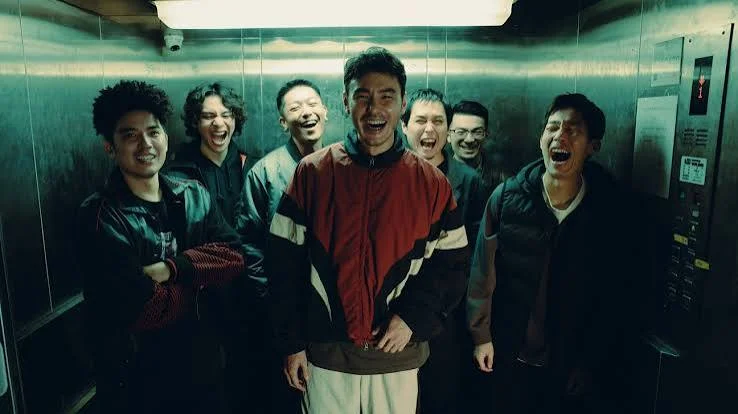

A detective who cannot trust his own perception presents a fairly obvious problem for a crime story. Sabu finds the better problem hiding behind it: what happens when everyone around that detective trusts him too much. In Arrested Memory, Lee’s failing memory interrupts an investigation while corrupting the meaning of everything he does. A blank stare looks like strategy. Wandering away with ransom money looks like betrayal. Confusion becomes evidence because the people watching him are determined to impose intention on behavior that has none.
The cruel joke begins with genuine trauma. Lee, played by Ethan Juan, is leading a police operation when one of his episodes strikes at the worst possible moment. His hesitation contributes to the massacre of his squad, leaving him alive with guilt and a mind that can no longer reliably hold onto the present. He later receives another assignment involving the kidnapped son of wealthy Japanese businessman Hatta, and the film proceeds to place a man who cannot remember his mission at the center of a ransom exchange.
That setup gives Sabu permission to turn procedural logic inside out. When Lee reaches the planned drop and loses track of what he is doing, officers observing him initially read his bewilderment as an extraordinarily convincing performance. “He really looks lost” becomes funny because the police are technically correct while understanding nothing. Once Lee walks away with the money, professional admiration mutates into suspicion. The same behavior acquires a different moral meaning without changing at all.
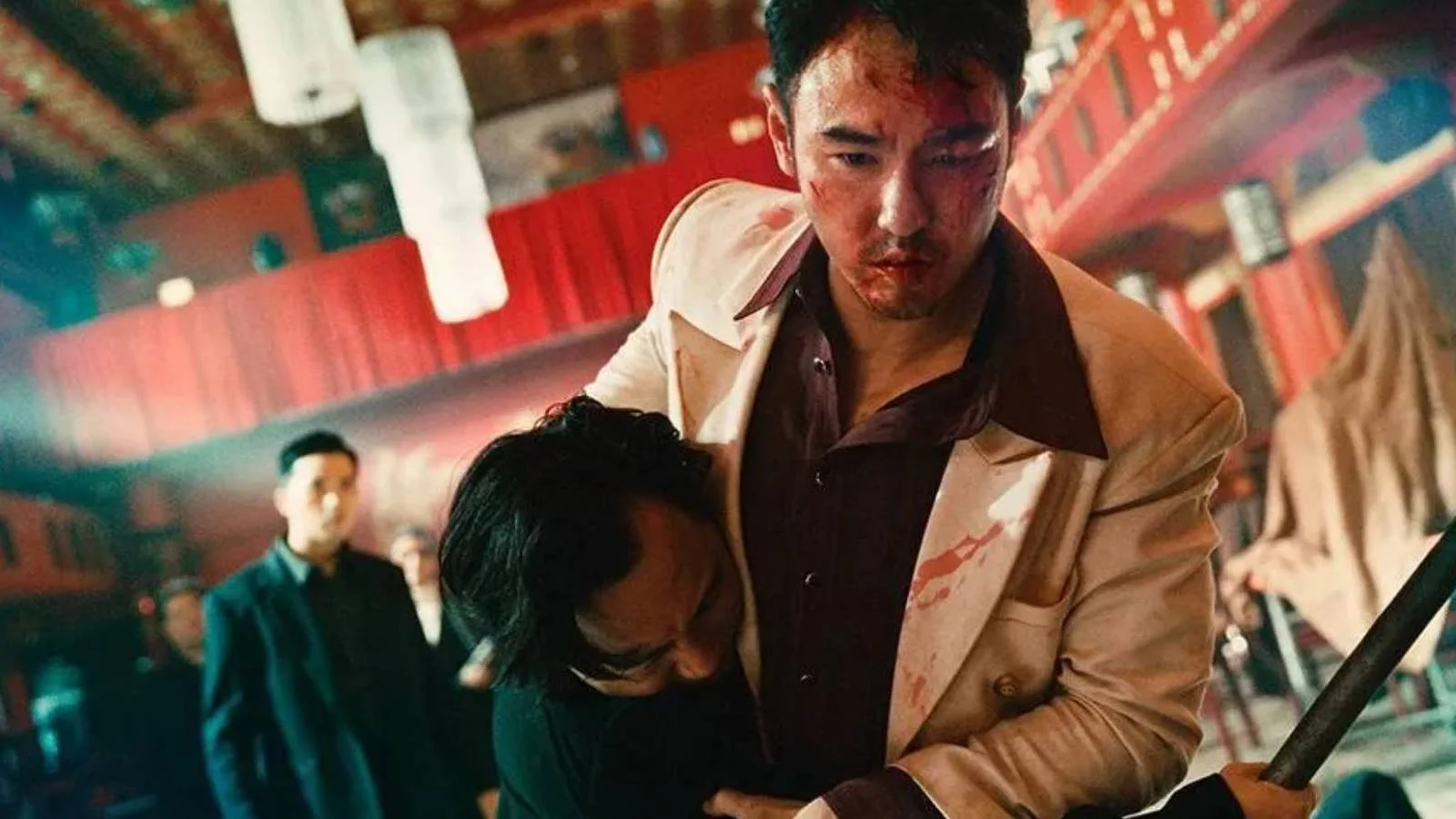
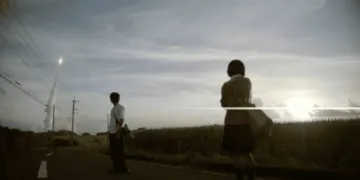
Sabu repeatedly makes that instability visible. Cinematographer Jai Ip narrows and softens Lee’s world as his condition worsens, allowing portions of the frame to blur while objects fracture into doubles or tripled images. Sound can retreat into a high ringing tone or disappear into silence. These subjective devices matter because the film refuses to let visual certainty remain neutral. When Lee cannot interpret the world around him, neither can the image.
The strongest use of that strategy comes through his dead colleagues. During one drive, the men Lee lost appear inside the car with him, crowding a space that should be empty. Memory ceases to function as exposition and becomes occupation. The dead are physically present because guilt has colonized Lee’s perception. Flashbacks to the disastrous raid similarly intrude upon his current surroundings rather than sitting politely in their own temporal compartment. Lee does not revisit the past. The past keeps arriving uninvited.
That visual uncertainty gives Arrested Memory an interesting moral problem. If Lee cannot distinguish present experience from memory, hallucination, or instinct, then the conventional detective privilege of seeing clearly has been taken away from him. Crime films usually build authority around observation. The detective looks harder than everyone else and therefore knows better. Lee has the badge and the reputation, but his memory, attention, and interpretation are compromised. His colleagues still treat those damaged signals as meaningful. Institutional confidence fills the space where perception has failed.
Juan is particularly good at making this funny without emptying it of pain. His Lee often wears the slack expression of a man arriving several seconds late to his own life. He can stare through conversations, lose the purpose of an encounter, then respond physically when danger appears, throwing an attacker with what looks like muscle memory operating independently of conscious thought. That contradiction gives the character his peculiar dignity. His body remembers the cop he was even when his mind cannot sustain the role.
The surrounding ensemble turns that condition into increasingly elaborate farce. Mad Dog Luke, a meth user arrested on the way to Hatta’s home, somehow becomes involved in the kidnapping crisis and gradually proves calmer and more useful than the officers nominally controlling the situation. Back at the house, police agitation increases while Luke starts applying actual logic. Authority is still wearing the uniform. Competence has wandered off with somebody else.
Sabu is sharpest when these reversals reveal character rather than merely stacking jokes. Lee’s encounter with Hua after stopping her suicide attempt is the clearest example. She resents his interference, and he absentmindedly gives her money from the ransom bag. Warm orange light suddenly surrounds him, briefly lending the gesture a strangely saintly glow. Then the source becomes clear: a bus has arrived. Hua takes the money and boards it, an easy comic exit, but the camera stays with her long enough for the triumph to drain from her face. The cash has changed her immediate circumstances. It has solved nothing that brought her there.
That small delay is Sabu at his best. Comedy arrives, exposes something painful, then leaves the pain standing.
The film becomes less precise when accumulation replaces observation. Lee’s wandering pulls criminals, police, Hatta’s household, Luke, Hua, and various misunderstandings into the same expanding mechanism. Some collisions are excellent, especially when different groups interpret Lee’s behavior according to their own expectations. Others interrupt the rhythm rather than complicate it. Hua’s thread contains one of the film’s finest scenes, yet the wider detour slows a kidnapping plot whose comic force depends on escalation.
The later resolutions create a related problem. Arrested Memory is richer when Lee’s perceptions remain suspect, because uncertainty forces the viewer to inhabit his compromised position. Explaining away ambiguities weakens that relationship. A film that has spent so much time teaching us to distrust what appears on screen loses something when it begins tidying the evidence.
Still, Sabu’s affection for these people prevents the tonal instability from turning cruel. Lee is damaged but never reduced to a diagnosis. Luke can be ridiculous and lucid within the same scene. Hua can participate in a joke without having her despair erased by it. The police officers chasing Lee become funny through the confidence with which they misunderstand him, while the film leaves room for their concern and frustration.
The result is an action-comedy whose most interesting confrontations occur inside the act of seeing. Sabu keeps shifting the line between Lee’s compromised perception and everyone else’s misplaced certainty, sometimes with a blurred frame, sometimes with a hallucination, sometimes with an officer confidently explaining behavior he has completely misunderstood. The mystery is never simply where the ransom went or who has betrayed whom. It is how quickly certainty becomes dangerous once perception has stopped earning it.
Arrested Memory had its world premiere in September 2026 at the Venice International Film Festival. The crime comedy follows a disgraced police detective in Taipei who develops amnesia after a botched operation and must rely on his instincts while handling a high-stakes kidnapping case.
Full Credits
Title: Arrested Memory
Distributor: LHB Films, Fourier Films
Release date: September 7, 2026 (Venice International Film Festival) / September 17, 2026 (Toronto International Film Festival)
Running time: 1 hour 27 minutes (87 minutes)
Director: Sabu
Writers: Sabu
Producers and Executive Producers: Roger Huang, Shozo Ichiyama, Justine O.
Cast: Ethan Juan, Hsieh Ying-xuan, Moon Lee, Shinichi Tsutsumi, Reika Kirishima, Akira Huang
Director of Photography (Cinematographer): Not publicly specified
Editors: Matthieu Laclau
The Review
Arrested Memory
Arrested Memory turns a detective’s failing perception into its richest source of comedy, melancholy, and moral uncertainty. Sabu is strongest when blurred images, hallucinations, and confident misunderstandings force us to question what Lee sees and what everyone else assumes. Ethan Juan gives that instability a bruised dignity. The crowded plotting and tidier late revelations weaken some of the uncertainty, but the film’s warmth toward its damaged, foolish characters keeps the tonal collisions alive.
PROS
- Ethan Juan’s layered central performance
- Strong visual expression of Lee’s disorientation
- Clever reversals of authority and competence
- Black comedy grounded in character
- Genuine sympathy beneath the farce
CONS
- Secondary threads slow the kidnapping plot
- Late explanations weaken ambiguity
- Comic escalation occasionally becomes cluttered