






















Léo Saragossi spends much of his unexpected week in Paris asking people to explain his own past to him. The arrangement is clever because it turns memory into a contested narrative rather than a reliable account. It is also the source of nearly every problem Nicolas Pariser eventually creates for himself. Once each reunion starts carrying exposition, social diagnosis, and moral reassessment at the same time, conversation stops feeling like discovery and starts resembling testimony entered into evidence.
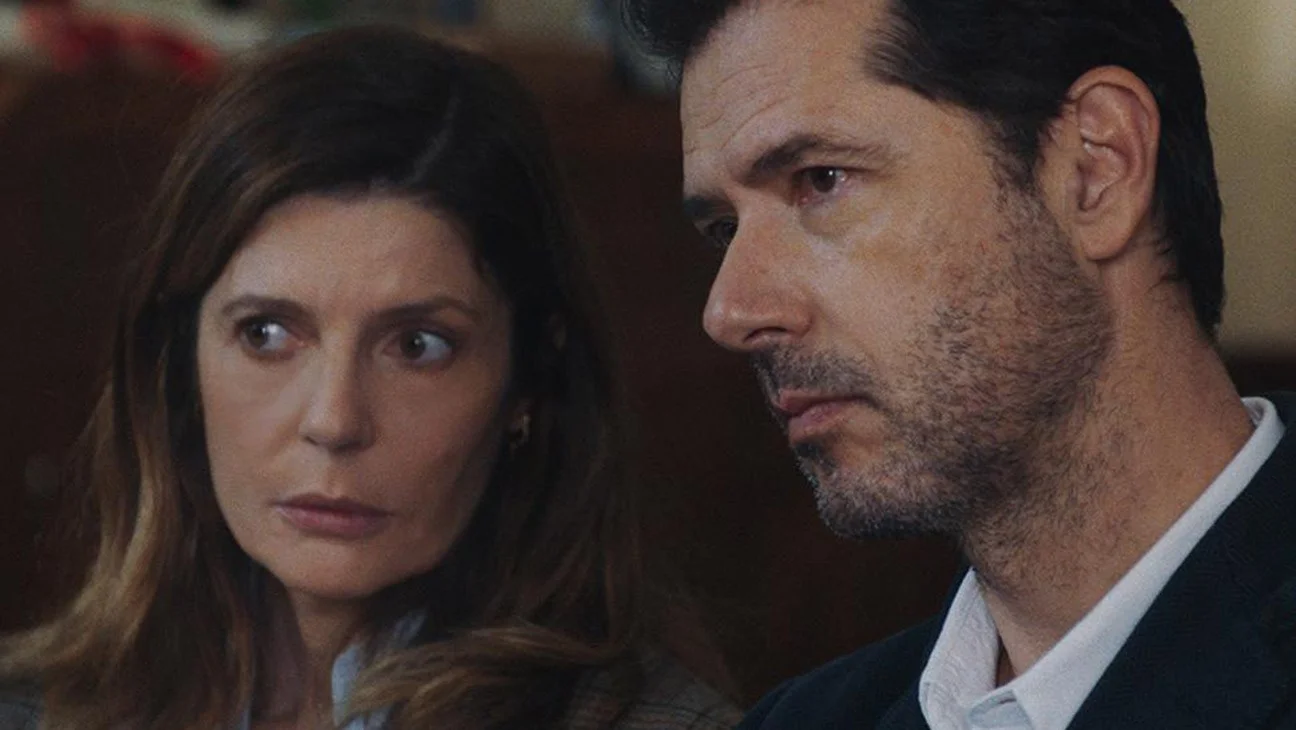
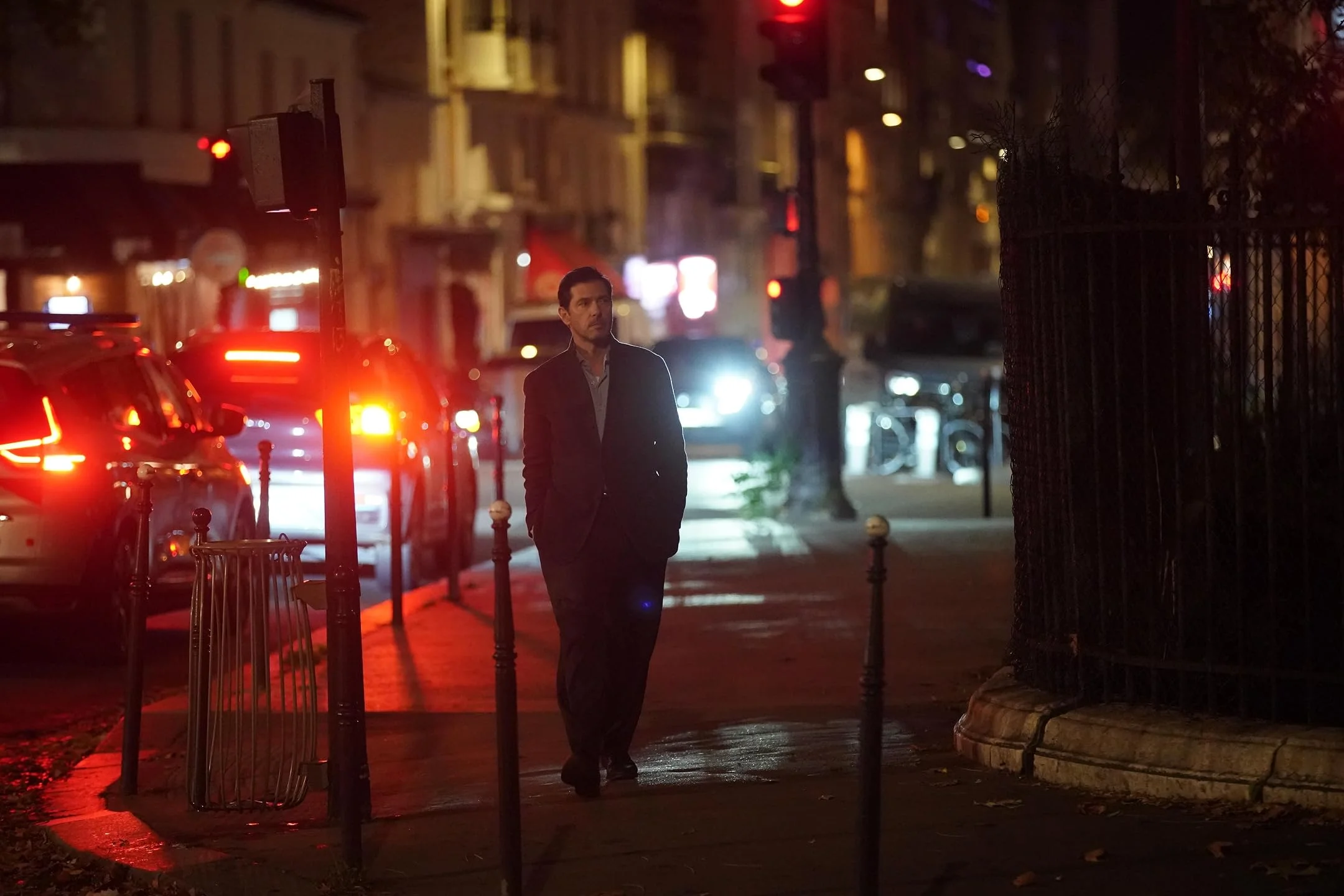
Léo is nearing 50 when the death of the Italian father he barely knew interrupts an already stalled life. His writing career has receded into an insecure academic job, his relationship is collapsing, and a postponed inheritance meeting leaves him stranded in Paris before he can continue to Ferrara. Melvil Poupaud plays him with enough residual charm to suggest the younger man other people once found magnetic, while his slightly defeated manner makes clear that he has been living off that version of himself for some time.
Pariser gives the delay a useful dramatic function. Paris becomes a waiting room in which Léo encounters the people who remember him differently. His 19-year-old daughter Emma is the first serious challenge to the story he has been telling himself. Léo regards old romances with tenderness.
Emma hears something else in those memories: women turned into idealized figures inside male fantasies. Their walk establishes the film’s generational argument quickly, perhaps too quickly, but it also gives the rest of the story a structure. Léo remembers. Someone else corrects the record.
That pattern gains urgency once allegations of rape and sexual assault against a former colleague force Léo to reconsider the culture surrounding the magazine where he once worked. He begins contacting old friends and former lovers, asking versions of the same question: What was I like then? The screenplay wisely leaves his motives mixed. There is remorse, certainly, but there is also fear. He wants to understand what he did, and he seems equally interested in discovering how much danger his younger self poses to the man he is now.
The distinction matters because One Minute to Midnight is much sharper when it refuses to reward the request for absolution. Léo’s conversation with Armelle, once an intern at the magazine and now a Socialist politician, is the best example. He recognizes the imbalance in their past affair, while she acknowledges that behavior once treated as ordinary looks different from the present. Then she declines the job he has quietly assigned her. She has her own life, political pressures, and memories. His insomnia is not her administrative responsibility.
That scene works because both people are permitted to retain some authority over the past. Several other encounters are less graceful. Characters regularly have to explain who they were, what happened at the magazine, where everyone went, and what the intervening decades did to them.
Éléonore, the wife of Léo’s former colleague Alexandre, becomes particularly burdened with biography. Pariser clearly needs these conversations because his story depends upon comparing old memories with present judgments. The cost is that people periodically sound as though they have been summoned to brief Léo, and us, before the next thematic appointment.
Tina presents the strongest challenge to that design. Léo spends much of the film searching for her, allowing his memories to inflate her into the defining woman of his younger years. By the time Golshifteh Farahani finally appears, nearly 50 minutes have been spent constructing someone who cannot possibly match the version living in Léo’s head. Farahani does not try.
Tina’s impatience with his masculine self-pity exposes the trap hidden inside his apparent moral awakening. He has recognized that women spent years carrying the consequences of male behavior, then responds by asking some of those same women to carry his guilt.
Poupaud is essential to keeping that contradiction playable. A harsher performance could make Léo’s behavior too easy to dismiss, while a warmer one might turn the story into an exercise in forgiveness. Poupaud stays somewhere less comfortable.
His sadness is credible, his confusion sometimes sympathetic, and his self-absorption persistent enough that the film never lets sympathy settle into exoneration. Clara Pacini, Léonie Simaga, Anaïs Demoustier, and Farahani provide the resistance the character needs. Their performances keep pushing against the softness with which Léo remembers himself.
Pariser complicates these private reckonings by placing them against an increasingly unstable Paris. Riot police fill the streets, protesters gather, ambulances pass, and the threat of martial law hangs over the city. Emma is politically engaged while her father spends his week examining old romances. The juxtaposition has an obvious purpose: Léo experiences his past as an emergency while an actual civic crisis unfolds around him.
The idea is stronger than its dramatic integration. Because the cause and shape of the unrest remain vague, the political material sometimes feels like a scale marker placed beside Léo rather than a force transforming the story. Still, that scale is useful. It prevents his midlife crisis from becoming the sole measure of consequence. Armelle has political stakes beyond him. Emma belongs to a generation facing questions he barely understands. Paris keeps moving while Léo audits the previous century of his love life.
The final move to Italy changes the film’s terms again. Meeting Giulia, the half-sister he never knew, gives Léo a relationship that is not another excavation of sexual history. Chiara Mastroianni brings a gentle melancholy to their scenes, and the shift allows Pariser to suggest that human connection need not be another repetition of Léo’s romantic mythology.
Structurally, though, Ferrara arrives almost like material from a neighboring film. The family history is affecting, but it has not accumulated the dramatic weight given to Tina, Armelle, Emma, and the old magazine circle. Pariser solves one problem by letting Léo encounter someone who has no old grievance to adjudicate, then inherits another because this new relationship belongs to a storyline introduced too late to carry the same force.
That imbalance suits a film concerned with the unreliability of retrospective tidiness. Léo enters Paris hoping his history can be inspected, understood, and perhaps cleared. He leaves with fewer illusions, but no certificate of rehabilitation.
The women he remembers have their own versions of events, the city has concerns that dwarf his, and Giulia represents a piece of family history that cannot be converted into another story about the man he used to be. For all the screenplay’s tendency to explain itself, that unresolved accounting is where Pariser finally trusts the structure.
One Minute to Midnight had its world premiere at the 83rd Venice International Film Festival on September 10, 2026. The French drama follows a 49-year-old man who, upon learning of his estranged biological father’s death, spends a reflective week in Paris reviewing his past relationships before traveling to Italy to settle his inheritance.
Full Credits
Title: One Minute to Midnight
Distributor: Pyramide International, Dimanche Soir, Bizibi
Release date: September 10, 2026 (Venice International Film Festival)
Rating: Not Rated
Running time: 1 hour 47 minutes (107 minutes)
Director: Nicolas Pariser
Writers: Nicolas Pariser
Cast: Melvil Poupaud, Chiara Mastroianni, Anaïs Demoustier, Golshifteh Farahani, Léonie Simaga, Sébastien Chassagne
The Review
One Minute to Midnight
One Minute to Midnight is strongest when Nicolas Pariser lets Léo’s former lovers and daughter resist the tidy moral reckoning he wants from them. Melvil Poupaud keeps that self-examination sympathetic without turning it into absolution, while Armelle and Tina expose how easily remorse can become another demand placed on women. The dialogue-heavy structure grows overly explanatory, and the political unrest never fully joins the personal story, but Pariser leaves Léo with something appropriately incomplete: a past reconsidered rather than repaired.
PROS
- Poupaud gives Léo charm without excusing him
- Armelle and Tina sharpen the film’s moral argument
- Competing memories complicate Léo’s self-image
- Strong tension between remorse and self-absorption
CONS
- Exposition weighs down several conversations
- Political unrest remains underdeveloped
- The Ferrara material arrives too late
- Some thematic points are explained too directly