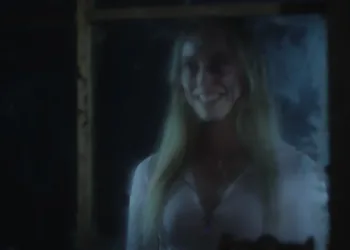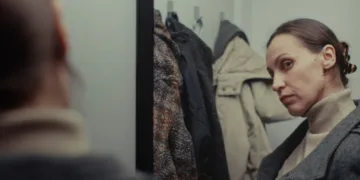
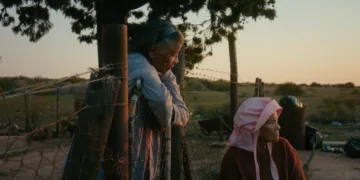



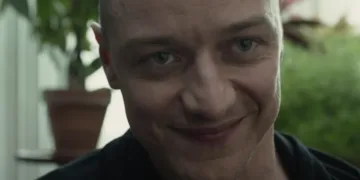



















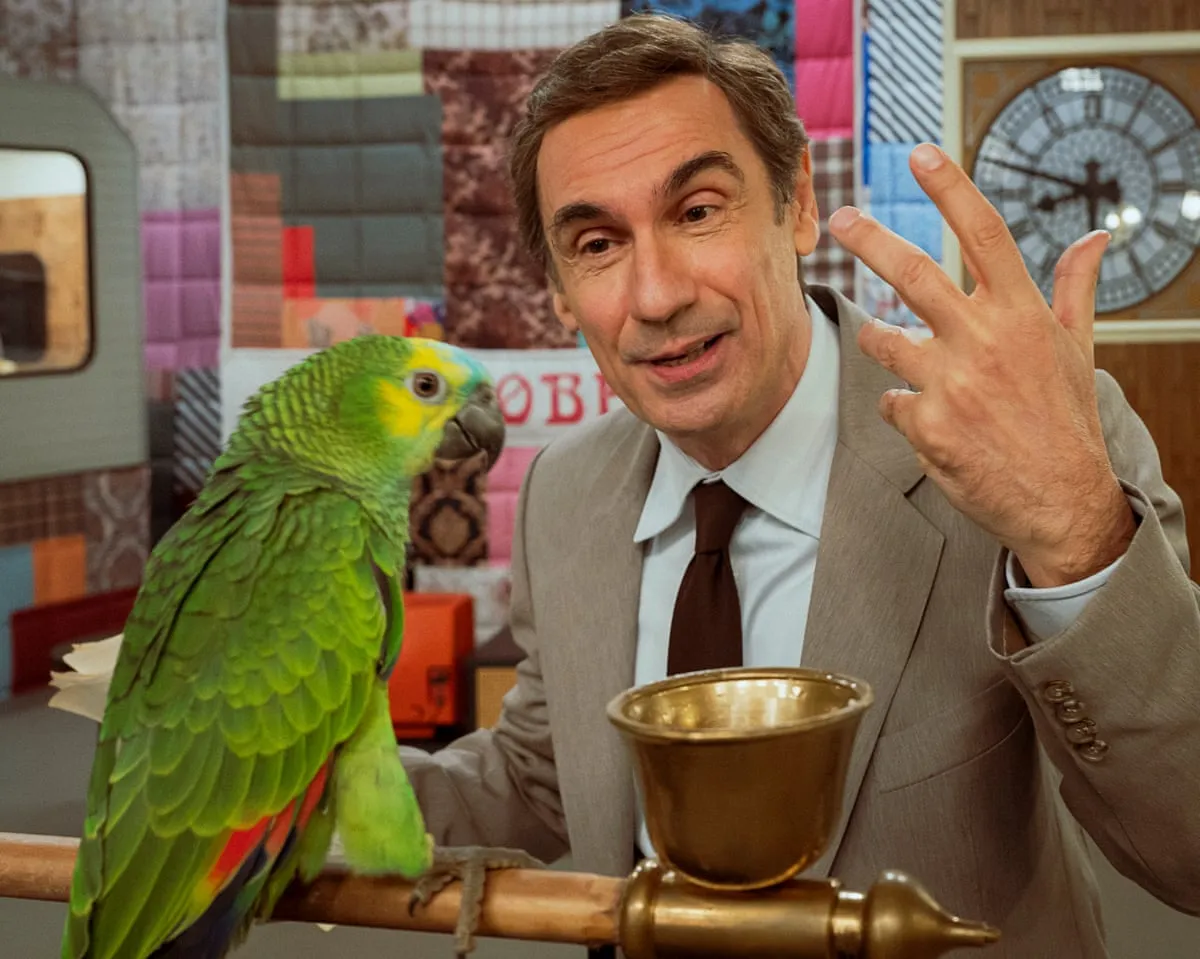
A parrot that refuses to speak. An inventor with a useless gadget. A lonely heart searching for a partner on national television. Each week, the chaotic, hopeful, and wonderfully strange pageant of Italian life unfolded on the set of “Portobello.” It was a market square of dreams televised in garish 1980s color, a place where the ordinary person could have their moment.
And at the center of this maelstrom, orchestrating the beautiful mess with an unflappable grace, was Enzo Tortora. He was the calm eye of the hurricane, a broadcaster whose easy charm and genuine curiosity made him feel less like a celebrity and more like a trusted national curator.
In his landmark series, veteran director Marco Bellocchio resurrects this forgotten television spectacle, not for nostalgia’s sake, but to meticulously stage the scene of a crime. He rebuilds the nation’s favorite living room only to show how quickly its walls can be torn down, and how its beloved host can be recast as a monster before the commercial break.
A Nightmare Delivered at Dawn
The transition from celebrity to suspect is brutally swift. Bellocchio structures the narrative to give the audience a severe case of whiplash, cross-cutting between the warm, saturated glow of the “Portobello” studio and the cold, damp stone of a Neapolitan prison.
One moment, Tortora is basking in the applause of millions; the next, he is being dragged from his home in a pre-dawn raid on June 17, 1983. The charges are as shocking as they are incomprehensible: he is a key figure in the Camorra criminal organization, a drug trafficker hiding in plain sight.
The series then peels back the layers of this accusation, revealing not a conspiracy, but a rotten core of pathetic human grievance. The state’s entire case is built on the word of imprisoned informants, chief among them the pitiful and venomous Giovanni Pandico.
As portrayed in the show, Pandico is a man desperate for any form of importance, a prison “scribbler” whose sense of self-worth is tied to the names he can offer his prosecutors. His motive for destroying Tortora is insultingly trivial. He had sent the host a set of handmade lace doilies, hoping for a mention on the show. When none came, his wounded pride curdled into a lie of spectacular proportions: the doilies, he claimed, were a coded message for a cocaine deal.
This is the “evidence.” A lie born from a crafternoon project. The series presents Tortora’s subsequent ordeal as a slow-motion descent into a surrealist nightmare. His rational denials are met with the serene confidence of accusers who have already decided his guilt. He has fallen through the looking glass into a world where proof is irrelevant and a man’s life can be bartered for a reduced sentence. It is, as Tortora himself calls it, “the theatre of the absurd,” and he is its unwilling star.
The Machinery of Ruin
While Tortora’s ordeal is personal, Portobello presents his case as a symptom of a diseased system. The Italian justice system of the 1980s, locked in a bloody war with the Nuova Camorra Organizzata, is depicted as an institution desperate for a public relations victory.
After scandals involving reconstruction funds for the Irpinia earthquake vanishing into mafia coffers, the pressure was immense. Prosecutors needed a big, clean win, and Enzo Tortora was the perfect offering. His celebrity and liberal leanings made him an ideal scapegoat, a high-profile target whose takedown would signal the state’s power.
Bellocchio portrays the prosecutors not as mustache-twirling villains, but as something far more chilling: true believers, men so convinced of their righteous crusade that they embrace the testimony of known criminals as gospel. They perform a version of justice, mistaking a prominent conviction for a meaningful one.
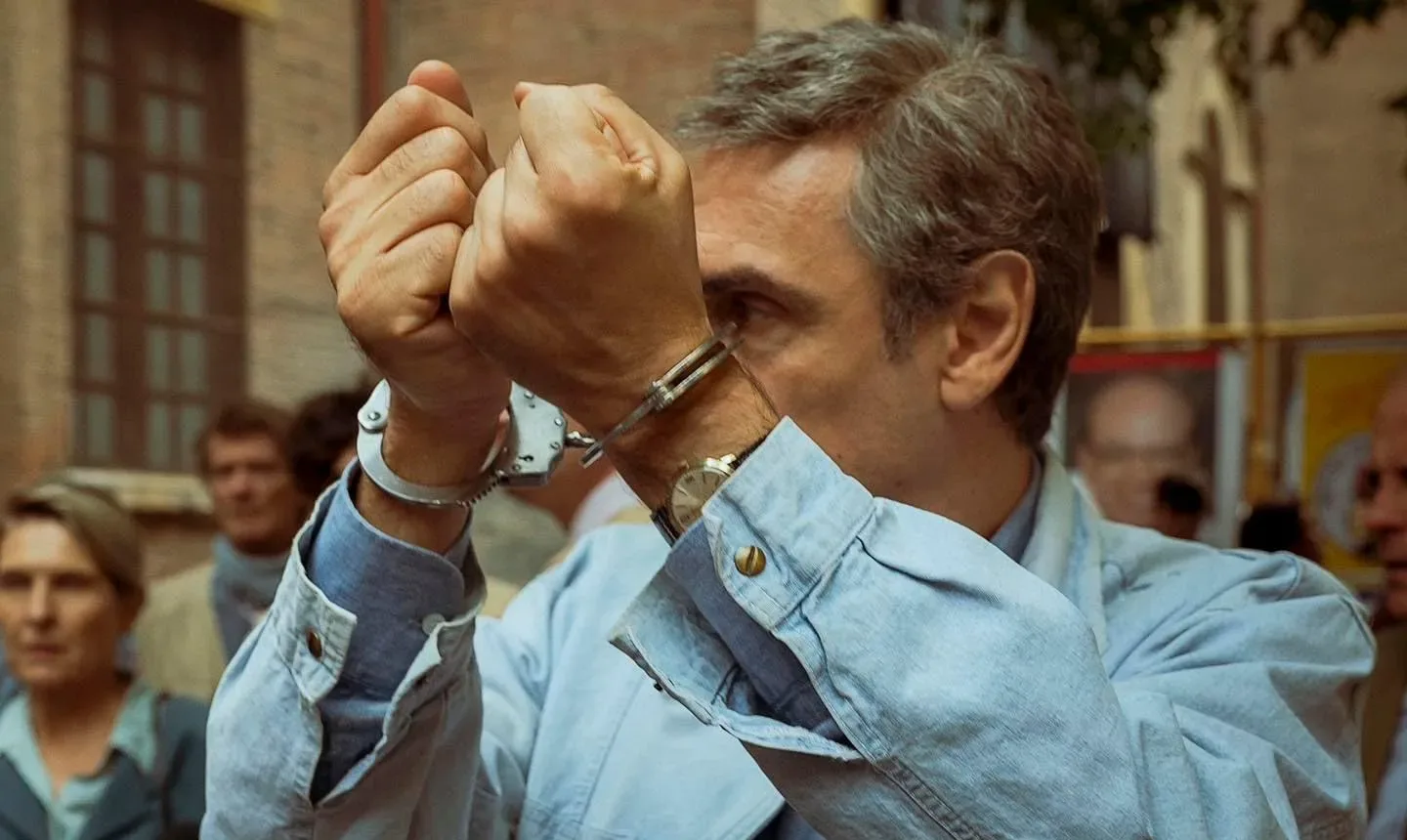
This flawed prosecution is amplified by its willing partner: the media. Having spent years elevating Tortora to secular sainthood, the press turns on him with a feral hunger. The series captures this betrayal in a single, devastating image: Tortora, in handcuffs, staring into the lens of a camera operated by his own network. The machine that made him is now unmaking him.
The media is shown as a ravenous entity, trading nuance for sensationalism and transforming a complex legal case into a lurid primetime spectacle. They conduct a trial by television, feeding a public that, as the show suggests, revels in the downfall of its idols.
Bellocchio uses this story to dissect a critical moment in Italian culture, a preview of an era where media power and political agendas would become dangerously intertwined, creating a landscape where a person’s reputation is a fragile commodity, easily destroyed for ratings or political gain.
The Poise of a Man Condemned
The entire series is anchored by Fabrizio Gifuni’s towering performance. He embodies Enzo Tortora not as a single character, but as a man fractured into distinct parts. There is the public Tortora, a master of his craft, whose command of the television studio is total. Then there is the private man, whose bewilderment at his arrest slowly hardens into a steely, sorrowful resolve.
Gifuni’s brilliance lies in his physicality; on stage, his posture is open and inviting, while in prison, he becomes a study in compression, his body coiled with a tension that speaks to his caged spirit. It is a performance of immense control, charting a journey from charismatic ease to the quiet desolation of a man watching his world burn.
Marco Bellocchio directs this story with the steady hand of a master documentarian. His camera is an unblinking observer, adopting a procedural coldness that makes the events feel all the more horrifying. The visual language of the show is built on a stark dichotomy.
The “Portobello” studio, meticulously recreated down to the last wood-paneled fixture, is a riot of warm, saturated colors. It is a time capsule of 1980s television aesthetics, a space designed to feel like a bustling, idealized town market. This vibrant, almost chaotic world of analog hope is jarringly contrasted with the grim palette of the legal system: the suffocating darkness of prison cells and the cold, institutional beige of courtrooms.
The sound design follows suit, cutting from the roar of an adoring live audience to the echoing drip of a prison faucet. This is not just a story about a man’s fall. It is a forensic examination of the very textures of freedom and confinement, of the blinding lights of fame and the oppressive darkness that waits just beyond the frame.
Portobello is an upcoming television series that recounts the true story of Enzo Tortora, a popular Italian TV host who was unjustly accused of being part of a criminal organization. The first two episodes premiered at the 82nd Venice International Film Festival on September 1, 2025. The series is expected to be released globally on HBO Max in early 2026.
Full Credits
Director: Marco Bellocchio
Writers: Marco Bellocchio, Stefano Bises, Giordana Mari, Peppe Fiore
Producers: Lorenzo Mieli, Mario Gianani, Simone Gattoni
Cast: Fabrizio Gifuni, Lino Musella, Romana Maggiora Vergano, Barbora Bobulova, Alessandro Preziosi, Fausto Russo Alesi, Carlotta Gamba, Salvatore D’Onofrio
Director of Photography: Francesco Di Giacomo
Editors: Francesca Calvelli
Composer: Teho Teardo
The Review
Portobello
Portobello is a masterfully restrained and chilling procedural. It functions as both a devastating character study and a sharp indictment of the institutions that failed one of their own. Anchored by Fabrizio Gifuni’s phenomenal performance, the series meticulously reconstructs a national scandal with righteous anger and clinical precision. Its deliberate pace demands patience, but the reward is a profoundly affecting and infuriating look at how easily a life can be dismantled by a lie when the system is hungry for a scapegoat. It is essential, unforgettable television.
PROS
- A commanding and nuanced lead performance from Fabrizio Gifuni.
- Marco Bellocchio’s precise, methodical direction that builds tension without melodrama.
- A powerful, scathing critique of judicial and media corruption.
- Impeccable recreation of 1980s Italy and its television culture.
- The compelling, stranger-than-fiction true story at its center.
CONS
- The deliberate, slow-burn pacing may not suit all tastes.
- Its tone is relentlessly grim and can be an emotionally taxing watch.
- A tight focus on the procedural leaves some secondary characters feeling underdeveloped.