


























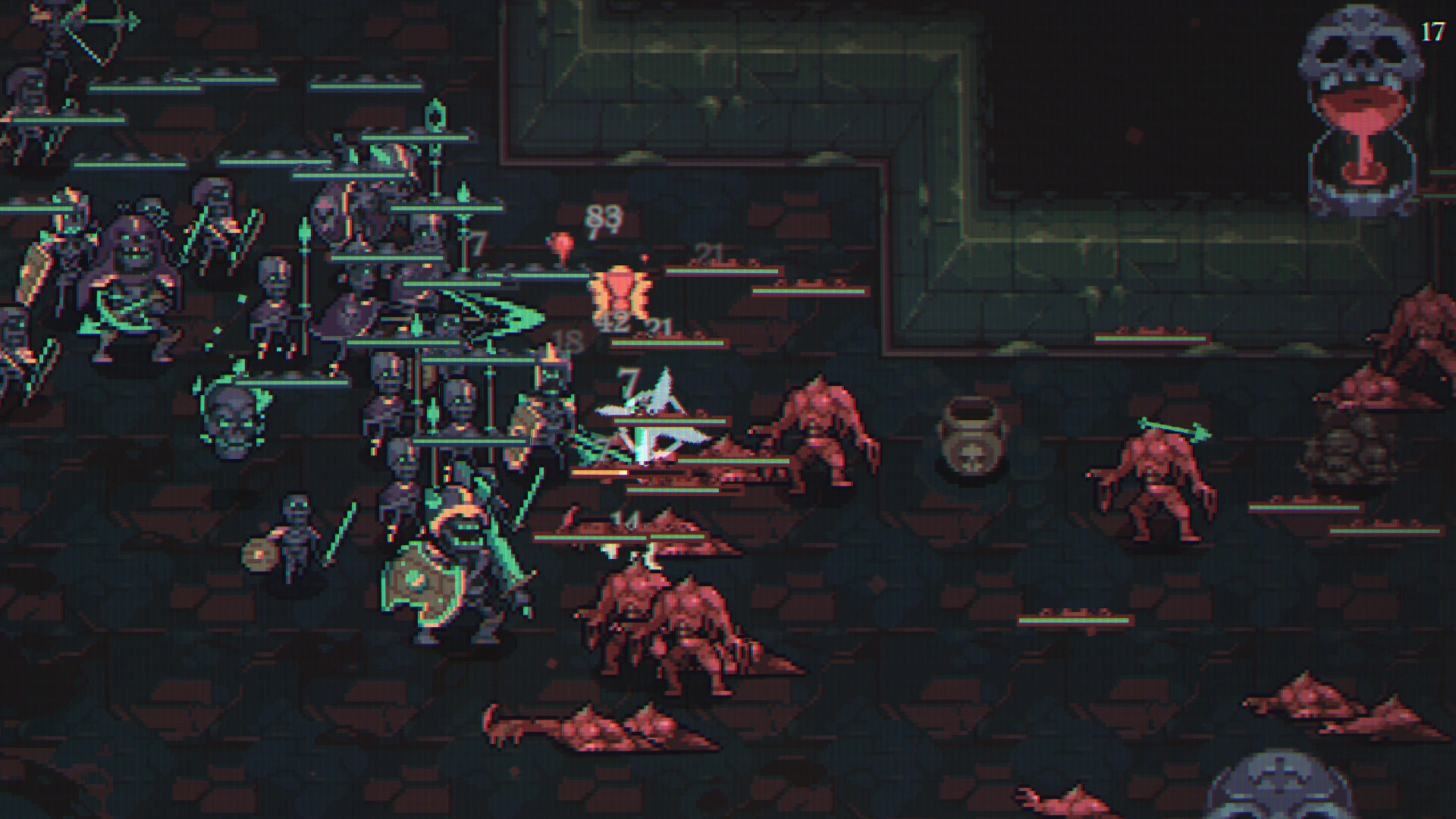

Eighteen skeletons can fill the screen, yet one careless step can erase the advantage they create. Skull Horde builds its action-survival loop around that tension. The player controls a floating necromancer skull while an undead squad attacks independently, turning movement and positioning into the real combat inputs.
The premise matches the design with unusual precision. A necromancer is decapitated by his own corrupted body, which escapes to complete an ascension ritual. The skull returns, summons disposable soldiers, and pursues the flesh that betrayed it. The story stays brief, delivered through voiced scenes between dungeon runs, but its central image carries into play: the commander has no body, so every borrowed body becomes a resource.
Compared with Vampire Survivors, power does not accumulate solely on the player character. The skull can attack from range, recall scattered troops, and trigger temporary bonuses, but the army handles most damage. Direct unit control is absent. Success comes from steering the formation around corners, keeping ranged units behind the front line, and retreating before a loose cluster becomes a respawn queue.
The Dungeon Clock
The shared-health structure gives those simple controls real consequence. Fallen units wait several seconds before returning. Damage dealt directly to the skull is spread through the squad, and losing one of the commander’s lives revives every dead soldier. This creates a useful reversal: a nearly defeated skull can suddenly restore its army, but the recovery spends a limited life and leaves less room for another mistake.
The hourglass in each dungeon creates the sharper decision. Every thirty seconds, the floor level rises. Enemies gain health, hit harder, and arrive in larger groups. A side corridor may contain a chest or event that fixes a weak build, yet the time spent searching also strengthens the boss waiting ahead.
This trade resembles Risk of Rain 2, though Skull Horde applies it to squad preparation rather than individual item stacking. Rushing preserves a manageable enemy level but may leave the army underdeveloped. Clearing every room produces extra Ducats and equipment while making later encounters much harsher. The adjustable timer helps players set the pressure they prefer, but removing the urgency would flatten the game’s best system.
Building the Horde
Recruitment turns each respite into a compact drafting game. Ducats purchase units from a small rotating selection, and cheap rerolls make searching for a specific class practical. The squad can hold six classes, each represented by up to three soldiers, for a maximum of eighteen minions.
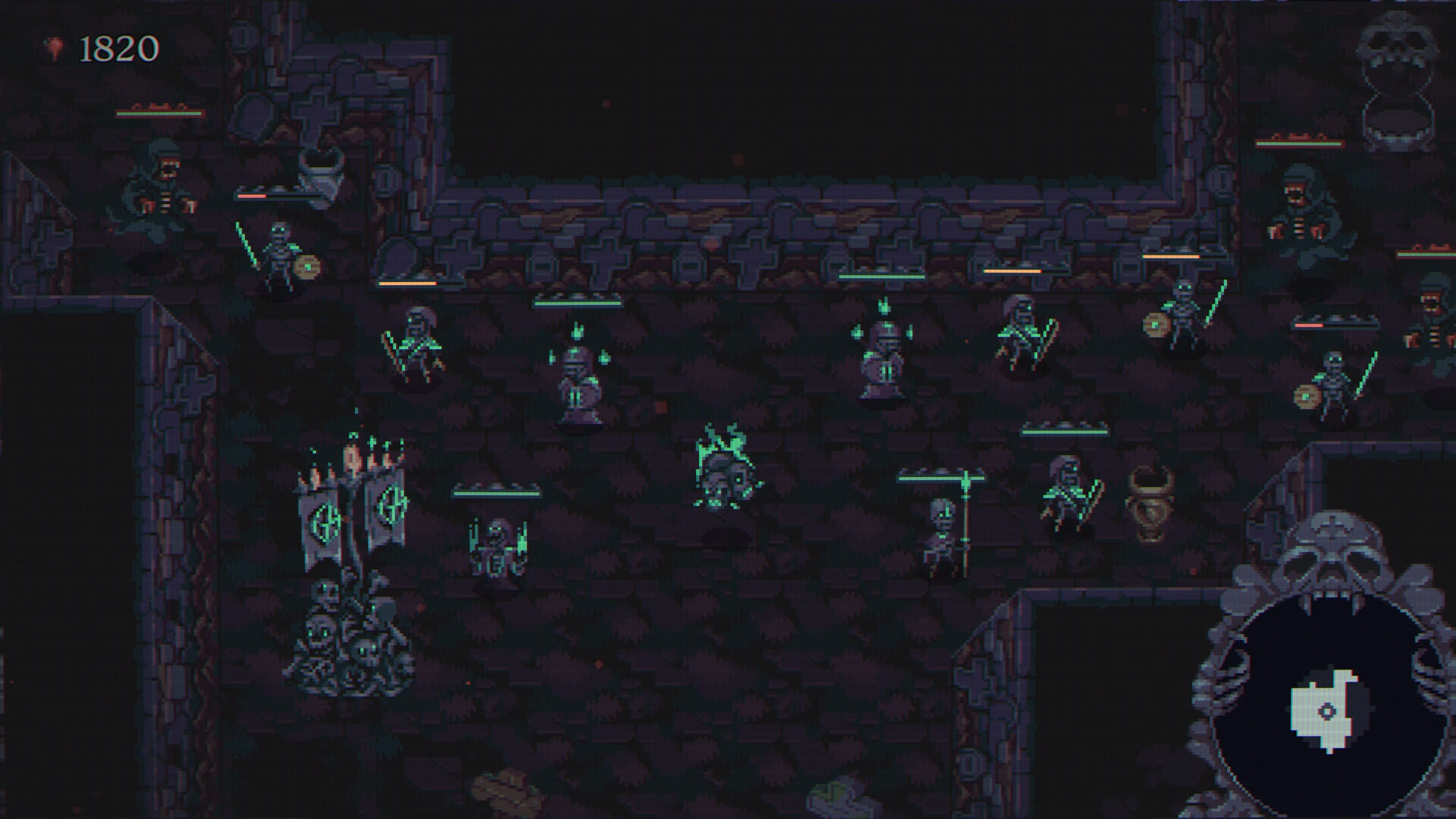
Buying duplicates upgrades a unit from commoner to veteran and then champion. The final rank adds an ability and activates an oath seal tied to that class. Three matching seals grant a class-wide bonus, so every purchase serves two calculations: the immediate value of the new soldier and the chance of completing a stronger synergy later.
This structure creates excellent build stories. A front line of durable melee fighters can protect plague-flinging mages, while expendable attackers draw pressure away from fragile damage dealers. Jesters, suicidal creatures, ranged units, and other specialists can be combined into formations that behave very differently once their oath bonuses activate.
The weakness lies in how much of this depends on shop rolls and dungeon rewards. Cheap rerolls soften bad luck, but a sound plan can still stall when its required class refuses to appear. Replacing a developed unit also discards its progress and returns only part of the investment. That penalty makes adaptation meaningful, though the interface and early tutorials do not explain every interaction with equal clarity.
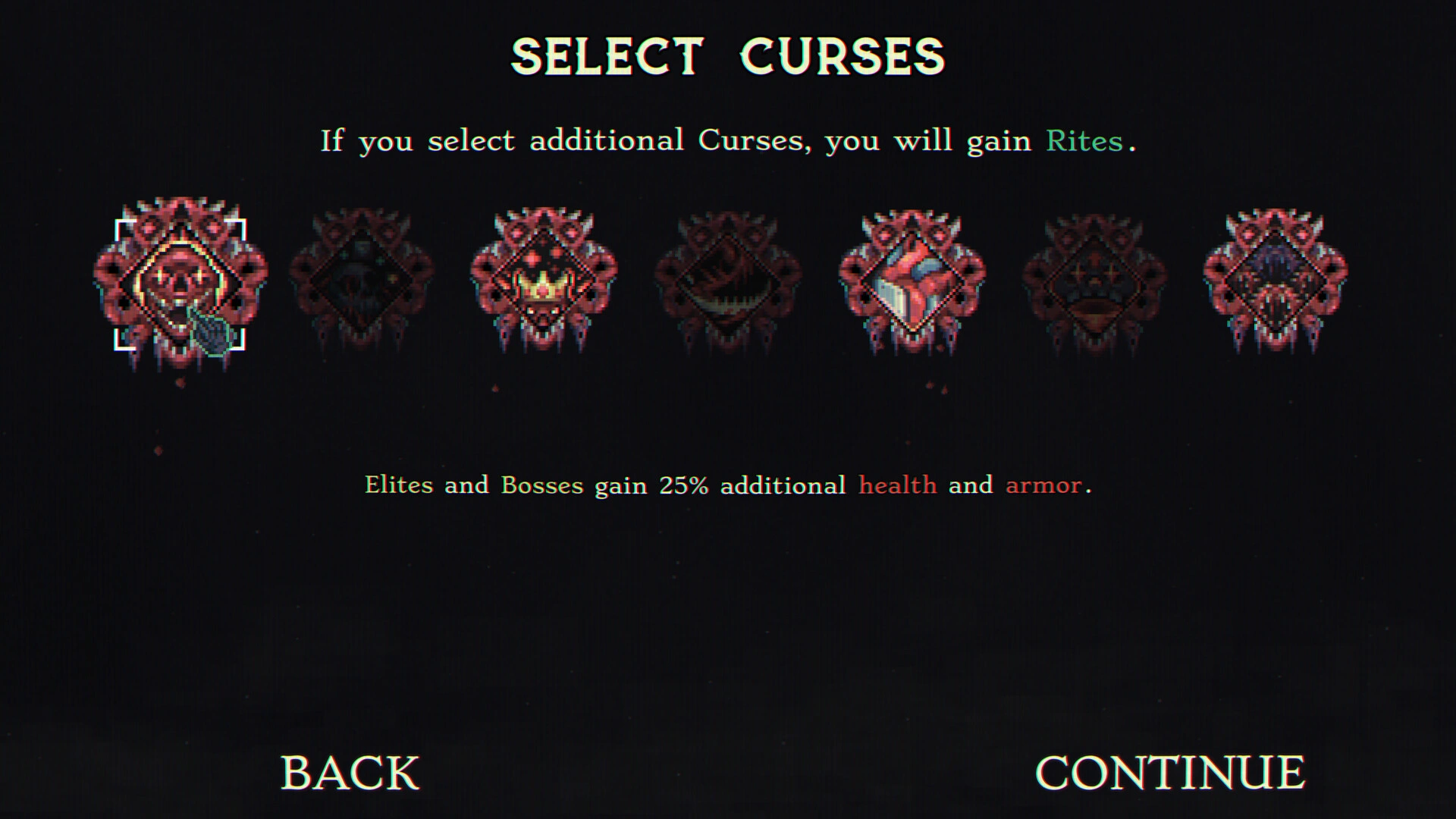
Permanent unlocks provide a reason to keep testing the system. New skull commanders introduce distinct abilities, while additional troops, equipment, dungeons, rites, and curses expand the available build space. The progression works because most unlocks create new tactical questions rather than adding a small number to an existing statistic.
Pixel Flesh
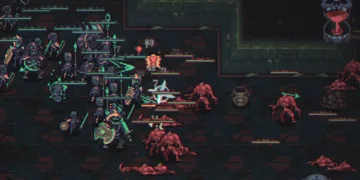
The pixel art keeps large battles readable. Dark stone corridors, torture devices, gore, and swollen flesh creatures establish the setting without obscuring unit silhouettes or attack effects. Later dungeons and enemy groups add enough visual variation to stop the campaign from becoming one continuous brown crypt.
Voice acting gives the revenge plot some character, particularly when the skull addresses the body that abandoned it. The guitar-driven music adds force to boss rooms, while several regular-stage tracks fade behind the mechanical noise. Sound effects communicate hits and ability triggers reliably, which matters once eighteen allies and a packed enemy wave occupy the same space.
Crowded encounters remained stable during extended play, with no notable crashes or frame-rate drops. Repetition does surface after the same search, recruit, upgrade, and boss rhythm settles in. The counterweight is experimentation: reaching a boss with three active oath seals and a formation that finally protects its damage dealers gives each run a concrete design problem to solve.
The Review
Skull Horde
Skull Horde turns automatic combat into a sharp exercise in squad composition, positioning, and time management. The rising dungeon clock makes every detour costly, while duplicate upgrades, oath seals, and cheap shop rerolls reward players who understand how their units interact. Random rewards can undermine careful planning, and the early learning curve explains its systems poorly. Once those systems click, commanding 18 disposable skeletons becomes consistently satisfying.
PROS
- Strong squad-building system
- Excellent dungeon timer pressure
- Flexible class synergies
- Rewarding skull and unit unlocks
- Stable performance during crowded fights
CONS
- Luck can derail sound strategies
- Early systems feel unintuitive
- Limited control over individual units
- Dungeon routines become repetitive