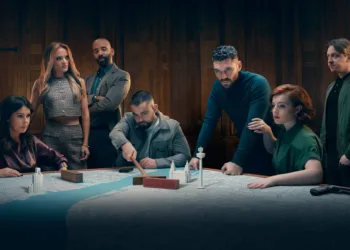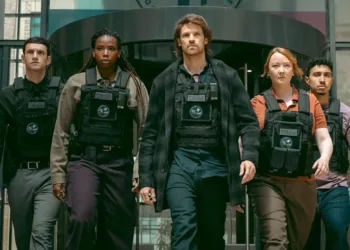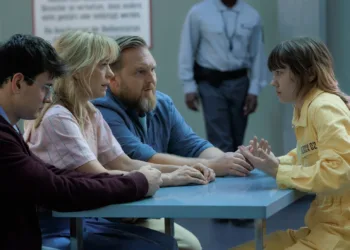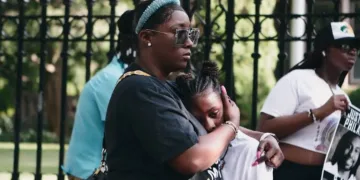












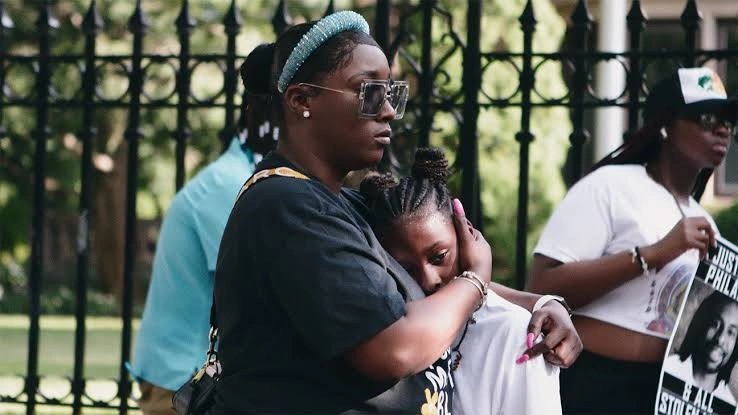

Darnella Frazier was seventeen when she recorded Derek Chauvin kneeling on George Floyd’s neck, and the world quickly treated her footage as evidence, history, protest material, and content. Jennifer Holness and Sidney Fussell’s documentary #WhileBlack asks what happened to the teenager behind that camera after everyone else claimed a piece of what she captured.
The film pairs Frazier’s experience with Diamond Reynolds, who livestreamed the aftermath of Philando Castile’s fatal shooting during a 2016 traffic stop. Reynolds’ four-year-old daughter was in the car, police confiscated her phone, and the recording had already escaped their control through Facebook Live. Both women performed acts of citizen journalism under unbearable pressure. Neither received the distance from trauma that time normally offers.
A Viral Video Has No Off Switch
Frazier’s recording exposed the gap between an official account and what a phone camera could prove. #WhileBlack is strongest when it translates that public importance into private consequence. Frazier and her family received threats, left their home, and lived under protection. Later, she had to describe Floyd’s killing again during legal proceedings, turning memory into testimony for institutions that had failed to protect him.
One of the film’s most effective choices layers audio connected to Frazier’s footage over present-day images of the Minneapolis intersection where Floyd died. This is sound bridging, where audio from one time is carried into images from another. The technique makes George Floyd Square feel occupied by two realities: an active neighbourhood and a site that cannot shed what happened there. Murals, candles, signs, and passing cars show remembrance sharing space with routine.
Reynolds’ story carries a different terror. Her livestream meant police could not quietly erase the immediate aftermath of Castile’s shooting, yet the same act made her grief permanently searchable. The film shows her frustration as the footage reappears through news clips, online videos, documentaries, and commentary.
I found the calmness of her delivery striking. So much pain sits beneath the controlled cadence, but the directors rarely alter the framing, music, or editing rhythm to examine that restraint. The interviews remain visually steady when the emotional material calls for closer attention.
Evidence Enters the Marketplace
The documentary’s sharpest idea concerns the point where proof becomes inventory. A video of police violence can challenge state power, mobilize protesters, and help establish what happened. Once uploaded, it can produce clicks, advertising income, user data, and publicity for the platform hosting it.
#WhileBlack notes that Meta earned about $16 billion in advertising revenue during the second quarter of 2020, when footage of police brutality circulated heavily amid the George Floyd protests. It also cites tens of thousands of advertisements that used such imagery. The numbers convert a familiar phrase, the attention economy, into a visible transaction. Someone records a death. Millions watch. A corporation sells access to those eyes.
Reynolds’ livestream brought major attention to Facebook Live, and one interviewee argues that the product gained visibility through the suffering of Castile’s family. The film connects this digital arrangement to earlier recordings, including George Holliday’s videotape of the Rodney King beating and Abraham Zapruder’s film of John F. Kennedy’s assassination.
Those recordings existed as physical objects with traceable ownership. Smartphone footage enters systems governed by platform rules, moderation policies, algorithms, police requests, and licensing arrangements that the person filming may barely understand.
Terms such as “Black witnessing,” reparative journalism, and “sousveillance” appear across the interviews. Sousveillance means recording authority from below, reversing the direction of surveillance. It is a useful concept for what Frazier and Reynolds accomplished.
The documentary introduces it, then moves on before testing its limits. A phone can watch the watchmen, but the platform receiving that footage still decides how long it stays visible, who profits, and who gets access to the data around it.
Ethical Restraint, Crowded Structure
Holness and Fussell avoid repeatedly displaying images of Black people being killed. That decision matters. Documentary editing can create emotional force by returning to a shocking image until viewers associate horror with significance. #WhileBlack rejects that method and looks instead at survivors, memorials, neighbourhood spaces, and community groups shaped by the recordings’ aftermath.
The opening has real audiovisual urgency. Tense music and quick protest montages create pressure, then quieter images of Minneapolis shift attention from public eruption to lingering damage. The colour in murals and memorials contrasts with the stillness of Frazier and Reynolds’ testimony. These passages show the filmmakers searching for a visual language that can acknowledge violence without replaying it.
The difficulty arrives when the film expands its field. Across 84 minutes, it moves through police violence, copyright, platform revenue, trauma, journalism, corporate moderation, data access, local activism, and digital ownership.
Talking heads carry much of this material, and several ideas receive the length of an introduction rather than sustained inquiry. Reparative journalism could support an entire chapter. The relationship between media platforms and police requests could support another.
I admire the refusal to turn death into spectacle, yet restraint needs an equally forceful alternative. George Floyd Square provides one. Reynolds describing the attempted confiscation of her phone provides another. The film needs additional moments with that same formal precision, where sound, place, editing, and testimony press against each other until an idea becomes something the viewer can feel.
#WhileBlack premiered on March 13, 2026, at the South by Southwest Film & TV Festival and is available through festival circuits and distribution via Fathom Film Group. The documentary explores the profound personal and psychological costs borne by individuals who film and share viral footage of police brutality and state violence.
Full Credits
Title: #WhileBlack
Distributor: Fathom Film Group
Release date: March 13, 2026
Running time: 84 minutes
Director: Sidney Fussell, Jennifer Holness
Writers: Ann Shin, Jennifer Holness, Sidney Fussell
Producers and Executive Producers: Ann Shin, Mariam Bastani, Sidney Fussell, Jeff Orlowski-Yang, Larissa Rhodes, Stacey Piculell, Geeta Gandbhir
Cast: Darnella Frazier, Diamond Reynolds, Bridgette Floyd, Mahailia Floyd, LaTanjie Frazier, Cam Gordon
Director of Photography (Cinematographer): Christian Bielz, Ricardo Diaz, Megan McCarthy Johnson, Amber Fares, Mike Rilstone
Editors: Mark Staunton
Composer: Todor Kobakov
The Review
#WhileBlack
#WhileBlack asks a sharp and painful question: who pays the emotional cost when a recording of police violence becomes evidence, activism, and profitable content? Its strongest passages stay close to Darnella Frazier and Diamond Reynolds, especially when Minneapolis streets and memorial spaces carry the weight their interviews leave unspoken. The crowded structure gives copyright, platform power, trauma, and citizen journalism too little room, yet the documentary’s ethical restraint and clear anger remain valuable.
PROS
- Sensitive focus on Black witnesses
- Ethical handling of violent footage
- Strong images of George Floyd Square
- Clear critique of platform profit
- Informative historical comparisons
CONS
- Too many competing subjects
- Heavy reliance on talking heads
- Key concepts receive brief treatment
- Emotional distance in later scenes
- Uneven visual momentum