
























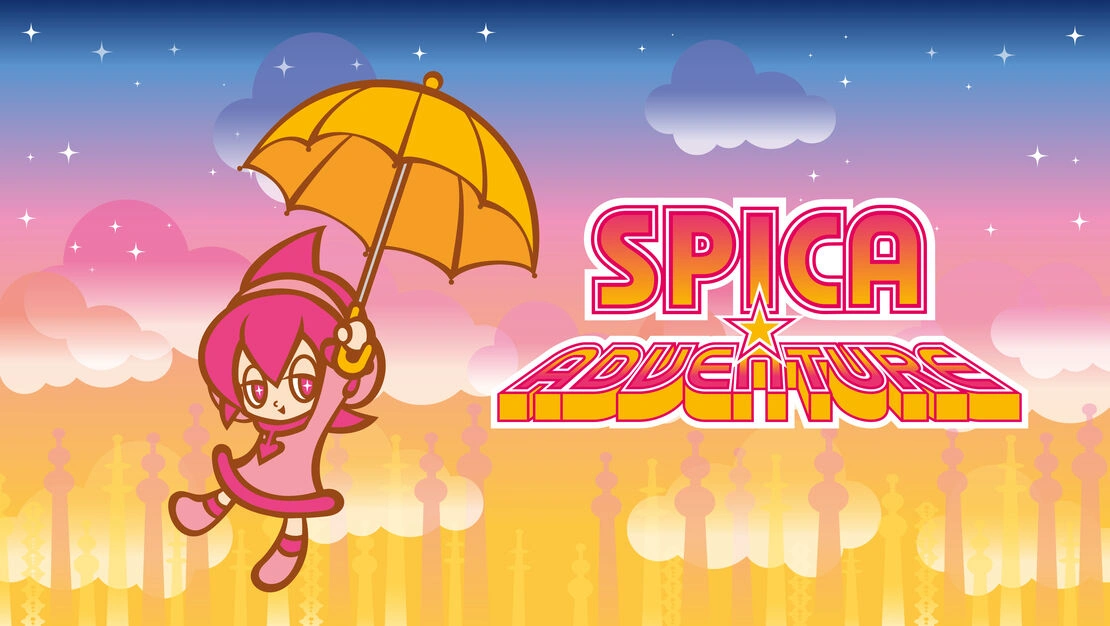

Plant Nico’s parasol into a wall, pull away, and she fires across the screen like a stone leaving a slingshot. The same tool can then become a shield, glider, pogo stick, boat, firearm, or blunt instrument. Spica Adventure builds nearly every good idea it has around that umbrella, which explains how a brief arcade platformer from Taito’s mid-2000s period can still feel mechanically distinctive.
The game began as a 2003 mobile release before moving into Japanese arcades. Its modern port marks its first wide international appearance, bringing the original 4:3 arcade version alongside a widescreen mode with simplified controls and adjustable settings. Nico has crash-landed on the planet Spica and must fight through 28 stages to find her way home, though the sparse introduction and short endings treat the story as little more than permission for the next burst of cartoon chaos.
Taito veterans will recognize the company’s family resemblance immediately. Route choices borrow the branching structure associated with Darius, while bosses and stage concepts pull imagery from Space Invaders, Bubble Bobble, and other corners of the publisher’s history. Spica Adventure lacks the dense secrets of Parasol Stars, yet its constant references give the game the feeling of an arcade cabinet assembled from pieces of Taito’s toy box.
Learning the Umbrella
Nico’s basic parasol combo deals with most ordinary enemies, sending them backward or launching them into nearby targets. Holding the attack button during longer sequences can knock an enemy upward, after which Nico aims the parasol like a gun and fires. The move looks excessive against the game’s fragile early creatures, but it becomes useful during bosses with larger health pools.
Movement gives the weapon its identity. Nico can attach the parasol to walls or floors, then launch herself toward hidden platforms, breakable blocks, and elevated collectibles. A clean launch can carry her through a line of enemies. A careless swing can destroy the platform needed to reach a gem. That small risk makes the mechanic feel connected to the level design rather than pasted onto it.
The original two-button control scheme hides several actions behind combinations. Standard Mode can assign parasol launching and other advanced moves to separate buttons, making them easier to use during crowded encounters. Once the launch sits on a shoulder button, wall climbing becomes quick and reliable. The modern layout removes some arcade friction, though it also lowers the execution demands that once separated an improvised escape from a practiced route.
Arcade Mode remains the better introduction because its tutorial scenes explain techniques that Standard Mode leaves for players to discover. Projectile reflection becomes especially important during the Space Invaders encounter, where Nico turns incoming energy into stars and sends it back. Entering that stage without understanding the shield mechanic can make a playful reference feel strangely obscure.
The Score Beneath the Exit
Players who rush toward each goal will see a forgiving action game. Enemies fall quickly, several routes avoid harder platforming, and the adjustable health and continues can soften most punishments. The campaign’s real challenge appears once the exit stops being the only objective.
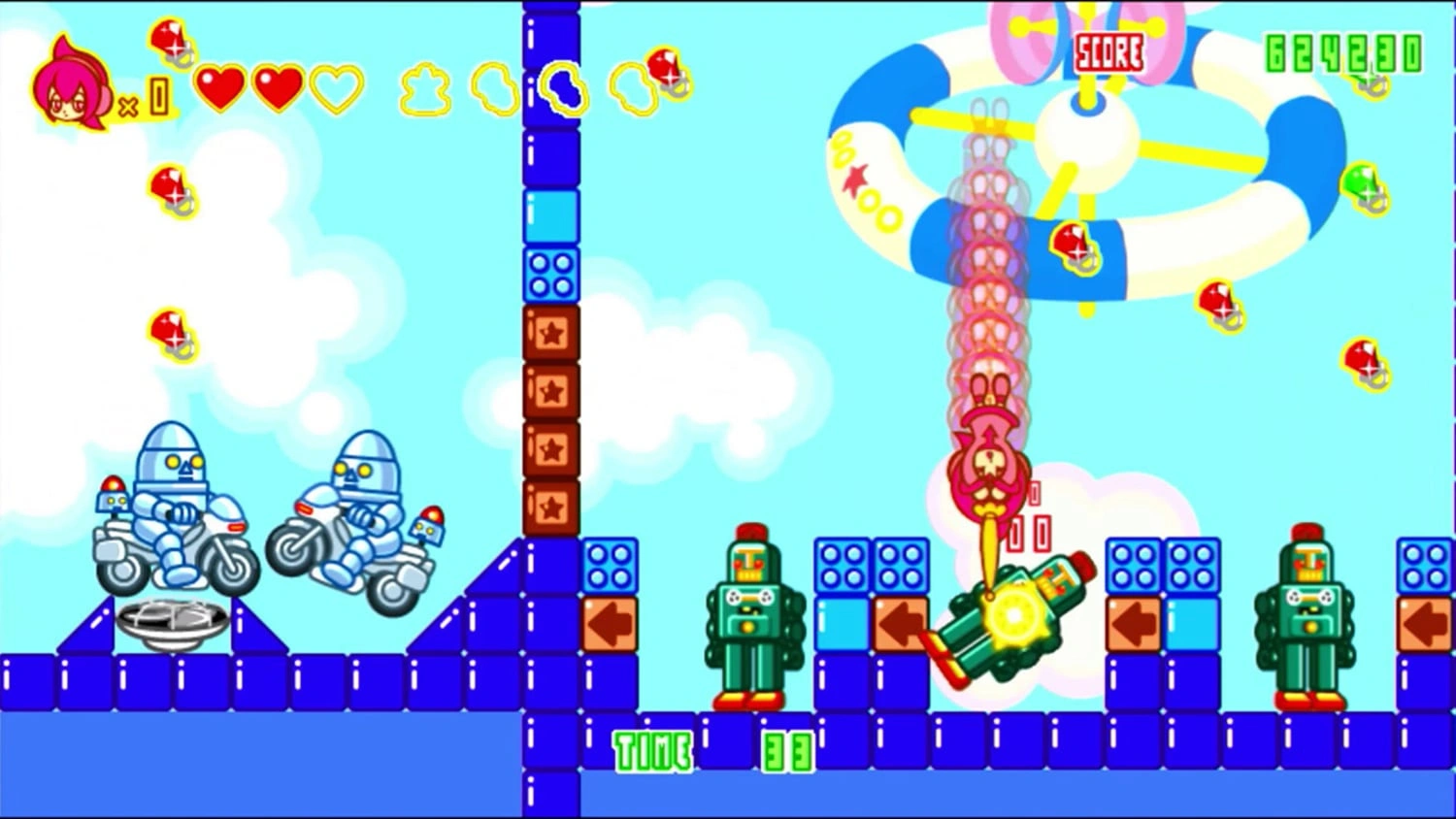
Each stage tracks enemies, collectibles, and flowers. Nico plants flowers by walking across marked floor tiles, which means jumping over a platform can cost completion progress even when it saves time. Gems sit behind false walls, above awkward launch points, or along routes that require precise parasol placement. The flower counter shows how much remains, turning every compact stage into a checklist performed under pressure.
Time limits keep those goals from becoming relaxed scavenger hunts. Stay too long and a powerful robot arrives to end the run. The strongest stages force a decision between one last hidden gem and a safe departure, especially after the remaining enemies have been cleared and the timer becomes the only immediate threat.
Branching paths strengthen repeat play because one run cannot cover every stage. Easier upper routes offer a quick path forward, while harder branches introduce denser hazards and tougher bosses. Different routes lead to different endings, and complete collection is tied to the better outcome. The structure recalls Darius without matching its dramatic route identity, yet it gives score-focused players a reason to learn each branch rather than repeat one efficient line.
Taito in Technicolor
Spica Adventure looks like a cartoon struggling to remain inside an arcade monitor. Fish, frogs, tanks, robots, and mechanical animals crowd stages filled with saturated scenery and constant movement. Enemy animations can shift from threatening to ridiculous within seconds, particularly when a machine collapses into an exaggerated defeat pose.
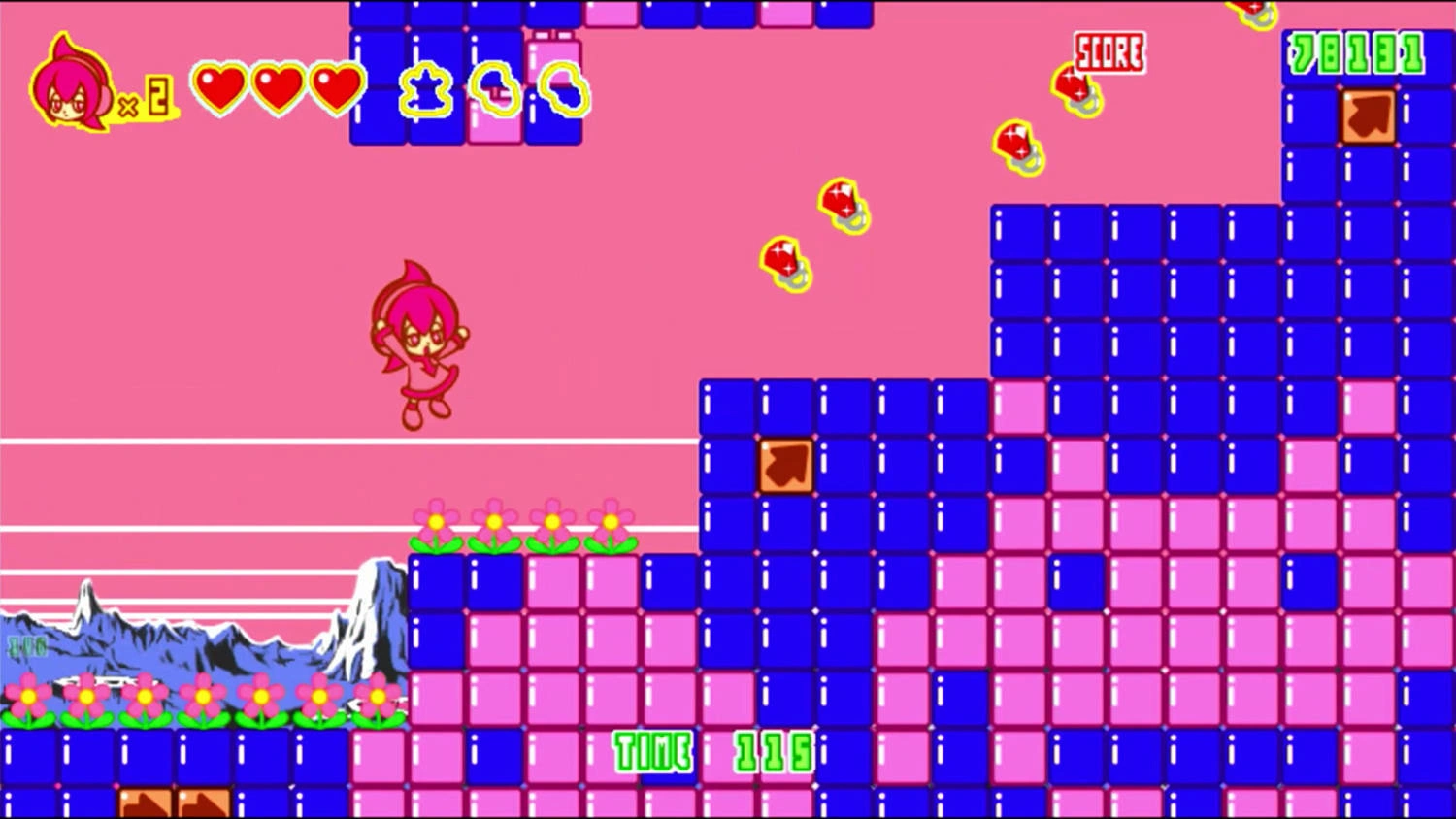
The visual excess suits the game’s pace, though the soft filter applied to sprites causes problems. Enlarged enemies can become blurry, and some bosses lose definition when scaled up. The widescreen view compensates by revealing hazards earlier, making stages easier to read than in the original 4:3 presentation.
ZUNTATA’s soundtrack keeps the action lively, with a memorable central theme carrying several levels. Other tracks recede behind the noise of attacks, collectibles, and enemy effects. The sound fits Taito’s later arcade style, though players attached to the company’s sharper 1990s electronic sound may find it less distinctive.
Standard Mode offers stage selection, adjustable difficulty, configurable health and continues, plus cheats unlocked through collection. Challenge Mode removes those conveniences and places score runs on online leaderboards.
Arcade Mode preserves the older framing and tutorial sequences. These modes cover the essential ways to play, but the package offers little beyond them. Gallery characters earned through complete stage clears come with biographies that are reportedly cut off, reducing what should have been a satisfying archive reward to a row of unreadable trivia.
Spica Adventure works best beside its arcade relatives, where a short runtime signals replay rather than scarcity. Parasol Stars remains the richer game, with stronger secrets and steadier challenge. Nico’s adventure earns its own place through a movement system that turns one cheerful umbrella into Taito’s most overqualified piece of equipment.
The Review
Spica Adventure
Spica Adventure earns its place beside Taito’s arcade curiosities through Nico’s wonderfully flexible parasol, branching stage routes, and scoring systems that reward players who hunt every gem, enemy, and flower tile. It lacks the challenge, secrets, and lasting depth of Parasol Stars, while unclear boss weak points and thin gallery rewards weaken the modern package. Players who approach it as a brief campaign may find it slight. Score chasers will discover the livelier game hiding beneath that first easy run.
PROS
- Versatile parasol mechanics
- Responsive modern controls
- Rewarding score-chasing loop
- Branching stage routes
- Playful Taito references
CONS
- Brief campaign
- Uneven boss encounters
- Limited modern extras
- Blurry enlarged sprites
- Broken gallery text