




















![Kingdom Hearts Collection [I-III] Review](https://gazettely.com/wp-content/uploads/2026/10/Kingdom-Hearts-Collection-I-III-1-360x180.webp "Kingdom Hearts Collection [I-III] Review: KHII Holds Steady as Newer Entries Fluctuate 33")







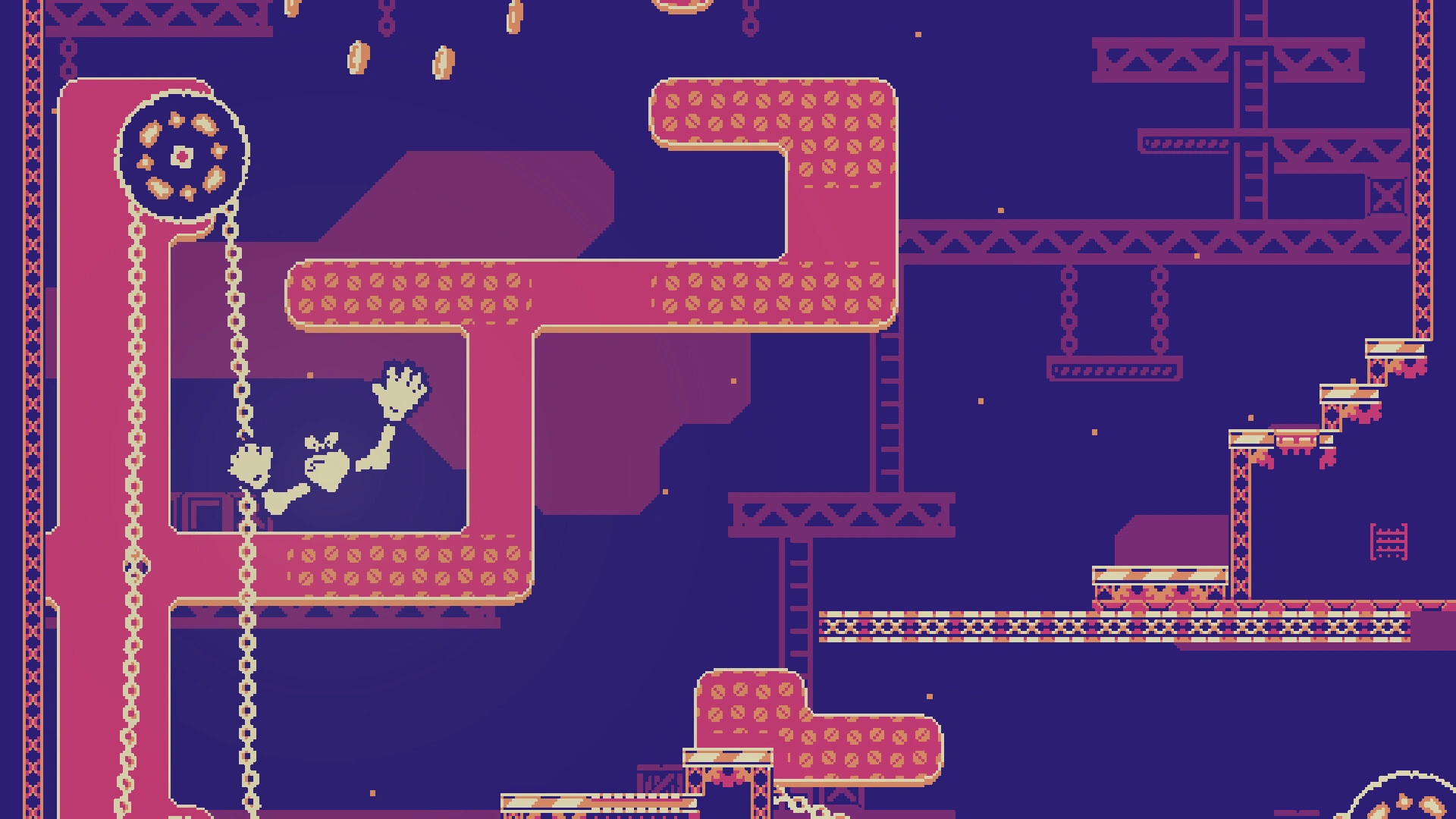

Every successful grab in Turnip Mountain feels like a small argument settled between your brain and your fingers. The game gives you control of a turnip with two enormous articulated arms, then asks you to climb back toward the summit after falling from it. The premise needs nothing else.
JanduSoft has published its share of odd indie games, yet this one earns its personality through movement rather than jokes. Each arm is controlled independently with an analogue stick, while the triggers close the corresponding hands around walls, ledges, ropes, and moving grips. The setup resembles coordination games such as QWOP, though Turnip Mountain is gentler about failure.
Its physics are consistent, its routes are readable, and its stages contain enough resting places to stop a bad grab from becoming a total disaster. The comedy fades quickly. Once the first ledge is behind you, the turnip stops being a punchline and becomes a body you are trying to understand.
Learning the Rhythm
The basic motion sounds simple. Reach with one arm, grip a surface, pull the body closer, then repeat with the other. Playing it requires your attention to split. You are watching each hand, rotating the body, judging distance, and deciding which trigger to release. Early movement can look painfully stiff because a diagonal input may send an arm somewhere you did not intend.
That awkwardness matters because the controls rarely feel random. A missed grab usually has a visible cause. You released too early. You approached the ledge from a poor angle. You pulled with one arm before the other had found support. Failure becomes readable, which gives each retry purpose.
The game changes once momentum enters the equation. Pulling the turnip backward, swinging its body, and releasing at the correct moment can send it across gaps that careful climbing cannot reach. Small stick flicks create short hops. Both arms working together can launch the turnip across a wider space, sometimes into a clean landing, sometimes into a vegetable-shaped collapse.
This is where the climb becomes expressive. A cautious player can follow the obvious path, gripping each surface in turn. A confident player can skip portions of the wall, chase coins, or reach hidden routes through a risky swing. The same controls that initially create tension later produce freedom.
They can also become tiring. Repeated stick rotations and trigger presses place a real strain on longer sessions, especially during sections demanding several precise jumps in sequence. The stage-based structure helps. Finishing one level and returning later feels natural, partly because your hands may request the break first.
A Mountain That Teaches
Across roughly ten main levels, Turnip Mountain introduces new obstacles without abandoning its basic movement. Switches require both hands. Springy mushrooms throw the turnip upward. Ropes and chains turn grip timing into a pendulum problem. Waterfalls make safe holds slippery, ice removes stable footing, and moving grips force the player to reach before a surface slides away.
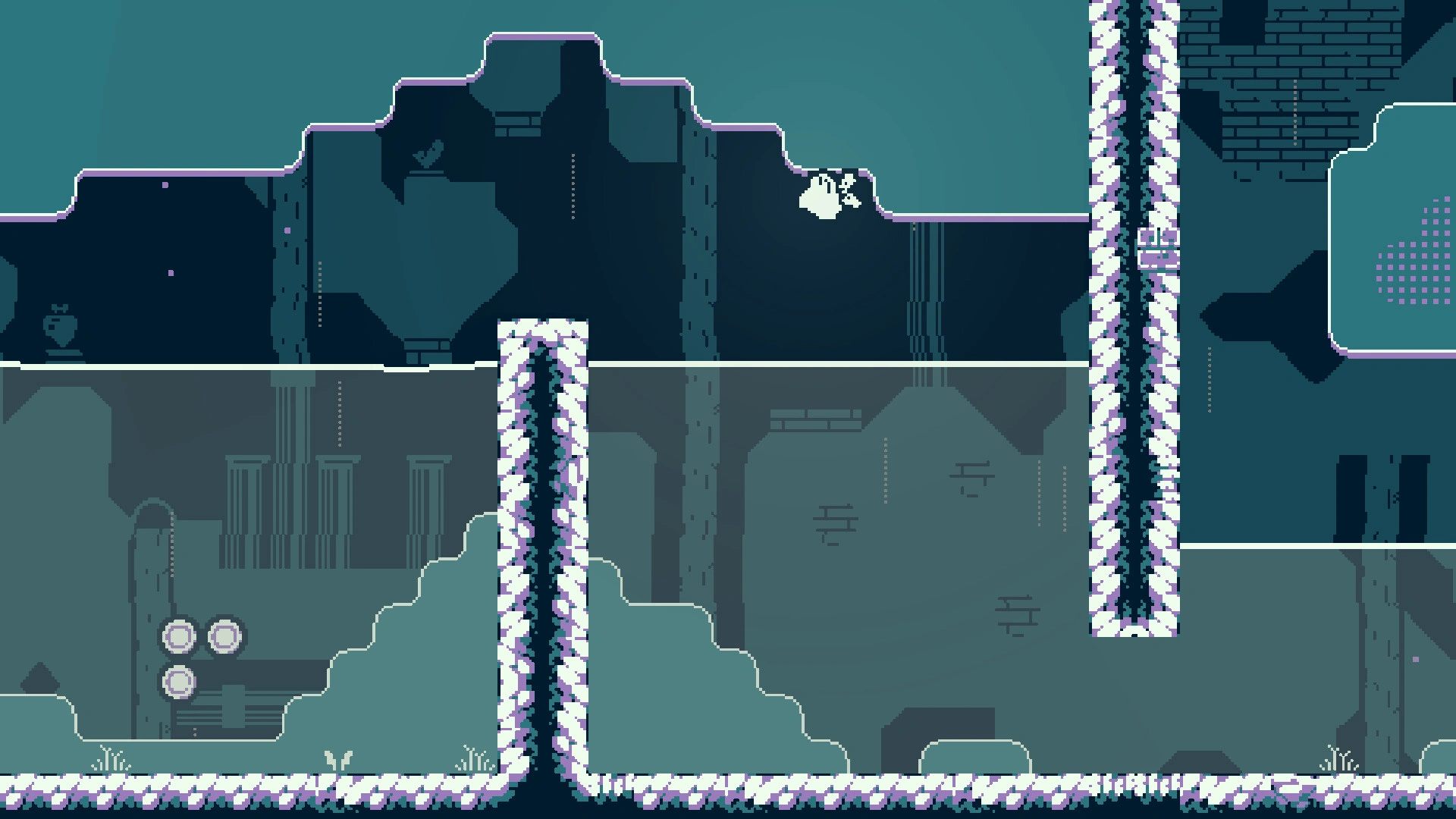
The strongest sections create pressure by changing the conditions around a familiar action. A grab learned in an early stage feels different when water rises beneath tiny platforms. A long swing becomes frightening when spikes wait below. Disappearing ledges ask you to commit before you feel ready.
Most failures remain fair because the mistake is easy to identify and checkpoints sit close enough to encourage another attempt. The harsher stages expose the limits of that generosity. One mistimed diagonal leap can undo a long sequence, and repeated precision tests can turn concentration into exhaustion. The game is weakest when it asks for the same difficult motion several times without offering a safe place to reset.
There are no upgrades that make the arms stronger or the grips easier. The character does not improve. You do. A movement that once demanded full attention eventually becomes automatic, and the game measures progress through that change. Raising the flag at the end of a stage by pulling its rope feels ceremonial because your hands have earned the motion.
Color, Coins, and Shared Chaos
The limited-color pixel art keeps the screen clean. Walls, hazards, and handholds remain readable during quick movements, while the near absence of a traditional HUD leaves the climb free from visual clutter. Unlockable palettes can repaint the game, giving later runs a different atmosphere. The starting monochrome look has charm, though some players may find it flat before new colors arrive.
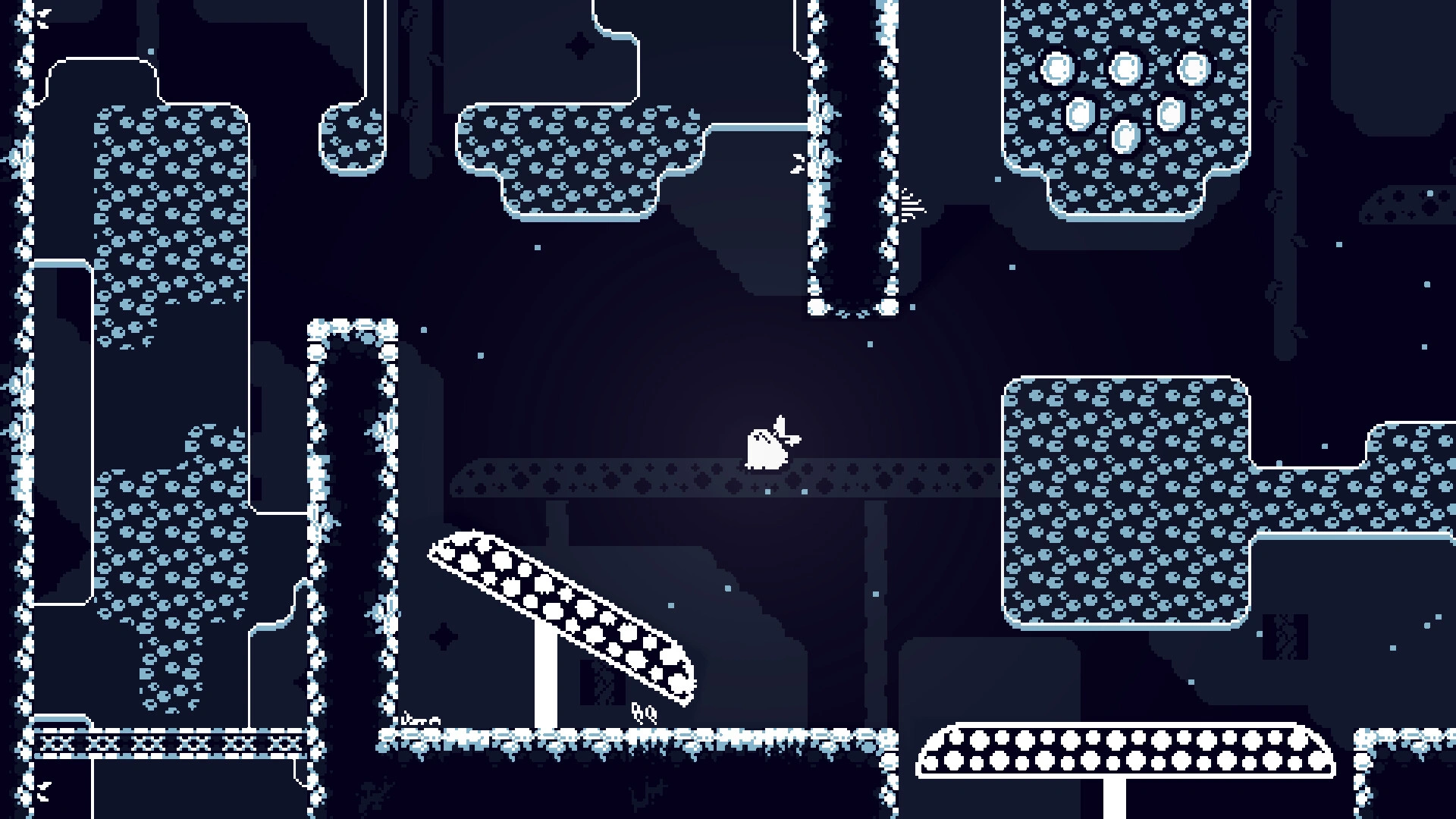
Coins along alternate paths give curious players a reason to leave the safest route. They can be spent on cosmetic hats through a vending machine, but the machine can take 50 coins and return nothing. There are no microtransactions attached to it, yet the empty reward still feels mean after a difficult detour. A risky climb deserves a hat. This should not be controversial.
The two-mouse option on PC fits the game’s strange spirit, assigning one mouse to each hand. Local co-op gives one arm to each player. Solo play asks one brain to coordinate two limbs. Co-op asks two people to agree on when to reach, grip, pull, and release. The likely shouting is part of the design.
Turnip Mountain finds its strongest feeling in the second after a desperate hand catches a ledge. The body swings below, the other arm searches for safety, and a fall becomes a recovery. Few games make relief feel this physical.
The Review
Turnip Mountain
Turnip Mountain makes every successful grab feel personal. Its independent arm controls begin as a fight against your own coordination, then gradually become a language of swings, leaps, and desperate recoveries. Frequent checkpoints keep failure playful, while shifting hazards give each stage a distinct rhythm. A few precision-heavy sections become exhausting, and the cosmetic vending machine rarely rewards the effort behind its coins. Still, reaching a ledge that once seemed impossible delivers the kind of quiet satisfaction few climbing games capture.
PROS
- Consistent, rewarding climbing controls
- Failure encourages experimentation
- Smart environmental progression
- Delightful local co-op potential
- Charming palette-based presentation
CONS
- Controls can become physically tiring
- Abrupt difficulty spikes
- Unsatisfying cosmetic vending machine
- Repetitive soundtrack