








![Kingdom Hearts Collection [I-III] Review](https://gazettely.com/wp-content/uploads/2026/10/Kingdom-Hearts-Collection-I-III-1-360x180.webp "Kingdom Hearts Collection [I-III] Review: KHII Holds Steady as Newer Entries Fluctuate 33")





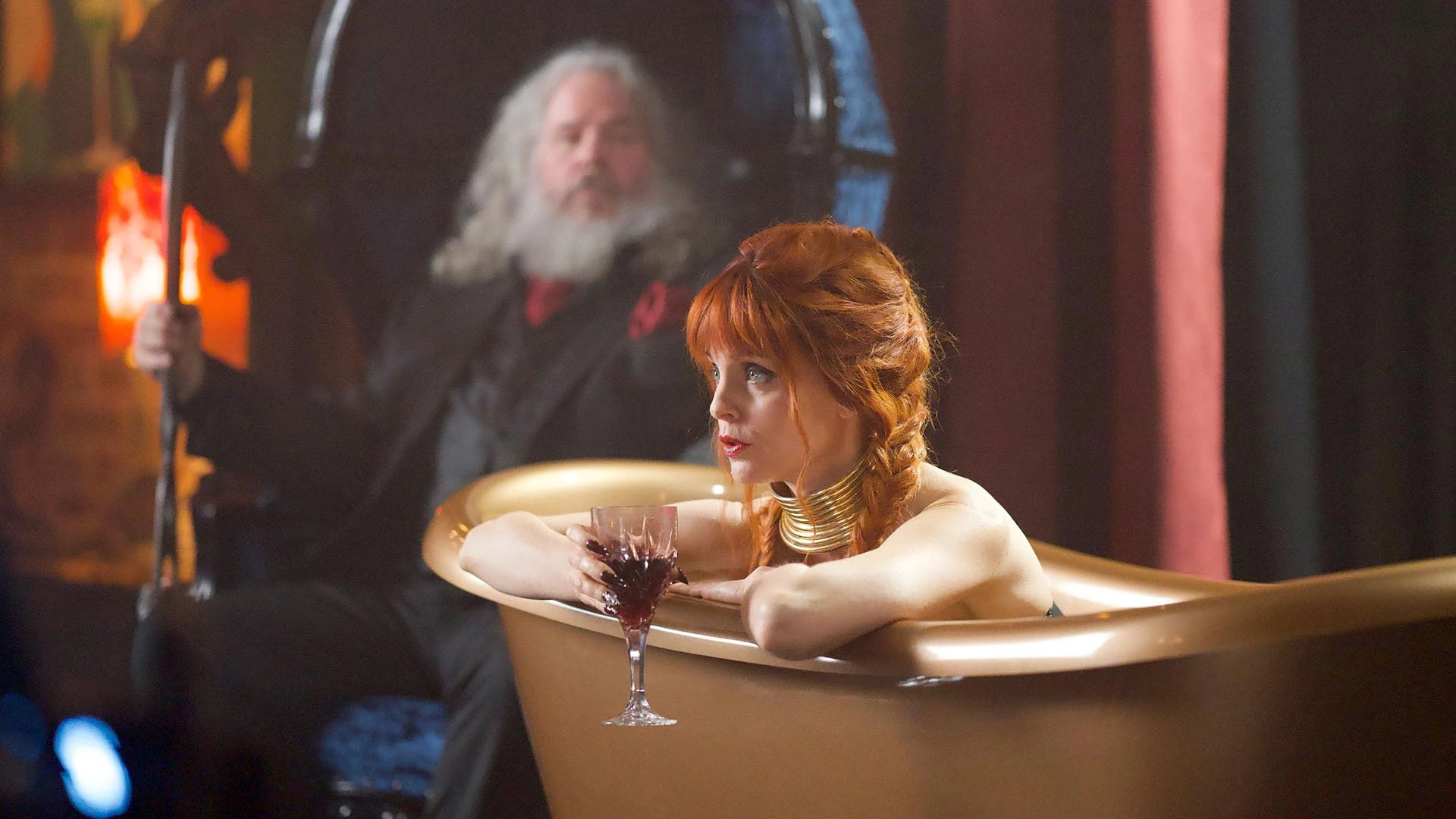

Online dating gives Elizabeth Báthory a hunting ground large enough to make Savannah feel like a private pantry. Writer-director Adam Sherman places the infamous countess in the present day, where Elizabeth and her coven operate an absinthe bar while luring visitors through carefully managed profiles. Their victims drink until the vampires appear as glowing green fairies, then discover how badly the evening has been advertised.
Vampires of the Velvet Lounge has the pulpy premise of a late-night cable horror movie. Mena Suvari plays Elizabeth with long red hair, leather outfits, and the weary authority of someone forced to supervise immortal coworkers. Joan, played by India Eisley, is her restless protégé. Helena and Chuck help handle the violence. Across town, former soldier Cora tracks them with Alexis and veteran hunter Albert.
Sherman spends an extraordinary amount of time explaining this arrangement. Opening text describes Báthory’s history, then the vampires discuss their ages, feeding preferences, powers, and sexual habits. A stronger version would let Eric’s first encounter establish the rules: absinthe, a green apparition, teeth, blood. The lesson is clear enough.
Too Many Stories in One Coffin
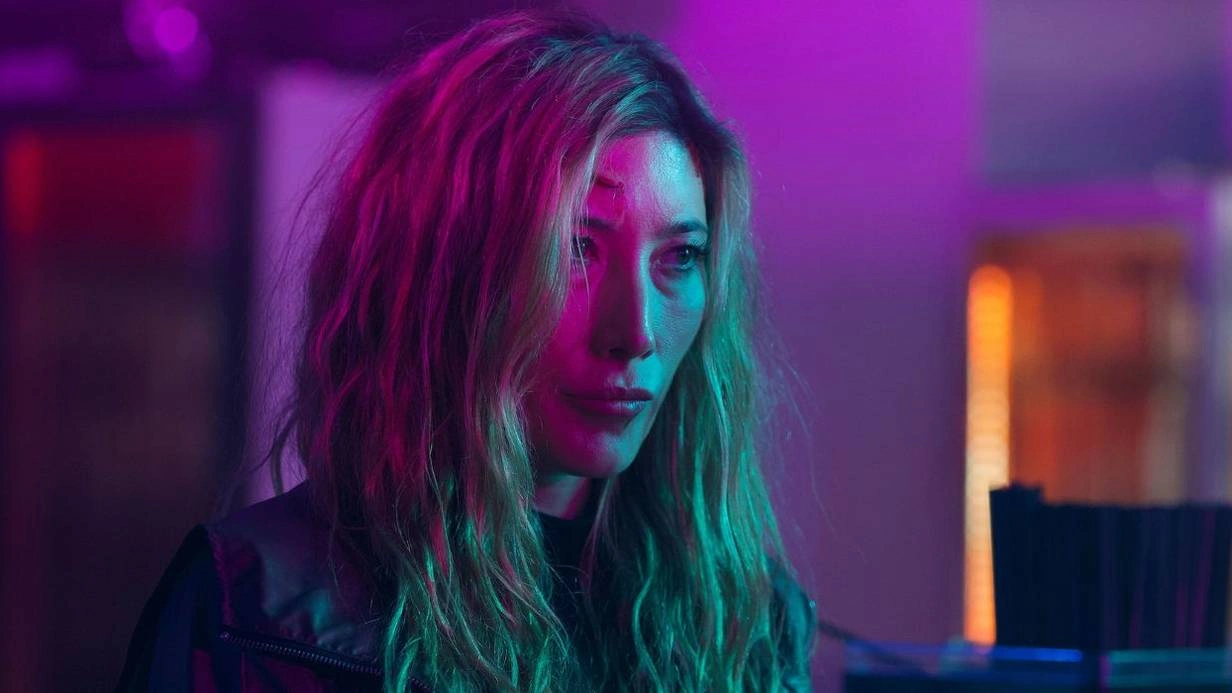
Cora initially appears to be the protagonist. Dichen Lachman gives her the posture of a person who has slept badly for several years, while a gravelly voiceover announces vague regrets from her past. Her investigation repeatedly disappears as the film introduces Luke, a depressed divorcé, his attorney Randall, and their friend Malcolm.
The trio travel to Savannah after Joan develops an online connection with Luke. Their scenes suggest a separate comedy about middle-aged men chasing reinvention through social media, drinking, and reckless stunts. One long joyride has them recording dangerous behavior for likes, setting someone on fire, and treating public destruction as weekend entertainment. Stephen Dorff understands the required temperature. His Randall becomes louder and stranger after turning into a vampire, giving the film a brief comic pulse.
The structural problem is easy to identify. Screen time creates expectation. When a movie spends this long explaining Luke’s divorce, Randall’s personality, and the group’s workplace dynamic, viewers reasonably assume these details will matter. They mainly fill time before the bloodshed.
Cora’s plot suffers from the opposite issue. Her team discusses delayed backup and the timing of a lunar eclipse, yet the plan remains hazy. Her dating profile is designed to attract Elizabeth, a clever reversal of the coven’s method, but their contact receives little development. The movie has several possible centers and commits to none.
Performances Searching for Characters
India Eisley finds the clearest emotional thread. Joan is tired of immortality, attached to human pleasures, and increasingly unwilling to treat every date as food. Her interest in Luke carries a loneliness the dialogue rarely knows how to express. When she wants to watch a sunrise, the gesture gives her dissatisfaction a physical shape. For a moment, the mythology becomes personal.
Suvari meets the movie’s camp directly. She snaps commands, kills with theatrical irritation, and treats leadership as an exhausting administrative burden. That choice works especially well when Elizabeth has to manage Joan’s sympathy or Randall’s new excitement over vampirism. Their mentor-protégé relationship needed several quieter scenes, since the conflict between them has little history beyond exposition.
Lachman fares better through movement than narration. Watch the rigid way Cora handles weapons or enters a room. Those choices suggest a life built around discipline. The voiceover flattens that work by delivering each thought in the same strained register.
Rosa Salazar’s Alexis receives even less help. She talks about dating, trains beside Cora, and is frequently framed in her underwear, yet the film never builds her desire for romance into a meaningful counterpoint to the vampires’ predatory profiles. The implied attraction among Cora, Alexis, and Elizabeth could have linked seduction with surveillance. It remains decoration.
Green Fairies, Red Blood
Sherman’s visual plan mixes neo-noir, grindhouse horror, vampire erotica, and early-2000s television effects. The Savannah exteriors drain much of the color from the frame, then allow red and green to punch through. This selective color grading limits the palette so certain shades carry extra force. It gives the streets a metallic, comic-book texture, while Elizabeth’s bar and Cora’s apartment provide the strongest production design.
The green-fairy vampires are less successful. Absinthe changing a victim’s perception is a smart extension of the bar setting, and the winged forms give this mythology a recognizable silhouette. The translucent digital effects lack weight, so attacks that should feel uncanny resemble unfinished composites.
The gore has the opposite issue. Bodies burst under cars, blood fills bathtubs, and oversized pruning shears turn decapitation into a sight gag. Excess can be funny when editing gives it a precise beat. Here, the timing shifts unpredictably. A slow-motion cut to popping popcorn calls attention to the edit without sharpening the joke, while fight scenes begin with energy and end looking like filmed rehearsals.
The soundtrack supplies some of the confidence missing from the images. Goth songs, noir saxophone cues, and driving themes push scenes toward the sleazy midnight movie Sherman appears to want. For a few minutes at a time, Suvari, Eisley, and the music make that movie visible. Then another explanation arrives, and the spell breaks.
Vampires of the Velvet Lounge was released in theaters on March 20, 2026, by Strand Releasing, and can be found via select independent cinema screenings or digital video-on-demand platforms. The film follows a coven of modern vampires using dating apps to hunt unsuspecting prey, only to encounter dangerous complications.
Where to Watch Vampires of the Velvet Lounge (2026) Online






Full Credits
Title: Vampires of the Velvet Lounge
Distributor: Strand Releasing
Release date: March 20, 2026
Rating: R
Running time: 105 minutes
Director: Adam Sherman
Writers: Adam Sherman
Producers and Executive Producers: Adam Sherman, Marcus Englefield, George Lee, Noémi Santo, Brian O’Shea, Nat McCormick, Danny Gusman
Cast: Mena Suvari, Dichen Lachman, Stephen Dorff, Rosa Salazar, Lochlyn Munro, India Eisley, Sarah Dumont, Tyrese Gibson
Director of Photography (Cinematographer): Adam Sherman Film
Editors: Adam Sherman
Composer: Bear McCreary, Sparks & Shadows
The Review
Vampires of the Velvet Lounge
Vampires of the Velvet Lounge has the raw materials for a rowdy midnight movie: an absinthe-drinking coven, online dating traps, neon-soaked Savannah streets, and gallons of digital blood. Mena Suvari and India Eisley occasionally locate the playful, lonely vampire story buried inside Adam Sherman’s film. The scattered plotting, repetitive exposition, awkward effects, and uncertain comic rhythm keep smothering those flashes. Its strangest scenes may earn a few late-night admirers, but purposeful camp requires timing and control. This lounge never finds either.
PROS
- Mena Suvari embraces the camp
- India Eisley brings genuine feeling
- Memorable absinthe mythology
- Several gleefully excessive gore effects
- Atmospheric soundtrack choices
CONS
- Severely unfocused plotting
- Exposition replaces character development
- Cheap, distracting visual effects
- Inconsistent comic tone
- Underwritten hunter storyline