









![Kingdom Hearts Collection [I-III] Review](https://gazettely.com/wp-content/uploads/2026/10/Kingdom-Hearts-Collection-I-III-1-360x180.webp "Kingdom Hearts Collection [I-III] Review: KHII Holds Steady as Newer Entries Fluctuate 33")






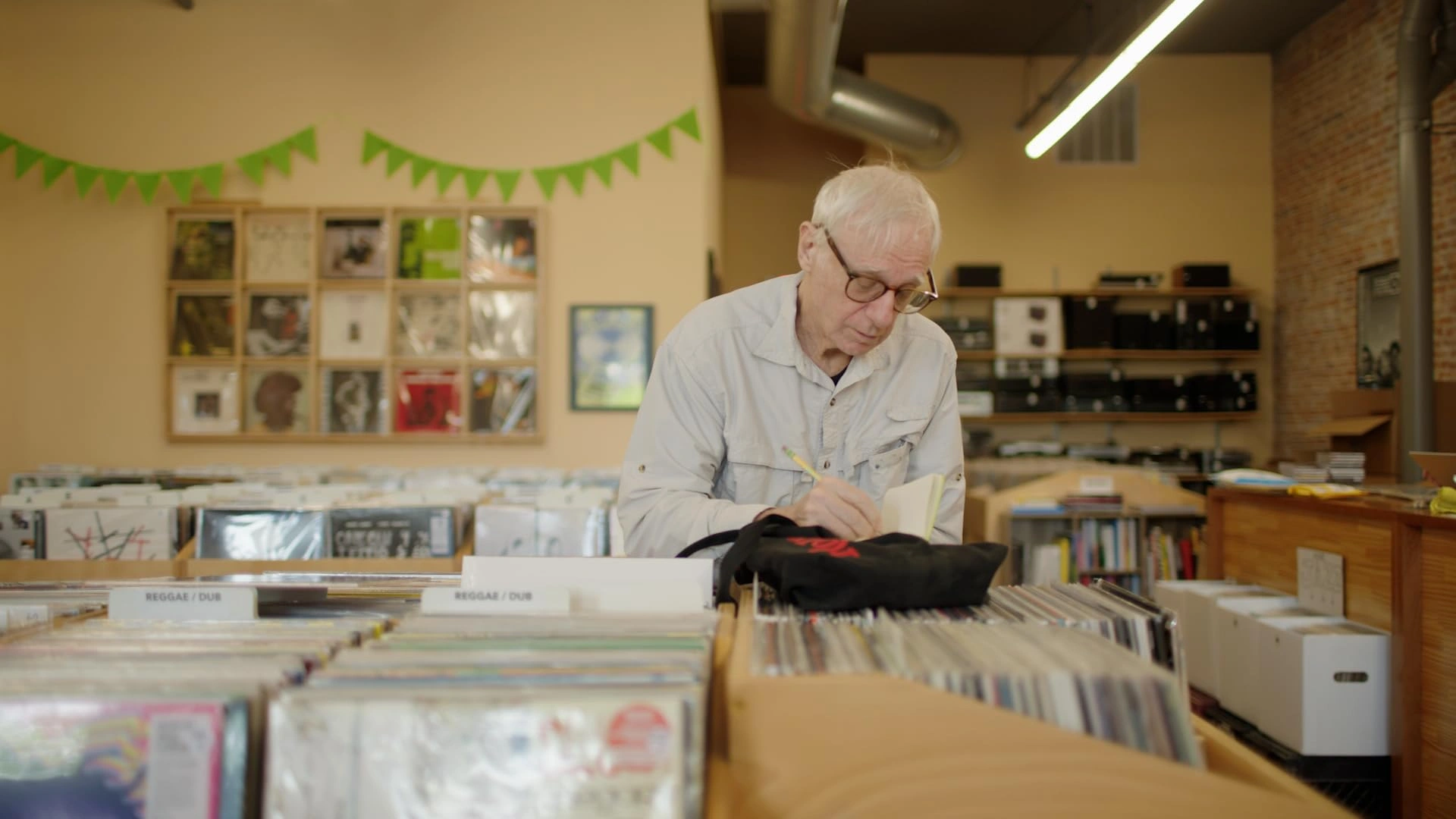

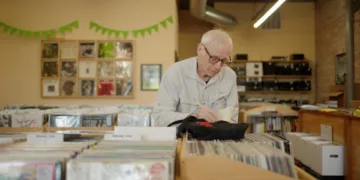
Robert Christgau still types on a tired desktop while 36,000 records, CDs, and cassettes press in from every wall. At 83, the self-appointed “Dean of American Rock Critics” continues assembling his Consumer Guide from the Manhattan apartment he has shared with writer Carola Dibbell for five decades. The equipment has aged. The appetite has not.
Matty Wishnow’s The Last Critic observes this routine with affectionate curiosity. Christgau feeds albums into unreliable players, listens repeatedly, argues with individual words, and decides which releases deserve one of his compressed reviews.
He has written roughly 14,000 of them. What could resemble hoarding becomes a physical record of cultural exchange, with American rock sitting beside African music, funk, country, hip-hop, and every commercial mutation that crossed his desk. The title hints at extinction, yet the film first presents criticism as stubborn daily practice. Christgau refuses to stop writing during surgical recovery. Listening has become the clock by which he measures a life.
Grading the Counterculture
Christgau’s Consumer Guide began in 1969 with a joke sharp enough to become a system. Rock musicians imagined themselves outside ordinary commerce, so he treated their albums like consumer products and graded them from A+ to E. If a record carried a price, his logic went, it could carry a letter.
Wishnow makes that hierarchy visible through a montage of album covers. Taylor Swift’s 1989 earns an A-, while Big Star’s #1 Record and Beyoncé’s Cowboy Carter sit at B+. Dr. Dre’s The Chronic receives a C+. The sequence is amusing because it rejects the stable canon that music culture tends to construct after the arguments have cooled. Christgau’s list belongs to one listener, yet it also exposes how any critical canon reflects its writer’s location, generation, and habits.
His taste moved far beyond the white American rock establishment that gave him authority. He backed funk, African music, and hip-hop when many colleagues treated those forms as peripheral. A conversation with Greil Marcus turns this openness into a precise cultural disagreement. Christgau argues that Marcus does not fully feel hip-hop because he does not feel James Brown. Rhythm, in that exchange, becomes historical knowledge.
The film is less attentive to the limits of Christgau’s American framework. Letter grades travel easily, while cultural meaning rarely does. His method absorbs music from across the world into a distinctly New York language of wit, classification, and combat.
Voice, Power, and Argument
Archival footage shows how thoroughly Christgau turned criticism into performance. The long hair, oversized glasses, crooked smile, and “Dean” title formed an identity suited to the Village Voice, where writers could become downtown celebrities without pretending to be respectable. He came from Queens, the son of a fireman, and carried an outer-borough suspicion of cultural elites even after joining their ranks.
His capsule reviews were brief, yet never casual. Boots Riley reads Christgau’s response to The Coup and recognizes the act of listening inside the sentences. Thurston Moore revisits the critic’s early contempt for Sonic Youth, a dispute that escaped the page and entered the band’s music. Christgau later changed his position. The episode captures criticism as a public relationship in which hostility, reconsideration, and wounded pride can survive together.
Former colleagues describe a demanding editor who chased late copy by bicycle and forced writers to defend every phrase. Nelson George and Greg Tate place his editorial record within the racial politics of American music journalism. Christgau did not merely praise hip-hop from a safe distance. He helped create space for Black writers who understood the form from within its language and communities.
Wishnow’s many interviews occasionally make the documentary feel like a private gathering for readers who already know the passwords. Still, the clashing opinions prevent sainthood from settling over the room.
Marriage Against Obsolescence
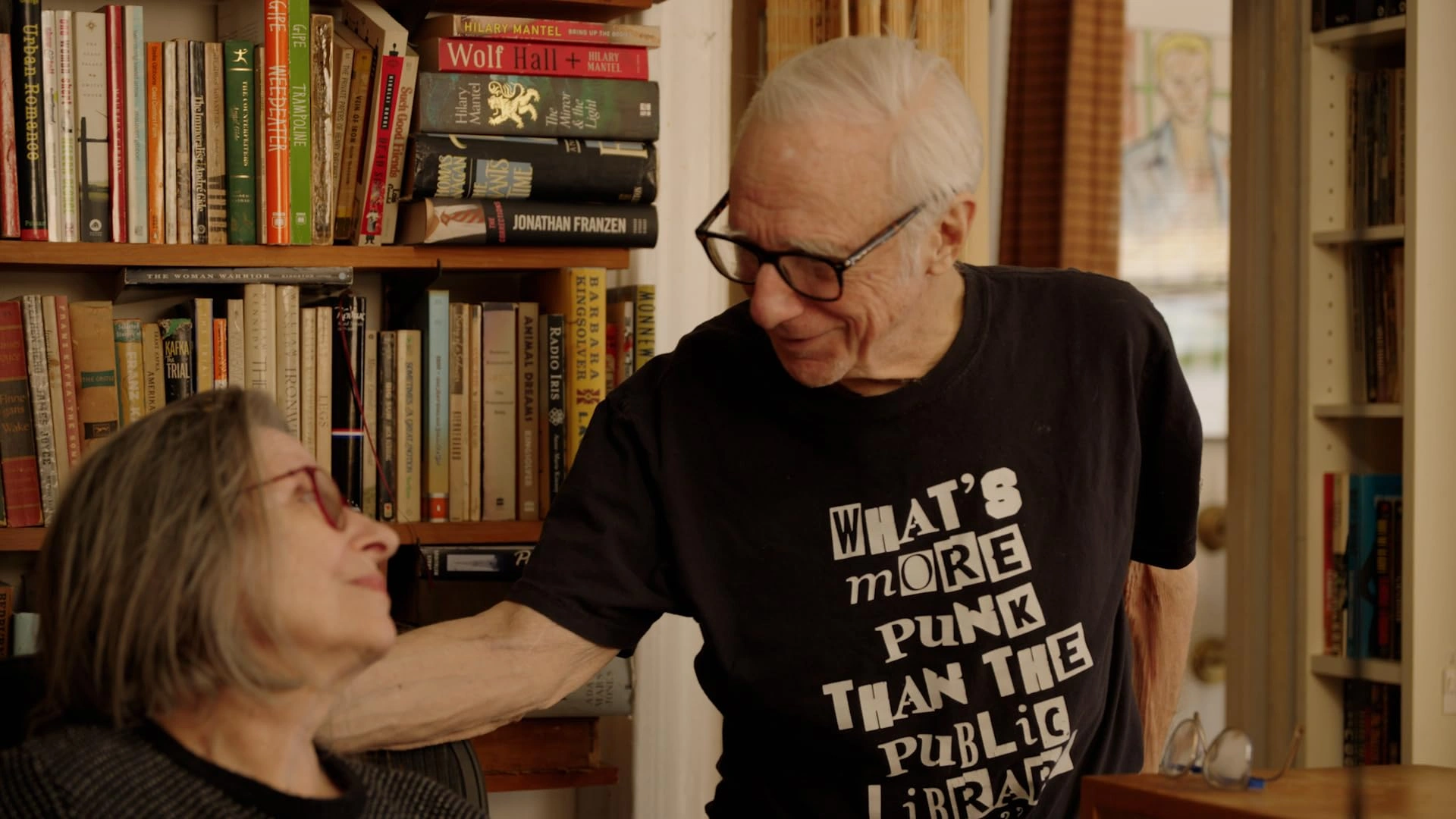
The film’s most intimate history begins with an argument. Christgau and Dibbell meet while disputing Jean-Luc Godard’s One Plus One on a Manhattan street, setting the terms for a partnership built through music, prose, and disagreement. She still proofs his work. Her taste can influence a grade, and his appreciation of Taylor Swift grows partly through taking their daughter Nina to concerts.
Their apartment resembles an archive, yet Wishnow films it as a shared habitat rather than a mausoleum. Industrial shelving runs through the rooms. Books and recordings narrow the available space. Christgau sits at the center, while Dibbell moves through the same collection with the ease of someone who helped construct its private order.
Editor Paul Lovelace avoids a rigid chronology, moving between the current Consumer Guide, archival appearances, artist readings, and recollections from writers such as Ann Powers, Amanda Petrusich, Rob Sheffield, and Kit Rachlis. This loose structure suits a subject whose career crossed several eras without surrendering its basic ritual.
Outside the apartment, the former Fillmore East has become an Apple Bank. The Village Voice is gone, and the Consumer Guide now appears on Substack. Wishnow acknowledges these changes, then retreats from asking what streaming, social media, and collapsing arts desks have done to critical authority. Christgau keeps typing, while the city that created his particular kind of critic becomes harder to recognize.
The Last Critic premiered at the SXSW Film & Television Festival on March 14, 2026, and is available through independent film festival screenings via Past Prime Productions. The documentary focuses on legendary music writer Robert Christgau, examining his enduring legacy as the dean of American rock critics.
Full Credits
Title: The Last Critic
Distributor: Past Prime Productions
Release date: March 14, 2026
Running time: 83 minutes
Director: Matty Wishnow
Writers: Matty Wishnow
Producers and Executive Producers: Paul Lovelace, Ben Wu, Joe Levy
Cast: Robert Christgau, Carola Dibbell, Thurston Moore, Boots Riley, Randy Newman, Colson Whitehead, Ann Powers, Joe Levy, Amanda Petrusich, Greil Marcus
Director of Photography (Cinematographer): Ben Wu
Editors: Paul Lovelace
Composer: Carmen Elle
The Review
The Last Critic
The Last Critic captures Robert Christgau as a distinctly New York creation whose methods reshaped how popular music could be discussed far beyond the United States. Matty Wishnow’s affectionate portrait is strongest inside Christgau and Carola Dibbell’s crowded apartment, where criticism becomes labor, marriage, argument, and daily ritual. Its reluctance to examine streaming culture and the shrinking authority of professional critics leaves the title underexplored. Still, the film preserves the restless curiosity behind fourteen thousand judgments without turning its subject into a museum piece.
PROS
- Rich portrait of Christgau’s working method
- Warm attention to his marriage
- Strong archival footage and artist testimony
- Sharp account of rock criticism’s formation
- Lively, flexible editing
CONS
- Avoids criticism’s uncertain digital future
- Familiar history for longtime followers
- Occasional insider-focused passages
- The title’s implications remain underdeveloped