





























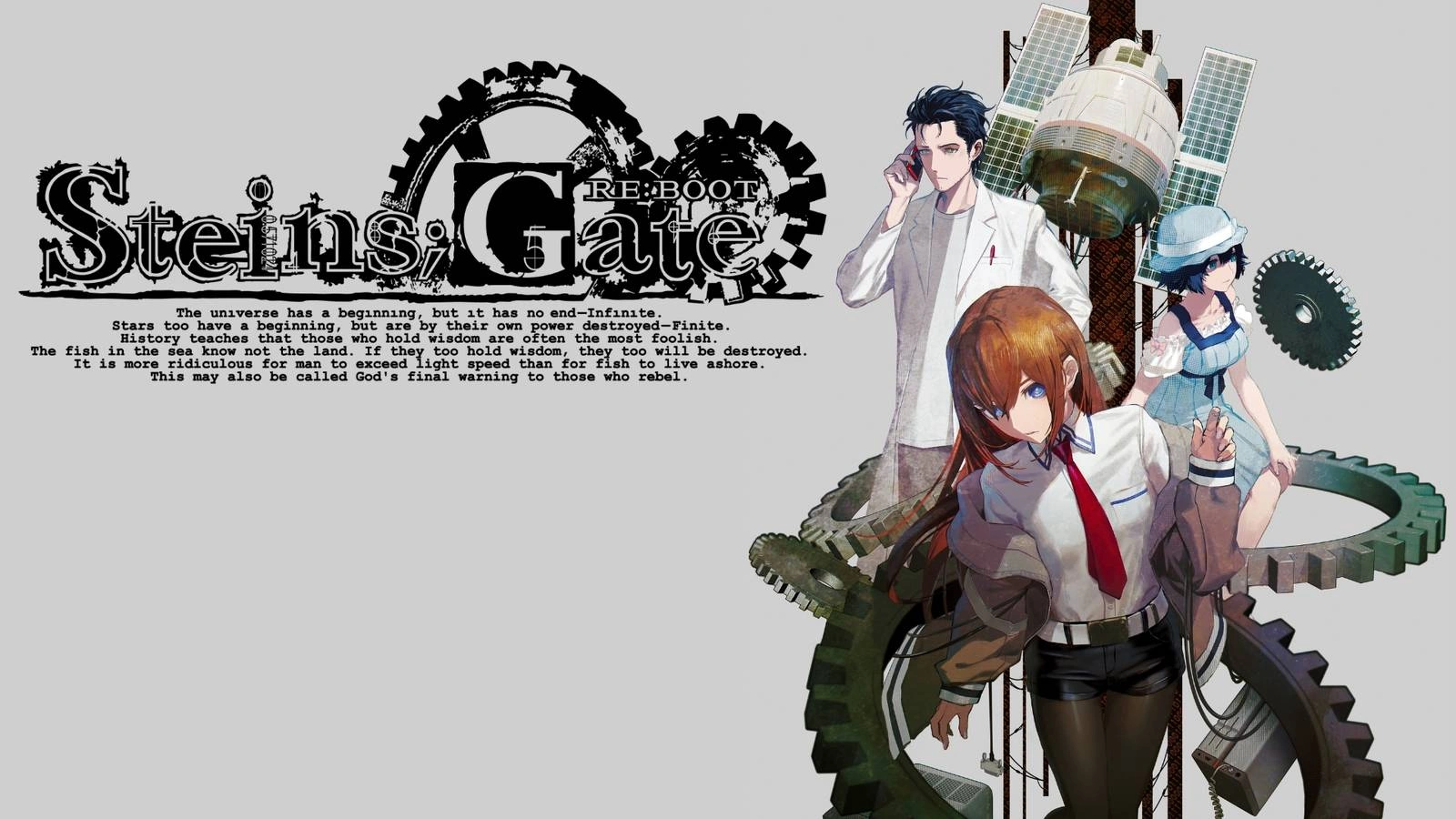

Rebuilding a visual novel for a third time creates an awkward problem: every improvement invites comparison with something another version did better. STEINS;GATE RE:BOOT understands that history and, for the most part, works as an amalgamation of the 2009 original and 2019’s STEINS;GATE RE:BOOT Elite rather than a clean replacement for either.
The setup remains wonderfully strange. Rintaro Okabe, self-appointed mad scientist Hououin Kyouma, operates the Future Gadget Laboratory from a cramped Akihabara apartment with Mayuri Shiina and hacker Itaru “Daru” Hashida. After finding Kurisu Makise apparently murdered, Okabe sends Daru a message and watches reality shift around him. Kurisu is suddenly alive. Soon, the Lab discovers that its ridiculous PhoneWave can transmit information into the past.
RE uses Elite’s shortened script, restores familiar visual-novel interactions, redraws the presentation and adds new material around Moeka Kiryu and the Gamma Worldline. That combination gives newcomers an unusually convenient entry point while leaving veterans with plenty to compare against what disappeared along the way.
When the Joke Stops Being Funny
STEINS;GATE still spends considerable time letting its characters behave like ordinary nerds before turning their experiments into a nightmare. Okabe invents conspiracies involving “the Organization,” Mayuri worries about cosplay, Daru rolls his eyes at his friend’s theatrics, and Kurisu repeatedly punctures Hououin Kyouma’s grandstanding. Those conversations can feel leisurely, especially before the larger mystery takes shape, yet they establish precisely what later chapters threaten to destroy.
The structure becomes far sharper once D-mails begin altering personal histories. Suzuha’s oddly specific remarks start sounding less eccentric once her connection to the larger time-travel mystery becomes clearer. Okabe’s casual trust in Moeka acquires a cruel second meaning. Most painful are the sequences involving Mayuri, where repeated attempts to repair one catastrophe keep revealing another version of the same loss.
Kurisu’s explanations of concepts such as Time Leap keep the science readable without stripping it of complexity. The rules matter because Okabe has to live through their consequences. Each attempt to alter a worldline forces him to decide how much suffering can be undone without transferring the cost somewhere else.
Here RE inherits one of Elite’s biggest compromises. Its condensed script removes dialogue and portions of routes present in the 2009 release. The opening moves faster, but quieter character beats are missing, which matters in a story whose later devastation depends so heavily on familiarity with these people.
Choices in Your Pocket
RE remains unapologetically a visual novel. Most of the experience consists of reading dialogue and listening to performances, with meaningful interaction concentrated in Okabe’s phone. The restored Phone Trigger works especially well because it belongs naturally inside the fiction. Calls can be answered or ignored, while selected words in messages determine possible replies.

Those seemingly mundane interactions can redirect character routes and decide which ending Okabe eventually reaches. A choice about replying to a text carries greater tension once the same device has become inseparable from manipulating history.
The Tips system helps with dense scientific language and cultural references, giving brief definitions without forcing explanations into every conversation. It is an elegant solution for a script that regularly moves between internet slang, physics and Akihabara subculture.
RE is less graceful during repeated playthroughs. Skip settings can stop at minor phone interactions alongside decisions that genuinely affect a route, while autoplay can rush through incoming messages quickly enough to require checking the phone manually. A game built around branching outcomes could use cleaner tools for jumping between previously read material and important decision points.
Repainting the Worldline
Original character designer Huke returns to redraw the cast, and Akihabara benefits immediately. The new backgrounds fill rooms and streets with CRT televisions, electronics, signs and clutter that anchor the story firmly in its 2010 setting. The Future Gadget Lab looks cleaner than before, sometimes to its detriment, since the original’s rougher texture suited the story’s growing unease.

The character art produces a similar trade. Mayuri and Moeka look particularly strong in the new style, yet the brighter palette sacrifices some of the bruised, melancholic quality of the 2009 portraits. E-mote animation adds breathing, blinking and subtle facial movement, which can make long conversations livelier. Repetition occasionally exposes the machinery. Two characters cycling through similar blinks or posture shifts can resemble animated streaming avatars rather than people caught inside a psychological crisis.
The returning Japanese cast provides continuity the artwork cannot. Mamoru Miyano remains extraordinary as Okabe, especially as the exaggerated confidence of Hououin Kyouma gives way to panic and exhaustion. His performance makes the transition from comedy to despair feel gradual rather than mechanically scripted. Takeshi Abo’s remade score performs a similar function, using familiar piano lines and electronic textures to make previously harmless locations sound increasingly unsafe.
The largest new attraction is the Gamma Worldline, which finally gives Moeka a dedicated alternate ending. Its scale is closer to another character route than a substantial second campaign, so anyone expecting a full adaptation of every Gamma-related side story may find it slight. For Moeka herself, the addition corrects a conspicuous absence from the original route structure and gives veteran readers material they have never encountered in this form.
Smaller references to STEINS;GATE 0 connect RE to the franchise that grew around the original without rewriting its central events. That leaves an interesting hierarchy among the three major releases: Elite remains the most radically reworked presentation, the 2009 game still has the fullest script and most distinctive visual identity, and RE provides the strongest compromise between accessibility, restored mechanics and new material. For anyone stepping into the Future Gadget Lab today, this is an excellent place to begin. For returning fans, the old worldline still refuses to disappear.
The Review
STEINS;GATE RE:BOOT
STEINS;GATE RE earns its place beside the original and Elite by combining Elite’s tighter script with restored Phone Trigger interactions, expressive new presentation, and the Gamma Worldline material. The trade remains clear: Huke’s cleaner character art loses some of the original’s strange, melancholy texture, while the shortened script still leaves memorable material behind. For newcomers, this is an excellent modern entry point. Veterans have stronger reasons to return than Elite offered, though the 2009 release still preserves the richest version of Okabe’s story.
PROS
- Excellent core time-travel narrative
- Restored Phone Trigger system
- Strong returning Japanese voice cast
- Detailed new Akihabara backgrounds
- Gamma Worldline adds worthwhile material
CONS
- Elite script retains notable cuts
- E-mote animation can look repetitive
- New art loses some original atmosphere
- Replay tools remain clumsy