


























Joanne earns her living deciding where stories turn, which makes her helplessness around Paz unusually cruel. On a television set, Jo can rethink a scene and redirect the script. At home, the woman who disappeared from her life 27 years earlier keeps calling her “JoANNE,” treating the intervening decades like an inconvenient continuity error.
Cholo Laurel’s This, That and Everything in Between places Jodi Sta. Maria’s successful writer on the verge of a New York fellowship, then brings her estranged mother home carrying a second disruption: Mattias, the 20-year-old half-brother Joanne never knew existed. The structure initially courts farce. Paz berates drivers, wounds relatives with casual insults, fights with her son and expects recognition for a faded acting career nobody around her seems particularly impressed by.
The comedy rarely finds the precise rhythm it needs. Paz yanking off a wig to reveal shorter, less-grey hair underneath has the visual logic of a punchline, yet the scene hangs there without a clean comic release. Laurel soon lets the room darken. What looked like diva chaos starts revealing something less amusing: a woman trying to control every account of her own absence before somebody else defines it first.
Paz in Hard Light
Agot Isidro plays Paz as though hostility were a form of stage lighting. She keeps herself brightly exposed, loudly visible, impossible to overlook. The trick is that this exposure conceals rather than reveals. Her nastiest remarks arrive with such speed that the family barely has time to distinguish calculated cruelty from panic.
Isidro’s strongest passages appear when the performance begins to fracture. Paz wants credit when relatives praise Joanne, claiming some inherited ownership of a daughter’s talent without granting the daughter the affection that talent never required. Joanne’s face does the harder work. Sta. Maria rarely needs to match Paz’s volume. Her pauses register as withheld verdicts.
One exchange gets closer to the film’s moral problem than any larger speech. Joanne points to the absence of childhood photographs with Paz and says, in effect, that her mother was never there. Paz fires back by asking who Joanne thinks was taking the pictures. Neither line cancels the other. The memory contains evidence for two incompatible truths.
That ambiguity suits Laurel better than the film’s louder emotional machinery. When characters are permitted to sit with a contradiction, the domestic spaces feel charged. When thunder punctuates a heated declaration, the direction behaves like a jury foreman announcing how everyone should feel.
The Family as Evidence
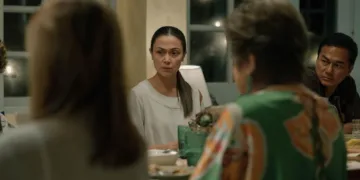
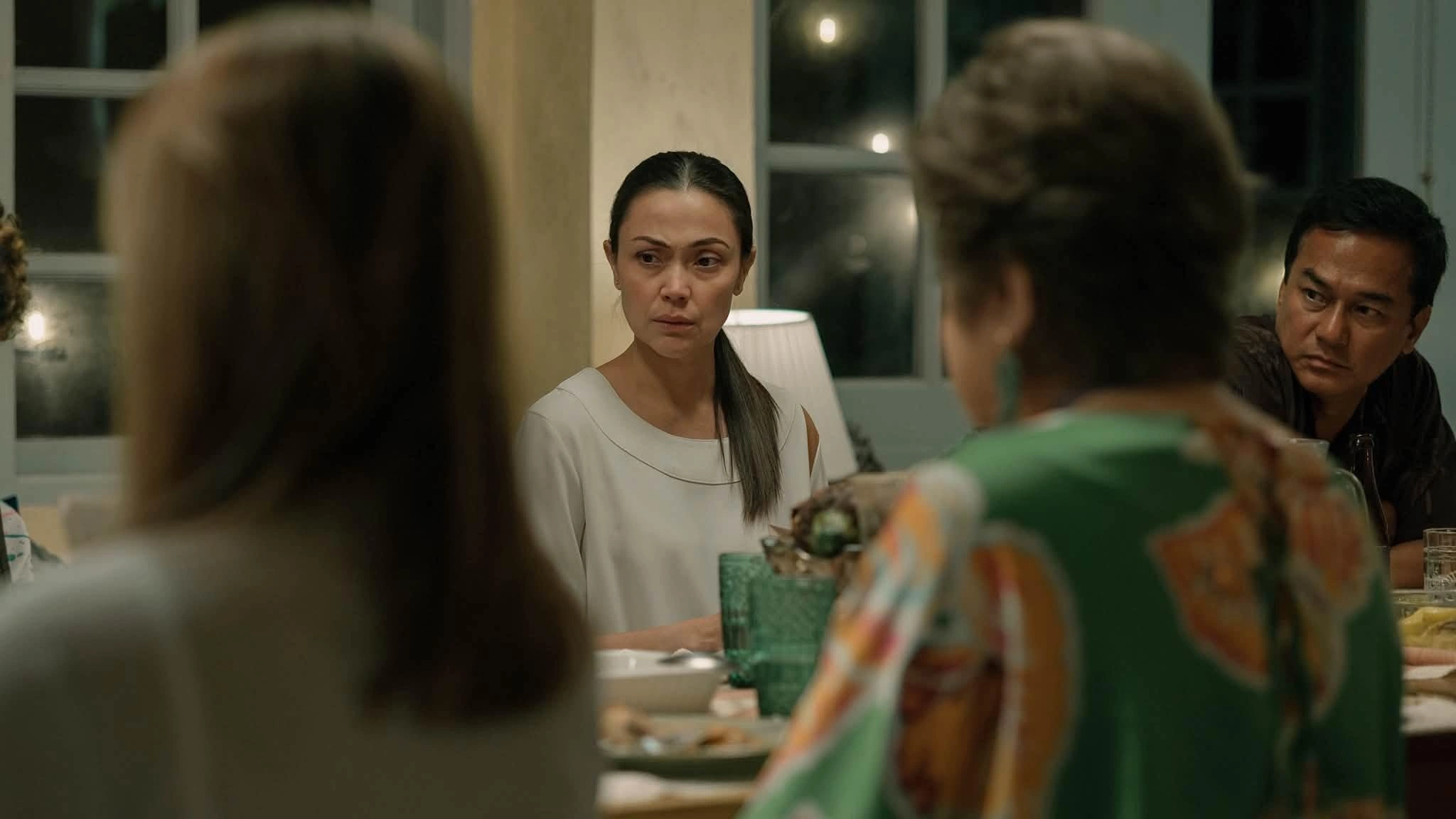
The reunion dinner turns the extended family into witnesses. Everyone remembers Paz through a different wound, grievance or excuse, and the long gathering makes clear that abandonment never belonged solely to mother and daughter. Relatives interrupt, eat, take sides and reopen arguments with the efficiency of people who have been rehearsing them privately for years.

Mattias gives that gathering its sharpest complication. Gabriel Lazaro plays him as twitchier and less defended than Joanne. He gets stoned to retreat from Paz’s volatility and proves willing to challenge her stories about the life she claims to have led. His presence prevents Joanne from preserving a simple image of Paz as a woman incapable of motherhood. Paz did stay for another child. The fact does not absolve her. It makes the absence harder to classify.
Joanne and Mattias become opposing responses to emotional vacancy. She built discipline, work and distance. He shows damage closer to the surface. Joanne’s writing project about a sister searching for her brother quietly changes meaning once Mattias enters her life, one of the screenplay’s cleaner structural ideas.
Her professional instinct is to reshape narrative until it works. Mattias is living proof that family history resists revision. Several relatives remain thinly drawn beside that central triangle. They function best around the table, where glances and interruptions turn the family into a jury that cannot agree on the charge.
No Clean Rewrite
The film grows shakier as its emotional subjects accumulate. Abandonment, illness, psychological distress, career pressure, parental expectation and long-buried truths begin competing for space across a 112-minute running time. Some revelations arrive with the unmistakable pressure of screenplay engineering, especially once the earlier comic register has been discarded.
Laurel finds greater authority when he resists catharsis. Joanne leaving a confrontation rather than finishing it, or holding silence while Paz tries to reclaim maternal ground, carries greater force than another explosive exchange. Sta. Maria understands that resentment maintained for 27 years would rarely present itself as a perfectly articulated speech. It sits in posture, delay and the refusal to answer.
The final movement respects that history cannot be repaired by acquiring better information about it. Joanne can understand Paz’s fear without retroactively receiving the mother she lacked. Paz can expose pain without transforming cruelty into innocence. Their relationship becomes clearer while remaining damaged. That distinction gives the film its most mature moral image: two people standing within the same history, finally able to see each other, with the missing years still occupying the space between them.
This, That and Everything in Between premiered globally on Netflix on August 13, 2026. The Filipino drama focuses on a successful TV writer whose life is turned upside down when her estranged, self-absorbed actress mother returns home after 27 years, forcing them to confront long-buried secrets and their dysfunctional family dynamic.
Where to Watch This, That and Everything in Between (2026) Online


Full Credits
Title: This, That and Everything in Between
Distributor: Netflix
Release date: August 13, 2026
Rating: UA
Running time: 112 minutes
Director: Cholo Laurel
Writers: Cholo Laurel, Cody Abad
Producers and Executive Producers: Gale Osorio, Noemi Peji
Cast: Jodi Sta. Maria, Agot Isidro, Gardo Versoza, Ruby Ruiz
Director of Photography (Cinematographer): Not Available
Editors: Shania Sumergido
Composer: Jaimie Pangan
The Review
This, That and Everything in Between
The strongest scenes let Joanne and Paz occupy the same room without pretending they inhabit the same history. Jodi Sta. Maria’s silences give abandonment physical weight, while Agot Isidro turns Paz’s aggression into a defensive performance that occasionally cracks at the edges. Cholo Laurel loses precision when thunder, revelations, and stacked family crises start underlining emotions the actors have already made clear. Still, the refusal to convert understanding into automatic reconciliation gives the final stretch unusual moral intelligence. Some wounds can be illuminated without being repaired.
PROS
- Sta. Maria’s controlled, expressive performance
- Isidro’s volatile portrayal of Paz
- Complicated mother-daughter dynamic
- Mattias deepens the family conflict
- Refuses easy reconciliation
CONS
- Uneven comedy in the opening stretch
- Melodrama becomes overloaded
- Supporting relatives lack depth
- Emotional cues can feel overemphasized