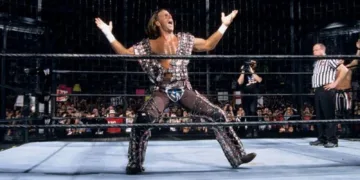



























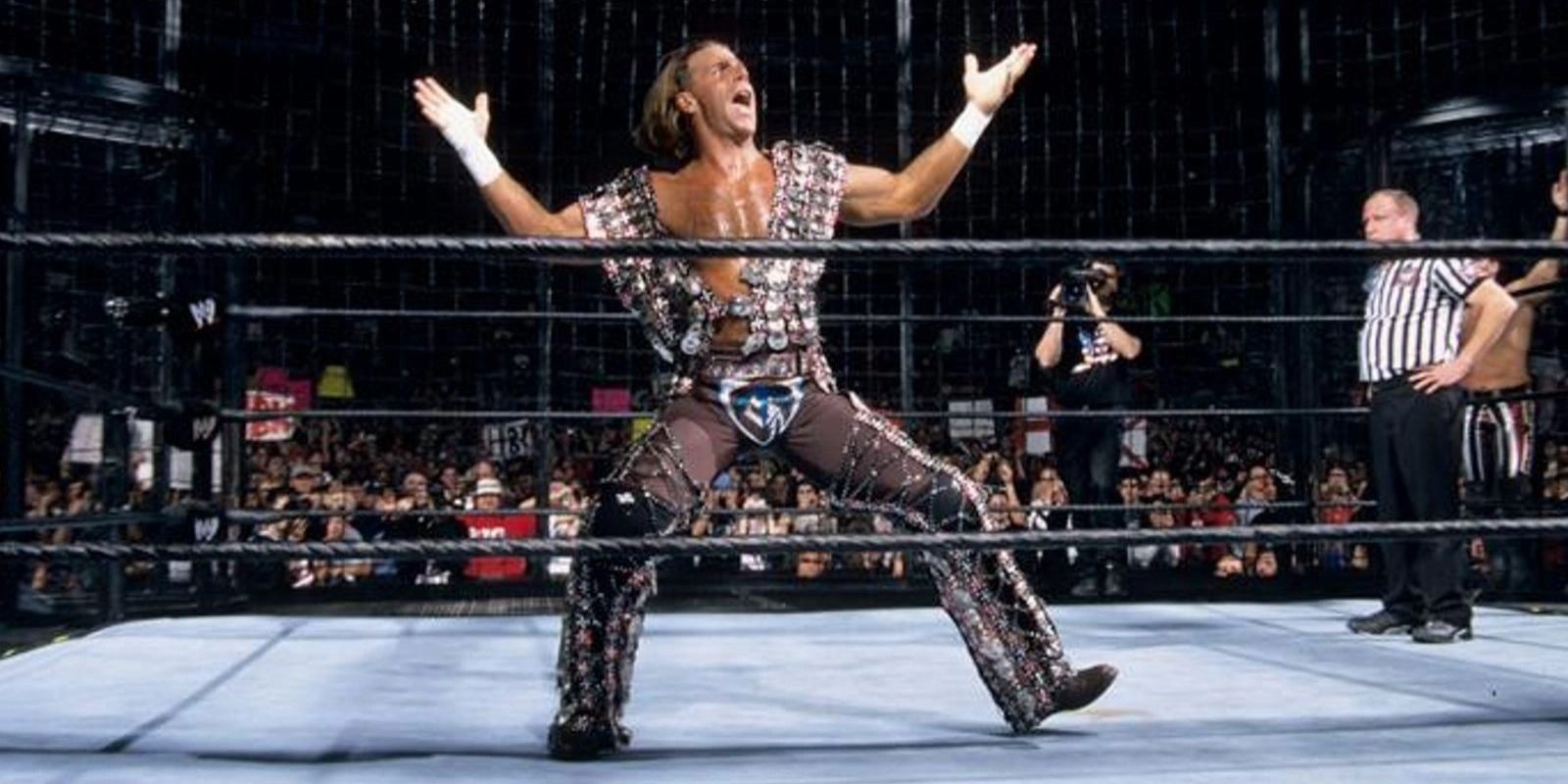

Shawn Michaels spent the 1990s learning how easily talent can become a form of isolation. The Heartbreak Kid: Becoming Shawn Michaels finds him decades later inside WWE’s Performance Center, surrounded by younger wrestlers who seek the knowledge of a man many of his contemporaries once could barely tolerate.
That distance between the two versions of Michaels gives the documentary its reason to exist. WWE has told his biography many times before: Michael Hickenbottom discovers wrestling, forms the Rockers with Marty Jannetty, smashes through the partnership during the famous Barbershop segment, becomes a singles star, joins The Kliq, wins championships, self-destructs, finds religion, returns in 2002, and retires after his second WrestleMania encounter with The Undertaker. The history is familiar. The older man is less so.
Watching Michaels operate NXT brings a quiet melancholy to that familiar chronology. Every young wrestler standing beside him becomes evidence of time passing. The body that once seemed designed to absorb punishment now belongs to someone teaching others how to survive it.
Teaching Pain
The Performance Center footage carries an intimacy that the historical recap often lacks. Michaels speaks to Ilja Dragunov during Dragunov’s long injury absence with the recognition of someone who knows what happens when a wrestler’s body suddenly interrupts the life built around it. His own back once forced him away from wrestling. Here, that old suffering becomes useful.
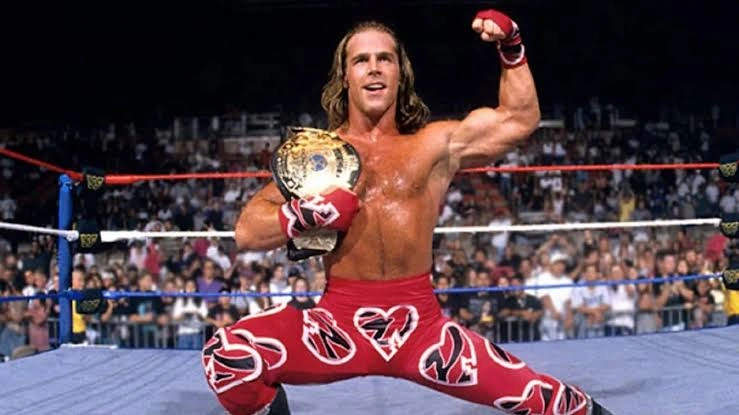
The same instinct appears during rehearsal for Ethan Page’s chair attack on Je’Von Evans. Michaels places his own head inside the chair so Page and Evans can understand how the spot should work. He is nearly sixty, yet his first solution is still to offer his body.
There is something sad and strangely beautiful about that gesture. Wrestling taught Michaels to communicate through physical risk long before he learned how to communicate through patience.
His relationship with Page sharpens the idea. Michaels privately observes that Page resembles the person he once was, while his encouragement of Evans after a main-roster appearance feels almost parental. He gives Evans his number and tells him to call whenever he needs anything. The younger Michaels once lived inside a business built around distrust, ego, and territorial loyalty. The older Michaels appears determined to leave somebody else a safer room.
Paul Levesque helps bridge those lives. His recollections of Michaels’ 2002 comeback and his later move into developmental wrestling carry the ease of a friendship that survived periods when survival itself was apparently uncertain. Their playful WrestleMania Axxess interaction keeps the relationship from hardening into corporate testimony.
History With Its Teeth Removed
The documentary becomes less persuasive whenever WWE begins protecting its own mythology. Marty Jannetty is essential to the creation of Shawn Michaels, yet he becomes little more than the person standing beside him before singles fame. The Rockers breakup remains visually unforgettable, but Jannetty himself is absent from the interviews. A partnership becomes a footnote because the film already knows which man history selected.
The treatment of The Kliq is similarly gentle. Kevin Nash, Scott Hall, Sean Waltman, Michaels, and Levesque are remembered through loyalty and ambition, while the group’s reputation for backstage influence barely troubles the surface. The Madison Square Garden Curtain Call disappears completely.
Bret Hart and The Undertaker briefly puncture the varnish. Hart remembers Michaels with brutal clarity. Undertaker admits how deeply he disliked him during those years. Their hostility raises the question the film repeatedly avoids: what, specifically, made Michaels so poisonous to people around him?
The Montreal Screwjob receives the same institutional softening. Vince McMahon’s contractual conflict with Hart receives little weight, leaving the betrayal strangely cleansed of the machinery that produced it.
Then there is 2018. Michaels’ Saudi Arabia return, eight years after the retirement presented here with almost sacred finality, simply vanishes. Erasing an uncomfortable chapter does not restore the purity of the previous ending. It merely leaves a suspiciously clean patch in the timeline.
The Footage That Refuses to Behave
Older footage sometimes escapes the documentary’s control. During a 1996 hospital visit, Michaels awkwardly lets sick children hold his championship belt and admits he does not quite know how to handle the moment. There is no polished legend in his posture. He looks uncertain, almost frightened by the emotional responsibility being placed in his hands.
Elsewhere, a photo shoot captures him trying to force charisma through visible exhaustion. He tells himself to love the camera while appearing increasingly unable to tolerate its gaze. After another match, he lies flat on his back and begs for a day off, then reduces the request to an hour.
Those fragments contain a darker film. Fame becomes repetition. Performance becomes obligation. The body keeps answering demands until it cannot.
This is where Michaels’ later life gains its real gravity. Sobriety, Christianity, fatherhood, friendship, and NXT do not erase the earlier man. They sit beside him. When the present-day Michaels steadies another wrestler through injury or volunteers his own head during rehearsal, the past quietly occupies the room with him.
Becoming Shawn Michaels frequently prefers the monument to the person. Yet the camera occasionally catches something the monument cannot contain: an exhausted wrestler asking for one hour, an older coach offering his body again, and a life spent learning that survival sometimes begins after the applause stops.
The Heartbreak Kid: Becoming Shawn Michaels premiered on April 13, 2026, and is available for streaming exclusively on Peacock. The feature-length sports documentary provides an intimate look at the life and career of WWE Hall of Famer Shawn Michaels, chronicling his rise to stardom, personal battles, and triumph as he guides the next generation of talent as head of WWE’s NXT brand.
Where to Watch The Heartbreak Kid: Becoming Shawn Michaels (2026) Online


Full Credits
Title: The Heartbreak Kid: Becoming Shawn Michaels
Distributor: Peacock, WWE Network
Release date: April 13, 2026
Rating: TV-14 / TV-MA
Running time: 1 hour 36 minutes
Director: Matt Braine
Writers: Matt Braine
Producers and Executive Producers: Ben Houser, Lee Fitting, Paul Levesque, Marc Pomarico
Cast: Shawn Michaels, Mark Calaway, Paul Levesque, Bret Hart, Kevin Nash, Matrick Belton, Je’Von Evans, Trick Williams, Joe Hendry
The Review
The Heartbreak Kid: Becoming Shawn Michaels
The most revealing Shawn Michaels appears when the official mythology falls silent: testing a chair spot with his own body, speaking gently to injured wrestlers, or admitting exhaustion in old footage. Those moments suggest a life altered by pain, addiction, faith, age, and responsibility. The documentary keeps retreating from that complicated man into a cleaner WWE legend, skimming controversies that might explain why his transformation matters. Newcomers get an efficient biography. Longtime fans get fragments of a richer film that never fully emerges.
PROS
- Excellent NXT backstage footage
- Michaels is candid in archival moments
- Strong material with Paul Levesque
- Effective portrait of his mentorship
CONS
- Major controversies are sanitized
- Montreal framing feels selective
- Key career episodes are omitted
- Historical sections remain surface-level