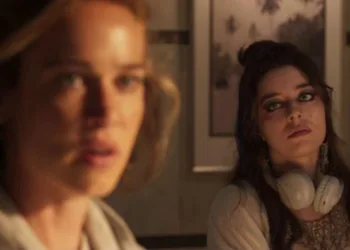










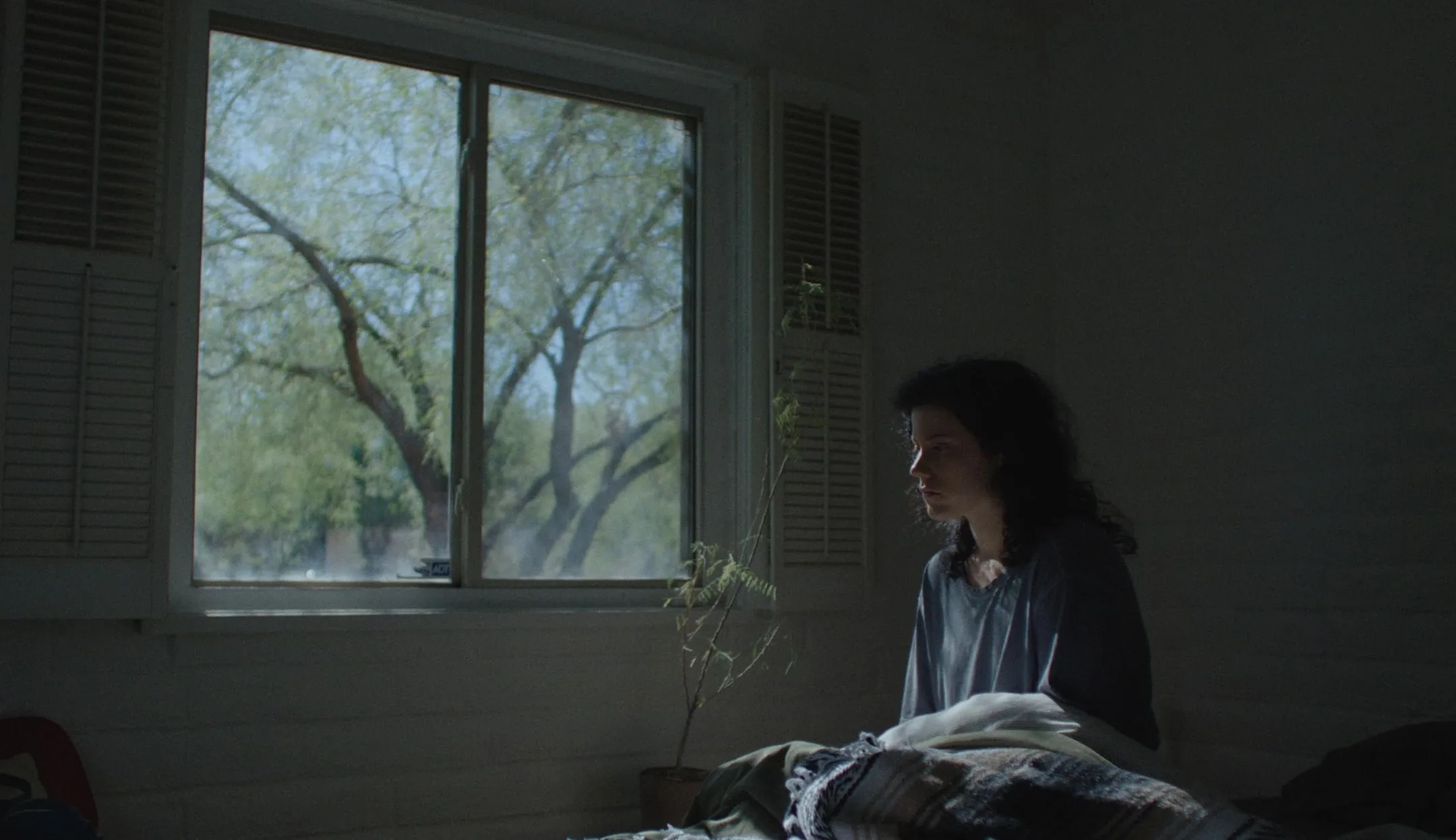

Parker returns home because her sister is dead, yet the town receives her with the indifference of a place that had already begun forgetting them both. Los Angeles had given her distance, auditions, acting classes, and a life built from borrowed lines. Arizona gives her Indiana’s voicemail, an empty house, and a final warning she ignored.
Zeshaan Younus shapes I’ve Seen All I Need to See around that refusal of comfort. Indiana had been involved in some kind of dangerous transaction before her death, and a biker, a bearded stranger, and a threat delivered beside Parker’s bed suggest a criminal world close enough to touch. It flickers at the edge of the frame, faint and intermittent, because Parker is less interested in solving a murder than in reopening a relationship she allowed to die early.
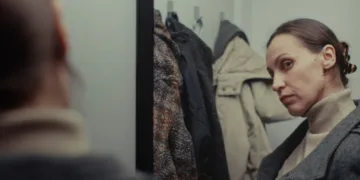
Her return carries the weight of punishment. She sits in Indiana’s home, searches through her clothes, and puts on her jacket as if fabric could restore contact. Home offers no childhood refuge, no room preserved by affection. It offers evidence. Every object says that Indiana stayed while Parker escaped.
Wearing the Dead
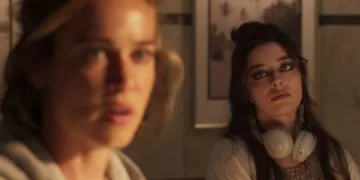
Renee Gagner’s performance lives in the silence between intention and movement. Parker often seems to decide on an action before her body obeys. In close-up, grief does not erupt. It settles across her face like dust. When anger finally breaks through, it feels less like release than contamination.
The film’s sharpest idea is that mourning can become imitation. Parker drinks, smokes, enters the same hostile spaces Indiana occupied, and slowly adopts her sister’s appetite for danger. At the bar, doom metal tears through the quiet while Parker gets wasted and pulls a knife on strangers. The scene is the film’s loudest pulse, yet it restores nothing. It shows how quickly pain can borrow the gestures of the person it misses.
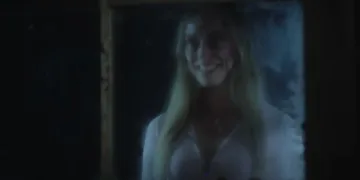
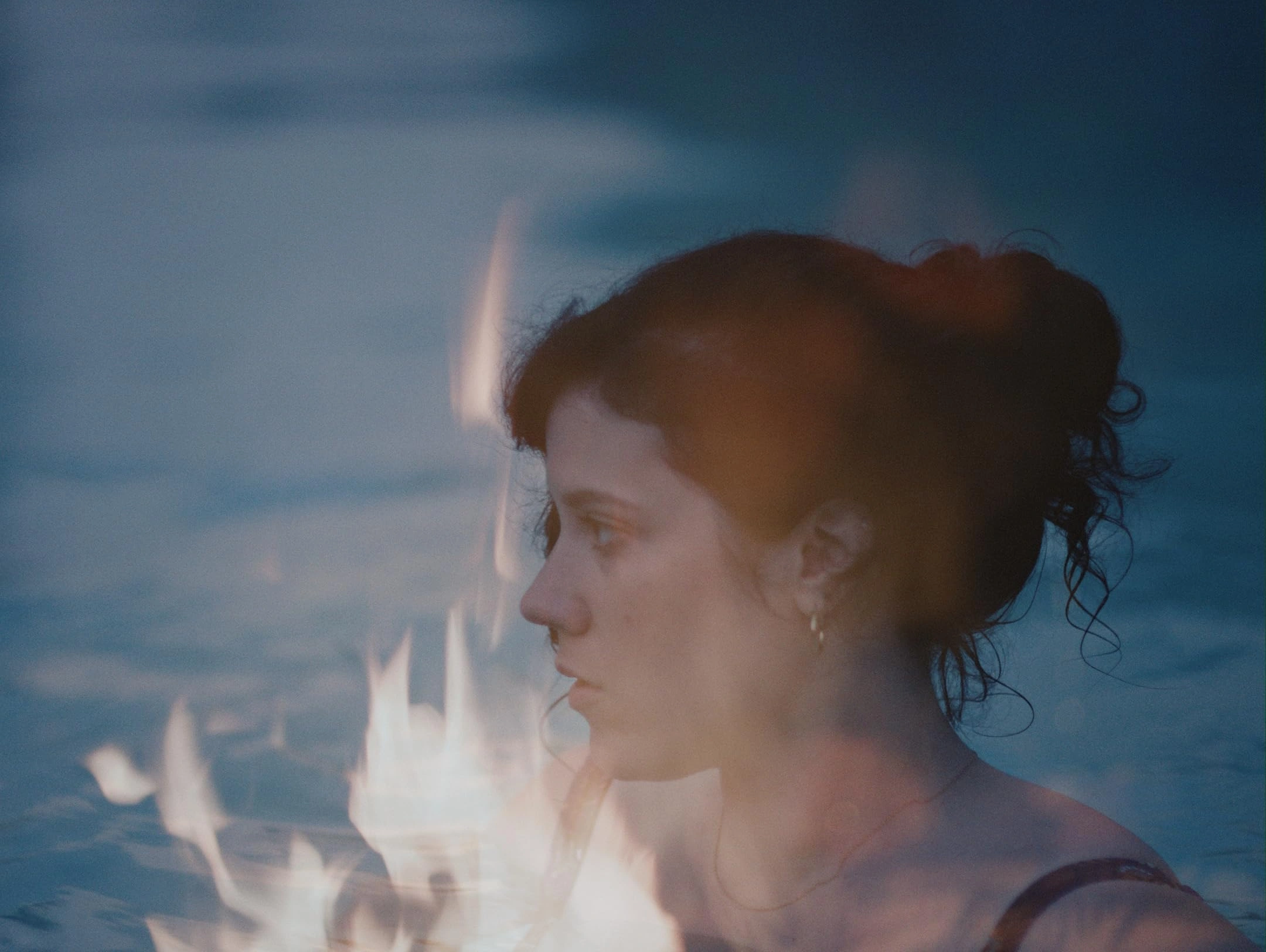
Younus repeats compositions associated with Indiana, placing Parker near cigarettes, fire, and shadows that swallow the edges of her body. Memory becomes physical. Indiana appears through dreams, fragments, and encounters that may be imagined, remembered, or supernatural. The film refuses to identify the border. Parker’s question, “Why can I still feel you?”, needs no answer. Feeling is the problem.
There is something frightening in the possibility that Parker can only understand her sister by becoming self-destructive enough to resemble her. Grief often asks for closeness. Here, closeness looks like possession.
A Frame Without Air
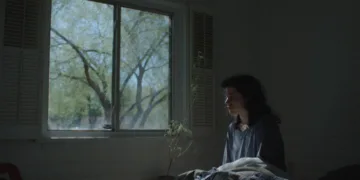
Justin Moore’s cinematography compresses the film into a square aspect ratio, turning stairways, underpasses, doorframes, and bare rooms into small enclosures. Parker is rarely allowed to occupy an image freely. Architecture divides her, corners her, or leaves her facing a wall of negative space.
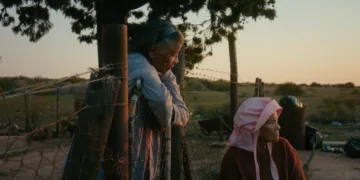
The desert appears to promise release when the delayed title card arrives roughly a third of the way through. Yet the Arizona horizon provides no freedom. Golden light falls across empty ground while wind and low ambient noise make the space feel watchful. The desert has distance without direction.
Younus contrasts rigid lines with the softer shapes of the sisters’ bodies. Their faces, shoulders, and hands seem temporary beside concrete, metal, and dry earth. Flesh bends. The town does not. Indiana could not leave it, and Parker’s return suggests that escape may have been geographical rather than emotional.
Sound gives this paralysis a second body. Long stretches of room tone, static-like interference, and low industrial rumbling press against scenes where almost nothing moves. The sudden violence of Civerous at the bar becomes startling because the film has trained the ear to expect absence. Silence here is never neutral. It waits.
Some images are so dark that attention turns into guesswork. That obscurity can feel honest, as if Parker cannot see the shape of her own loss. It can also feel mannered. Sorrow does not become deeper merely because the lamp has been switched off.
Stillness After Meaning
The film’s patience is both its method and its wound. Repeated scenes of drinking, smoking, staring, and wandering capture grief as recurrence. Parker does not move forward because mourning rarely respects dramatic structure. The same thought returns wearing a different hour.
Yet repetition loses force when every pause asks for the same reading. At 83 minutes, several close-ups remain long after Gagner has delivered their emotional content. The film holds until stillness starts resembling hesitation. A mystery built from Indiana’s deal, the bearded man, and the warning to leave town should deepen Parker’s knowledge of her sister. Instead, each clue dissolves into atmosphere.
Supporting figures arrive carrying pieces of Indiana’s life, yet few remain long enough to become people in their own right. Parker learns that Indiana was unstable, trapped, and involved with dangerous men, yet the film protects her mystery so fiercely that she risks becoming a collection of beautiful absences.
The return to routine near the end registers as a minute shift. Parker has not mastered grief, solved Indiana, or found peace. She has simply reached the point where memory no longer needs to seize every gesture. Some losses do not open a door. They loosen their grip by a fraction, and the body mistakes that fraction for morning.
The atmospheric independent noir drama I’ve Seen All I Need to See originally won the Grand Prize for Best Feature at its festival premiere in August 2025 before launching its limited theatrical rollouts in the United States and the United Kingdom earlier this spring. Audiences who missed its run on the big screen can currently rent or purchase the title digitally from home on platforms such as Apple TV and Amazon Prime Video. Shot through a non-linear, moody lens, the narrative follows a Los Angeles actor who journeys back to her desert hometown in a search for answers following the sudden, violent death of her estranged sister.
Where to Watch I’ve Seen All I Need to See (2025) Online





Full Credits
Title: I’ve Seen All I Need to See
Distributor: Bulldog Film Distribution, Apple TV, Amazon Prime Video
Release date: August 2025 (Flickers’ Rhode Island International Film Festival), April 17, 2026 (United States Limited Theater Release), May 1, 2026 (United Kingdom Theater Release)
Rating: Cert 15
Running time: 84 minutes
Director: Zeshaan Younus
Writers: Zeshaan Younus
Producers and Executive Producers: Zeshaan Younus, Trevor Dillon, Chris Heck, Matt Latham
Cast: Renee Gagner, Rosie McDonald, Sydney McCarthy, Nick Samson, John R. Smith Jnr.
Director of Photography (Cinematographer): Justin Moore
Editors: Matt Latham, Zeshaan Younus
Composer: Benjamin Doherty
The Review
I’ve Seen All I Need to See
I’ve Seen All I Need to See understands grief as repetition: the same cigarette, the same empty room, the same dead voice returning through static. Justin Moore’s compressed images and the film’s low sonic rumble give Parker’s sorrow a physical shape, while Renee Gagner sustains silences that the screenplay cannot fill. Yet stillness gradually hardens into inertia. The criminal mystery fades before it can deepen Parker or Indiana, leaving atmosphere to carry a burden too heavy for it. What remains is beautiful, oppressive, and only intermittently alive.
PROS
- Haunting square-frame cinematography
- Renee Gagner’s restrained performance
- Carefully layered ambient sound
- Potent visual echoes between the sisters
CONS
- Repetition weakens the emotional force
- The mystery remains underdeveloped
- Supporting characters lack dimension
- Long pauses often feel empty