






















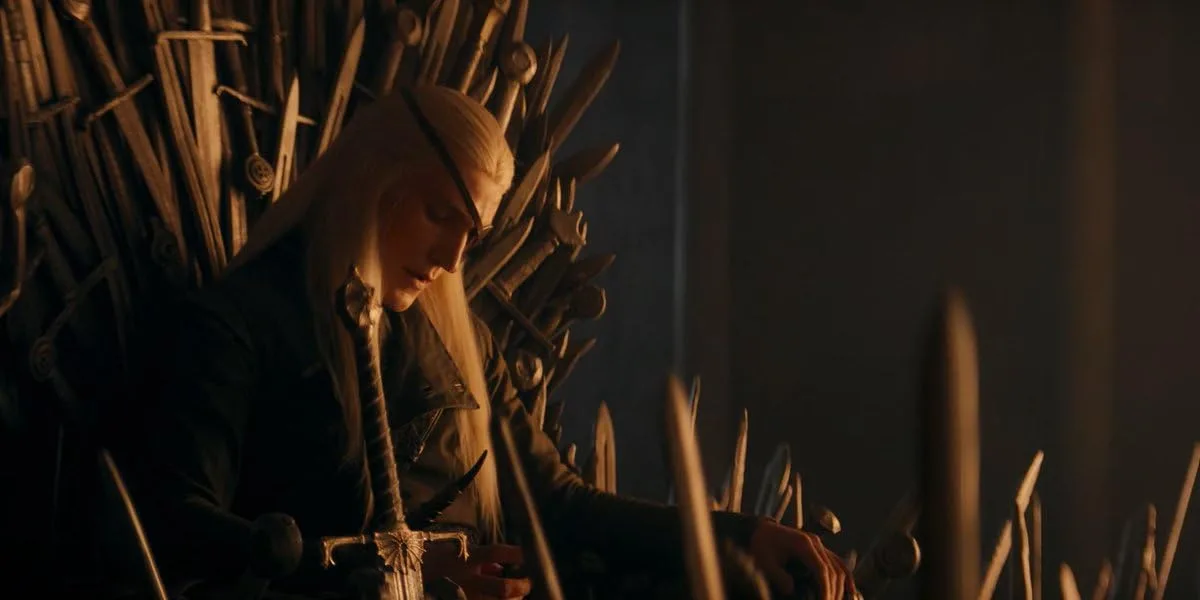

A dragon that brings its rider a burned sheep carcass should not be trusted with naval strategy. That is the first useful law of this Season 3 premiere, which arrives with a backlog of fire, grief, and unfinished business from last season. House of the Dragon has spent two seasons turning war into an approaching object. Here, war stops approaching. It becomes wet, loud, and badly managed.
The episode has the odd shape of a missing ninth chapter from Season 2, and that is both its strength and its problem. Ryan Condal’s script has no leisure. Loni Peristere’s direction barely gets a chance to breathe between Rhaena’s desperate claim on Sheepstealer, Alicent’s failed bargain in King’s Landing, Aegon’s escape with Larys, Daemon’s blood-soaked progress in the Riverlands, and the Battle of the Gullet. The premiere moves as if it has been told it is late for its own coronation.
That urgency helps. Season 2 often mistook hesitation for tragedy, placing people around tables so they could almost make decisions. Episode 1 gives those deferred choices bodies. Ships splinter. Dragons misread commands. Sons die in the water. Even Ramin Djawadi’s opening theme sounds heavier, with the drums landing like history has stopped embroidering and started marching.
Call it dynastic weather. Everyone thinks they are making plans, and the climate has other ideas.
The Sea Snake Remembers Himself
Corlys Velaryon has long been treated like a monument people keep promising to visit. Characters call him the Sea Snake, the greatest sailor alive, the man whose reputation was built across oceans and wars. The show has too often left Steve Toussaint standing near maps, grieving, advising, or staring into distance with the patience of a man waiting for his own legend to return from lunch.
The Gullet gives it back to him.
His early scene with Alyn over dragon water matters because it is blunt rather than sentimental. Corlys offers something like an apology, or the nearest version available to a man whose emotional vocabulary was packed away with his old trophies. Alyn does not melt. Abubakar Salim plays him with a hard, controlled resentment, the kind that does not need speeches because the body has already filed the complaint. When Corlys warns that rough seas lie ahead, the line is obvious. It works anyway because both men know the sea is the one subject on which Corlys can still be trusted.
The battle turns that trust into action. Corlys steering The Queen Who Never Was through the rocky Dragonstone Pass is the episode’s cleanest piece of character writing. The ship’s name carries Rhaenys into the fight without dragging the scene into memorial fog. The wheel in Corlys’s hands, the rocks closing around him, Lohar’s ships chasing through unfamiliar danger: this is grief expressed as seamanship. Very Westerosi, really. Therapy would have been cheaper, but less explosive.
Sharako Lohar enters as a force of disruption, part tactician, part pirate theater. Abigail Thorn gives her a sharp physical presence, especially in the hand-to-hand fight aboard Corlys’s ship. She commands attention before she draws a blade. The script gives her a grudge with too little stored pressure. Her decision to burn High Tide is strong because it understands Corlys as a man whose home is also his autobiography. The personal rivalry itself feels underwritten, like a feud introduced at the wedding feast and settled before dessert.
The fight between Lohar, Corlys, and Alyn is messy in the right way. These are not tourney knights arranging themselves for honor. They hack, shove, slip, and survive. Alyn’s killing blow gives the Velaryon family drama its first true transfer of power: the bastard son saving the father who left him outside the walls of legitimacy. The tragedy is that Corlys earns Alyn’s respect at the exact moment his seat burns behind him.
A house can win a battle and lose its furniture. In Westeros, that counts as moderate success.
Dragons Are Bad Theology
The premiere returns to one of the franchise’s most fertile ideas: Targaryen power is built on a misunderstanding. They do not control dragons. They negotiate with appetite from a very unsafe distance.
Rhaena’s claim on Sheepstealer makes that idea physical. Phoebe Campbell gives Rhaena’s desperation a raw edge in the opening stretch below the Eyrie, where cold and hunger strip dragonriding of its royal glamour. She does not look like a princess fulfilling destiny. She looks like a neglected daughter trying to force the universe to notice her. That difference matters.
Sheepstealer’s design is excellent visual argument. The noble dragons tend to carry a ceremonial beauty, all dangerous elegance and imperial silhouette. Sheepstealer looks like a wound with wings. Thorny, ragged, ugly, and strangely touching, he feels closer to an animal than a dynasty. His burned sheep offering to Rhaena is funny, grotesque, and sweet in the way a cat dropping a dead bird at your feet is sweet. One accepts the gift. One does not build a military doctrine around it.
Then Rhaena flies into battle, and the episode’s theology collapses into accident. Sheepstealer attacks Velaryon ships, turns on friendly dragons, and refuses to make moral distinctions in the middle of a naval war. This is the episode’s best and most frustrating idea. Best, because it makes dragons frightening again. Frustrating, because the series has leaned hard on catastrophic accident before. Luke died because Aemond could not control Vhagar. Now Jace dies partly because Rhaena cannot control Sheepstealer. Two sons, two dragons, two disasters shaped by riders who discover too late that command is a costume.
Call it accidental feudalism: history changes because someone intended a gesture and committed a massacre.
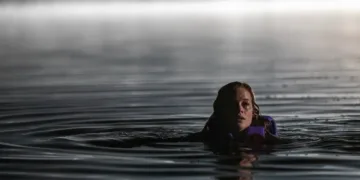
Jace’s death still lands. Harry Collett has not always been given enough room to make Jace feel as vital as his position in the war demands, but the final sequence gives him a tragic clarity. He sees Rhaena on Sheepstealer. He hesitates. Vermax is struck and dragged into the sea. The image of the dragon sinking has a sickening weight, almost worse than the arrows that follow. Jace survives the crash long enough for hope to make a fool of us, then the Myrish archers finish him.
The cruelest part is that his death comes from recognition. He does not see a battlefield problem. He sees family. In this universe, that is often the most dangerous possible vision.
Queens, Sons, and Locked Doors
Rhaenyra begins the episode in the high of apparent opportunity. Alicent has offered a path into King’s Landing. Aemond can be lured away. The capital may fall without the bloodbath that has haunted her decisions since the first crown was placed on her head. It is a seductive idea because it flatters the part of Rhaenyra that still wants history to be reasoned with.
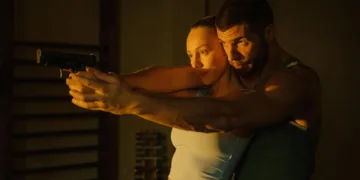
Her son does not share the fantasy. Jace questions Alicent’s motives, reads danger in the timing of the Triarchy attack, and then commits the episode’s strangest act of protective treason: he orders the Queensguard to lock Rhaenyra in her chambers.
The scene is thematically sharp and logically wobbly. A queen being imprisoned by her own side because the men around her decide she is too valuable to obey is very much the point. The patriarchy in House of the Dragon is not a council position. It is weather, architecture, muscle memory. Rhaenyra can wear the crown and still find the door barred by a knight who has somehow decided a prince’s panic outranks the queen’s command.
Still, one question sits there like a goblet no one wants to drink from: why does he obey Jace? The answer is probably dramatic convenience, that old courtier who never ages.
Emma D’Arcy nearly makes the choice work through sheer force of performance. Rhaenyra tearing at her queenly dress while wearing riding leathers gives the scene its proper symbolic violence. She is both monarch and prisoner, both dragonrider and ornament. D’Arcy plays her anger with a bitter precision, as if Rhaenyra has discovered that even her own faction can convert reverence into containment.
The episode places that humiliation beside Jace’s death with a nasty intelligence. Her final living exchange with him is not tender. It is a struggle over authority. He goes to war after denying her the same right, then dies in a battle she was not allowed to enter. The grief coming for Rhaenyra will not be clean. It will arrive carrying insult, guilt, and the knowledge that her cause keeps needing men to explain her own survival to her.
That is not motherhood as softness. That is motherhood as a political trap with a nursery attached.
Green Rot, Bad Faith, and a Kiss No One Needed
King’s Landing offers its own little study in institutional decay. Alicent returns from Dragonstone expecting a board she can still play, only to find the pieces have developed hobbies. Aegon is gone. Aemond sits in power. The city she promised to surrender is now under the control of the son least likely to treat mercy as anything except a design flaw.
Olivia Cooke gives Alicent a familiar mixture of calculation and horror, which remains one of the show’s most reliable emotional engines. Alicent is trying to betray her son for the sake of peace, or maybe for the sake of penance, or maybe because every path left to her requires a sin and she has decided this one comes with better lighting. The scene with Aemond turns that calculation rancid. She offers maternal affection to push him toward Harrenhal. He receives it as something closer to erotic invitation.
The kiss is meant to make the audience recoil. Mission accomplished, with all the subtlety of Vhagar landing on a greenhouse. Ewan Mitchell plays Aemond as a young man whose power has outgrown every human category around him. Son, brother, regent, king, weapon: he slides between them with reptilian certainty. The trouble is that Alicent has already been punished, cornered, judged, and shamed by the men around her so many times that this beat feels less like revelation and closer to repetition with extra perfume.
Aegon’s capture with Larys gives the Green side a different kind of instability. Tom Glynn-Carney’s broken king remains one of the show’s great miseries, a man whose body has become a ruined argument for divine right. Larys revealing Aegon’s identity to Black loyalists is practical, cowardly, and entirely in character. Survival, for Larys, is not a value. It is an art form performed with a limp.
Elsewhere, Ormund Hightower enters with polished ambition and a glimpse of Tessarion nearby, a neat promise that Daeron’s shadow is finally approaching the war. Criston Cole and Gwayne Hightower offer a rougher moral register. Gwayne still believes knighthood should mean something when a village girl flees from one of their tents. Cole, hollowed out by dragon war, treats honor like an obsolete language.
“Doom and ruin surround us,” Cole tells him. This is probably true. It is also exactly the sort of thing a man says when he would rather philosophize than clean his own camp.
Blood in the Riverlands, Whispers at Harrenhal
Daemon’s Riverlands material is brief, but Matt Smith makes the most of blood and steel. He has always understood Daemon as a man who becomes simpler in violence. Court makes him slippery. Marriage makes him restless. A battlefield gives him grammar. Blood on his face, sword in hand, Daemon looks almost peaceful, which is never good news for anyone within riding distance.
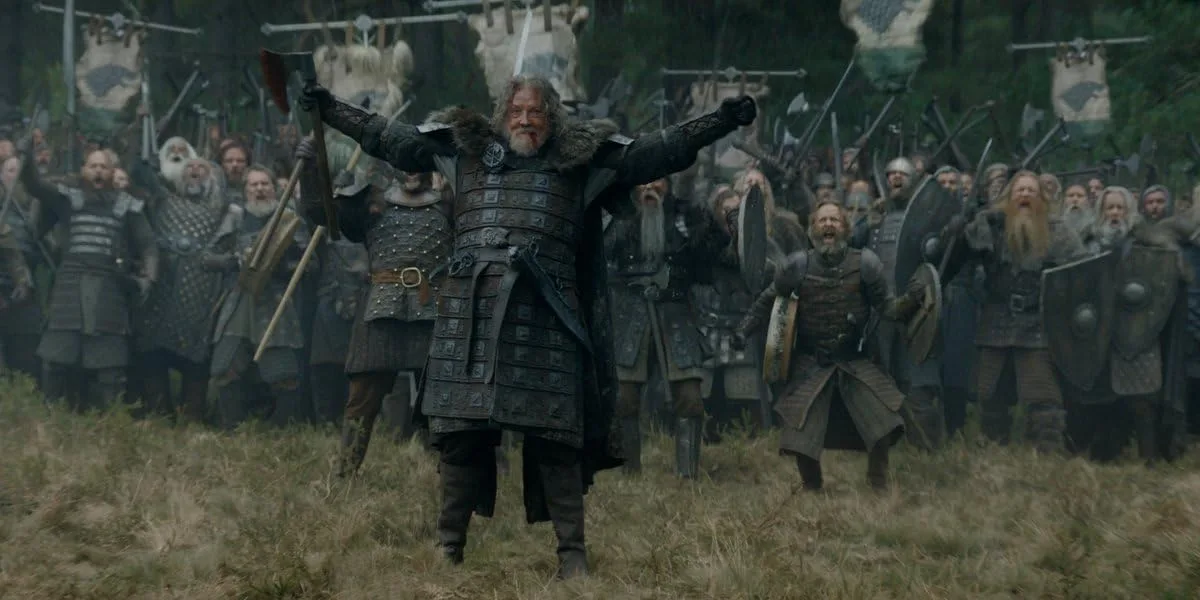
The arrival of the Winter Wolves gives the episode one of its best jolts. Roderick Dustin tossing Jason Lannister’s head at Daemon’s feet has the blunt theatricality of old Westeros, before every betrayal needed three private conversations and a candlelit apology. Tommy Flanagan looks instantly right in this world, all weathered menace and northern fatalism. The Starks have entered the war through older men who have already made their bargain with death. That changes the texture of Rhaenyra’s cause. It gains ice.
The Lannisters take a beating from both ends of the episode, with Jason dead in the Riverlands and Tyland thrown into the Gullet during Lohar’s ruthless maneuvering. There is comedy in that, the expensive kind. Lions do poorly around dragons, wolves, pirates, and apparently water.
Near Harrenhal, the Dragonseeds wait for Aemond and Vhagar, which creates one of the premiere’s tactical irritations. Ulf, Hugh, and Addam sitting out the Gullet makes sense as bait for Aemond, yet the episode itself shows the cost of that choice. Jace and Baela fly into a massive naval crisis with too little support, while the adult dragonriders stand near cursed architecture waiting for a prince who has not taken the bait.
Ulf’s line about respect coming from “the big dragon” is the important part. It states the Targaryen disease in tavern language. Power does not refine people here. It gives their worst thoughts better transportation. Hugh’s silence beside him feels heavier, especially with his family history and the moral unease already visible in his face.
Alys Rivers and the strange pull of Harrenhal keep the supernatural thread alive without turning the episode into a lore lecture. The Isle of Faces, the green men, the Old Gods, the sense that dragons may be waking older forces beneath the political war: these details matter because they remind us that Westeros is not merely a chessboard. It is haunted ground. The players keep moving pieces across it, never asking what the board wants.
The premiere works best when it treats control as the grand delusion of noble houses. Corlys controls the sea until his home burns. Rhaenyra controls her faction until her son locks the door. Rhaena controls a dragon until the dragon edits the plan. Alicent controls affection until Aemond makes it grotesque. That is the Dance: everyone speaks of bloodlines, and the animals keep writing the footnotes.
The third season premiere of the epic fantasy drama television series House of the Dragon, titled “Salt and Sea, Fire and Blood,” officially debuted on June 21, 2026. Viewers can watch the episode globally on HBO and stream it on Max. The narrative tracks the escalating Targaryen civil war, culminating in the brutal and devastating naval Battle of the Gullet between the opposing factions.
Where to Watch House of the Dragon Season 3 Episode 1 Online






Full Credits
Title: House of the Dragon Season 3, Episode 1 (“Salt and Sea, Fire and Blood”)
Distributor: HBO, Max
Release date: June 21, 2026
Rating: TV-MA
Running time: 64 minutes
Director: Loni Peristere
Writers: Ryan Condal, George R. R. Martin
Producers and Executive Producers: Ryan Condal, George R. R. Martin, Sara Hess, Melissa Bernstein, Kevin de la Noy, Vince Gerardis, David Hancock, Philippa Goslett, Íde O’Rourke, Danny Gulliver, Pam Fitzgerald, Daniel S. Kaminsky, Miguel Sapochnik
Cast: Matt Smith, Emma D’Arcy, Olivia Cooke, James Norton, Steve Toussaint, Fabien Frankel, Matthew Needham, Sonoya Mizuno, Tom Glynn-Carney, Ewan Mitchell, Harry Collett, Phia Saban, Bethany Antonia, Jefferson Hall, Abubakar Salim, Clinton Liberty, Phoebe Campbell, Kurt Egyiawan, Freddie Fox, Gayle Rankin, Kieran Bew, Tom Bennett, Joplin Sibtain
Director of Photography (Cinematographer): P. J. Dillon
Editors: Crispin Green
Composer: Ramin Djawadi
The Review
House of the Dragon Season 3 Episode 1
The premiere gives war the shape of a storm: ships crack, dragons misfire, sons die, and every claim of control looks a little sillier by the minute. The Battle of the Gullet is grand, vicious television, with Corlys finally treated like the legend people keep describing. Yet the episode keeps leaning on accident as destiny, which weakens some of its tragedy. Rhaenyra trapped in her room while history eats her son is sharp, absurd, and very Westerosi (bureaucracy with dragons).
PROS
- Spectacular Gullet battle
- Sheepstealer’s feral presence
- Strong Corlys and Alyn material
- Jace’s death lands hard
- War feels immediate again
CONS
- Repeated dragon-control tragedy
- Rhaenyra confinement strains belief
- Lohar rivalry needed setup
- Alicent and Aemond kiss feels forced
- Dragonseed tactics feel odd