




























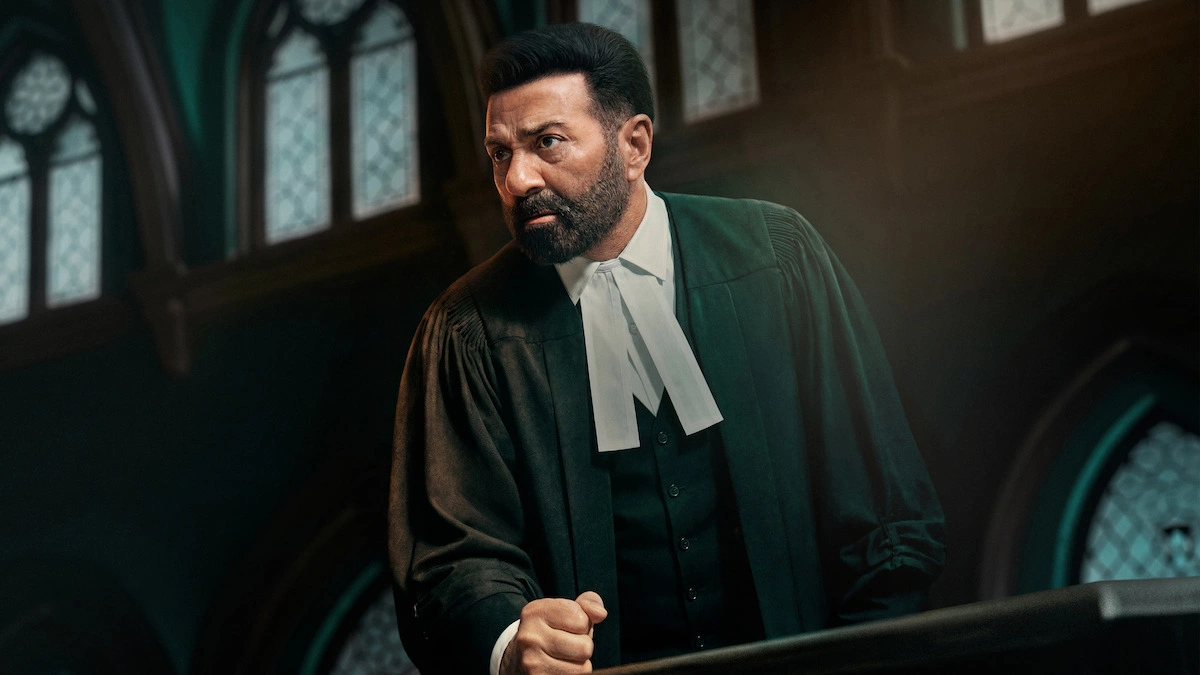

Hindi courtroom dramas have long treated the law as theatre. The judge supplies the stage, the witness box provides the spotlight, and the star arrives with a speech capable of overpowering both evidence and procedure. Siddharth P. Malhotra’s Ikka inherits that tradition through Sunny Deol, whose history with legal melodrama makes every raised voice and clenched fist carry the memory of Damini. The film knows this. It even pauses for a reference to the famous “dhai kilo ka haath” line, as though acknowledging the lineage excuses its dependence on it.
Deol plays Arjun Mehra, a celebrated defence lawyer whose uninterrupted winning streak has earned him the nickname Ikka, the ace. His success supposedly comes with strict principles. He accepts clients he believes are innocent and views the law as public service rather than professional conquest. That reputation faces its test when he is forced to defend Shouryamann Gaur, played by Akshaye Khanna, the wealthy son of aspiring politician Harshvardhan Gaur.
Shouryamann stands accused of sexually assaulting and grievously injuring Soma Mittal after meeting her at a nightclub. She is found covered in blood after being pushed from a moving car. His vehicle has been professionally cleaned, a witness identifies him, and his wife Gauri supplies the alibi holding his defence together. The case offers the right ingredients for a tense legal mystery. Ikka keeps reaching for the megaphone instead.
The Victim Leaves Her Own Story
The screenplay’s strongest question concerns Arjun’s moral compromise. He does not trust Shouryamann, yet private history binds the two men together. Defending him requires Arjun to place personal loyalty beside the ethical code that has shaped his public identity. Sunny Deol handles this conflict best during quieter conversations, particularly when Arjun sits with his wife Avantika and attempts to explain a decision he can barely justify to himself.
Those restrained scenes suggest a useful variation on Deol’s established screen persona. His authority comes from stillness, measured speech, and the knowledge that every person in the room already understands his power. Malhotra gradually abandons that approach. Arjun becomes the familiar incorruptible hero whose pain matters longer and louder than anybody else’s.
Soma’s assault launches the plot, yet her perspective recedes while Arjun’s past, marriage, reputation, and sacrifice absorb the running time. Her mother demands justice, but the film grants greater dramatic weight to the turmoil of the lawyer defending the accused. This reflects an old habit in mainstream Hindi cinema, where violence against a woman becomes the test through which a male hero proves his virtue. The victim supplies the wound. The star receives the moral arc.
Dia Mirza gives Avantika enough composure to suggest a fuller domestic conflict, especially when she influences Arjun’s decision to take the case. Once that choice is made, the script leaves her with little to do. Ikka repeatedly introduces women whose decisions matter, then returns the narrative to the men who interpret those decisions for them.
A Trial Built From Reversals
The courtroom material initially creates a productive balance between Arjun, Shouryamann, and public prosecutor Madhura Banerjee. Madhura is a government-appointed lawyer facing her former mentor, a man who has turned legal victory into personal mythology. She possesses the stronger evidence. He possesses experience, confidence, and a screenplay determined to keep an ace hidden in his sleeve.
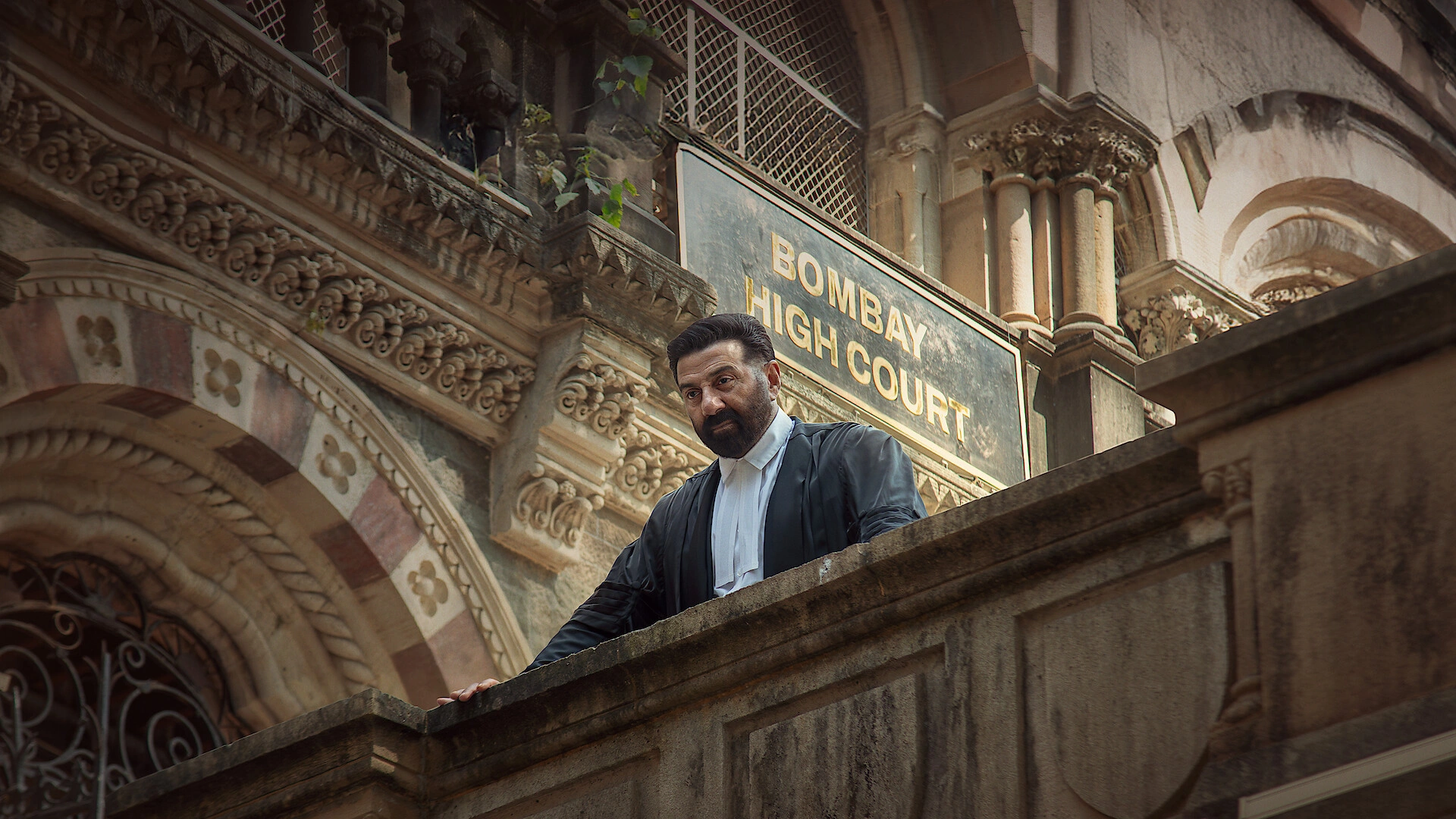
Tillotama Shome gives Madhura a nervous physical rhythm without losing the character’s intelligence. Her pauses before addressing the court, hurried preparation, and uncertainty around Arjun establish the pressure of arguing against someone she once admired. Shome’s grounded delivery also exposes the film’s tonal confusion. One scene asks Madhura to confront a brutal assault case. Another suddenly gives her an arm sling so she can participate in a “dhai kilo ka haath” joke. The sling soon vanishes, replaced by a handkerchief around her wrist. Legal continuity appears to have been overruled.
The early ambiguity around Shouryamann works because the evidence emerges gradually. His guilt feels likely without becoming certain. The second half replaces that uncertainty with a pile of concealed facts. During the final stretch, revelations about the attack, Arjun’s history, the culprit, and the defence strategy arrive so rapidly that the courtroom stops functioning as a place of argument. It becomes a delivery system for twists.
Strong legal dramas allow testimony, forensic detail, and cross-examination to alter the audience’s understanding of a case. Ikka withholds key information, then presents coincidence and fortunate timing as legal ingenuity. The promised ace resembles a card introduced after everyone else has shown their hand.
Star Mannerisms Over Legal Precision
Akshaye Khanna plays Shouryamann through a collection of familiar gestures: the lowered stare, the sideways glance, the twisted mouth, and the long pause before a contemptuous reply. These choices suit a privileged man accustomed to treating everyone around him as inferior. Their repetition turns menace into routine. His entrance into court receives musical fanfare and the visual grammar of a hero’s walk, an odd choice for a character accused of leaving a woman close to death.
Khanna and Deol appear to be performing in different branches of Hindi cinema. Khanna brings the polished cruelty of the modern streaming villain. Deol carries the moral thunder of the 1990s social drama. Shome belongs to a quieter legal film that watches how institutional pressure changes a person’s posture and voice. Malhotra places all three registers in the same courtroom without creating a stable tone.
The clash could have produced something sharp. Indian cinema has frequently combined procedural structure with melodrama, from reformist social films to contemporary thrillers that borrow the pace of global streaming dramas. Ikka borrows the surface of both traditions. Medical terminology such as “haploidentical” shares space with dialogue about spoiled rich sons, while forensic discussion gives way to star references and applause cues.
At 140 minutes, the film has room to develop Madhura’s strategy, Soma’s experience, Avantika’s conflict, and the evidence surrounding Shouryamann’s car. It spends much of that time returning to Arjun’s righteousness. The courtroom may belong to the law, but the film has already reserved its finest chair for the hero.
The Indian Hindi-language legal thriller Ikka premiered globally on Netflix on July 10, 2026. The story follows an incorruptible, celebrated defense lawyer who faces a severe moral crisis when he is forced to defend a reckless man from his past accused of attempted murder. Viewers around the world can stream the film exclusively on Netflix to see this high-stakes courtroom battle unfold.
Where to Watch Ikka (2026) Online


Full Credits
Title: Ikka
Distributor: Netflix
Release date: July 10, 2026
Rating: TV-MA
Running time: 122 minutes
Director: Siddharth P. Malhotra
Writers: Althea Kaushal, Mayank Tewari
Producers and Executive Producers: Siddharth P. Malhotra, Sapna Malhotra
Cast: Sunny Deol, Akshaye Khanna, Tillotama Shome, Dia Mirza, Sanjeeda Shaikh, Shishir Sharma, Akansha Ranjan
Director of Photography (Cinematographer): Mubeen Siddiqui
Editors: Nitin Baid
Composer: A.R. Rahman
The Review
Ikka
Ikka revives the star-driven Hindi courtroom drama, where legal argument, family honour, and heroic spectacle occupy the same witness box. Sunny Deol’s restrained early scenes hint at a sharper variation on his Damini persona, while Tillotama Shome gives Madhura’s nervous resolve genuine texture. Yet the 140-minute structure keeps abandoning the case for Arjun’s suffering, then compresses its largest revelations into a frantic final stretch. Akshaye Khanna’s theatrical menace and the “dhai kilo ka haath” tribute turn a grave trial into fan service. The ace arrives after the game has lost its rules.
PROS
- Tillotama Shome’s grounded performance
- Strong initial moral dilemma
- Sunny Deol’s quieter early scenes
- Early uncertainty around Shouryamann’s guilt
CONS
- Overloaded final revelations
- Victim pushed to the margins
- Excessive 140-minute runtime
- Akshaye Khanna’s exaggerated mannerisms
- Fan service disrupts the legal drama