

























![Kingdom Hearts Collection [I-III] Review](https://gazettely.com/wp-content/uploads/2026/10/Kingdom-Hearts-Collection-I-III-1-360x180.webp "Kingdom Hearts Collection [I-III] Review: KHII Holds Steady as Newer Entries Fluctuate 37")



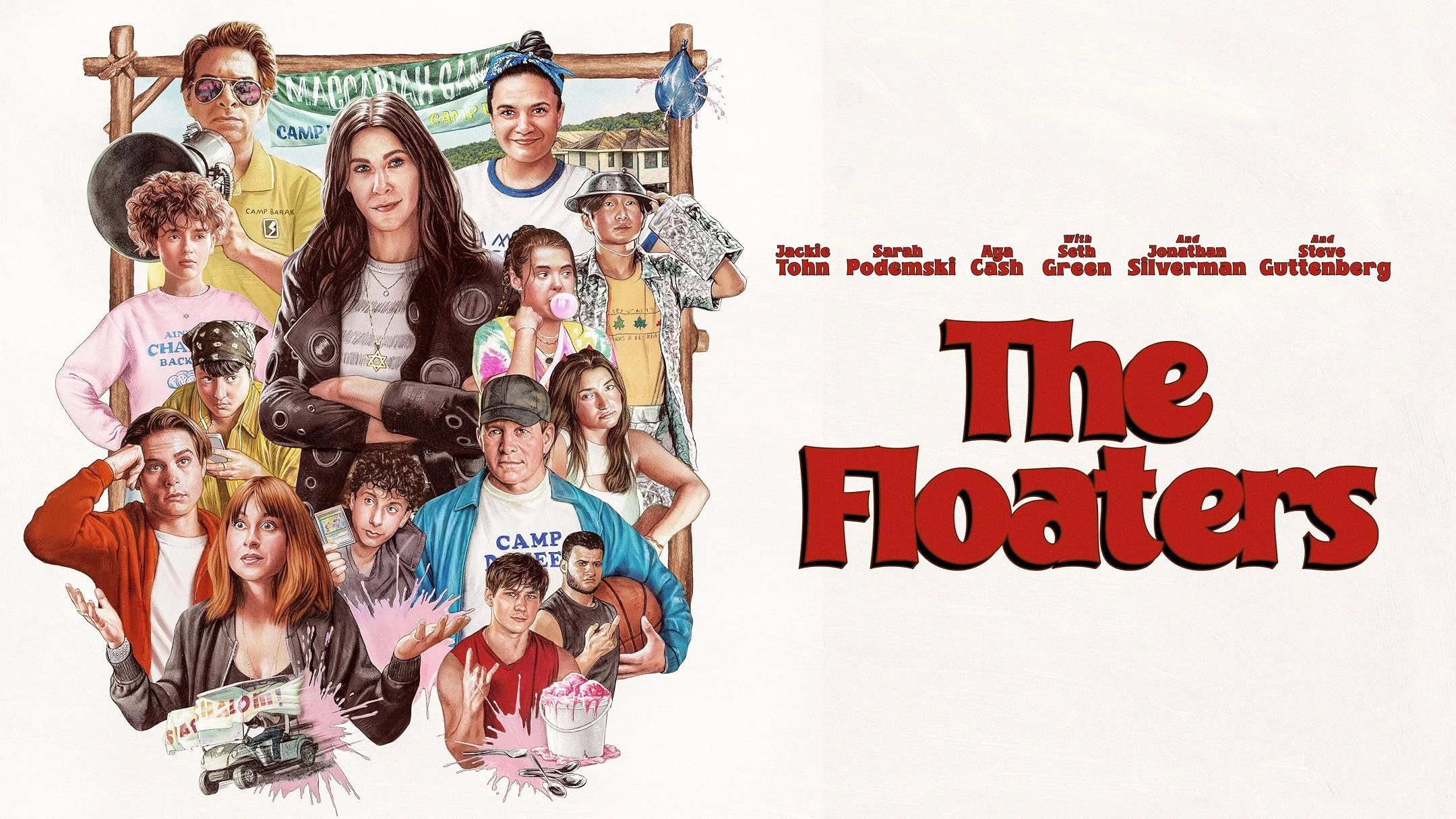

Nomi is fired two days before a European tour because her idea of artistic provocation involves paint packed inside a condom. The stunt is messy, childish, and far less shocking than she believes. It also establishes the contradiction Jackie Tohn carries through The Floaters: Nomi worships creative disruption, yet she has never developed the discipline needed to make disruption meaningful.
Her childhood friend Mara, played by Sarah Podemski, offers her a summer job at Camp Daveed, where broken plumbing and anxious donors threaten the institution’s future. Nomi accepts because someone has sublet her apartment and because humiliation offers limited vacation options.
Camp Daveed has its own category for campers stranded between refusal and apathy. The Floaters have selected no activities, formed no shared identity, and spend their days inside a communal cabin. Mara assigns Nomi to supervise them with the brisk logic of someone placing several unstable substances in one container and hoping chemistry does the paperwork.
Jonah, played by Judah Lewis, arrives under similar pressure. His father Eli treats camp as both a nostalgic rite and an informal college networking event. Jonah’s question about everyone being “Jewish Jewish” reveals his unease with Camp Daveed before the adults begin telling him why he should value it.
Friendship by Editorial Shortcut
The young performers give the Floaters recognizable temperaments before the screenplay gives them credible relationships. Jonah retreats into sarcasm and writing. Lindsey, played by Nina Bloomgarden, carries the social punishment of some previous camp transgression. Jake Ryan brings bruised sincerity to the campfire confessions, where the campers briefly stop performing indifference and describe what pushed them toward isolation.
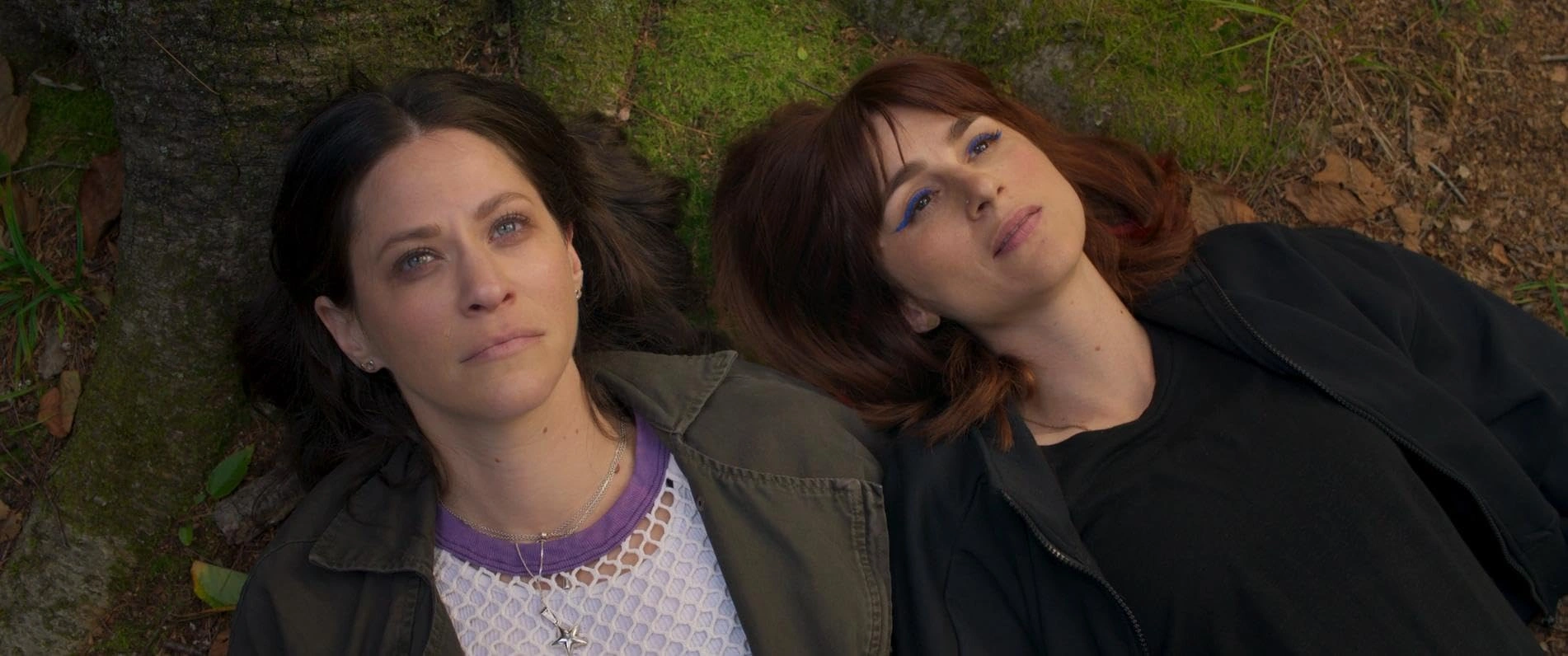
Those confessions supply the emotional groundwork the rest of the film keeps skipping. Campers who barely tolerate one another appear united a few scenes later. A teenager initially indifferent to their planned skit becomes its most passionate defender without a visible decision connecting those positions. Jonah’s encounters with bullying register as incidents rather than stages in an arc.
Nomi encourages the group to create a theatrical piece instead of repeating the safe Fiddler on the Roof production Mara has prepared for donor approval. Jonah combines Sodom and Gomorrah with a satire of college admissions, turning biblical destruction into a joke about institutional judgment. The concept suits teenagers discovering that rebellion can borrow the language of the systems it attacks.
The screenplay then has several characters praise the skit’s intelligence and comic force. Their approval works like canned laughter without the recording. The material needed sharper writing, stronger rehearsal scenes, and genuine disagreement among the campers. Declaring a piece of art transgressive cannot replace showing why it unsettles anyone.
A Faith Built Through Argument
Camp Daveed becomes convincing through small exchanges that treat Jewish identity as lived practice rather than decorative production design. Campers debate food rules, Hebrew literacy, observance, and cultural belonging with the impatient shorthand of people who share a tradition without sharing one interpretation of it. A discussion about burying a spoon that touched the wrong food is played for comedy, yet the ritual itself is never treated as foolish.
The film allows Orthodox, Conservative, Reform, and culturally Jewish characters to occupy the same space without appointing one as the model participant. This matters because American films frequently flatten Jewish life into trauma, neurosis, or a few recognizable holiday rituals. Camp Daveed contains those cultural markers, then lets people quarrel over what they mean.
Aya Cash’s Rabbi Rachel embodies this openness. Her advice draws on religious teaching without closing debate, and her relaxed presence gives the camp spiritual authority free from severity. Several conversations with Nomi hint at a deeper connection, possibly material lost during editing. Cash creates enough warmth and history in her pauses that the absent subplot can be felt around the scenes that remain.
The camp’s authenticity comes from disagreement. Tradition survives here through questions, jokes, corrections, and minor acts of disobedience, which makes the institution feel far richer than the contest designed to save it.
Rebellion With Permission Slips
Rachel Israel directs the ensemble with an appealing looseness. Scenes breathe long enough for Tohn’s ambivalence, Podemski’s administrative strain, and Lewis’s defensiveness to emerge through performance. The visual language remains plain, rarely turning the cabins, gathering spaces, or stage into expressive comic environments. A cast this lively could have supported bolder framing.
The rival camp exposes the film’s attachment to convention. Seth Green plays Daniel as an abrasive obstacle, yet the rivalry produces little beyond predictable hostility, scattered montages, and a final competition whose outcome matters less than the screenplay insists. Removing this thread could have created space for Lindsey’s history, Jonah’s writing process, or the Floaters’ gradual acceptance of Nomi.
The comedy faces a similar problem. Jokes about sex, political sensitivity, kosher practice, and parental expectations approach friction, then soften before anyone must confront the implications. Nomi claims that art should make people uncomfortable, while the film keeps checking the room for approval.
Its sincerity remains valuable. One camper’s unexpected defense of the skit rests on the belief that theatre deserves protection, even when the work is crude or embarrassing. Yet sincerity cannot supply the nerve the jokes avoid. Camp Daveed feels alive because people argue inside it; the comedy falters whenever the film starts policing those arguments.
The independent comedy film The Floaters is distributed by Brainstorm Media and scheduled for a nationwide theatrical release on July 24, 2026, following its initial film festival tour. Audiences can check local listings for independent cinema tickets upon its official summer rollout later this month. The story follows a struggling musician who accepts a last-resort counselor job from her childhood best friend at a Jewish summer camp, where she gets assigned to mentor a group of eccentric, misfit teenagers who refuse to sign up for standard activities.
Where to Watch The Floaters (2026) Online
Full Credits
Title: The Floaters
Distributor: Brainstorm Media
Release date: July 24, 2026
Running time: 100 minutes
Director: Rachel Israel
Writers: Brent Hoff, Andra Gordon, Amelia Brain, Lily Korman, Shai Korman
Producers and Executive Producers: Becky Korman, Lily Korman, Shai Korman, Andra Gordon
Cast: Jackie Tohn, Sarah Podemski, Aya Cash, Judah Lewis, Nina Bloomgarden, Jake Ryan, Seth Green, Jonathan Silverman, Steve Guttenberg
Director of Photography (Cinematographer): Danny Vecchione
Editors: Chelsea Taylor
Composer: Jacob Bloomfield-Misrach, Erik Desiderio
The Review
The Floaters
The Floaters finds genuine warmth in Camp Daveed’s competing forms of Jewish identity, treating observance, cultural belonging, and disagreement with rare ease. Its misfit campers have enough personality to earn affection, while Jackie Tohn gives Nomi’s artistic stubbornness a bruised sincerity. Yet the screenplay skips the difficult work of showing these outsiders become a community. Safe provocations, an expendable rival-camp plot, and a hurried final act leave its celebration of self-expression feeling tidier than the skit it defends.
PROS
- Authentic Jewish cultural detail
- Strong chemistry among the campers
- Jackie Tohn’s warm performance
- Aya Cash’s relaxed authority
- Earnest defense of artistic expression
CONS
- Character growth happens off-screen
- Rival-camp plot wastes time
- Provocative jokes lack nerve
- Predictable competition structure
- Rabbi Rachel feels underwritten







