



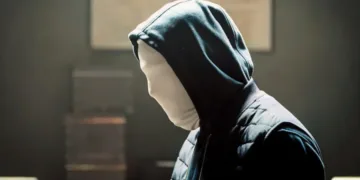















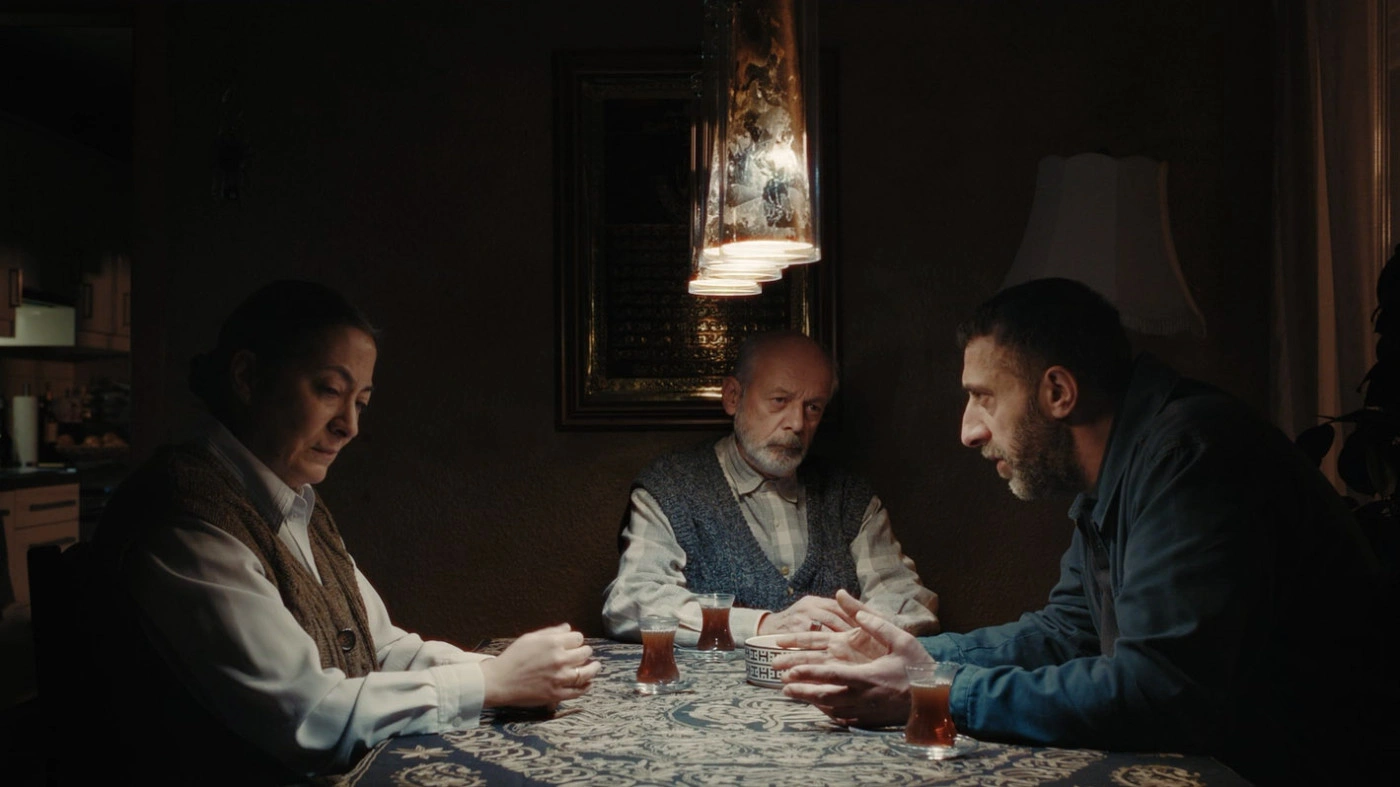

The first act of violence occurs inside a celebration designed to affirm communal belonging. A frightened boy, dressed for his circumcision, watches the festivities from the cramped safety of a cupboard while guests wave envelopes, plastic scimitars, and comic noses through rooms swollen with music. Emre Erkmen initially keeps the camera near the child’s eye level, turning adult bodies into walls and ritual into sensory assault. The ceremony promises inclusion. Its framing suggests captivity.
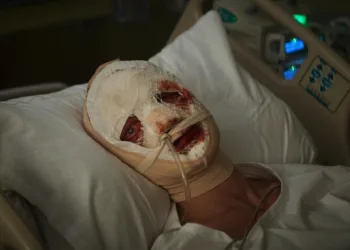
Nader Saeivar soon redirects our attention toward Murat, played by Kida Khodr Ramadan, as he instructs his wife Leyla to watch his younger brother Kerem and slips into the kitchen for a forbidden drink. Kerem is attacked by young men after photographs expose his relationship with another man. The beating does not rupture the celebration’s social order. It enforces it.
The family’s successful restaurants and respectable position have given them material security without freeing them from communal surveillance. Berlin exists outside the windows, legally permissive and geographically close, yet the rooms remain governed by another authority. Saeivar makes that distance visible through blocked compositions, crowded interiors, and conversations staged with fathers, sons, and religious leaders occupying fixed positions. Everyone knows where to stand. Kerem’s crime is stepping outside the frame assigned to him.
Doctrine Behind a Smile
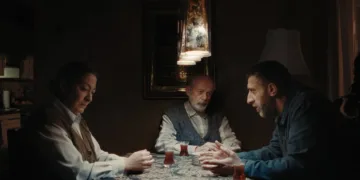
Imam Ahmet rarely needs to raise his voice. Aziz Capkurt plays him with a soft manner and an expression that approaches warmth, which makes his warning to Murat especially poisonous. “Look out for your son,” he says, allowing a pause to convert pastoral concern into a threat. His power rests in plausible deniability. He advises. Other men act.
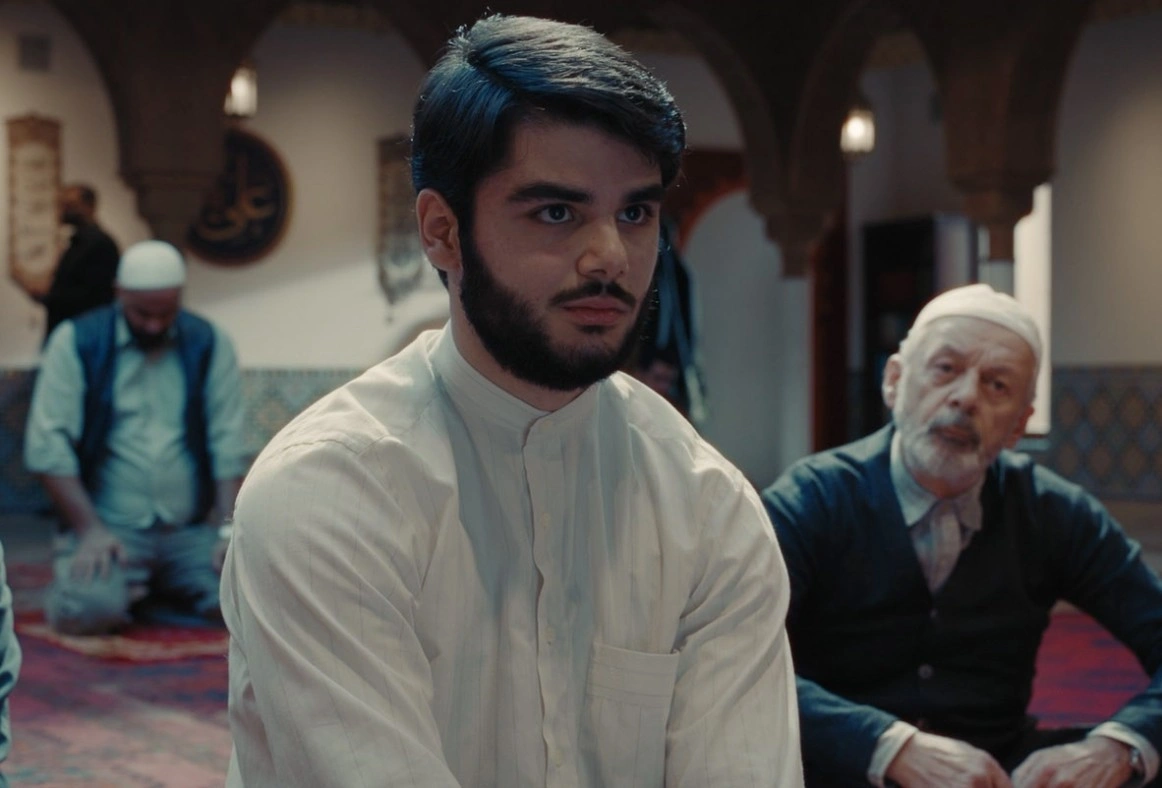
Ahmet describes Kerem’s sexuality through images of rivers flowing incorrectly and trees growing downward. The analogies are simplistic, yet they reveal the logic of his authority: nature becomes whatever confirms doctrine. Kerem’s epilepsy is folded into the same system and treated as evidence of punishment. A seizure ceases to be a medical event once the imam gives it moral meaning.
The restaurant dispute complicates this conflict without developing it. Ahmet pressures Ibrahim, the family patriarch, to return the business to its former owner, hinting that Kerem’s exposure may serve economic interests hidden beneath religious outrage. Saeivar leaves the connection vague, and the subplot fades before it can show how property, reputation, and faith reinforce one another. The imam remains threatening, but the machinery surrounding him stays frustratingly indistinct.
The film’s portrayal of Islam narrows as the pressure intensifies. Religious authority appears almost entirely through condemnation, manipulation, and fear. Berlin’s queer Muslim life receives little attention, leaving Kerem trapped between abandonment and secrecy. A richer drama might have placed competing interpretations of faith within the same community. Here, doctrine arrives with one face and one verdict.
Lives Concealed in Plain Sight
Kerem appears to be the centre of the conflict, yet Murat gradually occupies the film’s deepest shadow. Ramadan builds the character through physical hesitation: the secret drink during the party, the guarded posture beside his wife, the heavy silence after defending his brother. Murat tells Kerem to live freely because he has failed to follow the same advice.
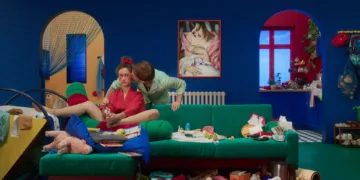
His marriage to Leyla functions as shelter, performance, and slow cruelty. She records cooking videos in search of a small public identity, while Murat repeatedly interrupts or sabotages them. These scenes initially resemble domestic irritation. Their meaning changes once his concealed sexuality becomes clear. He does not merely withdraw from Leyla. He obstructs her attempts to exist beyond the role their arrangement demands.
Nicolette Krebitz gives the film its sharpest scene when Leyla speaks with Kerem about Kosovo. She survived Serbian violence by pretending to be Christian and watched her parents die because they were Muslim. Kerem claims she cannot understand a divided life. Her answer exposes the limits of his assumption without diminishing his pain. Both characters know that identity can become evidence at a trial conducted by neighbours, soldiers, or family.
Leyla later describes Murat’s behaviour as “false humility, empty heroism, meaningless pride.” The line cuts through his self-image as protector. He challenges the imam and defends Kerem, yet his courage remains selective. He will confront another man’s hypocrisy before naming his own.
Kerem receives less space to become equally complex. Jael Cem Ilhan conveys panic through lowered eyes, abrupt movement, and the strained pauses preceding his seizures, but the screenplay confines him to reaction. His relationship is barely embodied, his resistance culminates in an awkward revenge attempt, and his desires exist largely as a problem discussed by others.
Blood Drawn, Focus Lost
The controlled visual pressure of the opening gives way to a looser, increasingly repetitive second half. Arguments between Murat, Ibrahim, Kerem, and Ahmet return to the same positions without altering the dramatic geometry. Panahi’s editing remains clear, but clarity cannot disguise scenes that circle rather than deepen.
Nastassja Kinski’s Margot belongs to a different film. She lives as though the Berlin Wall still stands and fears pursuit by the Stasi, giving Murat another vulnerable person to protect. Her trauma could have extended the film’s interest in histories that survive inside modern cities. Instead, her appearances sit apart from the family crisis, connected by theme but left without dramatic weight.
Moritz Bleibtreu’s Michael creates a sharper rupture. Wearing an eccentric wig and treating Murat’s varicose veins through hijamat, he introduces a sensual comic energy that the film has not prepared to absorb. Cups draw blood from Murat’s skin while the scene gestures toward buried desire, purification, and release. The symbolism is legible from across the room.
The image should carry force. It becomes strangely weightless. Saeivar’s camera knows how to make a crowded celebration feel dangerous and a smiling imam feel predatory, yet the titular act of extraction arrives after the drama has lost pressure. The blood leaves Murat’s body. The secrets remain where they were.
The powerful psychological drama Hijamat celebrated its world premiere at the 60th Karlovy Vary International Film Festival as a main Crystal Globe competition contender. Audiences tracking its distribution can watch for upcoming art-house theatrical rollouts via Neue Visionen Filmverleih or global festival screenings coordinated by ArtHood Entertainment. Set entirely within a tense Berlin living room, the narrative follows a traditional older brother who suffers an intense crisis of faith after his younger brother’s secret relationship with a man is exposed to their deeply traditional Muslim family.
Full Credits
Title: Hijamat
Distributor: Neue Visionen Filmverleih, ArtHood Entertainment
Release date: July 2026 (Karlovy Vary International Film Festival World Premiere)
Running time: 103 minutes
Director: Nader Saeivar
Writers: Nader Saeivar
Producers and Executive Producers: Jafar Panahi, Said Nur Akkuş, Murat Şeker
Cast: Kida Khodr Ramadan, Jael Cem Ilhan, Nicolette Krebitz, Aziz Capkurt, Moritz Bleibtreu, Nastassja Kinski, Vedat Erincin, Derya Durmaz
Director of Photography (Cinematographer): Emre Erkmen
Editors: Jafar Panahi
Composer: Hossein Mirzagholi
The Review
Hijamat
Hijamat locates its strongest moral argument in the camera’s early movement through the circumcision celebration, where ritual, fear, and violence occupy the same crowded frame. Kida Khodr Ramadan gives Murat’s concealed life a persuasive physical weight, while Nicolette Krebitz turns Leyla’s memories of Kosovo into the film’s clearest challenge to inherited shame. Saeivar loses control once disconnected subplots and an oddly comic healing sequence interrupt the family conflict. The light remains severe. The screenplay wanders out of it.
PROS
- Formidable opening sequence
- Ramadan’s restrained performance
- Leyla’s Kosovo confession
- Imam’s quietly threatening presence
- Strong visual sense of community
CONS
- Kerem remains underwritten
- Repetitive later confrontations
- Weak restaurant subplot
- Margot’s detached storyline
- Misjudged hijamat sequence