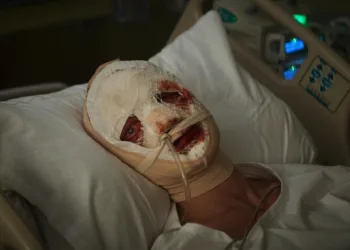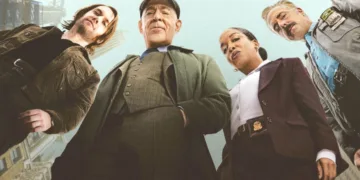










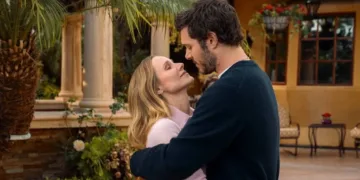
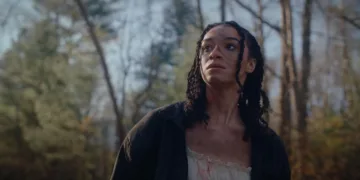

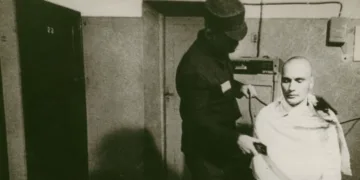









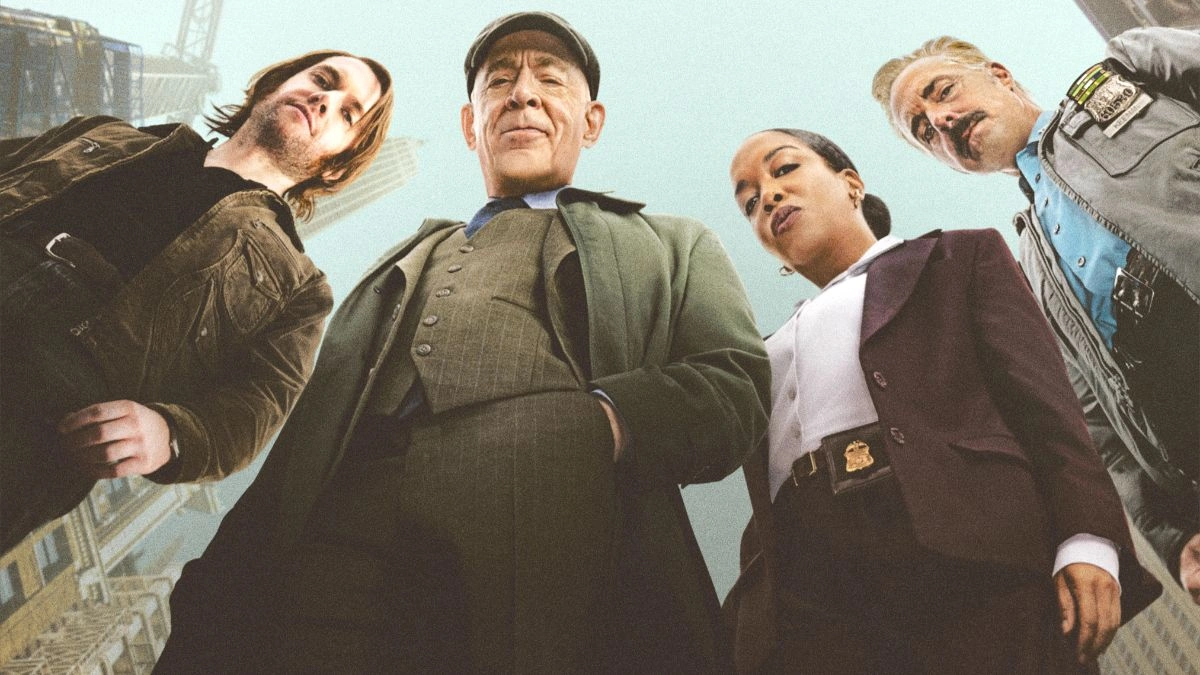

Davey believes kidnapping an Italian gangster still counts as ordinary business in Hell’s Kitchen. Eamon Sweeney knows ordinary business has changed. The ransom might deliver a quick payday, yet it also threatens the Westies’ arrangement with the Gambino family and their lucrative grip on construction around the Jacob Javits Convention Center. Eamon resolves the problem with the kind of arithmetic crime television loves: one body exchanged for continued profit.
Created by Chris Brancato and Michael Panes, The Westies fictionalizes the Irish-American gang that controlled parts of Hell’s Kitchen from the 1960s into the 1980s. Its eight episodes place that organization at a point when neighborhood power is being replaced by corporate development, federal surveillance, cocaine money, and a Mafia structure large enough to absorb or erase smaller crews. The Westies may know every pub owner and union worker on their streets. John Gotti knows scale.
The series packages this history as a brisk gangster drama filled with kidnappings, informants, executions, political weapons, and whiskey glasses that rarely remain full for long. MGM+ has plainly learned the streaming lesson that every service needs its own prestige criminals. These happen to be Irish, which means the funerals have better speeches.
The Old King of Hell’s Kitchen
Eamon has fashioned himself into a public institution. He receives community honors, speaks about solidarity at wakes, and maintains the courteous posture of a businessman who has never needed to scrub blood from a butcher’s floor. J.K. Simmons makes that contradiction visible without turning Eamon into a cartoon. When he raises his voice, the moment is alarming. When he lowers it, someone should check the exits.
His speeches reveal the political structure of the gang. Eamon treats “the neighborhood” as a sacred body, yet the phrase usually means his access to contracts, labor, and deference. The Javits Center gives him a profitable position inside Manhattan’s redevelopment, provided he can keep the Italians satisfied and his own men obedient. Davey’s kidnapping matters less as an ethical offense than as a disruption to that arrangement.
This is where The Westies finds its most useful historical argument. Urban change does not remove organized crime from the city. It changes the form of crime worth organizing. Eamon’s gang emerged from streets where violence controlled bars, unions, and local businesses. The convention center rewards a quieter arrangement involving construction money and political respectability. Eamon has survived by moving between both worlds, yet his authority still depends on men who solve disputes with fists and meat hooks.
John Gotti represents the next stage of that system. Hamish Allan-Headley plays him with a smile that functions as a territorial marker. In meetings with Eamon, Gotti rarely needs to issue a direct threat. His contempt establishes the hierarchy. The Westies can remain useful while supplying labor and violence, but usefulness should never be mistaken for equality.
Simmons is sharpest when Eamon has no dialogue. A dismissive remark from Gotti produces a flicker of rage, then fear, then the disciplined calm of a man refusing to let either emotion become public. The old king understands that his kingdom exists under lease.
Cocaine places further pressure on his rule. Eamon resists the trade because its volatility threatens the controlled business he prefers. The disco operating above a protected cocaine bunker reveals that the market has already spread beyond his objections. Younger criminals see profit, Italian crews see expansion, and the city’s nightlife supplies endless customers. Refusing to participate will not preserve the old order. It will leave the Westies outside the new one.
The Children of the Old Code
Jimmy Roarke has spent most of his life preparing to inherit Eamon’s position. Recruited at thirteen, he regards the gang leader as a father and Hell’s Kitchen as a birthright. Tom Brittney plays Jimmy with enough charm to explain why men follow him and enough alertness to show that he is beginning to understand the price of succession.
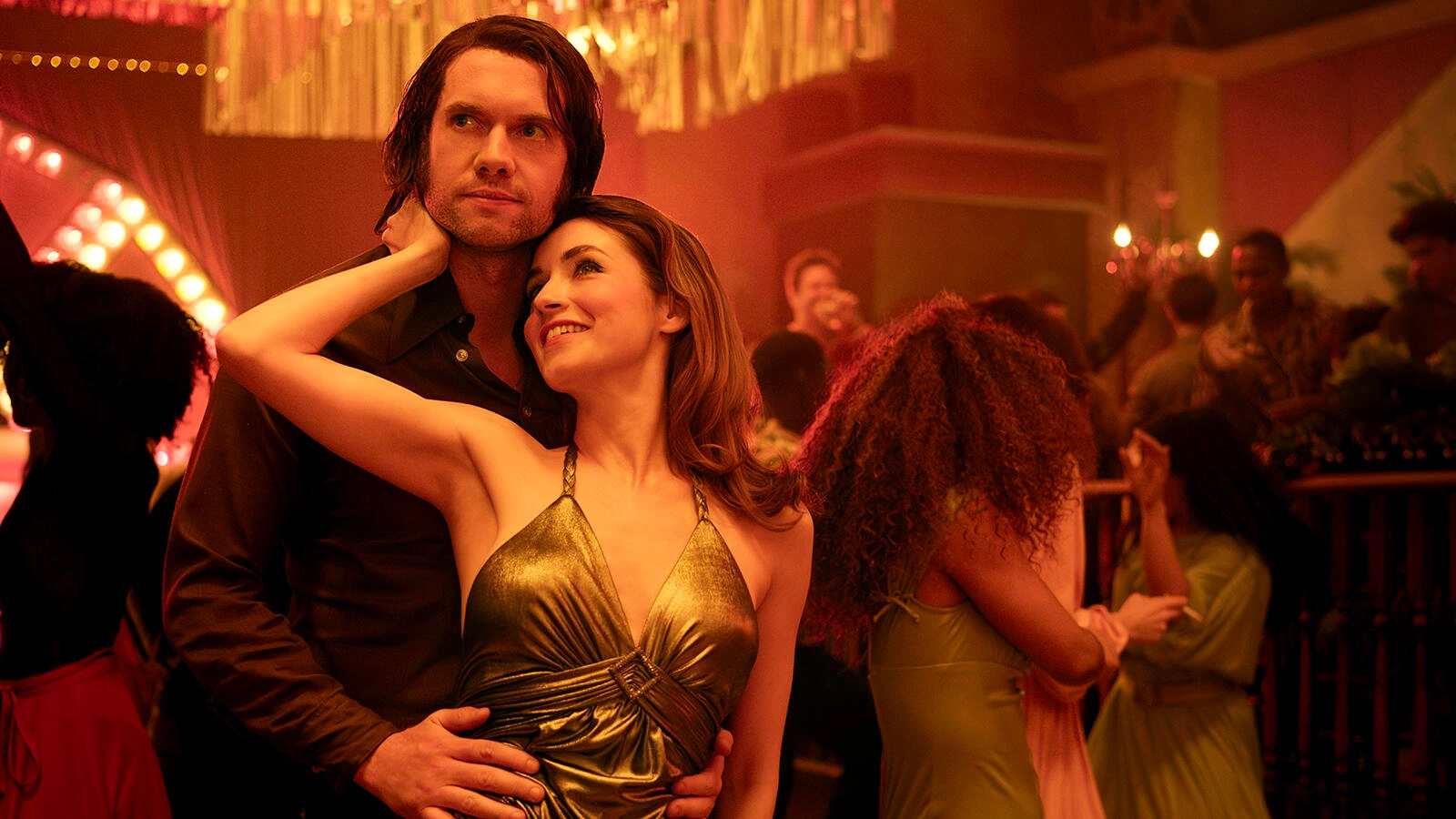
Davey’s death creates the first visible crack in that loyalty. Jimmy knows the kidnapping endangered everyone, yet he also sees how quickly Eamon turns one of his men into an expendable correction. Each later betrayal widens the distance between the leader Jimmy remembers and the man standing before him. His emerging moral code remains narrow. Jimmy threatens, extorts, and kills. He simply wants those actions governed by loyalty rather than convenience, which is a modest ethical standard even for organized crime.
Television has spent decades refining this figure: the criminal whose conscience is measured against people worse than himself. The tactic works because Brittney gives Jimmy genuine warmth in scenes with Mickey and Bridget. It also allows the series to avoid confronting the harm he causes outside his chosen circle. Victims arrive tied to chairs, receive a beating, shout defiance, and disappear from the story. Moral complexity becomes a ranking system among killers.
Mickey Flanagan’s return from Bellevue places that problem in sharper relief. A Vietnam veteran living with PTSD, Mickey moves from affection to explosive violence with little warning. Stanley Morgan prevents him from becoming a stock loose cannon by emphasizing his shame after an outburst and his reliance on Jimmy’s approval. During street confrontations, his body seems ready to strike before his mind has processed the threat.
The writing repeatedly converts that trauma into plot acceleration. Mickey’s instability triggers fights, complicates negotiations, and gives enemies a weakness to exploit. His years at war and in institutional care receive less attention than the danger he can produce in the next room. The season recognizes him as a damaged veteran, then places the damage on a timer.
Bridget’s storyline introduces another history of political violence. She lives with Jimmy under an assumed identity after fleeing Ireland, raises money through respectable charities, and tries to keep her earlier IRA activity buried. Brendan Cahill’s arrival ends that separation. He asks her to conceal a military-grade weapon while refusing to identify its target, relying on old allegiance to substitute for informed consent.
Sarah Bolger gives Bridget a hard, watchful authority during these meetings. She does not accept Brendan’s secrecy passively, yet her commitment to the republican cause makes refusal difficult. Her scenes with Jimmy have a dry domestic absurdity. Each returns home after some concealed act of violence, warns the other to be careful, and asks no useful questions.
The IRA plot sometimes feels imported from a neighboring series. Its political stakes remain abstract until the weapon begins affecting Jimmy’s world, and Bridget’s convictions receive less examination than the suspense created by her secrecy. She is allowed danger, intelligence, and history. The season is less interested in what that history means to her than in how efficiently it can collide with the men’s criminal succession fight.
A Badge with No Safe Direction
Glenn Keenan occupies the season’s most developed position because his loyalties cannot be arranged into a clean hierarchy. He is a police officer, an old associate of Eamon, a reluctant asset in a federal investigation, and an estranged father watching his son drift toward the gang he helped protect.
Titus Welliver begins with physical restraint. Glenn holds his shoulders stiff, answers questions with practiced indifference, and drinks as if each glass were part of an administrative procedure. That posture weakens across the episodes. His work with FBI Special Agent Birdie Polk forces him to confront John Gotti’s organization, while Eamon sees the investigation as an opportunity to acquire information. Glenn becomes valuable precisely because no institution can trust him.
Birdie supplies one of the few perspectives untouched by neighborhood nostalgia. Jessica Frances Dukes plays her as observant rather than naïve. She recognizes Glenn’s compromises and uses them without pretending that cooperation restores his integrity. Their partnership places federal procedure beside street loyalty, two systems attempting to convert the same compromised man into an instrument.
Glenn’s request that Eamon stay away from his teenage son Danny exposes the fantasy underneath years of corruption. He believed he could help violent men while keeping their influence outside his home. Eamon’s refusal makes the arrangement personal, but the damage began long before Danny entered the gang’s orbit. Glenn’s absence helped create the space that Eamon’s organization now fills.
Jimmy and Glenn move through inverse paternal crises. Jimmy is losing faith in the man who raised him. Glenn is trying to reclaim the son he failed to raise. Both discover that fatherhood inside this world is another claim of ownership, enforced through secrecy, obligation, and selective protection.
Style Inside a Familiar Shape
The premiere establishes several lines of conflict at once: Eamon’s peace with the Italians, Jimmy’s growing doubt, Mickey’s return, Bridget’s hidden IRA connection, Glenn’s federal assignment, and Danny’s attraction to the Westies. The next seven episodes keep those threads crossing with impressive efficiency. Information gathered in one plot creates danger in another, and private loyalties become public liabilities before characters have time to recover.
That speed leaves limited room for transformation. Many figures move through recognizable positions: ruthless patriarch, decent heir, traumatized enforcer, compromised cop, political operative, ambitious mobster. The performances give those roles texture, but the scripts frequently push them from disclosure to retaliation because another reversal is required.
Violence follows a similarly repetitive pattern. Characters are abducted, restrained, beaten, and threatened with such regularity that the scenes begin to resemble appointments. The profanity changes less often than the location. Precision in the stunt work helps. Fights remain rough and readable, with heavy blows and awkward movement replacing glossy choreography. Episode 3 uses this physical messiness especially well, allowing bodies to collide with furniture and walls while the editing preserves the geography of the room.
The production’s recurring spaces create a compact criminal map. The pub functions as headquarters and community theater. The butcher shop turns ordinary labor into body disposal. A disco sits above the cocaine trade that Eamon wants to resist. Rundown apartments, modest offices, and wealthy homes chart the economic ladder every character is trying to climb or defend.
The limited number of locations can make Hell’s Kitchen feel smaller than the forces reshaping it. The muted gray photography carries the standard prestige-streaming finish, polished enough to signal seriousness and restrained enough to avoid a strong visual identity. The motion-comic opening credits, paired with the Dropkick Murphys’ “Dropped on My Head,” display greater graphic confidence than much of the main series.
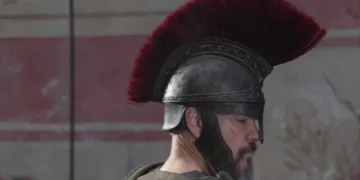
Period cars, crowded pubs, cigarette smoke, and the soundtrack establish the era, while uneven wigs and clothing occasionally slide across the late 1970s, early 1980s, and early 1990s. Historical specificity becomes a mood board when the costume department gets tired.
Richard Schiff’s late appearance as a sophisticated money launderer briefly changes the show’s rhythm. His amused response to Jimmy’s ambition suggests a criminal class that regards neighborhood gangsters as energetic amateurs. Jimmy may believe he is preparing to inherit Hell’s Kitchen. Men like this are already calculating what the property will be worth after people like him are gone.
The gritty, period crime drama television series The Westies premieres tomorrow, July 12, 2026, launching its highly anticipated first season on the MGM+ premium cable network and streaming platform in the United States. International audiences can stream the show concurrently on Amazon Prime Video or Paramount Plus depending on localized regional distribution agreements. Set in the Ronald Reagan era of 1980s Hell’s Kitchen, the narrative follows the internal power struggles and rapid rise of a notorious Irish-American gang trying to secure multi-million dollar construction profits from the massive Jacob Javits Convention Center project while warding off territorial pressure from the Gambino crime family and deep-reaching FBI operations.
Where to Watch The Westies Online








Full Credits
Title: The Westies
Distributor: MGM+, Amazon MGM Studios, Amazon Prime Video
Release date: July 12, 2026
Rating: TV-MA
Running time: 60 minutes per episode
Director: Chris Grismer
Writers: Chris Brancato, Michael Panes
Producers and Executive Producers: Chris Brancato, Michael Panes
Cast: J.K. Simmons, Titus Welliver, Tom Brittney, Jessica Frances Dukes, Stanley Morgan, Sarah Bolger, Allen Leech, Hamish Allan-Headley, Vincent Walsh, Hilary McCormack, Richard Schiff
Composer: Dropkick Murphys
The Review
The Westies
The Westies gives MGM+ a sturdy crime saga built from J.K. Simmons’ controlled menace, Titus Welliver’s fraying authority, and eight episodes that rarely lose momentum. Its vision of Hell’s Kitchen carries historical pressure, from the Javits Center money to cocaine’s arrival, yet the series often treats trauma, revolution, and corruption as efficient plot fuel. Streaming television has found another expensive way to rediscover men in smoky rooms. At least these men are compelling company.
PROS
- Simmons’ quietly terrifying performance
- Welliver’s layered character arc
- Tightly connected storylines
- Rough, readable fight choreography
- Strong period soundtrack
CONS
- Thin character development
- Repetitive kidnappings and beatings
- Detached IRA storyline
- Muted visual palette
- Uneven period details