

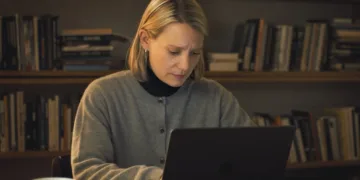
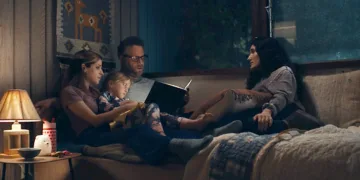


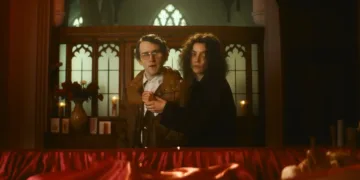










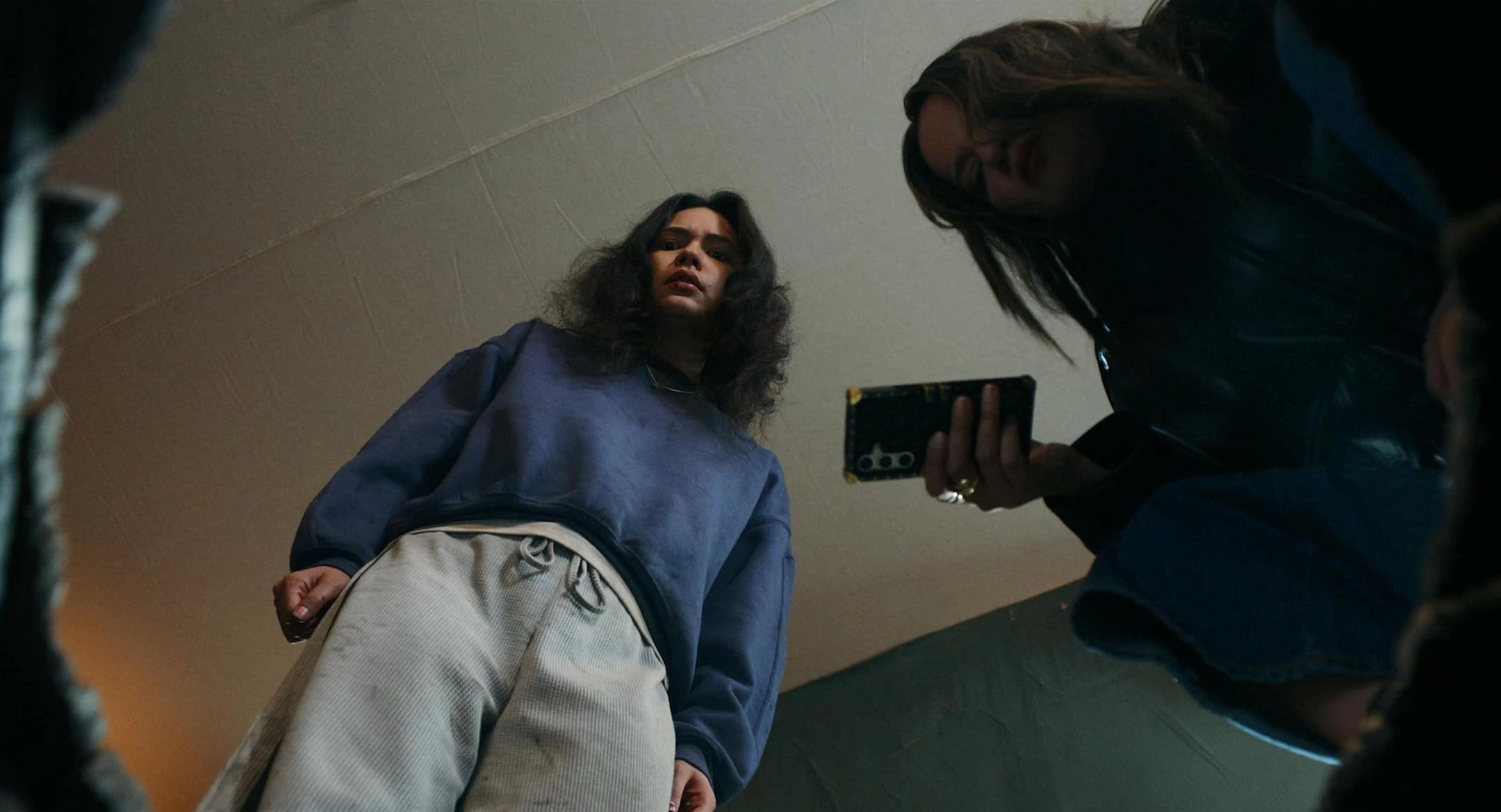

The cabin gives Elyse nowhere to stand without being judged. Its low ceilings press down, its dark wood corridors narrow behind her, and the hole beneath the floor turns domestic shelter into an accusation. Writer-director Tim Riedel understands the moral value of architecture: this house has inherited a secret, and every room appears to know it before Elyse does.
Morgan Holmstrom plays Elyse, a young Métis woman living under the weight of her mother’s suicide, a failing grip on work, and an older sister who treats control as care. After screaming at a customer and pleading to keep her bar job, Elyse retreats to her aunt’s rural Manitoba home, hoping distance might quiet her mind. The landscape offers space. Joey Forte’s camera makes sure the cabin does not.
Ancestral Beasts works best while uncertainty remains intact. Scratching animals, bad weather, insurance calls, and an intrusive neighbour occupy the same register as the supernatural presence beneath the house. The film asks Elyse to separate threat from illness while denying her reliable light.
Shadows That Refuse to Testify
Forte photographs the cabin as a structure built from obstructed sightlines. Doorways divide Elyse from whatever waits beyond them, while the cramped rooms force the camera close enough to make her isolation feel physical. Empty space rarely reads as empty. It reads as occupied territory.
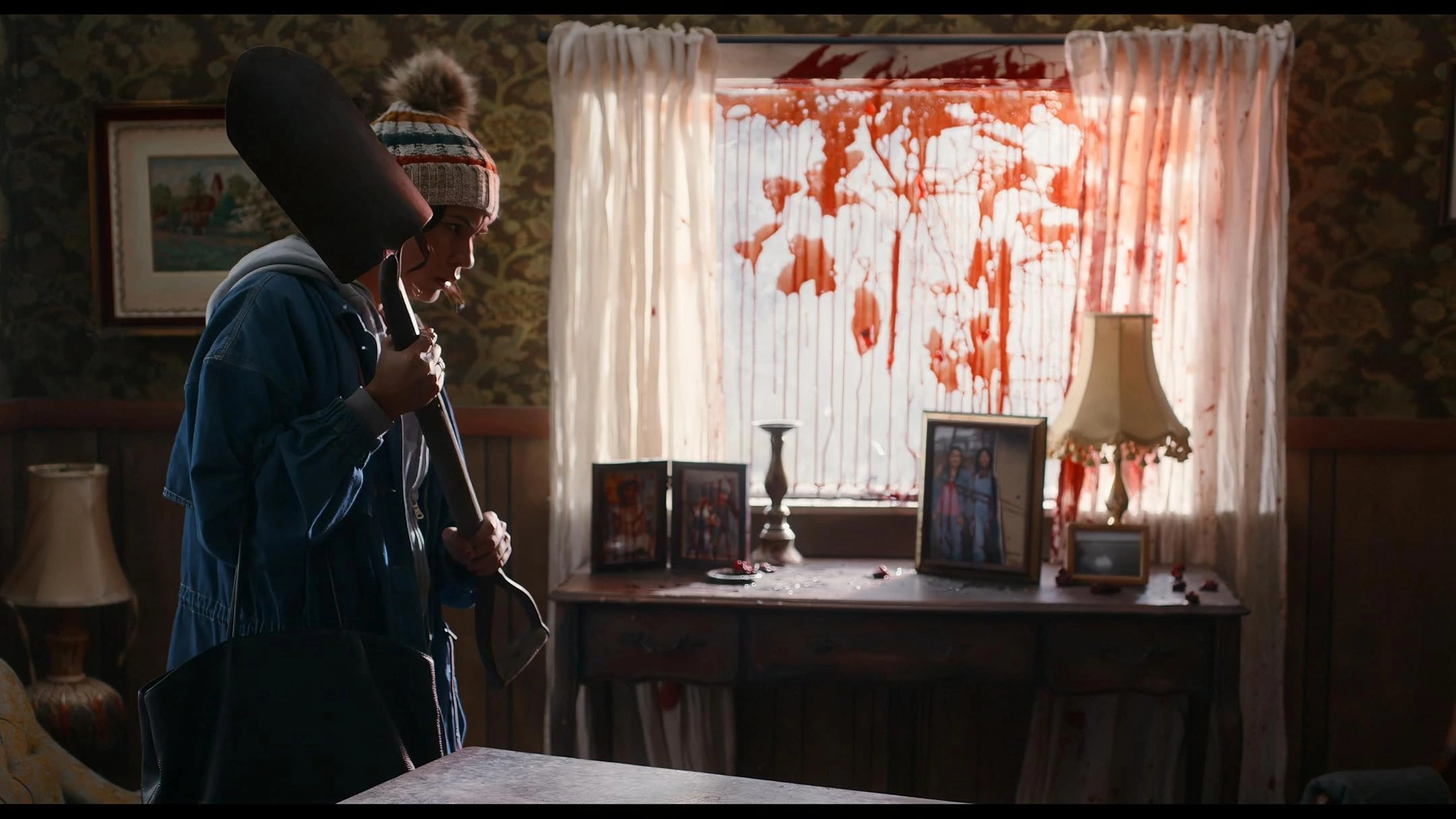
The opening prologue establishes that Elyse’s mother died under supernatural pressure, yet Riedel withholds the creature long enough for doubt to contaminate each sound. Tapping beneath the floor might be an animal. A shadow crossing a corridor might be exhaustion. Max, the white neighbour played by Josh Strait, may be warning Elyse in good faith, though his condescension makes every warning resemble surveillance. His refusal to respect her suspicion is precisely what makes him suspicious. A tidy little trap.
Justin Delorme’s restrained score helps the first two acts maintain this ambiguity. It leaves room for floorboards, breathing, and movement inside the walls to carry the tension. The approach falters when the scare design repeats itself. Elyse hears something, follows it, then faces an attack. Once is dread. Twice is pattern recognition.
Holmstrom keeps those repetitions from collapsing completely. Her performance lives in small defensive choices: the tension in Elyse’s posture around strangers, the delay before answering Nikki, the sense that every friendly exchange requires a private risk calculation. When rage breaks through, it feels stored rather than performed.
Care Under Interrogation Lighting
The most frightening confrontation contains no creature. Nikki visits the cabin, pushes Elyse toward explanations, and turns concern into a public trial in front of her new friends. Darla Contois gives Nikki the blunt force of someone convinced that proximity grants moral authority. She checks on Elyse, speaks over her, then demands gratitude for the intrusion.
Riedel frames the sisters’ conflict around two incompatible versions of responsibility. Nikki believes survival requires discipline and compliance. Elyse experiences that discipline as another voice telling her that her own perceptions cannot be trusted. Their argument gains force from its lack of visual escape. The cabin keeps both women boxed into the same frame, turning family care into a closed circuit.
The screenplay weakens the scene by providing too little of their shared past. We learn how Nikki behaves after their mother’s death, yet little reveals what the sisters once offered each other. Without those memories, Nikki sometimes edges toward caricature, a pressure device wearing a relative’s face.
Cody repeats the same failure on a smaller scale. Elyse warns him during a dangerous encounter, and he continues imposing his reading of the situation. She is trying to save his life. He is still deciding how seriously to take her. The scene gives the film’s gendered anger a clean shape: Elyse can identify danger and remain unheard until the danger acquires teeth.
History Beneath the Foundation
Riedel draws from his Red River Métis heritage and his mother’s experience as a survivor of the Sixties Scoop, when Indigenous children were removed from their families and placed with white adopters. That history gives the creature a specific moral origin. It is inherited suffering made physical, passed through a family already trained to distrust its own pain.
The strongest visual idea binds body, land, and house together. The wound is under the floor, beneath a home standing on Métis Nation land, hidden by the same domestic structures meant to provide safety. Elyse’s fear of inheriting her mother’s illness becomes inseparable from a history that has entered the family through institutional violence.
The film hesitates to develop that history into a full mythology. The aunt’s wellness podcast provides fragments, including a land acknowledgment, while the creature itself remains closer to a familiar grief-horror device than a distinctly articulated cultural presence. The symbolism is legible. Its roots receive less screen time than its symptoms.
Restraint serves the effects early on. Brief glimpses of the skittering, hand-like form carry an ugly tactility, and the implied violence allows blood, body makeup, and sound to finish what the frame withholds. Clearer digital views weaken the creature by giving it a shape the imagination had rendered with greater precision.
The final act compounds that exposure. Family revelations, attacks, and emotional reversals arrive in quick succession, leaving motivations to change faster than the relationships can support. The cabin loses its moral ambiguity once every shadow receives an explanation. Darkness had been doing excellent work. Then someone turned on the light.
Ancestral Beasts premiered at the Fantasia International Film Festival in July 2026 and is distributed commercially by Mongrel Media. The horror film follows a troubled Métis woman who returns to her family home to heal her mental health, only to confront a terrifying supernatural entity.
Full Credits
Title: Ancestral Beasts
Distributor: Mongrel Media
Release date: July 22, 2026
Running time: 104 minutes
Director: Tim Riedel
Writers: Tim Riedel
Producers and Executive Producers: Tim Riedel, Fawnda Neckoway, Tina Keeper, Phyllis Laing, Edmon Rotea
Cast: Morgan Holmstrom, Darla Contois, Gail Maurice, Asivak Koostachin, Jess Salgueiro, Josh Strait
Director of Photography (Cinematographer): Joey Forte
Editors: Tim Riedel
Composer: Justin Delorme
The Review
Ancestral Beasts
Ancestral Beasts finds its sharpest fear in the cabin’s geometry: low ceilings, sealed corridors, and a hole that turns inheritance into architecture. Morgan Holmstrom gives Elyse’s anger lived-in weight, while Joey Forte’s shadowed interiors make every threshold feel morally suspect. The film weakens when the creature steps fully into view and the final act rushes through revelations the earlier silence had earned. Its Métis history supplies real gravity, yet the screenplay leaves too much of that history outside the frame. It knows darkness best when it withholds the light.
PROS
- Holmstrom’s volatile lead performance
- Claustrophobic cabin photography
- Powerful sister confrontation
- Effective implied violence
- Métis cultural grounding
CONS
- Repetitive scare structure
- Underwritten family history
- Creature overexposure
- Rushed final act
- Blunt thematic dialogue