












The ugliest idea in The Sentinels is also its strongest: a wounded soldier can survive the battlefield only by surrendering ownership of his body to the state. Gabriel Ferraud, played by Louis Peres, is pulled from the mud after stepping on a landmine and taken to a secret laboratory, where Colonel Mirreau’s team injects him with Dyxénal. The serum repairs tissue, increases strength and turns dying men into weapons. It also causes seizures, mental instability and dependence on further doses.
Created by Guillaume Lemans and Xabi Molia from the graphic novels by Xavier Dorison and Enrique Breccia, this eight-episode French series mixes First World War drama, superhero fiction, espionage noir and industrial gothic. The combination often looks terrific. It also crowds the frame with enough plots for several shows.
A Body Under Orders
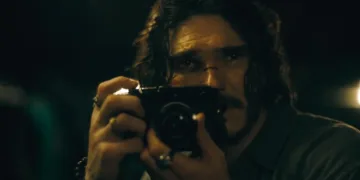
Louis Peres keeps Gabriel grounded by resisting the posture of a conventional superhuman hero. During his first training scenes, Gabriel moves with tense caution, testing each burst of strength as if it belongs to someone else. His guarded expression when the other Sentinels explain that losing control is normal gives the transformation a frighteningly practical quality. Nobody in the room treats the warning as extraordinary. This is simply the cost of the job.
The series is most effective when it treats Dyxénal as a system of control. Gabriel cannot contact his wife Irène or their infant son. Colonel Mirreau tells him that revealing the programme will make him a deserter. Continued access to the serum keeps his body functioning, which means obedience is built into his bloodstream. The science-fiction premise becomes easy to read: the army saves Gabriel by making survival conditional.
His fellow soldiers give that idea a human scale. Djibouti, De Clermont and Armand understand the drug’s effects before Gabriel does, and their barracks exchanges suggest men trying to make routine out of terror. Thibaut Evrard gives Djibouti a blunt authority that makes him the unit’s natural centre. The writing gives the others less room, so later danger lands with reduced force.
Pauline Étienne brings sharper tension to Marthe, the scientist monitoring Gabriel’s mutations. Her restrained reactions to his seizures reveal concern before the dialogue admits it. When she is ordered to experiment on a condemned woman, the show places its ethical argument inside a concrete choice: follow the programme, or recognize that scientific procedure has become state violence.
Two Wars, Too Many Plots
Irène’s search for Gabriel carries the strongest material outside the laboratory. Olivia Ross avoids large emotional displays, letting persistence communicate grief. Irène keeps pressing military officials after being told her husband is dead, then uses her newspaper position to trace withheld records and contradictions in Mirreau’s account. Her investigation gives the conspiracy a civilian perspective and reminds us that Gabriel’s disappearance has consequences beyond the front.
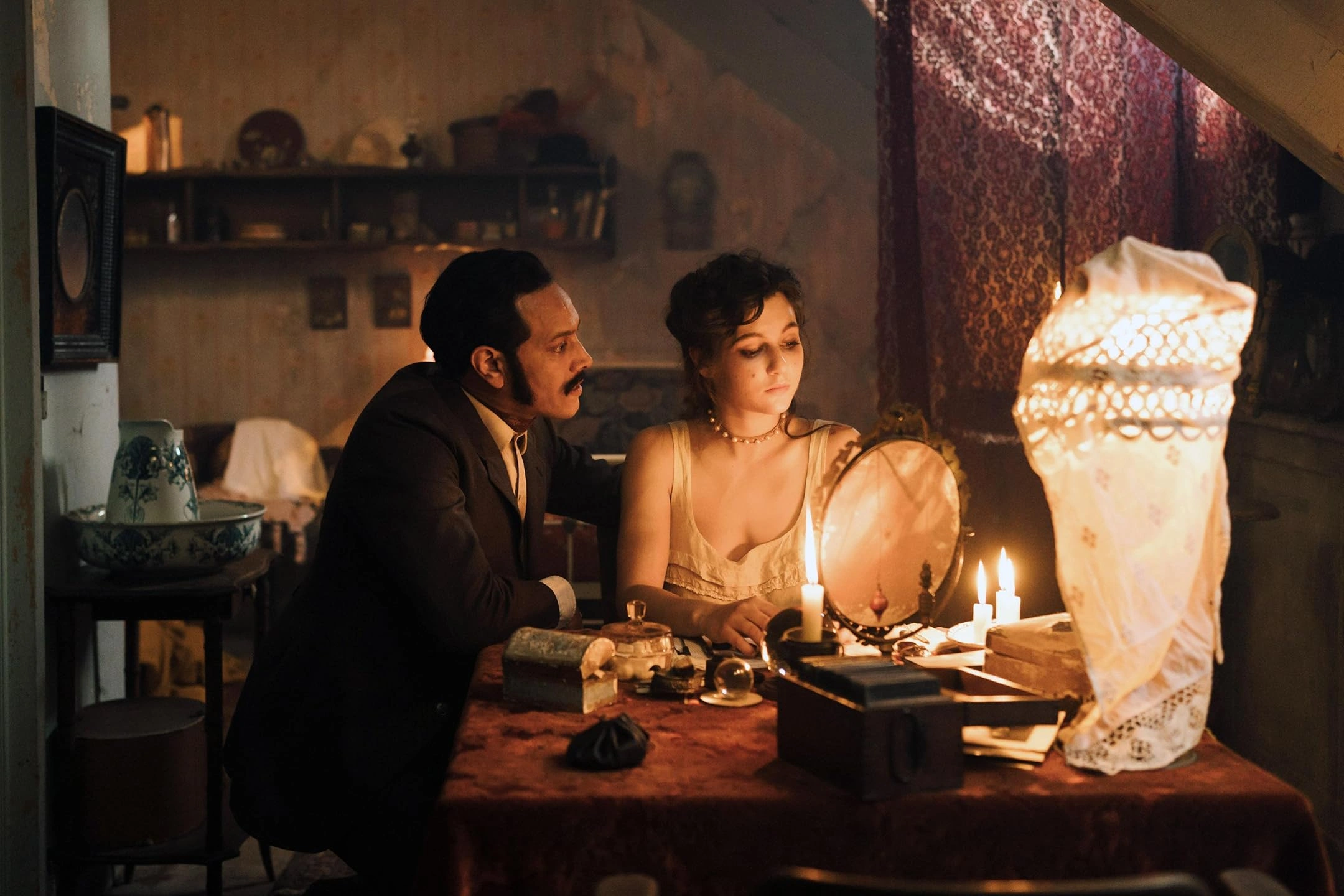
The Paris storyline introduces The Baron, the cabaret Les Damnés and Gisèle, a medium who can influence minds during espionage missions. These scenes have smoky rooms, criminal bargains and a supernatural charge that distinguishes them from the trenches. They rarely connect cleanly with Gabriel’s missions. The season can feel divided between a wartime superhero series and a Montmartre conspiracy drama, with each interrupting the other before either gathers momentum.
Project Atlas creates another pocket of secrecy around Mirreau’s earlier experiments. The mystery is handled better than many modern science-fiction shows manage because several questions receive actual answers. Still, the cast of politicians, gangsters, scientists, soldiers and psychics keeps expanding. The episodes move quickly, yet speed cannot replace development.
That problem is clearest in the German enhanced soldier. He is designed as Gabriel’s physical mirror, a vision of what Dyxénal may turn him into. Saving their major confrontation for the final episode gives the fight scale, but the antagonist arrives with too little history or personality. He functions like a final boss because the season has written him like one.
Mud, Metal and Missing Bite
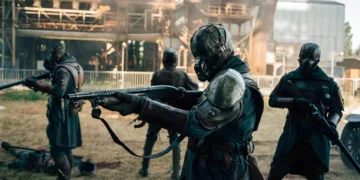
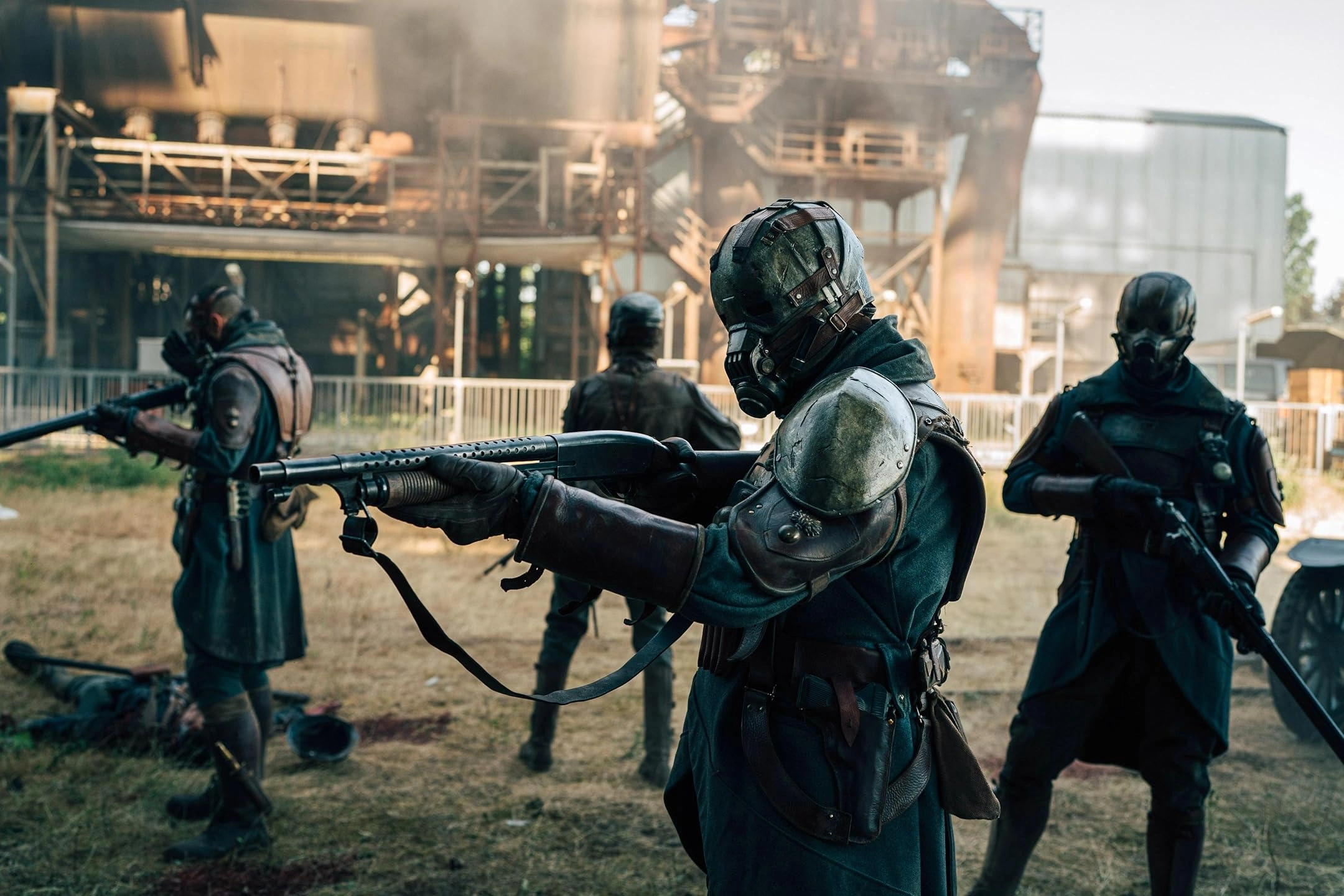
The production design does much of the persuasive work. Thierry Poiraud’s first four episodes press soldiers into muddy trenches, narrow corridors and dim laboratories where machinery seems to consume every room. Heavy armour and exposed mechanisms give the Sentinels a handmade, dangerous appearance. Their equipment looks built by people who expect it to break, possibly while someone is inside.
The action is strongest when the camera stays close to bodies. The laboratory assault uses tight framing and abrupt edits to make enhanced strength feel brutal rather than graceful. Later battlefield clashes lose clarity when gunfire, slow motion and impact shots take over. Those sequences resemble game cinematics because spectacle replaces tactical information. We see power, but not always the decision behind it.
Thomas Couzinier and Frédéric Kooshmanian’s score combines orchestral weight with metallic percussion and synthetic pulses. The method is easy to hear: acoustic sounds belong to the period, electronic textures suggest the future being forced into it. At its best, the score makes Gabriel’s altered body sound like machinery under strain. At its loudest, it flattens dialogue and emotional detail.
The graphic novels carried a stronger anti-militarist charge, while the series often shifts from coercion to combat before examining the institution responsible. Mirreau’s belief that victory excuses abuse should cut deeper. The brutal final scene restores some of that force by denying Gabriel an easy reunion and turning survival into another sentence. The war may end. His dosage will not.
The ambitious French science-fiction historical drama series The Sentinels premiered its first season on the premium network Canal+ on September 29, 2025, and is currently available for home subscribers to stream directly via the Canal+ video-on-demand platform. Viewers outside of France can track international broadcast updates and digital home entertainment availability through global distributor Studiocanal. Adapted freely from a famous graphic novel series, the retro-futuristic steampunk narrative follows a severely wounded French infantryman in World War I who gets recruited into a highly classified military research program, morphing into a technologically augmented super-soldier caught up in espionage, illegal weapon development, and psychic warfare.
Where to Watch (2026) Online







Full Credits
Title: The Sentinels (originally titled Les Sentinelles)
Distributor: Canal+, Studiocanal, Federation Studios
Release date: September 29, 2025
Rating: TV-MA
Running time: 52 minutes per episode
Director: Thierry Poiraud, Édouard Salier
Writers: Guillaume Lemans, Xabi Molia, Raphaëlle Richet, Xavier Dorison
Producers and Executive Producers: Lionel Uzan, Thierry Sorel, Delphine Clot, Guillaume Lemans
Cast: Louis Peres, Thibaut Évrard, Kacey Mottet-Klein, Carl Malapa, Olivia Ross, Pauline Étienne, Ouassini Embarek, Nastya Golubeva Carax, Noam Morgensztern, Sergej Onopko, Jochen Hägele
Director of Photography (Cinematographer): Matias Boucard, Mathieu Pleinfosse
The Review
The Sentinels
The Sentinels turns its super-soldier premise into a grim study of bodies claimed by war. Gabriel’s seizures, Marthe’s experiments and Irène’s search give the spectacle a human pulse, while the mud-caked trenches, metallic score and brutal laboratory assault sell its industrial-gothic world. The season weakens when Project Atlas, Gisèle’s powers, the Paris underworld and the German soldier compete for limited space. Still, its craft and moral tension carry it through the narrative congestion.
PROS
- Convincing industrial-gothic production design
- Louis Peres’s restrained central performance
- Brutal, well-staged combat
- Strong mechanical soundscape
- Serious treatment of military coercion
CONS
- Too many competing subplots
- Underdeveloped German antagonist
- Paris and battlefield stories rarely connect
- Political critique lacks bite
- Action occasionally resembles game cinematics