




























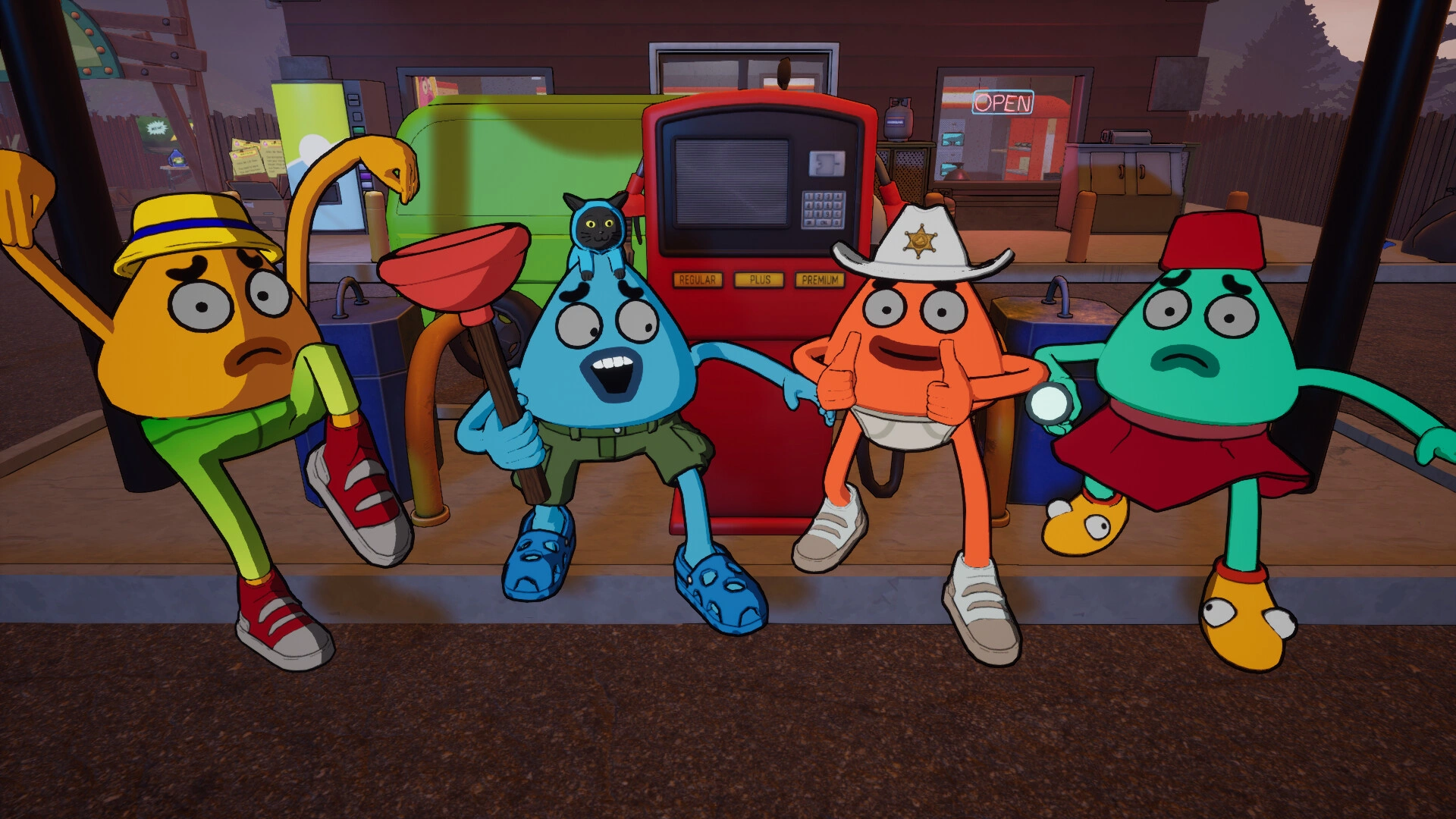

Every run asks the same desperate question: can four players locate a toilet before their bowel meters betray them? FuzzyBot builds We Gotta Go around that panic, sending groups into a haunted mansion after a disastrous gas-station meal and forcing them to manage fear, flatulence, and an increasingly hostile house.
The premise is proudly juvenile, yet the design behind it has a smart first step. Moving, taking damage, and getting frightened raise the poop meter. Farting lowers the pressure and can recover health, but it agitates the mansion and may affect anyone nearby. One player’s relief can make the next room worse for everyone.
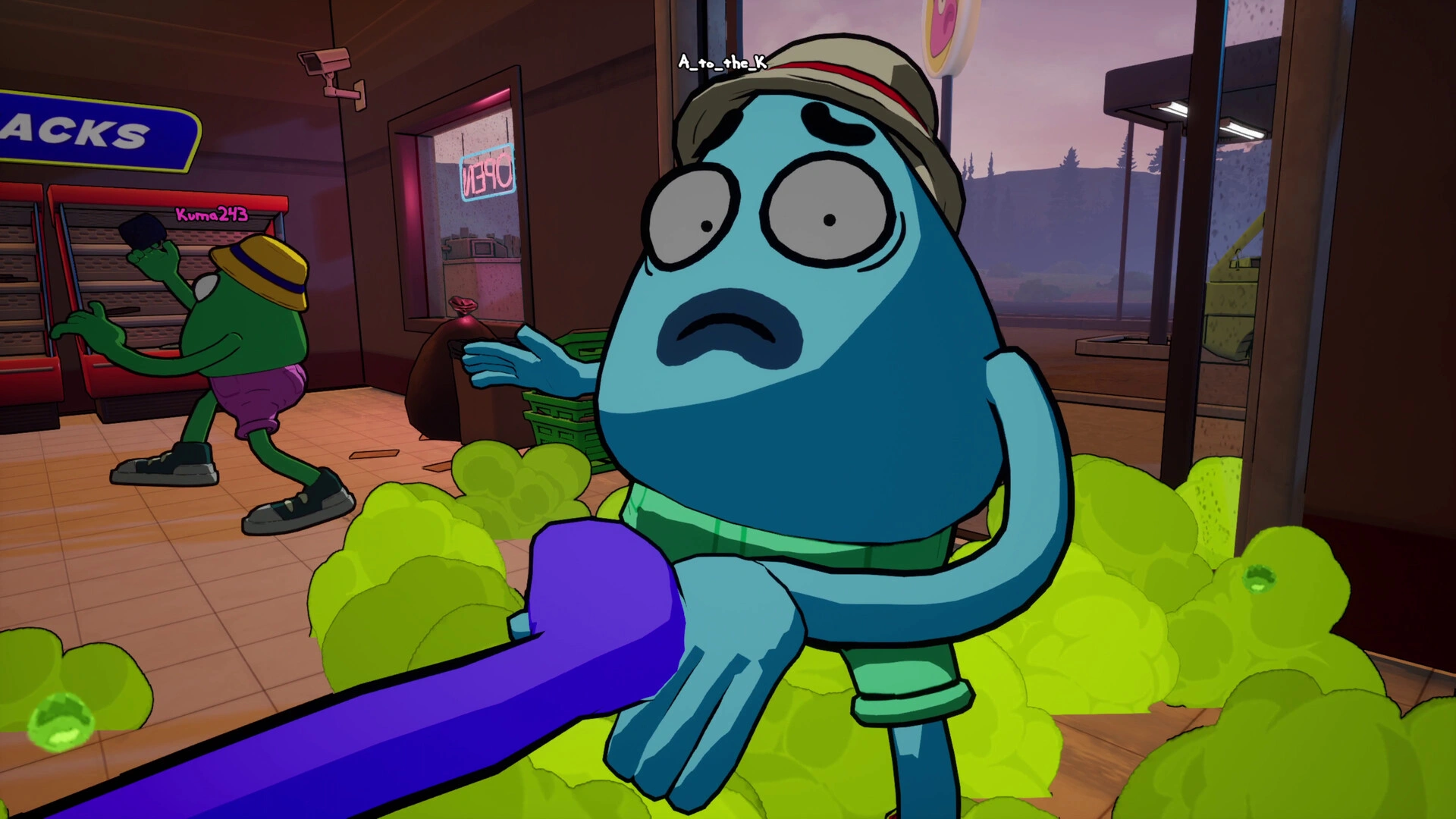
That tradeoff gives We Gotta Go its clearest identity beside Lethal Company, R.E.P.O., and PEAK. Those games turn bad coordination into comedy. Here, the funniest mistakes come from bodily self-preservation. A panicked fart can trigger fresh enemies, separate the group, or leave a teammate scrambling through pink eye while the bathroom key remains several rooms away.
The House Gets Angry
The mansion tracks how much trouble the group causes. Breaking furniture, making noise, exploring deeper rooms, and releasing gas raise its agitation. Once the building becomes perturbed, doors may lock and waves of TP mummies, ghosts, skeletons, haunted armour, turd creatures, or stranger monsters can fill the room.
This pressure works best when players face several problems at once. A teammate may be close to soiling themselves while another searches a vending machine for medicine and a third tries to solve a symbol puzzle. The game understands that co-op panic needs overlapping demands, not one enemy with a large health bar.
Failure also keeps the joke alive. A defeated player can return as a mobile piece of poop, roll through the level, annoy surviving friends, and search for a suitable body. In some situations, teammates can carry the fallen player to a corpse and restore them. Compared with co-op games that send dead players into spectator mode, this keeps everyone involved and gives the group another ridiculous object to protect.
The procedural layout should make each attempt feel different, but the variation is thinner than the rules suggest. Locked passages shift, enemy events change, and hidden containers appear in new places, yet many rooms share the same layout and decorations. Repeated key hunts expose the mansion’s limited vocabulary quickly.
Better at Playgrounds Than Combat
The gas-station hub reveals what We Gotta Go does best. Players can buy spare underwear, medicine, modifiers, plungers, rubber chickens, water guns, machetes, and stranger tools before a run. They can also ignore preparation and spend twenty minutes launching each other toward the basketball hoop.
That basketball court is a stronger co-op toy than much of the combat. It gives the group space to invent goals, block shots, attempt dunks, and turn physics into a private competition. The mansion rarely offers the same freedom. Most encounters ask players to kick enemies or swing weapons until the room opens.
Weapons such as bats, plunger blasters, and the Big Butt Launcher fit the tone, but many break too quickly or appear too rarely to shape a run. The basic kick becomes tiresome, and weak hit reactions make ghosts and armour sets feel weightless. Consumables have similar problems. Discovering a new suppository or gas modifier is funny once, yet many effects are too slight to change how the group approaches the next corridor.
The best challenge rooms point toward a stronger structure. Floating platforms above supernatural abysses force players to coordinate jumps, recover from mistakes, and watch each other fail spectacularly. Memory puzzles requiring players to throw items at matching symbols create frantic communication. These sections resemble PEAK’s obstacle-driven teamwork far closer than the ordinary room searches do.
Some puzzles explain their rules poorly, replacing panic with confusion. Still, they create shared tasks. Standard exploration often encourages the opposite. Players split up to search for coins, keys, weapons, and hidden containers, reducing the proximity-based comedy the game needs.
Bright Colors, Familiar Rooms
The cartoon presentation gives the game an appealing late-1990s gross-out energy. The triangular, vaguely turd-shaped characters wobble through patterned halls filled with glowing signs, skeleton displays, suits of armour, and exaggerated Halloween creatures. Hats, trousers, shoes, and color options let each player look distinct without burying the lobby beneath menus.
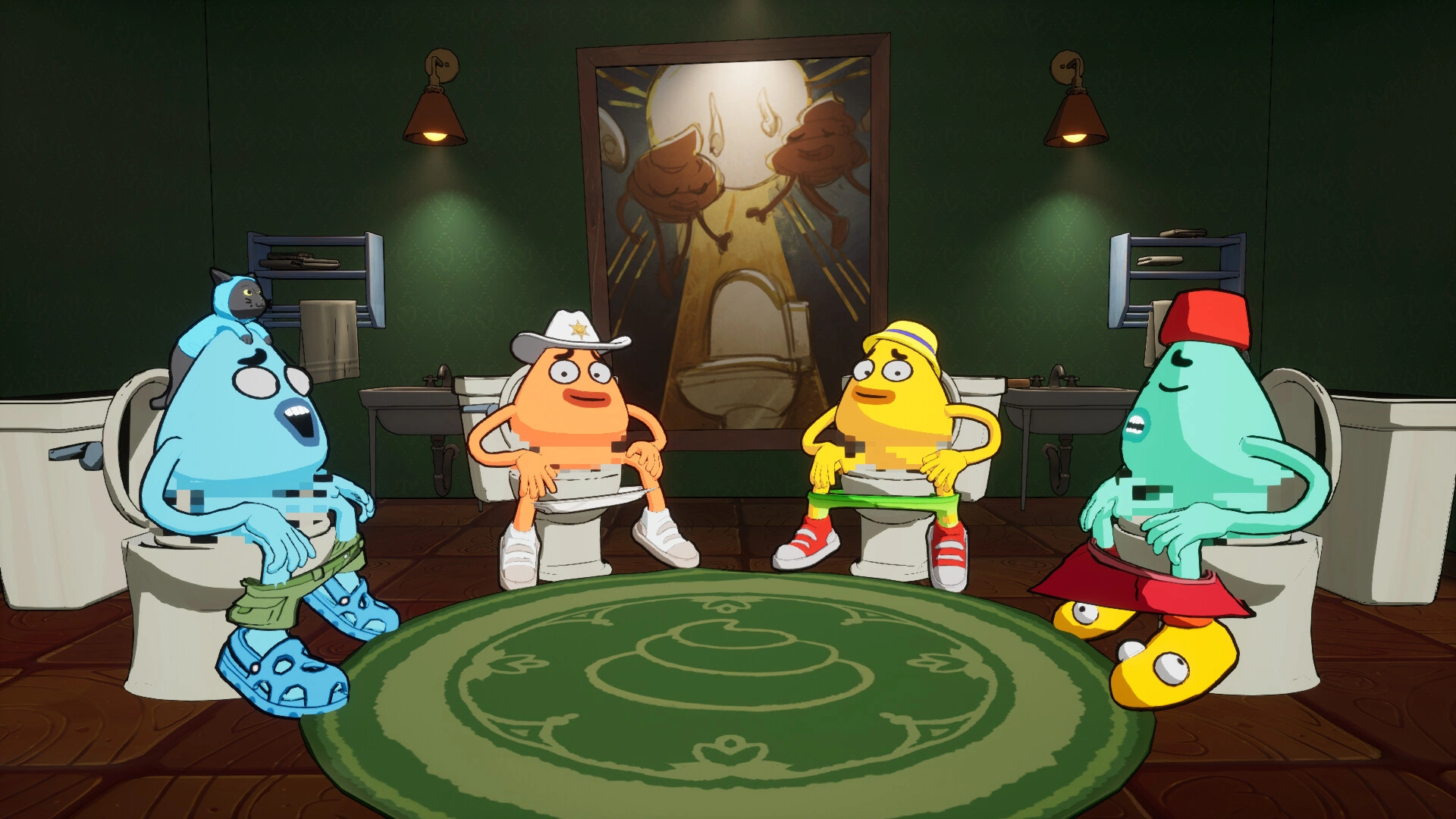
The problem is repetition. The mansion’s bold wallpaper and goofy monsters make a strong first impression, but repeated layouts dull that personality. Graveyards, laboratories, dungeons, obstacle courses, secret routes, and shifting visual themes could give each run a stronger identity. The current procedural changes move the furniture without changing the reason to enter the room.
Proximity chat should carry much of the comedy. Hearing a friend scream from a distant corridor, beg for medicine, or announce that a mummy stole their pants is exactly the social texture this genre depends on. Uneven volume, voices cutting out, and groups switching to Discord matter because the game loses part of its design when players cannot trust the distance between voices.
Cosmetics and secondary tasks from Mr. Bum provide light progression, but neither changes how a return visit plays. PEAK reshapes cooperation through terrain, while R.E.P.O. lets physics complicate every object the group touches. We Gotta Go keeps sending players back to familiar locked doors, leaving its smartest bowel-management system with too little space to develop.
The Review
We Gotta Go
We Gotta Go finds a clever co-op dilemma inside its toilet joke: every fart relieves one player while making the haunted house angrier for the entire group. That system gives the first few runs the panicked energy of Lethal Company and PEAK, especially when a fallen teammate returns as a mobile turd. Repeated key hunts, weak combat feedback, unreliable proximity chat, and limited room variety drain the momentum before its roguelite structure takes hold.
PROS
- Smart pressure-management loop
- Amusing revival mechanic
- Excellent cartoon presentation
- Playful gas-station lobby
- Strong group comedy
CONS
- Repetitive room exploration
- Unreliable proximity chat
- Weak combat feedback
- Limited long-term incentive