






![Kingdom Hearts Collection [I-III] Review](https://gazettely.com/wp-content/uploads/2026/10/Kingdom-Hearts-Collection-I-III-1-360x180.webp "Kingdom Hearts Collection [I-III] Review: KHII Holds Steady as Newer Entries Fluctuate 33")






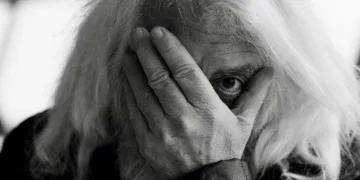
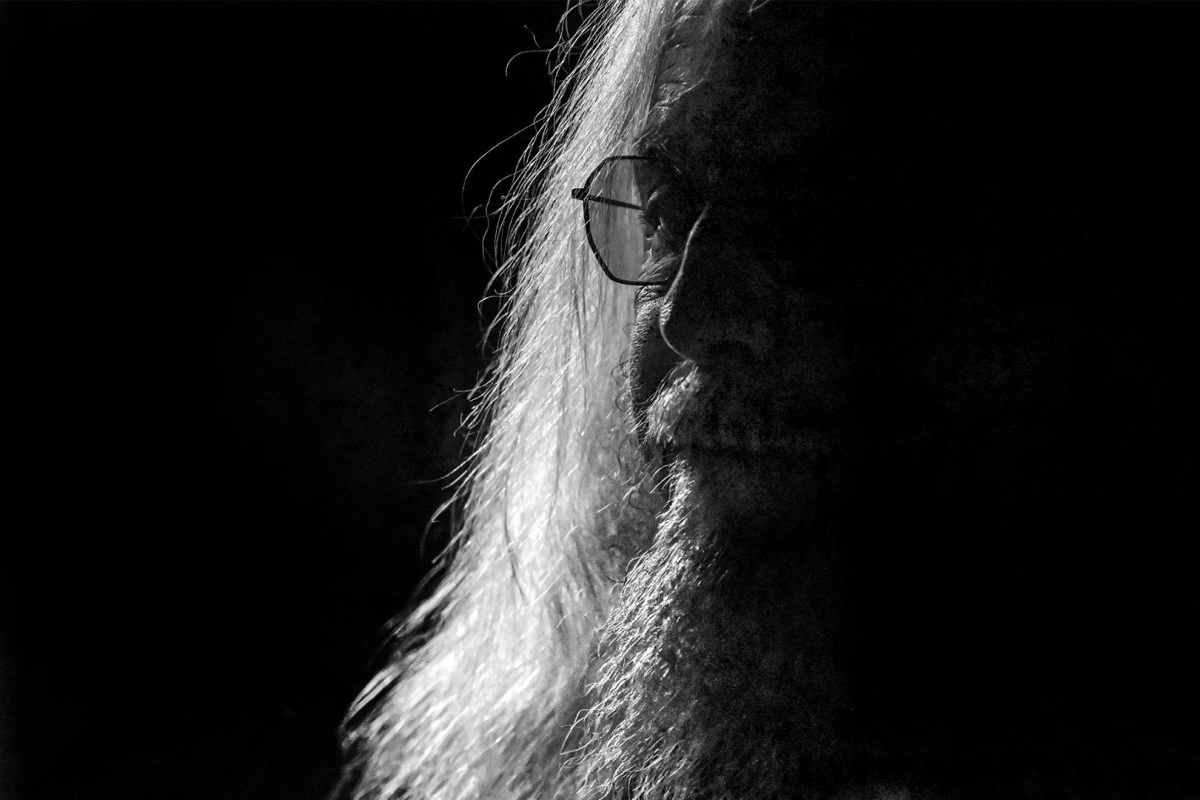
For Robert Richardson, the camera appears less like an instrument of seeing than a room he can lock from the inside. Jana Hojdová’s documentary finds the three-time Oscar winner in his seventies, his white hair now carrying the calm of an aging prophet, then slowly uncovers the restlessness still moving beneath it.
Richardson calls his career “a study in how to escape.” At first, the phrase sounds like an elegant description of cinema, a medium built to carry people elsewhere. Hojdová gradually gives it a harsher meaning. Film sets took Richardson away from his partners and children for months. Work gave his days purpose whenever depression threatened to close around him. Looking through a lens became easier than remaining present without one.
Hojdová entered his life through a letter sent while she was studying cinematography at FAMU. Richardson answered personally, shared his diaries and research, then invited her into an archive dense with photographs, notes, storyboards, and home videos. When the 2020 lockdown trapped them together at his Cape Cod house, a student project became an uneasy act of excavation.
Student and Subject
Hojdová’s admiration never makes her obedient. She asks Richardson broad, almost innocent questions, then waits through his irritation. “What is life for you?” causes him to bristle, partly because the question is vague and partly because it reaches a place he would rather approach through technique.
Their exchanges create the film’s most revealing tension. Richardson can be gruff, impatient, and commanding, yet he rarely retreats into polished anecdotes. His hostility often leads to candor. A weak question receives a sharp rebuke, then an answer far stranger and sadder than the question seemed capable of producing.
The documentary traces his visual sensitivity to several sources. Richardson recalls psychedelic experiences that altered his perception of light. He also speaks about living with tinnitus, a constant disturbance that pushed his attention toward vision. Kate Hudson jokes that a person would need considerable chemical assistance to see illumination as he does. The remark is funny because Richardson’s images often seem to come from someone who regards ordinary light as an unfinished state.
Hojdová’s editing can feel unruly. Film clips appear beside personal recollections without always earning the connection, while childhood memories interrupt career passages at abrupt angles. Yet the roughness preserves the unstable relationship taking shape behind the production. The film behaves like an archive being opened faster than either person can control.
Battles Over Light
Richardson’s career is built through creative partnerships that resemble marriages conducted under hotter lamps. His work with Oliver Stone began with Salvador and Platoon, then continued through Born on the Fourth of July, JFK, Natural Born Killers, Nixon, and U-Turn. Richardson drew storyboards, proposed shots, and met Stone’s aggression with an equal force. Their images emerged from collision.
The partnership ended after Richardson chose to work with Martin Scorsese. Stone speaks about the separation with the tone of someone remembering an artistic betrayal that time has softened without curing. Scorsese demanded another form of discipline. Richardson’s private plans mattered less because the director already carried the film’s visual design in his head. On The Aviator and Hugo, Richardson’s task shifted from combative co-author to exacting interpreter.
Quentin Tarantino describes his love of crane shots with a joke: Richardson likes the crane because he does not have to share it. The humor catches his mixture of ambition and territorial control. Their relationship fractured after Kill Bill, with Tarantino recalling Richardson’s abusive treatment of crew members. They later reconciled, but the documentary does not treat reconciliation as erasure.
For a film about a cinematographer, The White Devil sometimes keeps technique at a frustrating distance. It names Richardson’s perfectionism, his appetite for cranes, and his changing relationship to directors, yet rarely studies a lighting setup or composition long enough to reveal how his decisions create meaning. The man comes into focus while parts of the work remain luminous and remote.
The Life He Recorded
Richardson’s home movies contain the emotional evidence his interviews cannot fully hold. In one clip, his daughter rebukes him for filming instead of sharing the moment. Her frustration turns the camera into a physical barrier. He is present, technically. He is also somewhere else.
His family history deepens this pattern of retreat. He speaks about a childhood shaped by his mother’s alcoholism and neglect, his brother’s mental illness and substance abuse, and the estrangement that followed his failure to attend his nephew’s funeral. He appears frightened by grief when it belongs to another person, as though proximity might pull him into a depth from which work cannot retrieve him.
The most disturbing footage shows medical workers lifting his recently deceased mother from her bed. Richardson keeps filming. The image is clear, steady, and almost unbearable, partly because the documentary has given her relatively little space before this moment. Death arrives with the visual precision of a professional composition and none of its protection.
He does not apologize for recording it. The refusal is unsettling, yet honest. Richardson has spent decades turning chaos into framed light, and the camera remains in his hands when beauty has vanished from the room. It cannot save him from grief. It gives grief an edge, a duration, a place to stand.
The captivating biographical cinema documentary Robert Richardson: The White Devil celebrated its highly anticipated world premiere at the 60th Karlovy Vary International Film Festival on July 5, 2026, coinciding with the subject receiving an honorary Crystal Globe award. Audiences tracking the festival circuit can anticipate its upcoming theatrical rollout across European territories later this year via Czech distributor Falcon, with global streaming rights and digital on-demand platform access under negotiation. Weaving together deep professional archives and candid quarantine footage, the intimate narrative chronicles the legendary, tempestuous life of the three-time Academy Award-winning cinematographer, exploring how his absolute obsession with visual perfection helped shape the signature masterpieces of legendary filmmakers while leaving a complex, painful trail across his personal family life.
Full Credits
Title: Robert Richardson: The White Devil (originally titled Portrét Roberta Richardsona)
Distributor: Falcon, MFF Karlovy Vary, Barletta Productions, B Rated International
Release date: July 5, 2026
Running time: 105 minutes
Director: Jana Hojdová
Writers: Jana Hojdová
Producers and Executive Producers: Matěj Chlupáček, Jana Hojdová, Nela Schlaichertová
Cast: Robert Richardson, Quentin Tarantino, Martin Scorsese, Oliver Stone, Woody Harrelson, Kate Hudson, Andy Serkis, Harvey Keitel
Director of Photography (Cinematographer): Jana Hojdová
Editors: Elisa Bonora
Composer: Simon Goff
The Review
Robert Richardson: The White Devil
Robert Richardson: The White Devil watches a man who can bend light toward beauty yet cannot make it illuminate the distances he created at home. Jana Hojdová’s access is extraordinary, exposing Richardson’s artistic discipline, anger, grief, and dependence on the camera as a shield against living. The editing sometimes scatters that intimacy, while the limited technical analysis leaves parts of his craft untouched. Still, the home movies linger like memories that have forgotten how to end. Richardson records death, absence, and regret. The lens remains steady. The man behind it does not.
PROS
- Remarkably intimate access
- Raw family archive
- Honest professional conflicts
- Complex mentorship dynamic
- Haunting emotional imagery
CONS
- Disjointed editing
- Major career gaps
- Occasionally misplaced film clips
- Limited technical analysis